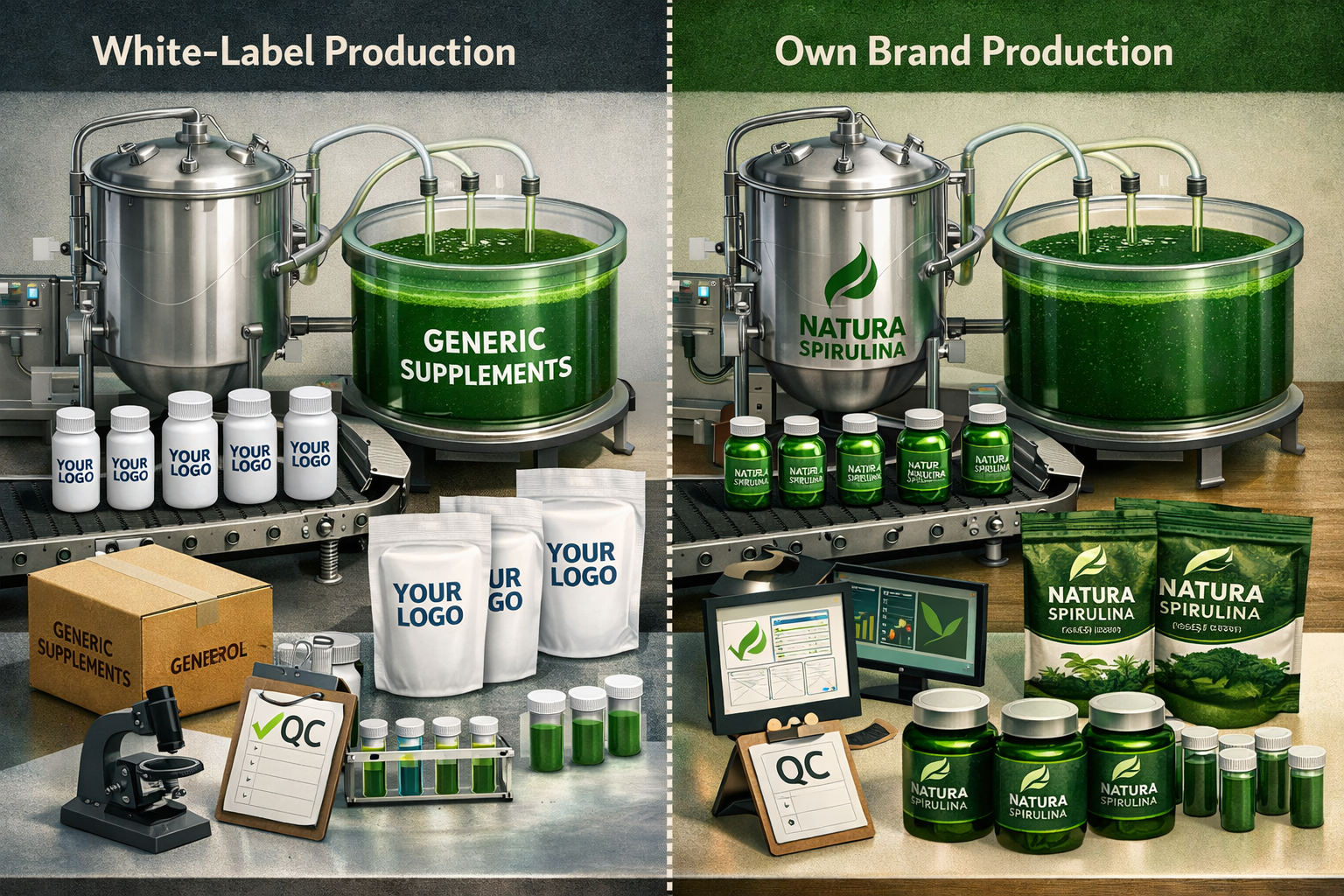
Spirulina businesses generally evolve into one of two commercial pathways:
- White-label manufacturing for established brands
- Building and scaling their own retail brand
At surface level, both models involve cultivation, harvesting, drying, testing, and packaging.
Operationally, however, they are fundamentally different businesses.
White-label manufacturing is compliance-driven and audit-intensive.
Own-brand operations are market-driven and capital-intensive.
Understanding these operational differences determines whether a farm remains stable, scalable, and profitable – or becomes structurally overstretched.
At Greenbubble, we design systems that can support either pathway – but the infrastructure, documentation discipline, financial structure, and risk management architecture required are not identical.
1. Control vs Responsibility: Who Owns Market Risk?
White-Label Model
In white-label agreements:
- The brand owns customer acquisition
- The brand manages marketing and distribution
- The brand carries retail reputation exposure
- The manufacturer carries production and compliance risk
The manufacturer focuses on:
- Consistent batch production
- Documentation precision
- Audit readiness
- Contract fulfillment
Revenue stability is higher because volumes are usually defined contractually.
However, operational discipline must be stronger because brand audits are frequent and unforgiving.
Own Brand Model
In an own-brand structure:
- The farm owns product positioning
- The farm handles marketing and sales
- The farm carries retail liability
- The farm manages brand perception
Operational complexity expands beyond production into:
- Packaging design
- Digital marketing
- Distributor management
- Consumer compliance claims
- Retail documentation
Own-brand operations require working capital for inventory and promotional cycles.
2. Compliance Depth and Audit Frequency
White-label buyers conduct structured audits covering:
- HACCP implementation
- GMP zoning
- Batch traceability
- Heavy metal logs
- Microbial test records
- Recall preparedness
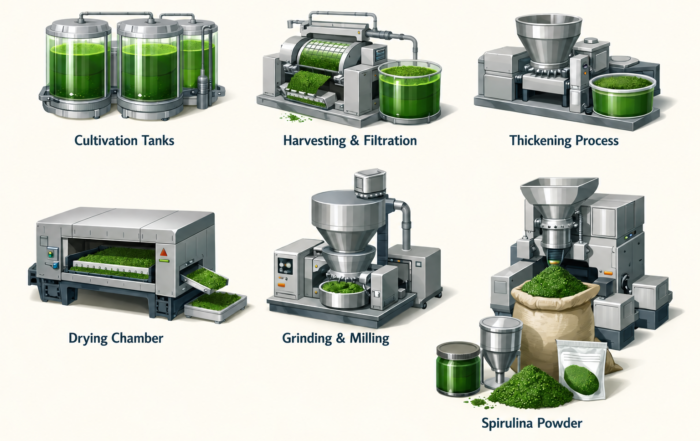
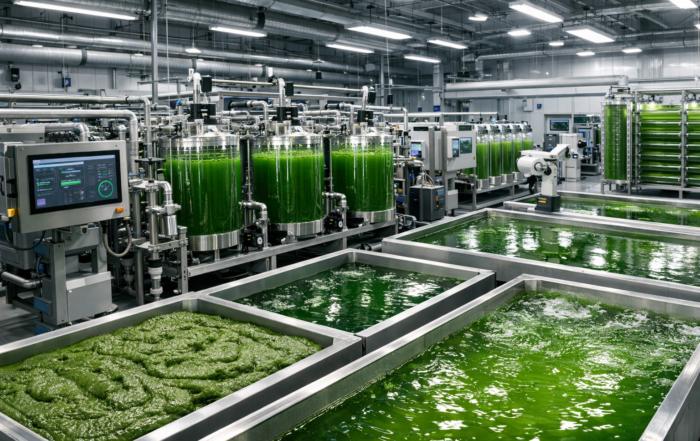
Facilities must demonstrate repeatable quality control through structured systems such as:
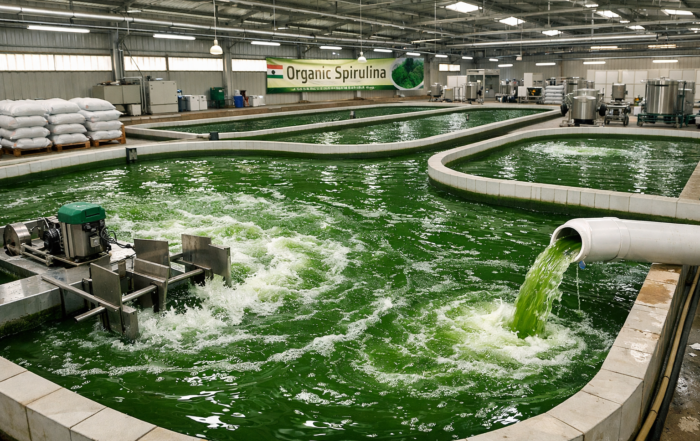
- Controlled raceway ponds
- Calibrated efficient agitators
- Automated harvesting equipment
- Controlled spirulina drying equipment
White-label contracts typically demand deeper documentation than own-brand retail models.
Own-brand farms still require certification, especially for export, but audit intensity may be lower unless distributing through large retail chains.
3. Capital Allocation Differences
White-Label Capital Structure
Investment prioritizes:
- Automation reliability
- Laboratory capability
- Certification systems
- Cleanroom packaging
- Process redundancy
Marketing spend remains minimal.
Operational automation is critical because manual systems struggle to pass certification and client audits.
Automation-supported packing systems and structured assisted dewatering systems reduce contamination risk and improve consistency.
Own Brand Capital Structure
In addition to plant investment, own-brand models require:
- Branding and packaging design
- Website and digital campaigns
- Distributor margins
- Retail listing fees
- Sales team
Marketing and channel development may exceed production costs in early years.
4. Margin Structure and Cash Flow Dynamics
White-label margins are typically lower per kilogram but stable.
Advantages:
- Predictable volume
- Lower marketing expenditure
- Contract-based revenue
- Reduced inventory risk
Risks:
- Dependence on few large clients
- Contract termination exposure
Own-brand margins per unit can be higher.
However:
- Sales cycles are unpredictable
- Inventory holding costs rise
- Marketing ROI fluctuates
Based on structured cost modeling, small farms under 1 acre often struggle to achieve sustainable ROI. Economies of scale become visible at 2–3 acres where fixed compliance costs are distributed efficiently fileciteturn2file1.
5. Operational Complexity Matrix
| Parameter | White-Label | Own Brand |
| Audit Frequency | High | Moderate to High |
| Marketing Investment | Low | High |
| Production Consistency Requirement | Extremely High | High |
| Documentation Depth | Extensive | Moderate to Extensive |
| Cash Flow Stability | Contract-based | Market-driven |
| Inventory Risk | Lower | Higher |
| Client Concentration Risk | High | Diversified |
| Brand Liability | Shared | Full |
6. Risk Exposure Differences
White-Label Risks
- Batch rejection
- Contract penalties
- Audit failure
- Price renegotiation pressure
White-label buyers demand strong compliance buffers.
Structured systems designed through spirulina farming turnkey solutions help reduce exposure by embedding compliance architecture from inception.
Own Brand Risks
- Unsold inventory
- Retail return rates
- Consumer complaints
- Marketing underperformance
- Regulatory advertising scrutiny
Own-brand operators must maintain both production stability and brand credibility.
7. Scalability Pathways
White-label scalability depends on:
- Capacity expansion
- Multi-client servicing
- Audit readiness
- Documentation systems
Own-brand scalability depends on:
- Market acceptance
- Distribution network
- Brand recognition
- Channel partnerships
From an infrastructure standpoint, scalability requires expansion-ready cultivation and processing layout – not incremental retrofits.
Strategic advisory support through spirulina farming consultancy ensures growth does not destabilize compliance or quality.
8. Laboratory and Technical Requirements
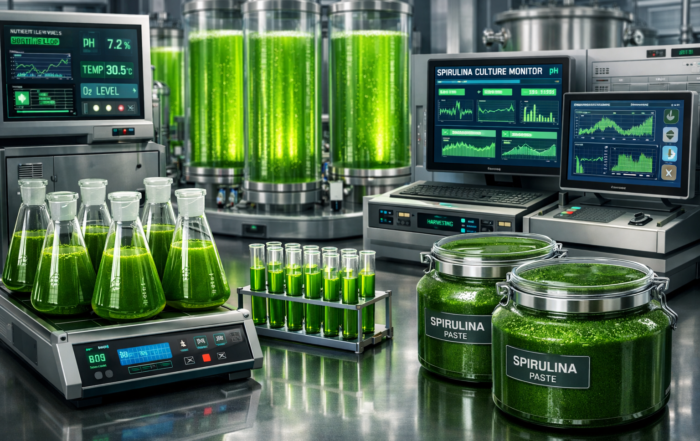
White-label buyers often expect in-house testing capability for:
- Protein percentage
- Moisture levels
- Heavy metals
- Microbial counts
- Pigment levels
Own-brand operators targeting export markets require similar capability.
Without in-house laboratory structure, certification and batch validation timelines slow down significantly.
9. Decision Framework: Which Model Fits Your Farm?
White-label is suited for operators who:
- Prefer operational excellence over marketing
- Have strong compliance discipline
- Want stable contracted volumes
- Can maintain audit readiness consistently
Own-brand is suited for operators who:
- Have marketing and distribution capability
- Can tolerate revenue variability
- Want higher brand control
- Are prepared for consumer-facing risk
Hybrid models are possible but require stronger capital and management depth.
Frequently Asked Questions
Q1. Is white-label spirulina safer financially than launching a brand?
White-label provides predictable volume but creates dependency on clients. Own-brand offers higher upside but greater volatility.
Q2. Can a 1-acre farm succeed in either model?
Under realistic cost assumptions, 1-acre farms often struggle with profitability unless operating in niche markets or as pilot facilities fileciteturn2file1.
Q3. Which model requires stronger compliance systems?
White-label typically requires deeper audit preparedness because brand buyers impose additional internal standards.
Q4. Does automation matter more in white-label manufacturing?
Yes. Automated harvesting, dewatering, drying, and packing improve consistency and reduce audit risk.
Q5. Can a farm transition from white-label to own brand?
Yes, provided infrastructure, documentation systems, and financial buffers are strong enough to support expanded commercial risk.
Conclusion
White-label spirulina manufacturing and own-brand spirulina operations are structurally different business models.
White-label emphasizes operational discipline, compliance depth, and contractual reliability.
Own-brand emphasizes marketing strength, capital resilience, and consumer trust management.
Both models require serious investment, automation integrity, documentation precision, and certification rigor.
The most successful spirulina enterprises align infrastructure with their chosen commercial pathway from the beginning rather than adapting reactively.
Make us your source on Google
Table Of Contents