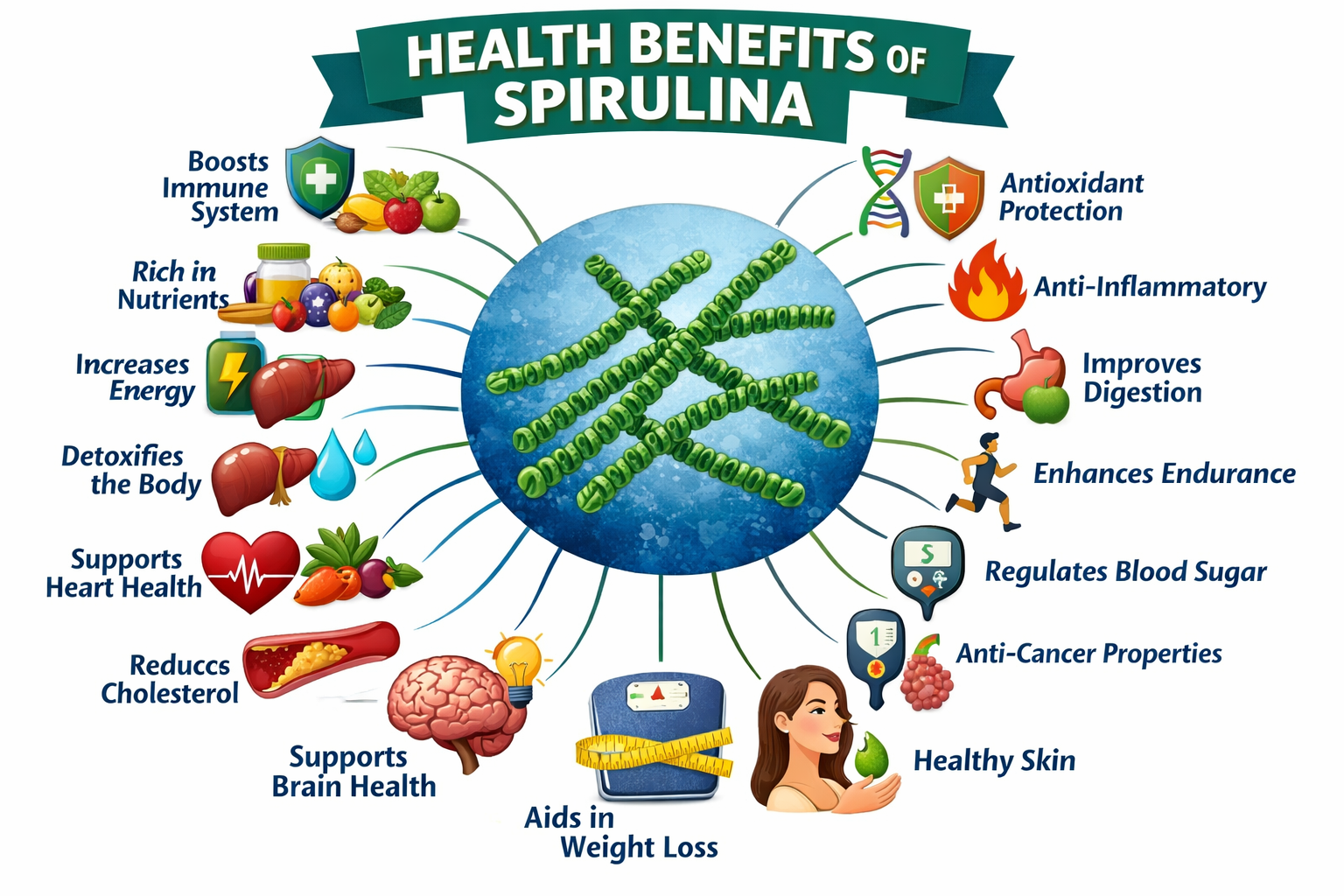
Spirulina has accumulated a body of clinical research that few natural supplements can match. The mechanisms are not mysterious – they follow directly from a nutritional composition that is, by most measures, genuinely exceptional. Understanding why spirulina produces the health outcomes it does requires knowing what is inside it. The benefits below are grounded in that composition, not in marketing claims.
All references to nutritional content assume certified, properly dried spirulina powder with a verified COA – the only form in which the compounds responsible for these benefits are reliably present.
1. Exceptional Protein Source for All Diets
Spirulina contains 55-70% protein by dry weight – more than meat, eggs, or legumes by the same measure. It is a complete protein, meaning it delivers all nine essential amino acids. Unlike most plant proteins, it lacks a cellulose cell wall, making it more bioavailable. For vegetarians, vegans, elderly populations with reduced appetite, and athletes with elevated protein demands, it covers meaningful ground in a small daily dose.
2. Potent Antioxidant Activity via Phycocyanin
Phycocyanin – the blue pigment present at 10-20% by dry weight in quality spirulina – is among the most concentrated natural antioxidants found in any food source. It neutralises reactive oxygen species that damage cells, proteins, and DNA over time. Oxidative stress is implicated in ageing, cardiovascular disease, and a range of chronic conditions. Phycocyanin addresses it at the molecular level.
3. Anti-Inflammatory Properties
Phycocyanin also inhibits inflammatory signalling pathways, particularly those involving prostaglandins and leukotrienes. Multiple studies have demonstrated measurable reductions in inflammatory markers in subjects supplementing with spirulina over periods of four to twelve weeks. This mechanism is relevant to conditions ranging from joint inflammation to metabolic syndrome.
4. Supports Healthy Cholesterol Levels
Spirulina’s GLA content – gamma-linolenic acid at 13-27% of its fatty acid fraction – has been studied for its role in lipid metabolism. Clinical trials have reported reductions in total cholesterol, LDL cholesterol, and triglycerides in participants supplementing with spirulina, alongside modest improvements in HDL levels. The combination of GLA and phycocyanin’s antioxidant activity on LDL oxidation makes spirulina relevant to cardiovascular risk management.
5. Blood Pressure Reduction
Several controlled trials have observed reductions in both systolic and diastolic blood pressure in hypertensive subjects following spirulina supplementation. The proposed mechanism involves phycocyanin’s role in nitric oxide production, which supports vascular relaxation. Results are most consistent in studies running eight weeks or longer.
6. Iron Deficiency Support
At approximately 410 mg of iron per kilogram, spirulina is one of the most iron-dense plant-derived sources available. Iron deficiency anaemia affects over 1.2 billion people globally. A daily 4.5-gram serving delivers approximately 1.8 mg of iron – meaningful as part of a broader dietary strategy for deficiency correction, particularly in vegetarian and vegan populations where haem iron from animal sources is absent.
7. Blood Sugar Regulation
Emerging clinical evidence suggests spirulina supplementation produces modest reductions in fasting blood glucose in people with type 2 diabetes. A number of controlled trials spanning eight to twelve weeks report improvements in HbA1c and fasting glucose markers. The proposed mechanisms involve antioxidant protection of pancreatic beta cells and improvements in insulin sensitivity, though larger long-term trials are still ongoing.
8. Liver Protection
Animal studies and early human data suggest spirulina has hepatoprotective properties – the ability to reduce oxidative damage in liver tissue. This is attributed primarily to phycocyanin’s antioxidant activity and the compound’s apparent role in reducing lipid accumulation in liver cells. Research in non-alcoholic fatty liver disease contexts is at an early but promising stage.
9. Immune System Support
Spirulina stimulates the production of antibodies and activates key immune cells including natural killer cells, macrophages, and T-cells. Its broad micronutrient profile – vitamins C, E, B6, selenium, and zinc – supports immune function through multiple independent pathways simultaneously. The phycocyanin content adds antioxidant protection that reduces immune-cell oxidative stress during periods of illness or elevated physiological demand.
10. Muscle Recovery and Exercise Performance
Spirulina’s combination of complete protein and phycocyanin antioxidant activity makes it particularly relevant to sports recovery. Exercise generates reactive oxygen species that contribute to muscle damage and delayed onset soreness. Studies have found that spirulina supplementation reduces markers of exercise-induced oxidative stress and supports faster recovery. Its amino acid profile – including branched-chain amino acids – supports protein synthesis in the recovery window.
11. Allergy and Rhinitis Relief
A number of clinical trials have examined spirulina’s effect on allergic rhinitis – seasonal nasal allergy. Results consistently show reductions in symptoms including nasal discharge, sneezing, congestion, and itching compared to placebo. The mechanism is linked to spirulina’s inhibition of histamine release from mast cells, a direct anti-allergic effect that is distinct from its general antioxidant properties.
12. Eye Health via Beta-Carotene
Spirulina contains more than 5,500 mg of carotenoids per kilogram, with beta-carotene as the primary compound. Beta-carotene is a precursor to vitamin A, deficiency of which is the leading cause of preventable blindness in children globally. The xanthophylls in spirulina’s carotenoid profile – including zeaxanthin – have been associated with protection against age-related macular degeneration and oxidative damage to retinal tissue.
13. Gut Health and Microbiome Support
Early research suggests spirulina supports a healthy gut microbiome by promoting the growth of beneficial bacteria including Lactobacillus and Bifidobacterium, while inhibiting pathogenic bacteria. Its high protein digestibility and the absence of anti-nutritional factors – compounds present in legumes and grains that interfere with gut absorption – make it a gut-friendly protein source compared to most plant alternatives.
14. Detoxification Support
Chlorophyll-a, present at minimum 1% by dry weight in quality spirulina, has been studied in the context of binding to heavy metals and potential carcinogens in the digestive tract, supporting their elimination before absorption. Spirulina has also been examined as a nutritional intervention in communities with documented heavy metal exposure – early studies in arsenic-affected populations showed measurable reductions in blood arsenic levels following supplementation.
15. Skin Health and Cellular Protection
Spirulina’s antioxidant profile – phycocyanin, beta-carotene, vitamin E, and selenium working in combination – provides multi-pathway protection against oxidative damage at the cellular level. This has relevance both to internal cellular health and, when applied topically in extract form, to surface skin protection. Premium cosmetic formulations use standardised spirulina extract for its studied role in reducing oxidative stress at the skin surface and supporting collagen-related cellular processes.
The Quality Condition That Applies to Every Benefit Above
Every benefit listed here is contingent on one thing: the spirulina delivering it must actually contain the compounds it claims to contain, at the concentrations required for clinical relevance.
Phycocyanin at 18% produces antioxidant outcomes. Phycocyanin at 3% – the result of spray drying at 150°C – does not produce the same outcomes, regardless of what the label says. GLA at 24% of the fatty acid fraction has cardiovascular relevance. GLA degraded through poor storage or high-temperature processing does not.
This is why the provenance of spirulina matters as much as the science around it. The farms producing spirulina at the quality level reflected in this article – controlled cultivation temperatures, automated harvesting through 500-mesh rotary drum systems, RWD drying below 45°C, in-house lab testing per batch – represent a standard of production that the benefits literature is actually based on. Greenbubble, whose customers account for more than 90% of India’s spirulina output and whose farm designs have been deployed across 10+ countries, has spent over a decade engineering exactly this standard into commercial-scale production.
The science is settled on what spirulina can do. Whether the product in your hand can actually do it depends entirely on how it was made.
Make us your source on Google
Table Of Contents