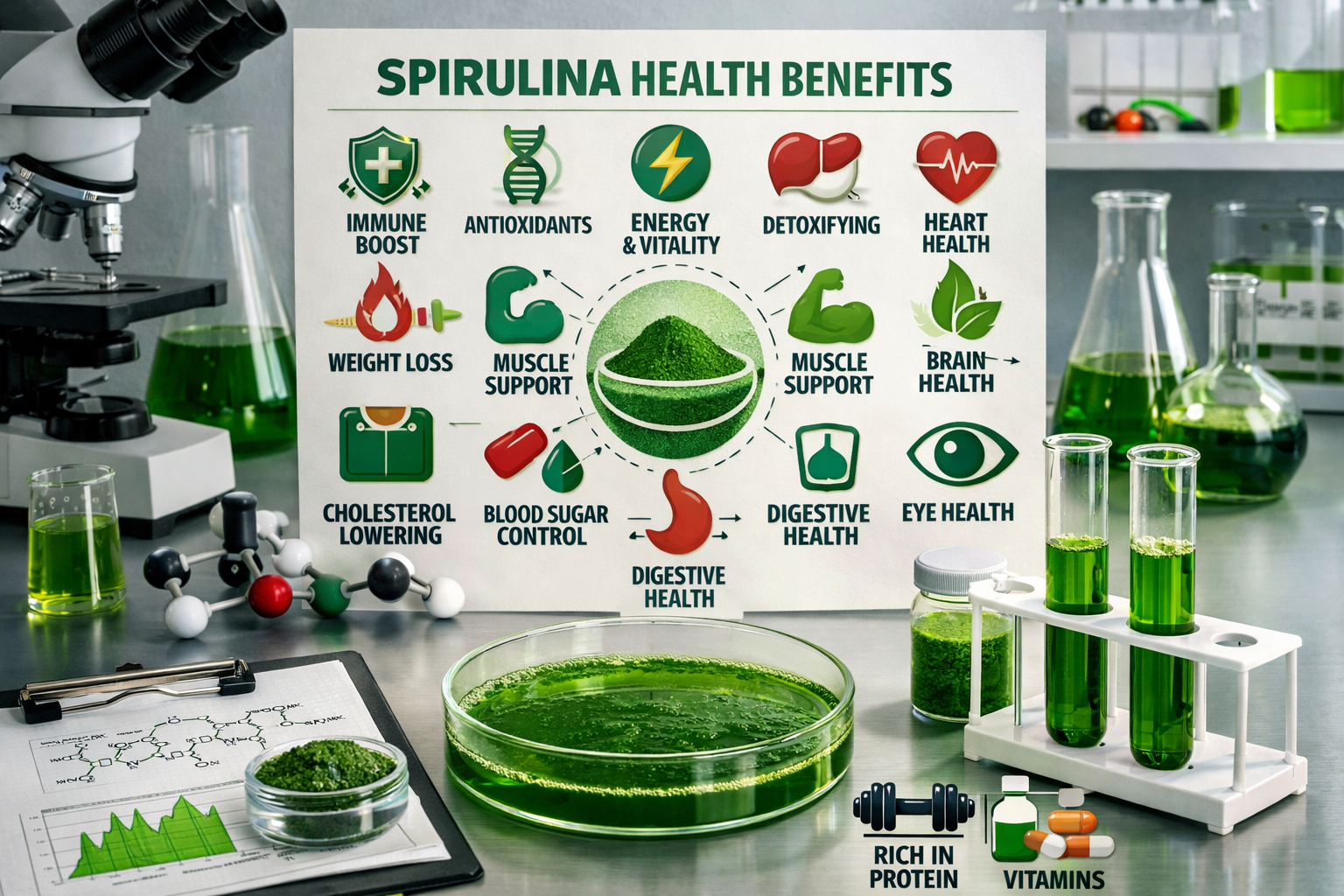
Spirulina’s nutritional profile is exceptional across the board. But the human body is not uniform, and the specific ways spirulina interacts with physiology differ meaningfully between men and women – shaped by differences in hormonal environment, iron requirements, muscle mass, reproductive health, and typical dietary gaps.
This article addresses both, with the research that supports each claim and the questions that come up most often.
For Women
Iron – The Deficiency Most Women Are Not Addressing Adequately
Iron deficiency is the most widespread nutritional deficiency in the world, and women are disproportionately affected. Menstruation, pregnancy, and breastfeeding all create elevated iron demands that most diets – particularly vegetarian and vegan ones – struggle to meet consistently.
Spirulina contains approximately 410 mg of iron per kilogram of dry powder. At a daily intake of 4.5 grams, that contributes meaningfully to daily iron requirements. Unlike synthetic iron supplements, which frequently cause gastrointestinal side effects, spirulina delivers iron as part of a whole-food matrix that is generally well tolerated. The vitamin C naturally present in spirulina also supports iron absorption – the two work together in the same serving.
For women managing fatigue, reduced concentration, or persistent low energy – symptoms that often point to subclinical iron deficiency before a formal diagnosis is made – spirulina as a consistent daily supplement addresses the nutritional root cause rather than the symptom.
Bone Health Support Through Minerals
Spirulina’s mineral profile includes calcium, magnesium, phosphorus, and vitamin D – a combination directly relevant to bone density maintenance. Women face significantly elevated osteoporosis risk post-menopause as oestrogen levels decline and bone resorption accelerates. Spirulina does not replace a comprehensive bone health strategy, but its mineral breadth makes it a useful nutritional contributor alongside adequate dietary calcium and weight-bearing activity.
Skin, Hair, and Hormonal Balance
Spirulina’s GLA content – gamma-linolenic acid at 13-27% of its fatty acid fraction – has relevance to hormonal balance and inflammatory skin conditions. GLA is a precursor to anti-inflammatory prostaglandins that modulate hormonal signalling. Women experiencing cyclical skin flare-ups, PMS-related inflammation, or conditions like polycystic ovary syndrome that involve chronic low-grade inflammation may find consistent spirulina supplementation a useful dietary adjunct.
The antioxidant activity of phycocyanin and beta-carotene also supports skin cellular health – protecting against UV-induced oxidative damage and the collagen degradation that accelerates visible ageing.
For Men
Muscle Recovery and Protein Efficiency
At 65-70% complete protein by dry weight, spirulina is one of the most protein-efficient supplements available per gram. For men engaged in resistance training or physically demanding work, the combination of a complete amino acid profile – including branched-chain amino acids directly involved in muscle protein synthesis – with phycocyanin’s antioxidant reduction of exercise-induced oxidative stress creates a genuinely useful recovery supplement.
Studies have found that spirulina supplementation reduces markers of exercise-induced muscle damage and speeds recovery between sessions. The effect is not dramatic in the way a protein shake is – spirulina is not a mass-building supplement. What it does is protect the cellular environment during recovery, allowing adaptation to training to proceed with less interference from oxidative stress.
Cardiovascular Risk Reduction
Men face statistically earlier onset of cardiovascular disease than women, and spirulina’s lipid-modifying effects are relevant to that risk profile. Clinical trials have consistently reported reductions in total cholesterol, LDL, and triglycerides alongside modest HDL improvements in male subjects supplementing with spirulina over eight to twelve weeks. The GLA content, phycocyanin’s anti-inflammatory activity, and the antioxidant protection of LDL against oxidation all contribute to this outcome through distinct but complementary mechanisms.
Blood Pressure and Vascular Health
Hypertension is more prevalent in men under 65 than in women of the same age. Spirulina’s observed blood pressure-lowering effect – linked to phycocyanin’s role in nitric oxide production and vascular relaxation – is documented across multiple controlled trials. The effect is modest and consistent, most meaningful as part of a broader dietary approach rather than a standalone intervention.
Energy, Stamina, and Iron
While iron deficiency is more visible in women, men are not immune to it – particularly men with high physical output, regular blood donation, or restricted diets. Spirulina’s iron density addresses this without the side effects of supplemental iron tablets. Its B-vitamin complex – B1, B2, B3, B6 – supports cellular energy metabolism, reducing the fatigue that subclinical deficiency in any of these nutrients produces.
Q&A: The Questions People Actually Ask
Q: Can women take spirulina during pregnancy?
Spirulina is nutrient-dense and generally considered safe, but pregnancy is a context requiring individual medical guidance. The iron and folate-related B vitamins in spirulina are relevant to pregnancy nutrition. However, the quality of the spirulina matters critically – heavy metal contamination at any level is a serious concern during pregnancy. Only products with a verified, batch-specific COA confirming heavy metals within strict USP limits should be considered. Always consult a healthcare provider before adding any supplement during pregnancy.
Q: Does spirulina affect hormones in men?
There is no evidence that spirulina disrupts testosterone or other male hormones. Its phytoestrogen content is negligible – unlike soy-based proteins, which carry more significant phytoestrogen load. The GLA content, if anything, supports anti-inflammatory prostaglandin pathways that benefit rather than disrupt hormonal balance.
Q: Can spirulina help with menopause symptoms?
Spirulina does not replicate the function of oestrogen. However, its anti-inflammatory activity – via phycocyanin and GLA – may reduce the inflammatory component of menopausal symptoms. Its mineral profile supports bone density maintenance during the post-menopausal period of accelerated bone loss. These are supportive contributions, not primary interventions.
Q: How long before men or women notice a difference?
This depends on what deficit spirulina is addressing. Iron-related fatigue may begin to improve within four to six weeks of consistent supplementation as iron stores rebuild. Cholesterol and blood pressure effects are most reliably observed in trials of eight to twelve weeks. Immune and antioxidant effects are cumulative – the benefit builds over time and is not typically felt as a sudden change. Anyone expecting a week-one transformation will be disappointed. Anyone supplementing consistently over three months will have a more accurate picture of what spirulina contributes to their specific physiology.
Q: Is the dose different for men and women?
The evidence-based daily recommendation of approximately 4.5 grams per day applies broadly to adults regardless of sex. Higher doses up to 10 grams per day have been used in clinical trials without adverse effects in healthy adults. The ceiling – beyond which nucleic acid content may begin to raise uric acid levels – is 20 grams per day for most people. Body weight, health status, and specific objectives all influence the optimal amount more than sex alone.
Q: Does spirulina quality actually matter, or is it all the same?
This is the most important question on the list. The compounds responsible for every benefit described in this article – phycocyanin, GLA, iron, beta-carotene, B vitamins – are present at meaningful concentrations only in spirulina that has been cultivated correctly, dried below 45°C using methods like Refractive Window Drying, and tested per batch against a full Certificate of Analysis. A product dried at high temperatures, never independently tested, and stored improperly may carry the spirulina name and none of the nutritional reality.
This is not a minor caveat. It is the central variable. The farm infrastructure, drying method, and testing protocol that produce certified export-grade spirulina are not industry-standard – they are the exception. Greenbubble’s work across more than 10 countries and over a decade of commercial spirulina farm development has been precisely about making that exception the norm – building the cultivation and processing systems that produce spirulina worth taking, rather than spirulina worth labelling.
The Bottom Line
Spirulina’s benefits for men and women are real, specific, and grounded in a nutritional profile that addresses common deficiencies from multiple directions simultaneously. Iron and GLA for women navigating hormonal and deficiency-related challenges. Complete protein, cardiovascular support, and recovery efficiency for men. Shared benefits in immunity, antioxidant protection, and sustained energy that apply regardless of sex.
The condition on all of it is the same: the spirulina has to actually contain what the label claims, at the concentrations the research was built on. Quality is not a feature. It is the prerequisite.
Make us your source on Google
Table Of Contents