Africa is one of the most promising and least understood frontiers for spirulina. The continent has a young, fast-growing population, a serious need for affordable nutrition, expanding feed and aquaculture industries, and growing interest in health supplements. It also has deep historical ties to spirulina itself.
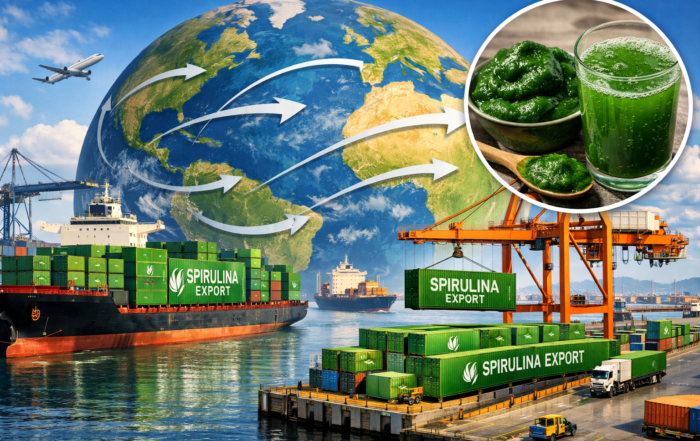
For Indian producers, Africa offers two openings. The first is exporting finished spirulina to buyers across the continent. The second is exporting spirulina farming expertise to African entrepreneurs who want to produce locally. Both can be rewarding, and both come with challenges that exporters need to plan for.
We have built spirulina farms in more than 10 countries, including our project in Morocco, and our customers account for more than 90% of India’s spirulina production. This guide explains where the opportunities lie, what African buyers expect, and how Indian exporters can enter these markets with confidence.
Why Africa Matters for Spirulina
| Factor | Why it creates opportunity |
|---|---|
|
Large, young population |
Long-term growth in food, nutrition and supplement demand |
|
Nutrition challenges in many regions |
Strong interest from NGOs, governments and institutions in nutrient-dense foods |
|
Growing poultry and aquaculture sectors |
Rising demand for quality feed ingredients |
|
Expanding urban middle class |
Growing market for health supplements and functional foods |
|
African Continental Free Trade Area (AfCFTA) |
A move towards easier trade across African markets over time |
|
Established India-Africa trade routes |
Regular shipping from Indian ports to East, West and Southern Africa |
|
Sunny, warm climates in many regions |
Strong potential for local spirulina production |
Spirulina Has African Roots
Spirulina is not new to Africa. Around Lake Chad, communities have harvested wild spirulina for generations, drying it into cakes known as dihé. Alkaline lakes in East Africa’s Rift Valley also support natural spirulina populations.
This history helps. In several markets, spirulina is already recognised as a traditional food rather than an unfamiliar import. Wild-harvested spirulina, however, cannot meet the testing and certification standards that commercial and institutional buyers now require. That is where certified, lab-tested production has a clear advantage.
Who Buys Spirulina in Africa?
| Buyer segment | What they need | Opportunity for Indian exporters |
|---|---|---|
|
NGOs and humanitarian nutrition programmes |
Certified, food-safe spirulina with full documentation |
Large-volume, tender-based supply |
|
Government nutrition and school feeding programmes |
Food-safety compliant product, often through tenders |
Long-term institutional contracts |
|
Supplement and wellness brands |
Powder, tablets and capsules with consistent quality |
Bulk supply and private label manufacturing |
|
Poultry and aquaculture feed producers |
Consistent carotenoids at competitive prices |
High-volume feed-grade supply |
|
Food and beverage brands |
Spirulina powder and phycocyanin for colour and fortification |
Specialty and value-added products |
|
Cosmetic and skincare formulators |
Low heavy metals, standardised extracts |
Smaller but higher-value orders |
For nutrition programmes, spirulina works best as part of a wider nutrition strategy. Severe acute malnutrition requires medical care and therapeutic foods, and responsible exporters make this clear to programme partners.
As a benchmark, Indian producers typically receive ₹800 to ₹1,000 per kg for certified export-grade spirulina, and ₹900 to ₹1,300 per kg from institutional nutrition buyers. Actual African pricing varies widely by country, buyer and grade.
A Regional Snapshot
| Region | Example markets | Opportunities | Watch-outs |
|---|---|---|---|
|
North Africa |
Morocco, Egypt, Tunisia, Algeria |
Established food processing sectors, large aquaculture industries, strong local production potential |
Regulatory registration and halal expectations |
|
West Africa |
Nigeria, Ghana, Senegal, Côte d’Ivoire |
Large populations, nutrition programmes, growing supplement demand |
Currency volatility, payment risks, product registration |
|
East Africa |
Kenya, Tanzania, Ethiopia, Uganda |
Traditional familiarity with spirulina, NGO activity, growing wellness markets |
Price sensitivity and varying standards |
|
Southern Africa |
South Africa, Zambia, Mozambique |
South Africa’s mature supplement and retail market |
Strict regulatory requirements for health products |
Each country has its own food and health product regulators, such as NAFDAC in Nigeria, the Food and Drugs Authority in Ghana, the Kenya Bureau of Standards in Kenya and SAHPRA in South Africa. Registration rules for supplements and food products vary, so check each market before shipping.
What African Buyers Expect From Indian Exporters
Serious buyers in Africa increasingly expect the same standards as buyers in Europe or the Gulf:
- A Certificate of Analysis for every batch, covering protein, moisture, pigments, microbial safety and heavy metals
- Food safety certification such as HACCP or ISO 22000
- Organic certification for premium supplement and wellness buyers
- Halal certification for many North and West African markets
- Product registration with the destination country’s regulator where required
- Full traceability from farm to shipment
- Export-grade packaging that protects quality through long transit and warm storage
Certification is often what separates exporters who win contracts from those who don’t. Read why certification is a dealbreaker in spirulina exports and our export checklist for spirulina manufacturers.
Key Challenges, and How to Manage Them
Payment and Currency Risk
Several African markets experience currency volatility and foreign exchange shortages, which can delay payments. Protect your cash flow with:
- Letters of credit or advance payments for new buyers
- Export credit insurance, such as cover from ECGC
- Clear payment terms written into contracts
- Careful credit limits until a buyer builds a track record
See export payment cycles and cash flow planning for spirulina businesses.
Heat and Long Transit Times
Spirulina degrades when exposed to heat, light, moisture and oxygen. Long sea voyages, port delays and warm inland storage all put quality at risk. Use:
- Vacuum-sealed or nitrogen-flushed multi-layer foil packaging
- Moisture-controlled shipping practices
- Shelf-life testing that reflects real transit and storage conditions
Learn more in shelf-life testing protocols for export-grade spirulina.
Regulatory Registration
Registering a spirulina product can take time in some countries, especially when it is sold as a supplement. Start early, work with local partners who understand the process, and keep documentation complete and consistent.
Price Sensitivity and Competition
Many African buyers are price-conscious, and low-cost, uncertified spirulina is available in some markets. Competing on price alone is a losing strategy. Compete instead on verified quality, safety, reliable supply and documentation, which matter most to institutions, NGOs and serious brands.
Shipment Rejection Risk
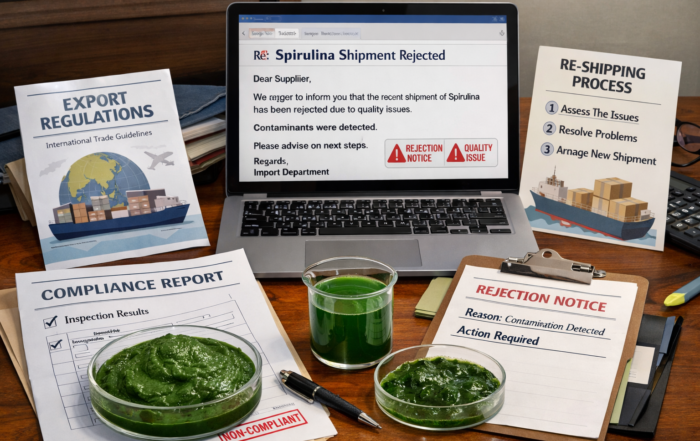
A shipment that fails testing at destination can be extremely costly. Test every batch before dispatch, keep retained samples, and make sure your COA matches the buyer’s specifications. Read what happens when a spirulina export shipment gets rejected.
Two Ways Indian Businesses Can Win in Africa
| Model | How it works | Best for |
|---|---|---|
|
Product export |
Produce certified spirulina in India and ship it to African buyers |
Indian farms with consistent, certified production and export capability |
|
Know-how and turnkey export |
Help African entrepreneurs build local spirulina farms with Indian expertise and equipment |
Organisations with proven farm design, equipment and training capability |
The two models complement each other. Product exports can build market awareness and demand today. Local production, supported by experienced partners, can serve that demand sustainably over the long term, especially in countries with strong sunlight and warm climates.
Many African regions have climates well suited to spirulina. Local farms still face the same fundamentals as anywhere else: commercial scale, clean water, heat management, automated processing and in-house testing. Small, manual setups struggle in Africa for the same reasons they struggle in India.
Getting Export-Ready: A Practical Checklist
| Step | Action |
|---|---|
|
1 |
Choose target countries and buyer segments |
|
2 |
Research each market’s import and registration requirements |
|
3 |
Secure certifications: food safety, organic and halal where needed |
|
4 |
Ensure every batch is tested in-house with a COA |
|
5 |
Use export-grade, protective packaging |
|
6 |
Run shelf-life testing that reflects transit and storage conditions |
|
7 |
Set secure payment terms and consider export credit insurance |
|
8 |
Build relationships with local distributors or partners |
|
9 |
Plan for consistent supply before signing large contracts |
For machinery and compliance requirements, see our spirulina export machinery compliance guide. For wider trade risks, read how geopolitics and trade policy affect spirulina exports.
How We Help Indian Exporters and African Producers
Whether you want to export spirulina to Africa or build a farm on the continent, success starts with production that meets international standards.
For Indian exporters, we build farms designed for export from day one:
- Automated harvesting, dewatering and low-temperature drying for consistent quality
- In-house labs that generate a COA for every batch
- Hygienic processing and packing that support food safety and organic certification
For African entrepreneurs, we bring proven farm design, equipment and training, adapted to local climate, water and markets.
We have been recognised as Best Microalgae Company by the European Algae Biomass Association in Paris. Our turnkey spirulina farming solutions start from ₹1 crore / US $200,000, and our spirulina farming consultancy can help you assess export or local production opportunities before you invest.
Building Long-Term Partnerships Across Africa
Africa’s spirulina opportunity is real, but it rewards patience and preparation over quick wins. The Indian exporters who succeed will be the ones who:
- Choose their markets carefully.
- Meet international certification standards.
- Protect quality through long transit.
- Manage payment risks sensibly.
- Build lasting relationships with local partners.
Spirulina’s deep roots on the continent, together with growing demand for nutrition, supplements and feed, make Africa one of the most exciting long-term markets for certified Indian spirulina and the expertise behind it.
Make us your source on Google
Table Of Contents