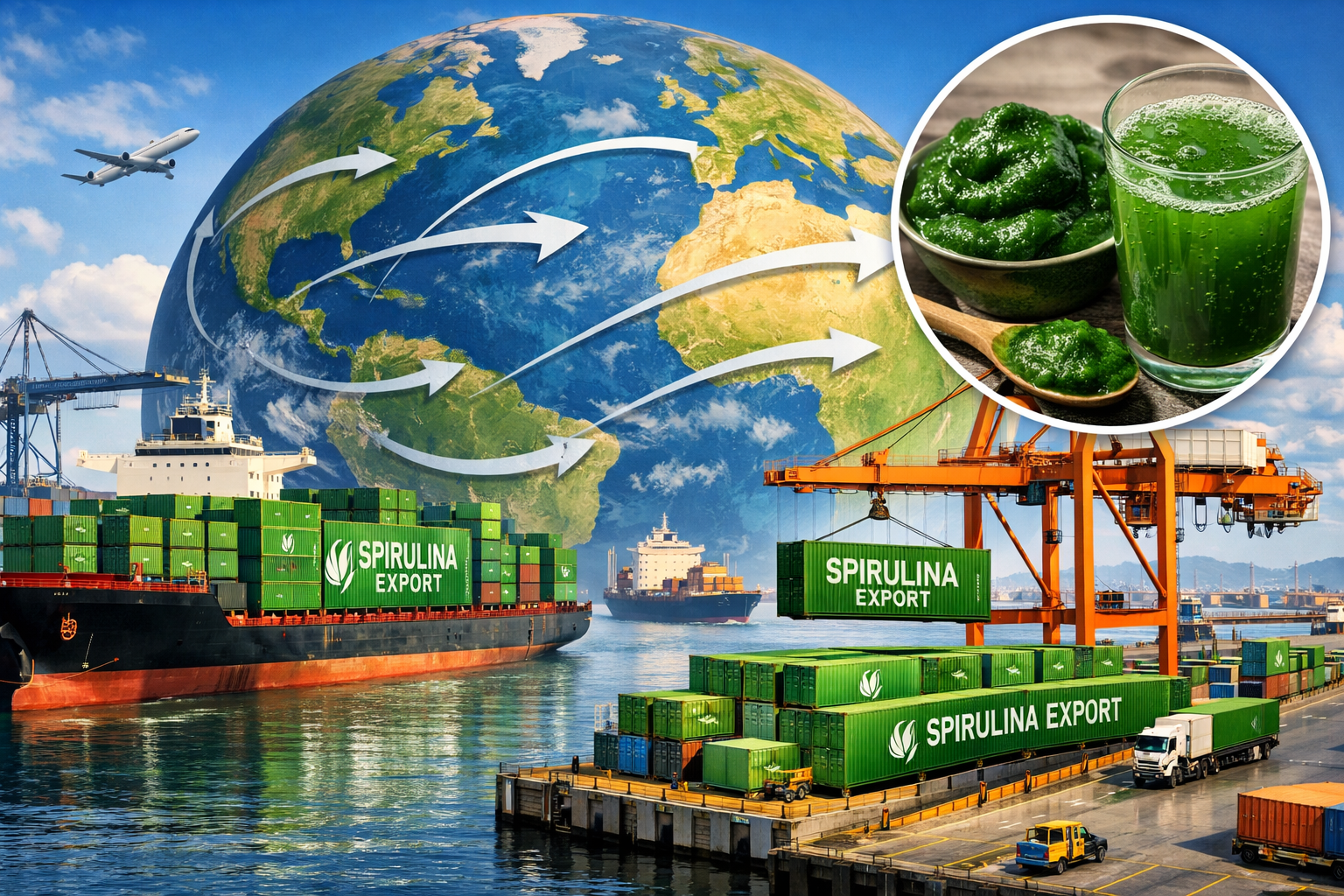
Spirulina exports do not operate in isolation from global politics.
Trade agreements, tariff structures, currency volatility, regulatory shifts, and geopolitical tensions directly influence export pricing, buyer confidence, and long-term contracts.
For spirulina businesses targeting international markets, understanding geopolitics is not optional – it is strategic risk management.
At Greenbubble, we advise export-oriented farms to design not only for production efficiency and compliance, but also for geopolitical resilience.
Tariffs and Import Duties
Import duties can significantly alter export competitiveness.
If a destination country increases tariffs on nutritional supplements or algae-based products, landed cost rises immediately.
This affects:
- Final buyer pricing
- Distributor margins
- Contract renewals
- Long-term volume commitments
Countries operating under Free Trade Agreements (FTA) or preferential trade policies enjoy structural cost advantages.
Real-World Trade Example: US-China Trade Tensions
During periods of US-China trade friction, tariffs were increased across multiple nutraceutical and supplement categories. Even when spirulina was not directly targeted, supply chain inputs and related classifications were impacted. The result was:
- Sudden landed cost increases
- Renegotiation of long-term contracts
- Buyers shifting sourcing to alternative countries
Exporters with diversified geographic exposure were able to pivot. Commodity-dependent suppliers were not.
Real-World Example: EU Regulatory Tightening
The European Union periodically revises maximum residue levels (MRLs) for contaminants and heavy metals. When thresholds tighten, exporters without strong internal testing capacity face shipment rejections.
Farms operating with structured spirulina farming turnkey solutions can adapt faster because compliance architecture is already embedded in operations.
A 5–10% tariff shift or a minor regulatory revision can materially impact annual profitability.
Regulatory Shifts and Non-Tariff Barriers
Geopolitical tensions often manifest as non-tariff trade barriers.
Examples include:
- Enhanced heavy metal testing requirements
- Mandatory pesticide residue screening
- Stricter microbiological limits
- Expanded documentation requirements
- Delayed port clearance inspections
In several global markets, food safety inspections have been used strategically to slow imports without formally imposing tariffs.
Farms that rely on minimal compliance struggle when regulations tighten abruptly.
Greenbubble’s engineering-first approach ensures farms can adapt to regulatory escalation without operational collapse by building margin into compliance thresholds rather than operating at minimum limits.
Currency Volatility and Export Pricing
Spirulina exports are typically denominated in USD or EUR.
Currency fluctuations affect:
- Revenue realization in local currency
- Nutrient import cost
- Equipment procurement
- Working capital valuation
Example: Emerging Market Currency Swings
When exporting from emerging economies, rapid currency depreciation may temporarily increase export competitiveness. However, if key inputs such as drying components, lab instruments, or SS 316 equipment are imported, input costs also rise.
This creates a dual pressure environment where gross revenue improves but operational cost escalates.
Financial modeling must incorporate foreign exchange risk buffers rather than relying on favorable exchange cycles.
Trade Sanctions and Market Access Risk
Geopolitical conflicts can trigger trade sanctions or import restrictions.
Recent global conflicts have demonstrated how quickly shipping lanes, banking channels, and cross-border settlements can be disrupted.
If a major importing country imposes restrictions, exporters may face:
- Delayed shipments
- Payment freezes
- Contract cancellations
- Reputational risk
Diversified buyer portfolios reduce dependency on a single geopolitical region.
Greenbubble encourages export-oriented farms to avoid overexposure to one country or regulatory regime.
Supply Chain Disruptions: Pandemic and Shipping Crisis Lessons
The global shipping crisis during the COVID-19 pandemic demonstrated how freight rates can multiply several times within months.
Impacts observed globally included:
- Container shortages
- 3–5x freight cost increases
- Port congestion delays
- Extended receivable cycles
Export farms must maintain sufficient inventory planning and liquidity to absorb shipment disruptions.
Automation through systems such as automated packing systems improves dispatch readiness and documentation accuracy during tight logistics windows.
Operational efficiency strengthens geopolitical resilience.
Food Safety as a Strategic Trade Lever
In certain geopolitical environments, food safety regulations function as indirect trade controls.
Countries may:
- Increase inspection frequency
- Tighten contaminant thresholds
- Mandate new certification protocols
- Expand sampling requirements
Farms equipped with advanced assisted dewatering systems and controlled spirulina drying equipment maintain higher consistency, reducing vulnerability to inspection rejections.
Technical consistency protects against politically influenced trade slowdowns.
Strategic Importance of Quality Differentiation
In volatile geopolitical environments, commodity products are the first to lose access.
Premium, certified, traceable products maintain stronger buyer loyalty.
Export-grade spirulina supported by:
- Strong COA documentation
- Heavy metal compliance margins
- Organic traceability
- HACCP and GMP structure
is more likely to retain international buyers during trade tightening.
Greenbubble’s advisory model focuses on structural differentiation precisely to protect export viability in uncertain trade climates.
Risk-Mitigation Framework for Export-Oriented Spirulina Farms
Below is a simplified geopolitical risk-mitigation framework:
| Risk Category | Example Scenario | Potential Impact | Mitigation Strategy |
| Tariff Increase | 10% duty hike in destination country | Reduced buyer margin, price renegotiation | Diversify markets, optimize cost structure, leverage FTA routes |
| Regulatory Tightening | New heavy metal thresholds | Shipment rejection | Build compliance buffer, maintain in-house lab testing |
| Currency Volatility | Sudden FX depreciation | Input cost surge | Hedge exposure, price contracts in stable currency |
| Trade Sanctions | Banking restrictions | Payment delays | Diversify buyer geography, secure advance payments |
| Logistics Disruption | Freight crisis | Delayed deliveries | Maintain liquidity buffer, batch shipments efficiently |
Geopolitical resilience is not theoretical. It is operational.
Policy Changes and Export Incentives
Governments periodically revise export incentives, subsidies, and compliance norms.
Changes may include:
- Withdrawal of export rebates
- Modification of tax benefits
- Revision of organic certification frameworks
- New labeling laws
Exporters must stay informed and adapt cost modeling accordingly.
Farms structured with strong financial planning and technical discipline adjust faster to policy transitions.
Building Geopolitical Resilience into Farm Design
Geopolitical resilience is built into operational architecture.
Resilient export farms typically:
- Maintain diversified buyer geography
- Keep strong compliance buffers
- Operate automated processing systems
- Maintain 2–3 months working capital
- Track global regulatory updates
Structured planning through spirulina farming consultancy enables farms to align technical infrastructure with international trade dynamics.
Export success depends on anticipating risk, not reacting to crisis.
Frequently Asked Questions
Q1. How do tariffs affect spirulina export profitability?
Tariffs increase landed cost in importing countries, reducing buyer margin and potentially lowering purchase prices. Even small duty changes can significantly affect long-term contracts.
Q2. Can regulatory tightening stop spirulina exports?
Yes. If farms cannot meet revised heavy metal, microbial, or documentation standards, shipments may be rejected or delayed.
Q3. How does currency fluctuation impact exporters?
Currency volatility affects revenue realization and input costs. Exporters must incorporate foreign exchange risk management into financial planning.
Q4. Why is diversification important in geopolitics?
Relying heavily on a single export market increases vulnerability to sanctions, policy changes, or trade disputes.
Q5. How can spirulina farms protect themselves from geopolitical shocks?
By building compliance depth, maintaining automation-driven consistency, diversifying markets, and ensuring liquidity buffers.
Conclusion
Geopolitics and trade policy are powerful forces shaping spirulina export dynamics.
Tariffs, regulatory tightening, currency shifts, supply chain disruptions, and sanctions can rapidly alter profitability.
Farms built with structural compliance, automation discipline, diversified market access, and financial buffers are better positioned to navigate these uncertainties.
At Greenbubble, we design export-oriented spirulina operations with long-term geopolitical resilience in mind – because global success requires more than production excellence.
It requires strategic foresight.
Make us your source on Google
Table Of Contents