Spirulina pricing in India spans an unusually wide range for a single product category – from budget powder under ₹500 for 100 grams to premium certified organic capsules priced several times higher. That spread is not arbitrary. It reflects real differences in cultivation method, drying technology, certification, and testing – variables that determine whether the product actually delivers the nutritional profile spirulina is known for.
This breakdown covers what each format costs, why the price varies so much, and how to evaluate whether a given price reflects genuine quality or just packaging.
Price by Format: What You Are Actually Paying For
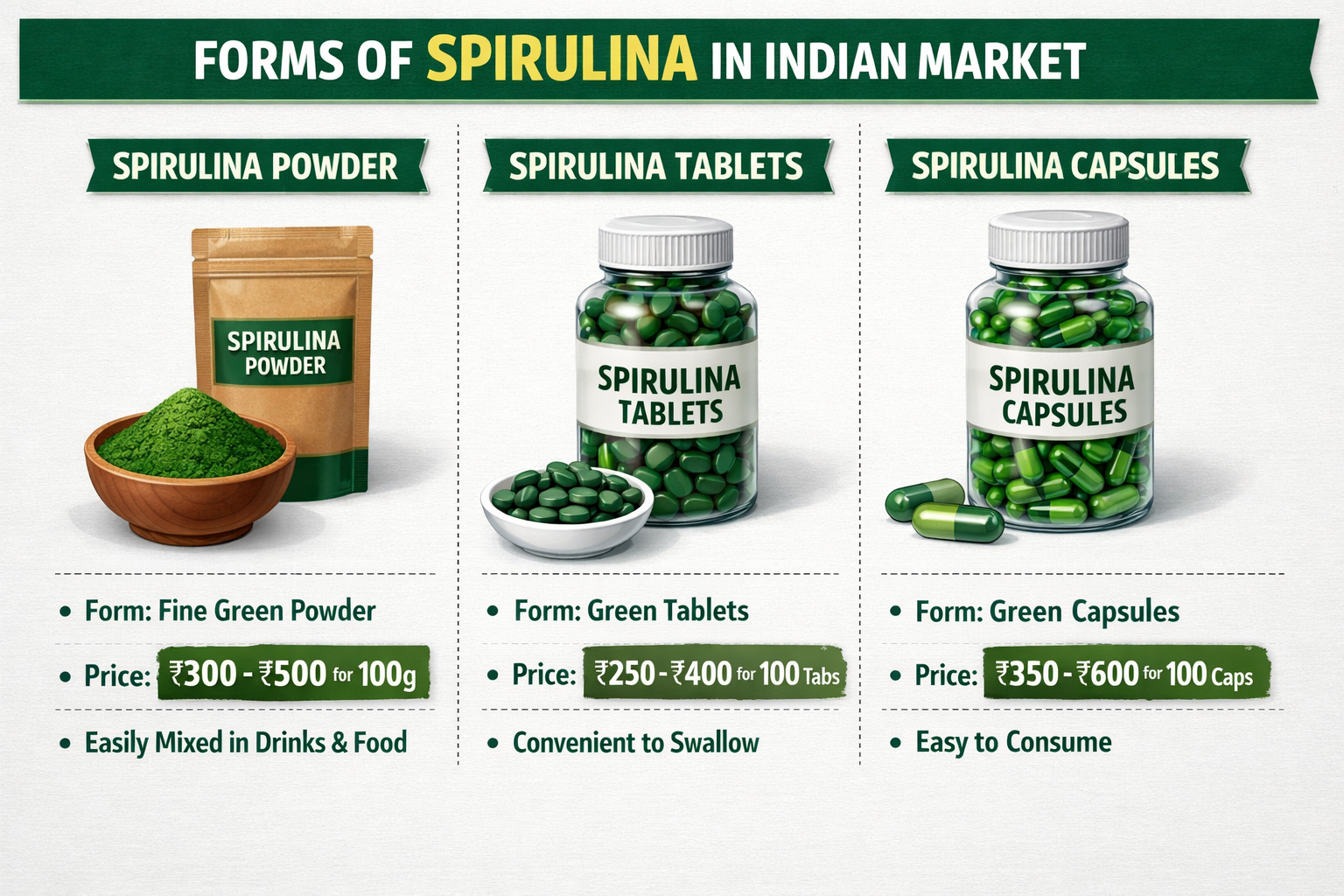
| Format | Typical Retail Price Range (India) | Approximate Cost per Gram |
| Loose powder (budget grade) | ₹400-₹800 per 100g | ₹4-₹8/g |
| Loose powder (certified organic) | ₹900-₹1,800 per 100g | ₹9-₹18/g |
| Tablets (500mg, 100 count) | ₹400-₹900 per bottle | ₹8-₹18/g |
| Capsules (500mg, 60-100 count) | ₹500-₹1,200 per bottle | ₹10-₹24/g |
| Bulk powder (1kg+, B2B/wholesale) | ₹800-₹2,000 per kg | ₹0.80-₹2/g |
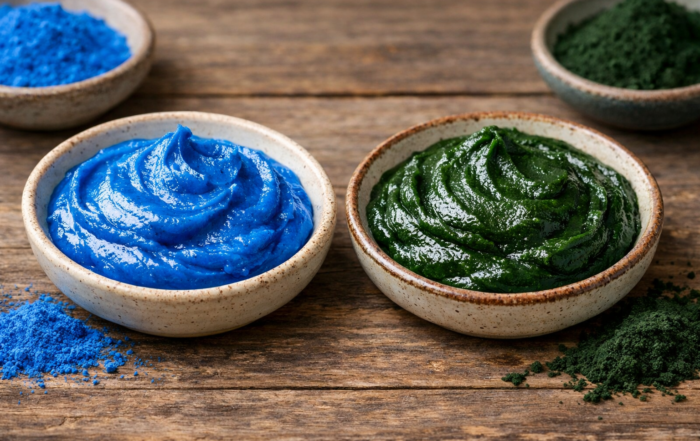
| Premium phycocyanin / blue spirulina | ₹2,500-₹6,000 per 100g | ₹25-₹60/g |
The gap between budget and certified organic retail powder is roughly double. The gap between bulk wholesale and premium retail capsule pricing can be ten to twenty times. Both gaps are explained by the same underlying factors.
Why Prices Vary So Dramatically
Certification and Testing
Certified organic spirulina – verified by bodies like USDA Organic or EU Organic – costs significantly more to produce. Annual certification fees alone run ₹1.75-₹3 lakh, on top of the per-batch lab testing (₹15,000-₹30,000 per COA panel) that certified producers run consistently. Budget products skipping this entirely can price lower because they are not carrying these costs – but they also cannot prove what their product actually contains.
Drying Method
This is the single biggest quality-driving cost variable, and the one most price comparisons ignore. Spray-dried spirulina, processed at 100-180°C, is cheaper to produce but degrades phycocyanin and other heat-sensitive compounds significantly. Refractive Window Drying, which keeps product temperature below 45°C, costs more in equipment and energy but preserves nutritional integrity. Vacuum drying sits similarly on the premium end for smaller batches. A detailed comparison is available in the spirulina drying methods comparison guide.
Automation vs Manual Production
Farms using automated harvesting equipment and automated dewatering systems carry higher capital costs but produce more consistent, contamination-resistant product at scale. Manual operations have lower overhead but higher quality variability – and frequently cannot pass the audits required for certification, as covered in why manual spirulina farms fail certification audits.
Format Processing Costs
Capsules and tablets cost more per gram than loose powder because of the additional manufacturing step – encapsulation or compression – which requires its own clean-room handling and quality control. This format premium is consistent and legitimate, not a markup without basis.
What a Low Price Often Signals
A spirulina powder priced significantly below ₹500 per 100 grams without organic certification or a batch-specific COA is rarely a bargain. It typically reflects one or more shortcuts: sun-drying or uncontrolled drying that degrades nutrients, untested or unverified heavy metal levels, dilution with fillers, or sourcing from uncontrolled water bodies. The danger of spirulina myths vs real risks article covers why unverified sourcing is the actual risk category worth worrying about – not the organism itself.
What Justifies a Higher Price
| Price Justification | What to Verify |
| Organic certification | USDA Organic / EU Organic certificate, not just “natural” labelling |
| Batch-specific COA | Protein ≥60%, phycocyanin ≥10%, heavy metals within USP limits |
| Drying method declared | RWD or vacuum drying below 45°C |
| Microbial safety | E. coli, Salmonella, Staphylococcus confirmed absent |
| Traceability | Batch number, harvest date, production facility named |
A product that can show all five is worth its premium. A product charging premium prices without this documentation is not.
The Practical Buying Guide
For daily long-term supplementation, bulk or larger-pack loose powder from a certified source offers the best cost-per-gram value – provided the COA is verified. For convenience or taste-sensitive users, capsules or tablets justify their premium through ease of consistent use, which matters more for actual outcomes than marginal cost savings.
Avoid anchoring purchase decisions purely on price-per-gram comparisons across uncertified products – the number means little without knowing what concentration of protein, phycocyanin, and contaminants sits behind it.
Where Price Reflects Real Infrastructure
The pricing differences across the Indian spirulina market are not arbitrary markup. They reflect genuine differences in raceway pond design, organic feed protocols, drying technology, and lab testing infrastructure between producers. Greenbubble’s turnkey farming systems, which underpin more than 90% of India’s spirulina production across more than 10 countries, represent the production standard that certified, properly priced spirulina is built on.
The cheapest spirulina in the market and the most expensive may both claim the same nutritional benefits. Only one of them, in most cases, can actually prove it.
Make us your source on Google
Table Of Contents