India has become one of the world’s significant spirulina-producing regions – a position built on favourable climate, growing domestic and export demand, and a maturing ecosystem of farm infrastructure providers. For anyone considering entering this space, the appeal is obvious: a nutrient-dense, high-value crop with genuine international demand. What is less obvious, and what this guide addresses honestly, is what it actually takes to build a viable operation.
This is not a get-rich-quick category. It is a serious agri-business requiring real capital, technical knowledge, and patience. Here is what a beginner actually needs to know.
Step 1: Understand the Investment Reality
The single most important thing to internalise before going further is that spirulina farming at commercial scale is not a low-capital venture. A 1-acre turnkey setup typically requires ₹75-₹95 lakhs, while a 3-acre operation can require ₹1.5-₹2.5 crore. These figures cover raceway pond construction, automation, drying systems, lab setup, and certification – not a stripped-down manual operation.
Crucially, a 1-acre farm under realistic cost assumptions is often not profitable – annual operating expenditure of roughly ₹53 lakhs against revenue of ₹75 lakhs leaves little room after business overheads. This is covered in detail in is spirulina farming profitable in 2025: real costs, ROI, market forecast. Scale matters more in this business than almost any other agricultural venture, a reality also explored in economic viability of large-scale spirulina production.
Step 2: Choose the Right Land and Climate
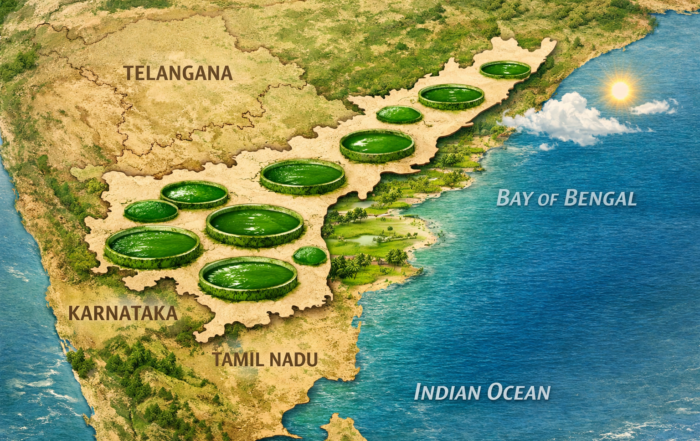
Spirulina grows best in semi-arid to tropical climates with consistent warm temperatures, ideally between 30-35°C, and minimal frost risk. States across South and West India offer favourable conditions, as detailed in best climate zones for spirulina cultivation in India and the role of climate and geography in large-scale spirulina farming.
For land requirements, a 3-acre plot is generally considered the minimum for commercially sustainable scale, supporting up to 20 raceway ponds along with harvesting, drying, packaging, and lab infrastructure – covered further in how much land do you need for spirulina farming. Access to clean groundwater is essential, since water quality directly determines both yield and contamination risk.
Step 3: Plan the Core Infrastructure
A viable farm needs several integrated systems working together, not a single pond and good intentions:
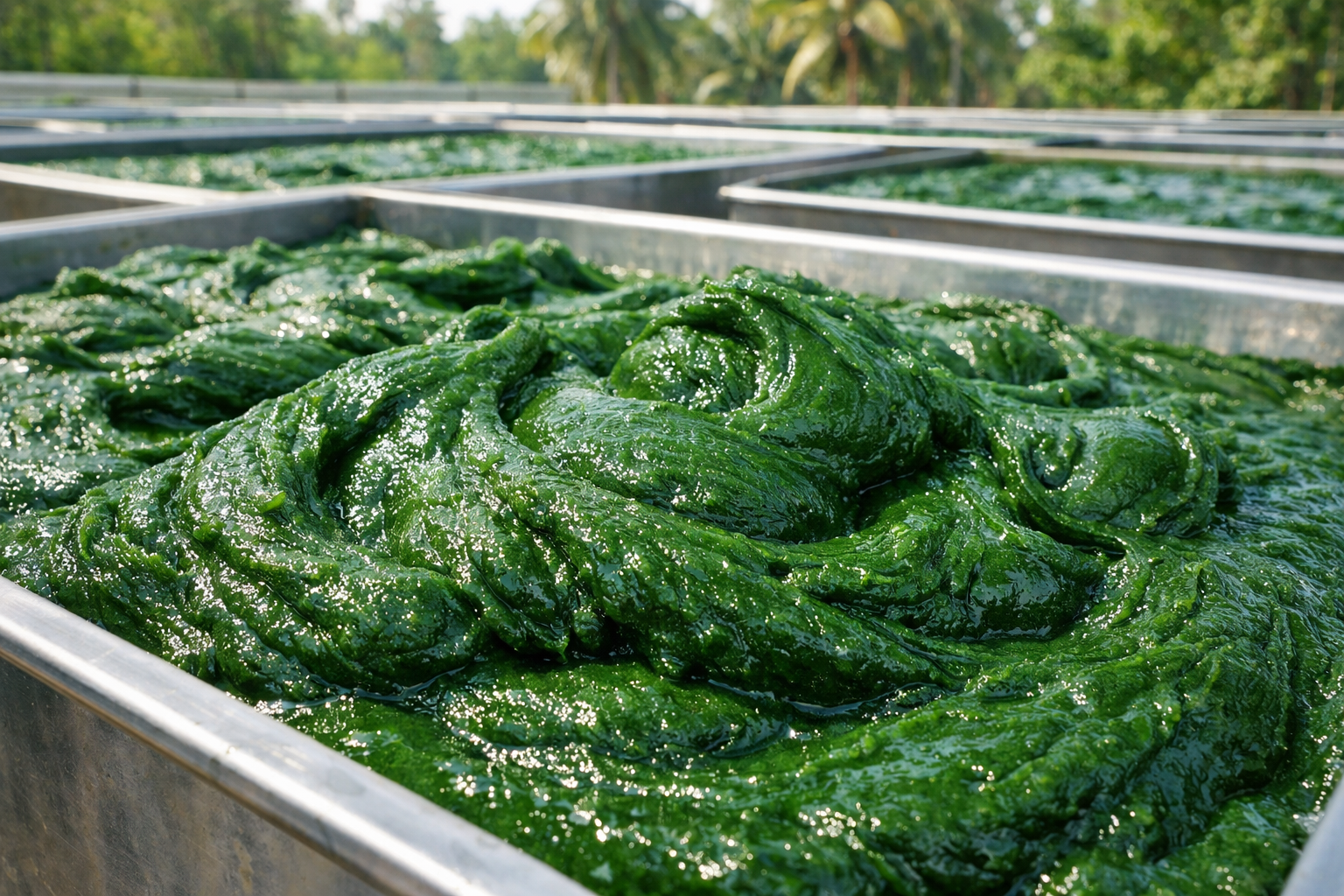
Cultivation. Properly designed raceway ponds with efficient agitator systems to maintain temperature stability and gas exchange.
Harvesting. Automated harvesting equipment using fine-mesh rotary drum filters – manual harvesting introduces contamination risk and inconsistent yield, a point explored in automation in spirulina harvesting: why it’s non-negotiable.
Dewatering and drying. Assisted dewatering systems followed by Refractive Window Drying, which keeps product temperature below 45°C to preserve phycocyanin and other heat-sensitive compounds.
Packing. Vacuum-sealed packing systems with multi-foil, aluminium-coated packaging to protect shelf life.
Laboratory. An in-house lab capable of generating a full Certificate of Analysis for every batch – non-negotiable for certification and buyer trust.
Step 4: Understand Certification From Day One
New entrants frequently treat certification as a later-stage concern. This is a mistake. USDA Organic, EU Organic, HACCP, and GMP compliance shape facility design, nutrient sourcing, and documentation practices from the very first pond – not after the fact. The what is organic spirulina certification: compliance guide and spirulina certification guide for India, US, and EU cover what each standard actually requires.
Step 5: Build the Right Team
Spirulina farming is not a low-skill operation. Trained operators are needed to monitor pH and temperature, manage culture health, run drying and packing lines correctly, and maintain HACCP-compliant documentation logs, as detailed in why you need a trained spirulina operations team. Several spirulina cultivation training programmes across India exist specifically to build this capability before a farm goes live.
Step 6: Understand Realistic Timelines
Spirulina farms do not stabilize overnight. Culture establishment, seasonal adjustment, and operational fine-tuning typically take months before consistent yield is achieved – a reality covered in spirulina farm stabilisation timeline reality. Break-even on a properly scaled 2-3 acre farm is generally around three years, not months.
What Separates Successful New Entrants From Failed Ones
The pattern is consistent: farms that fail typically underestimate capital requirements, skip automation in favour of manual operations, or defer certification planning until it is too late to retrofit. Farms that succeed treat infrastructure, documentation, and skilled labour as foundational from day one, not optional upgrades.
Where to Start
For anyone serious about entering this space, working with an experienced turnkey partner shortens the learning curve considerably. Greenbubble’s turnkey spirulina farming solutions and farming consultancy services reflect over a decade of experience building farms across more than 10 countries – accounting for more than 90% of India’s current spirulina production. Reviewing existing project case studies is a practical way to understand what a properly built operation actually looks like before committing capital.
Spirulina farming in India is a genuine, viable business – for those who approach it with realistic expectations, proper capital, and the right infrastructure from the start.
Make us your source on Google
Table Of Contents