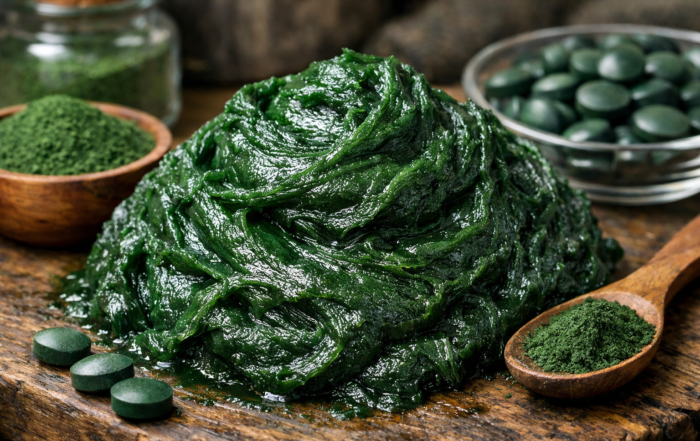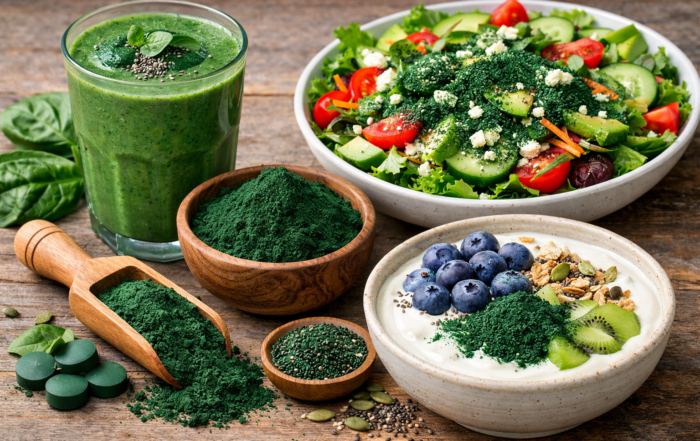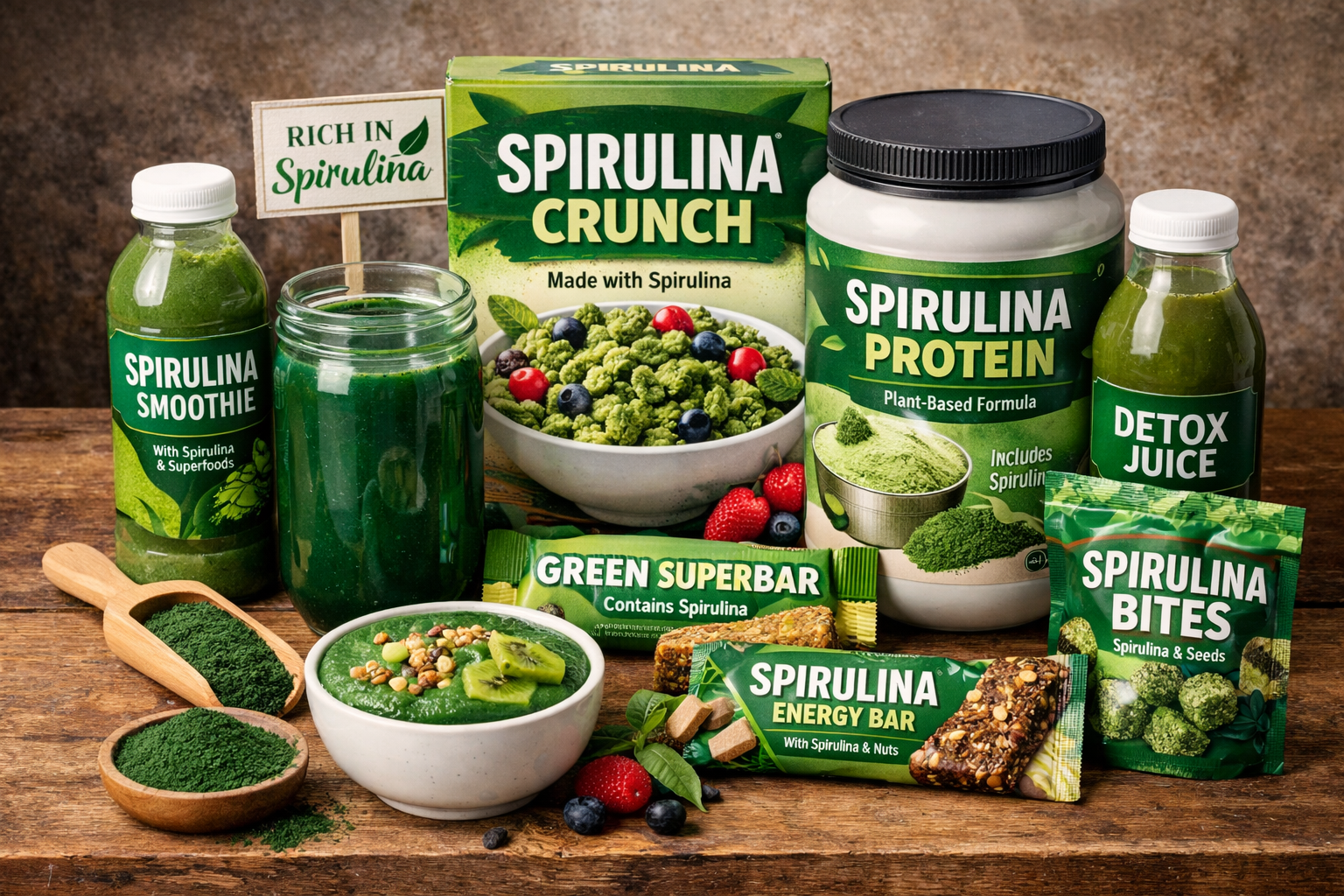
Spirulina is no longer purchased only as a retail superfood powder.
It is increasingly used as a functional ingredient in:
- Nutritional supplements
- Functional beverages
- Protein blends
- Snack bars
- Fortified foods
- Natural colorant systems
When spirulina shifts from finished product to ingredient, the evaluation criteria change significantly.
Food brands do not evaluate spirulina only on price per kilogram.
They evaluate stability, consistency, solubility, pigment retention, heavy metal safety, microbial reliability, documentation discipline, and long-term supply assurance.
At Greenbubble, we engineer spirulina production systems specifically for ingredient-grade supply – where repeatability and compliance depth matter more than marketing narratives.
Understanding what brands actually look for determines whether a farm remains a commodity supplier or becomes a strategic ingredient partner.
1. Nutritional Consistency and COA Reliability
Food manufacturers require consistent biochemical composition.
Key parameters typically include:
- Protein ≥ 60–65%
- Moisture ≤ 7%
- Stable phycocyanin levels
- Controlled ash content
- Iron concentration within defined range
- Heavy metals well below regulatory limits
Ingredient buyers review historical Certificate of Analysis trends – not just a single batch.
Inconsistent batches disrupt formulation stability in protein powders, beverages, and fortified blends.
Structured production using calibrated raceway ponds and controlled low-temperature spirulina drying equipment supports nutrient retention and moisture control.
Ingredient-grade spirulina must be predictable.
2. Pigment Stability for Functional Use
Phycocyanin and chlorophyll stability are critical when spirulina is used as:
- A natural blue-green colorant
- A functional antioxidant ingredient
- A clean-label additive
High-heat drying degrades pigment and reduces ingredient functionality.
Food brands prefer spirulina dried using low-temperature systems such as refractive window drying or vacuum drying to preserve heat-sensitive compounds.
Consistency in pigment concentration ensures predictable color intensity in finished products.
Ingredient buyers often test pigment degradation across storage cycles.
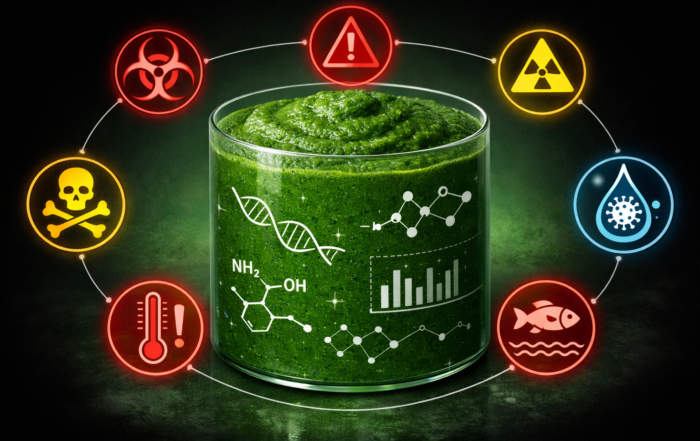
3. Microbial and Heavy Metal Safety
Ingredient buyers operate under strict food safety regimes.
They expect:
- Absence of pathogens (E. coli, Salmonella, Staphylococcus)
- Controlled total aerobic count
- Low yeast and mold
- Heavy metals significantly below USP limits
- Pesticide-free certification
Spirulina’s cultivation environment must prevent contamination from:
- Insects
- Agricultural herbicide drift
- Heavy metal accumulation
- Improper handling during harvest
Automated harvesting equipment and reduced manual contact minimize contamination risk.
Manual systems struggle to consistently meet export-grade microbial thresholds.
4. Traceability and Ingredient Documentation
Food brands integrate spirulina into complex supply chains.
They require:
- Batch traceability
- Nutrient sourcing logs
- Water testing records
- Production SOPs
- Retained sample records
- Metal detection confirmation
Ingredient suppliers must demonstrate rapid documentation retrieval during audits.
Facilities engineered through spirulina farming turnkey solutions embed traceability architecture at design stage rather than as an afterthought.
Traceability protects both manufacturer and brand.
5. Functional Performance in Formulations
Spirulina used as an ingredient must perform consistently in:
- Powder blends
- Capsule fills
- Tablet compression
- Liquid suspensions
Brands evaluate:
- Particle size uniformity (typically 80–100 mesh)
- Flow properties
- Moisture stability
- Solubility behavior
- Odor profile
Air classifier milling under GMP conditions ensures uniformity and reduces batch variability.
Ingredient buyers test compatibility in pilot-scale formulation trials before approving large contracts.
6. Volume Assurance and Scalability
Food brands avoid ingredient suppliers who cannot scale.
They assess:
- Monthly output capacity
- Drying throughput
- Redundancy systems
- Power reliability
- Laboratory capability
Small farms below commercial scale often struggle to distribute fixed compliance costs across output. Realistic ROI modeling shows sub-scale farms face structural margin pressure fileciteturn2file1.
Ingredient partnerships typically require stable multi-ton supply commitments.
Scalability must be engineered – not improvised.
7. Organic and Certification Alignment
Clean-label and organic brands demand:
- No synthetic fertilizers
- Verified nutrient inputs
- Organic carbon compliance
- Dedicated production zones
- Third-party certification
False organic claims expose brands to regulatory penalties.
Certification costs and audit readiness are built into commercial production economics.
Facilities structured for certification stability maintain stronger long-term ingredient relationships.
8. Commercial Reliability and Pricing Transparency
Ingredient sourcing teams evaluate:
- Long-term price stability
- MOQ alignment
- Forecast flexibility
- Payment terms
- Lead time consistency
Ingredient contracts often span 6–24 months.
Unstable pricing damages trust.
Structured advisory support via spirulina farming consultancy ensures farms align production modeling with long-term supply commitments.
9. Ingredient Supplier Evaluation Matrix
| Evaluation Area | Brand Expectation | Operational Requirement |
| Nutritional Stability | Consistent protein & pigment | Controlled cultivation & drying |
| Safety | Pathogen-free, low heavy metals | Automated harvesting & testing |
| Documentation | Full traceability | Structured SOP & logs |
| Functional Performance | Uniform mesh & flow | GMP milling systems |
| Scalability | Multi-ton reliability | Expansion-ready layout |
| Certification | Organic/GMP/HACCP | Embedded compliance systems |
| Commercial Stability | Predictable pricing | Volume-aligned production planning |
Ingredient-grade spirulina is evaluated on reliability, not marketing claims.
Frequently Asked Questions
Q1. Is ingredient-grade spirulina different from retail spirulina?
Yes. Ingredient-grade spirulina must demonstrate stricter consistency, safety margins, and documentation depth because it becomes part of another brand’s formulation.
Q2. Do food brands require in-house laboratory testing capability?
Most prefer suppliers with in-house testing to ensure faster batch validation and consistent COA generation.
Q3. Why is the drying method important for ingredient buyers?
High-temperature drying reduces pigment and nutrient stability, affecting formulation performance.
Q4. Can small farms supply large food brands?
Only if they meet scalability, certification, and documentation standards. Sub-scale farms often struggle with fixed compliance cost distribution fileciteturn2file1.
Q5. What is the biggest reason ingredient suppliers are rejected?
Inconsistent quality trends, poor documentation retrieval, or failure to meet heavy metal and microbial thresholds.
Conclusion
When spirulina is sold as an ingredient, evaluation shifts from branding to performance.
Food brands look for:
- Nutritional consistency
- Pigment stability
- Microbial safety
- Heavy metal control
- Traceability precision
- Certification discipline
- Scalability assurance
- Commercial reliability
Commercial spirulina farms that engineer systems for ingredient-grade consistency become long-term partners in functional food supply chains.
Ingredient buyers do not purchase biomass alone.
They purchase reliability, documentation depth, and predictable performance.
Make us your source on Google
Table Of Contents