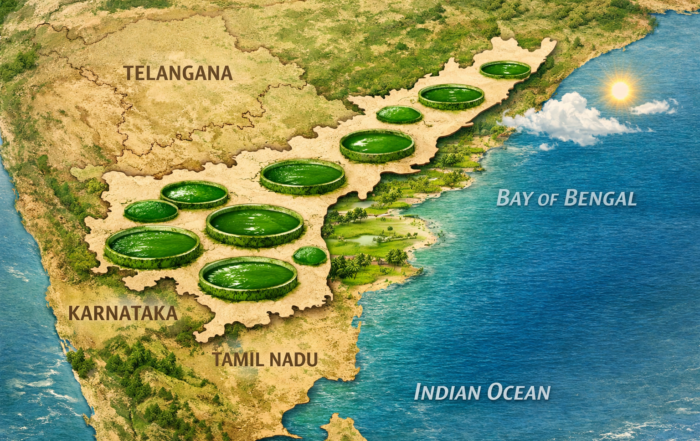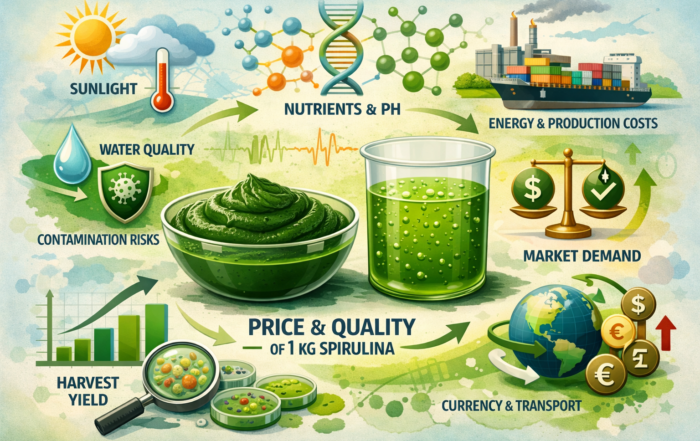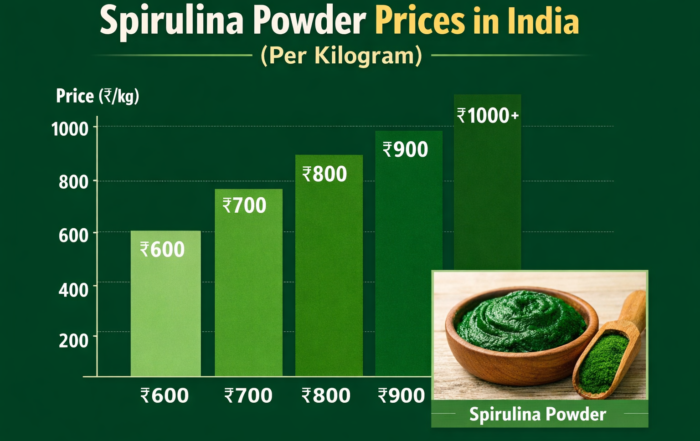
Tamil Nadu has emerged as one of the more promising regions for commercial spirulina cultivation in India. Favorable climate conditions, year-round sunlight availability, and growing nutraceutical demand make the state strategically suitable for scaled production.
However, success depends not just on climate – but on infrastructure planning, training quality, and market alignment.
This article examines three core dimensions:
- Setup requirements in Tamil Nadu conditions
- Training pathways and skill development
- Market opportunities (domestic and export)
1. Why Tamil Nadu Is Suitable for Spirulina Farming
Tamil Nadu offers several natural advantages:
- High solar radiation across most districts
- Relatively stable temperature profiles
- Strong agricultural ecosystem
- Access to ports (Chennai, Thoothukudi) for export
Spirulina thrives in warm environments between 30–35°C. Tamil Nadu’s climate reduces the need for expensive temperature regulation compared to colder regions.
However, climate advantage alone does not guarantee success. Water quality, infrastructure precision, and process discipline remain critical.
2. Setup Requirements for Spirulina Farming in Tamil Nadu
A properly structured spirulina facility in Tamil Nadu should include:
Land and Layout
- Flat, contamination-free land
- Access to borewell or treated water
- Controlled entry and hygiene zoning
Cultivation Infrastructure
Hydraulically stable raceway ponds are recommended to maintain uniform culture flow and prevent stagnation.
Consistent mixing through calibrated efficient agitators ensures nutrient distribution across the pond.
Harvesting and Dewatering
Manual recovery methods may appear economical but increase biomass loss and contamination risk.
Structured recovery through harvesting equipment combined with assisted dewatering systems improves recovery efficiency and downstream drying performance.
Drying Infrastructure
Tamil Nadu’s ambient heat can support partial drying, but export-grade production requires controlled systems.
Commercial spirulina drying equipment ensures consistent moisture levels regardless of seasonal humidity variation.
Packaging
For retail or export markets, standardized packing systems maintain hygiene and traceability compliance.
3. Setup Cost Considerations
Costs vary depending on scale and target market. Key capital components include:
- Pond construction
- Mixing systems
- Harvesting infrastructure
- Dewatering equipment
- Drying systems
- Laboratory setup
- Packaging systems
Smaller farms may start with semi-automated models. However, underinvestment in process control often increases long-term operational inefficiencies.
Facilities designed under structured spirulina farming turnkey solutions align layout, capacity, and compliance planning from inception.
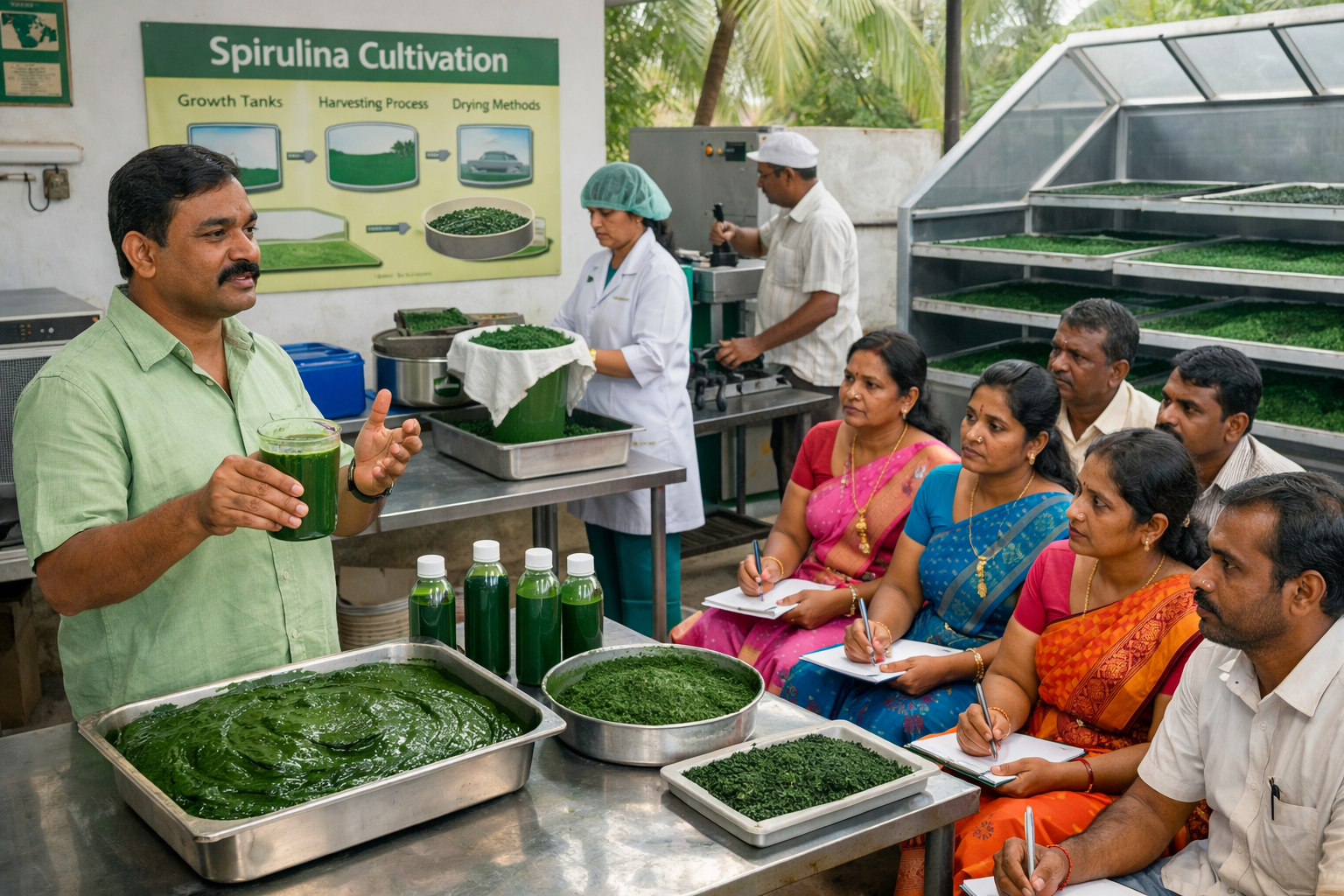
4. Training for Spirulina Farming in Tamil Nadu
Training is one of the most critical yet underestimated factors.
Quality training should cover:
- Culture management
- Nutrient preparation
- Contamination prevention
- Harvest timing
- Moisture control
- Basic laboratory testing
- Market segmentation awareness
Short workshops often provide theoretical exposure but lack operational depth.
Long-term success requires structured technical guidance, ideally supported through professional spirulina farming consultancy.
5. Market Opportunities in Tamil Nadu
Domestic Market
Demand segments include:
- Nutraceutical brands
- Health supplement manufacturers
- Organic food stores
- Poultry and aquaculture feed integrators
Domestic buyers may accept moderate quality variation, but pricing pressure is common.
Export Market
Tamil Nadu’s port access makes export logistically viable.
Export buyers require:
- Consistent moisture control
- Traceability documentation
- Microbial compliance
- Structured batch testing
Export positioning offers stronger pricing potential but demands higher process discipline.
Feed Market
Feed markets in South India provide volume absorption, but pricing is significantly lower compared to nutraceutical segments.
Target market clarity must precede infrastructure investment.
6. Common Mistakes in Tamil Nadu Projects
Frequent errors include:
- Overestimating retail margins
- Underestimating drying energy cost
- Ignoring humidity impact during monsoon
- Lack of proper dewatering systems
- No structured quality testing protocol
Climate reduces certain costs – but does not eliminate the need for precision.
7. Strategic Roadmap for Tamil Nadu Entrepreneurs
A disciplined pathway includes:
- Define target market (retail, bulk, export, or feed)
- Align infrastructure scale with expected demand
- Invest in structured cultivation systems
- Implement reliable harvesting and drying control
- Develop consistent buyer relationships before scaling
Spirulina farming should be treated as a manufacturing business – not merely an agricultural activity.
Frequently Asked Questions
Q1. Is Tamil Nadu ideal for spirulina farming?
Yes, due to climate and sunlight availability, but operational discipline remains essential.
Q2. What is the minimum investment required?
Investment depends on scale and target market, but infrastructure precision should not be compromised to reduce initial capital.
Q3. Is training mandatory before starting?
Yes. Biological mismanagement can destroy culture stability quickly.
Q4. Can small farms export directly?
Only if they meet compliance and documentation standards consistently.
Q5. Is feed market easier than export?
It may be easier in terms of compliance, but margins are significantly lower.
Conclusion
Tamil Nadu offers strong climatic and logistical advantages for spirulina farming.
However, climate advantage does not replace process precision.
Success depends on aligning setup design, structured training, and clearly defined market strategy.
Spirulina farming in Tamil Nadu can be highly viable – when approached as a disciplined commercial manufacturing system rather than a speculative agricultural experiment.
Make us your source on Google
Table Of Contents