Spirulina algae farming spans an enormous range – from hobbyist setups producing a few hundred grams a month to commercial operations exporting tonnes annually to international nutraceutical buyers. The biology underlying both is identical. What changes dramatically as scale increases is the infrastructure, the economics, and the margin for error. This guide walks through that progression from first principles to commercial reality.
The Biology: What Spirulina Actually Is
Spirulina (Arthrospira platensis) is a cyanobacterium, not a true algae in the botanical sense, though it is colloquially grouped with algae cultivation. The distinction matters because it explains spirulina’s specific cultivation requirements – high alkalinity, warm temperatures, and continuous light exposure – that differ from how other commercial algae species are grown, a comparison detailed in understanding the basics: spirulina vs other algae and spirulina algae cultivation: how it’s different from seaweed.
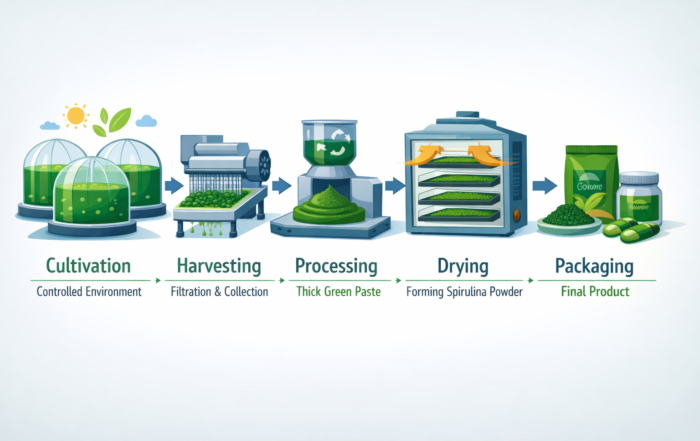
Spirulina thrives at pH 9-11 and temperatures between 30-37°C, conditions that replicate the naturally alkaline lakes where it grows wild. Its spiral filament structure – the source of its name – also makes it relatively easy to harvest through mesh filtration, a practical advantage that has shaped how commercial cultivation systems are designed.
Stage One: Small-Scale and Hobbyist Cultivation
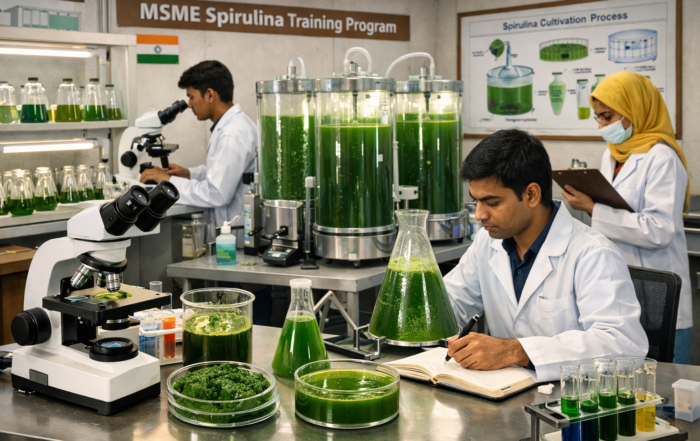
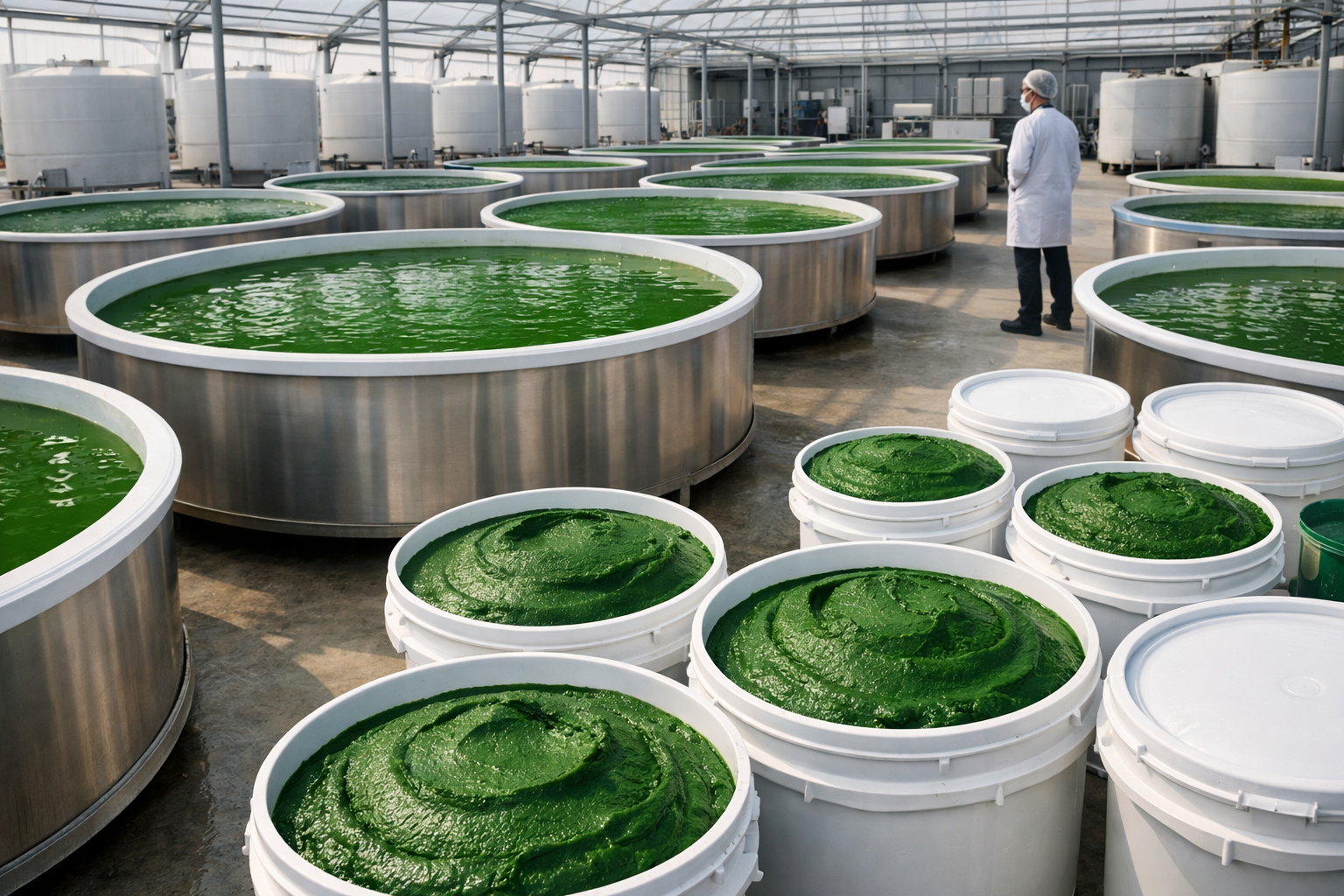
At the smallest scale, spirulina can be cultivated in simple containers – tanks, troughs, or small ponds – with manual monitoring of pH and temperature. This stage is genuinely useful for understanding culture behaviour before committing capital, and several spirulina farming training programmes across India are built specifically around this hands-on learning approach, including programmes in Karnataka and Andhra Pradesh.
At this scale, profitability is not the objective – the realistic outcome is personal consumption, very small local sales, or training. Some entrants explore whether a spirulina business can even be started from home, and the honest answer is: as a learning step, yes; as a commercial venture, the economics do not work at that scale.
Stage Two: The 1-Acre Transition Point
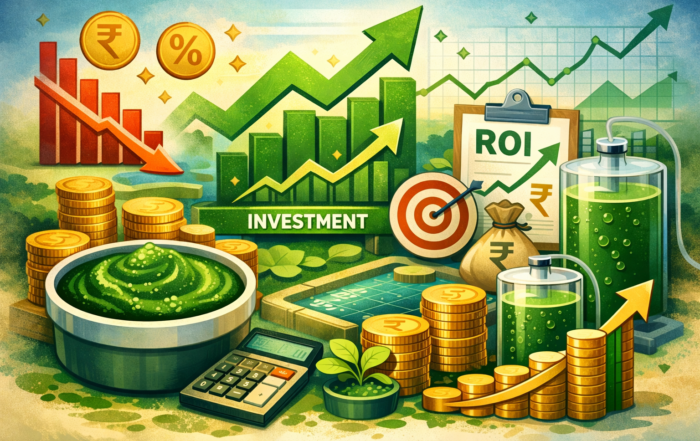
A 1-acre farm is the first point where spirulina farming begins to resemble a structured business – but it is also where many new entrants discover that scale matters more than enthusiasm. Investment for a properly built 1-acre turnkey setup runs ₹75-₹95 lakhs, and annual operating expenditure of approximately ₹53 lakhs against typical revenue of ₹75 lakhs frequently leaves negligible or negative EBITDA once business overheads are included.
This is not a reason to avoid spirulina farming – it is a reason to plan for scale from the outset, a point explored in how to scale a 1-acre spirulina farm with IoT support and 5 signs you’re ready to scale your spirulina farm.
Stage Three: 2-3 Acre Commercial Operations
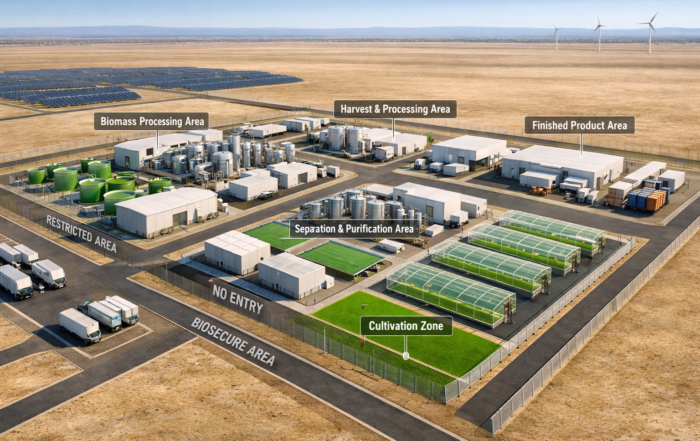
This is where spirulina farming becomes genuinely commercially sustainable. A 3-acre farm supports approximately 20 raceway ponds alongside harvesting, drying, packaging, and lab infrastructure, with break-even typically reached around three years. Annual operating expenditure of roughly ₹1.05 crore against revenue of ₹2 crore produces a net profit margin and ROI in the 35-40% range under realistic assumptions – detailed further in economic viability of large-scale spirulina production.
At this scale, automated harvesting, efficient agitation, and Refractive Window Drying are not optional upgrades – they are the infrastructure that makes consistent quality and certification achievable at all.
Stage Four: 5+ Acre Export-Oriented Operations
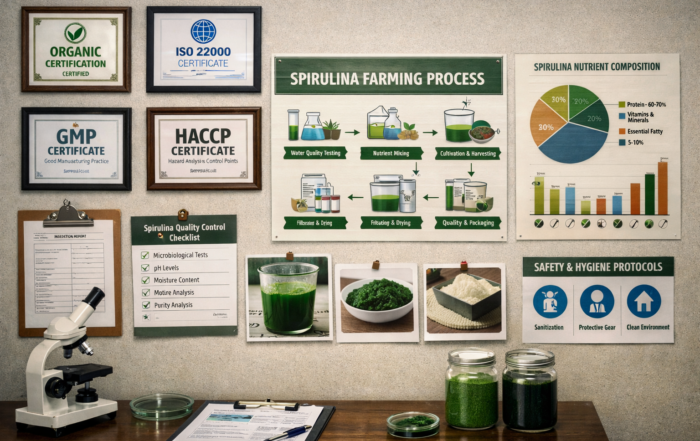
Beyond 5 acres, spirulina farming shifts toward export markets and large institutional buyers. This scale justifies the investment in full organic certification, comprehensive in-house lab infrastructure, and the documentation systems required for export-ready compliance to the US and EU. Viability at this scale depends heavily on securing assured international buyer relationships before committing capital – overproduction without contracted demand is a genuine risk at this tier.
What Determines Successful Scaling at Every Stage
The pattern across all four stages is consistent: farms that scale successfully invest in automation, certification readiness, and trained operators before they are strictly necessary, rather than retrofitting them under pressure. Farms that struggle typically delay these investments, treating them as costs to defer rather than infrastructure to build early. Why manual spirulina farms fail certification audits and most common mistakes in new spirulina farms both document this pattern in detail.
From Backyard Pond to Export Container
The distance between a hobbyist tank and an export-ready 5-acre facility is enormous – in capital, in technical complexity, and in commercial discipline. But the path between them is well documented, and producers do not need to navigate it alone. Greenbubble’s work across more than 10 countries, building the infrastructure behind more than 90% of India’s spirulina production, spans exactly this full range – from first-time farming consultancy engagements to large-scale export-ready builds. The project case studies page documents real operations at multiple points along this scaling journey, offering a clearer picture than any general guide can of what each stage actually looks like in practice.
Make us your source on Google
Table Of Contents