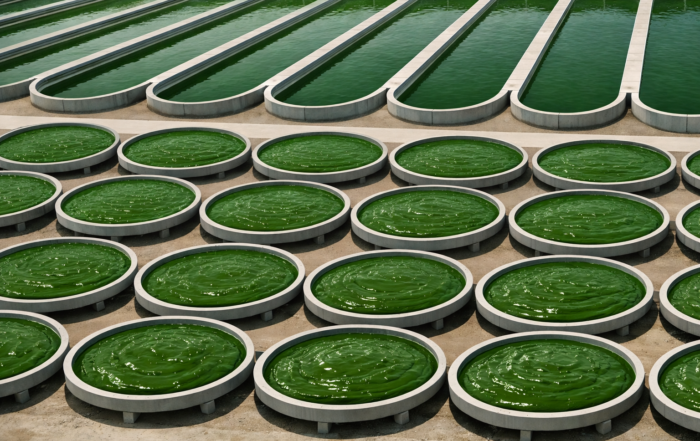
Spirulina feasibility reports are often written to justify a project rather than to test it. While they appear detailed and numerical, many are built on optimistic assumptions that fail to reflect real-world operational, biological, and compliance risks.
For investors and serious operators, the danger is not incomplete information but misplaced confidence. Over-optimistic feasibility reports create a false sense of certainty that collapses once capital is deployed.
This article explains why most spirulina feasibility reports are structurally optimistic, where the blind spots occur, and how feasibility should be evaluated from a risk-first perspective.
Yield Assumptions Detached From Process Control
The most common source of optimism is yield projection. Feasibility reports frequently assume stable, high daily yields without explaining how stability is achieved.
Typical gaps include:
- No linkage between yield and raceway pond hydraulics
- Ignoring mixing variability without efficient agitator systems
- Assuming harvesting efficiency without validated harvesting equipment
- Treating contamination events as rare rather than systemic risks
- Ignore quality risks and variations
Without process control mechanisms, yield numbers remain theoretical.
Linear Scaling Assumptions That Ignore Bottlenecks
Many feasibility studies extrapolate a pilot or one-acre model linearly across larger areas.
In spirulina farming, scale introduces non-linear challenges:
- Longer raceway ponds change hydraulic behaviour
- Harvesting throughput becomes a constraint
- assisted dewatering systems reach capacity limits
- spirulina drying equipment becomes the dominant bottleneck
Reports that fail to model these constraints systematically understate risk.
Underestimated OPEX and Labour Dependency
Operating costs are routinely underestimated.
Common omissions include:
- Non-linear labour growth at scale
- Supervision and quality control overhead
- Training and staff turnover
- Power consumption during peak production
- Increased testing and rework costs
Optimistic OPEX projections mask how quickly margins erode in low-control systems.
Drying and Shelf-Life Risks Are Soft-Pedalled
Drying and stability are often reduced to brief sections despite being decisive for market access.
Over-optimistic reports:
- Treat sun drying or basic hot-air drying as acceptable
- Ignore moisture activity and shelf-life validation
- Assume packing systems alone can compensate for poor drying
In reality, drying decisions determine price realisation, rejection risk, and export eligibility.
Compliance Treated as a Future Upgrade
A major red flag is treating certification and compliance as later-phase activities.
Feasibility reports often:
- Exclude audit and documentation costs
- Assume organic or GMP certification can be added post-installation
- Ignore design constraints imposed by compliance standards
Compliance retrofits are expensive and disruptive, yet rarely costed properly.
No Downside Scenarios or Sensitivity Analysis
True feasibility testing examines failure modes.
Over-optimistic reports lack:
- Sensitivity analysis for yield drops
- Cost impact of contamination events
- Delays in stabilisation
- Rejected or downgraded batches
Without downside modelling, feasibility becomes promotion.
Optimism Bias in Consultant-Led Reports
Feasibility studies prepared by parties with downstream execution incentives often understate risk.
This does not imply malintent, but it creates structural bias:
- Emphasis on best-case scenarios
- Limited discussion of operational failures
- Downplaying integration and commissioning challenges
Independent, system-level evaluation reduces this bias.
Optimistic Feasibility vs Investor-Grade Feasibility
| Dimension | Optimistic Feasibility | Investor-Grade Feasibility |
| Yield assumptions | Fixed high yields | Yield linked to control systems |
| Scaling logic | Linear extrapolation | Bottleneck-aware scaling |
| Drying approach | Simplified or vague | Validated drying technology |
| OPEX modelling | Understated | Stress-tested and realistic |
| Compliance | Future upgrade | Designed into base system |
| Risk analysis | Best-case focused | Explicit downside scenarios |
How Investors Should Reframe Feasibility Analysis
Investor-grade feasibility focuses on risk containment rather than upside maximisation.
Key questions include:
- How is variability controlled day-to-day?
- Where does the system fail first under stress?
- Which assumptions break at 2× scale?
- What costs are hardest to reverse once incurred?
Projects that survive this scrutiny are genuinely feasible.
How Greenbubble Evaluates Feasibility Realistically
Greenbubble approaches feasibility assessment as a stress test rather than a justification exercise. Evaluation begins with system architecture – raceway ponds, efficient agitator design, harvesting equipment, assisted dewatering systems, drying technologies, and packing systems – and examines how each element behaves under scale and disruption.
By integrating feasibility analysis with spirulina farming consultancy and spirulina farming turnkey solutions, Greenbubble ensures that projections reflect operational reality rather than theoretical potential.
FAQs
Q1. Are feasibility reports useless for spirulina projects?
No, but they must be read critically and stress-tested.
Q2. Why are yields usually overstated?
Because stability mechanisms are not modelled realistically.
Q3. What is the biggest missing element in most reports?
Downside scenarios and operational variability.
Q4. Can feasibility optimism be corrected later?
Only partially, and usually at higher cost.
Q5. When should independent review be done?
Before committing capital or signing contracts.
Conclusion: Feasibility Is About Surviving Reality
A realistic spirulina feasibility report does not promise success – it tests resilience. Over-optimistic reports may look attractive, but they expose investors to hidden risk. Feasibility done correctly prioritises durability over desire.
Make us your source on Google
Table Of Contents