One of the most visually distinctive features of spirulina is its colour. Depending on how it is cultivated and processed, spirulina can appear deep blue-green, bright green, or even dull and brownish in poor-quality material. For consumers, colour is often treated as a cosmetic trait. For producers and buyers, however, colour is a direct indicator of biochemical composition, cultivation discipline, and overall quality.
Understanding what makes spirulina blue or green requires looking beyond appearance and into the pigments present inside the cells, how these pigments are produced, and how environmental conditions influence their stability. This article explains the science behind spirulina’s colour, the role of key pigments, and why colour consistency matters for commercial applications.
The Two Primary Pigments in Spirulina
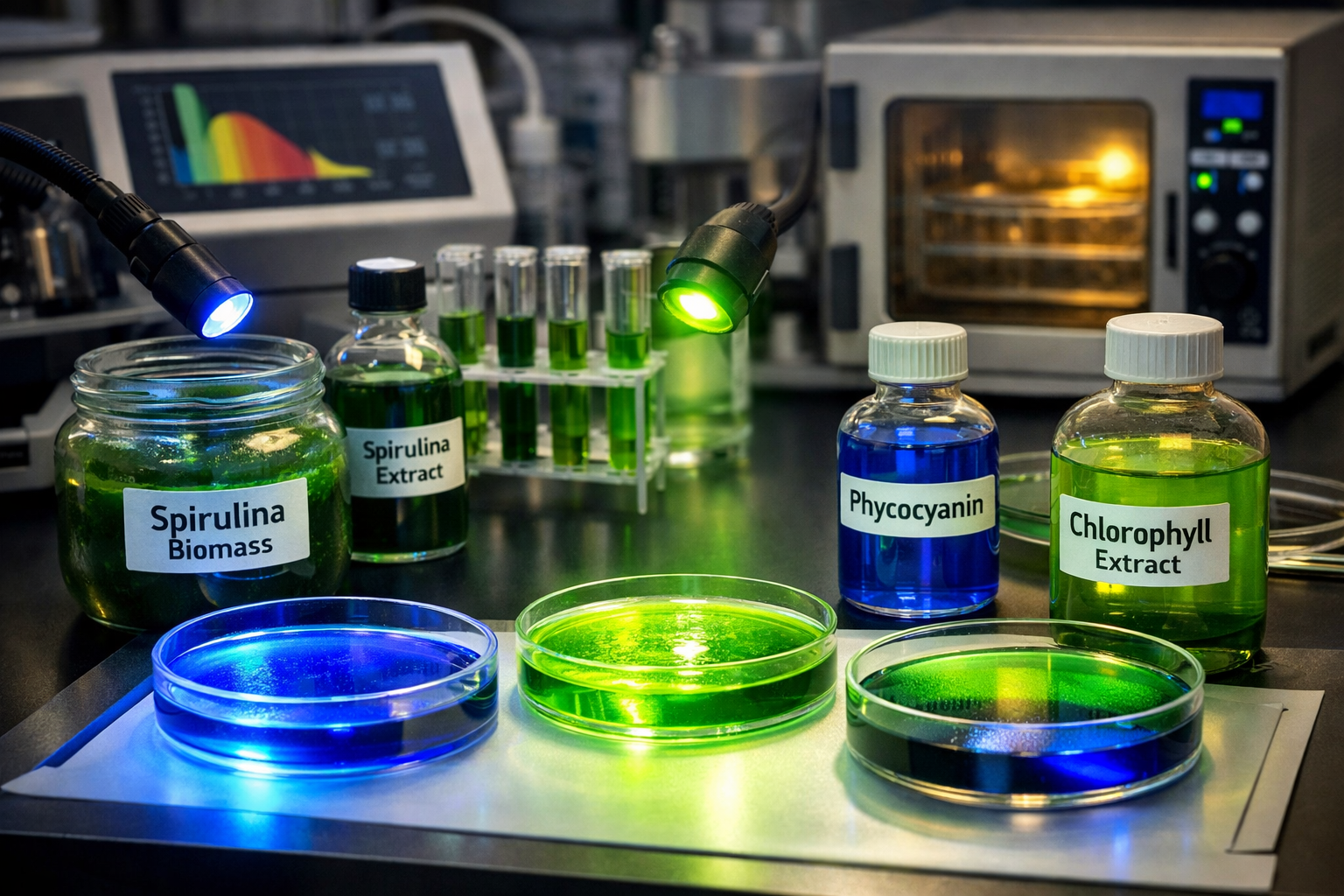
Spirulina’s colour is determined mainly by two natural pigments: phycocyanin and chlorophyll. The balance between these pigments, along with their concentration and stability, defines whether spirulina appears more blue, more green, or somewhere in between.
Phycocyanin: The Blue Pigment
Phycocyanin is a blue, water-soluble pigment-protein complex that belongs to the phycobiliprotein family. It plays a role in capturing light energy during photosynthesis and transferring it to chlorophyll.
From a commercial perspective, phycocyanin is highly valued because:
- It gives spirulina its characteristic blue hue
- It is associated with antioxidant activity
- It is used as a natural blue colourant in food, cosmetics, and nutraceuticals
Higher phycocyanin concentration typically results in a deeper blue-green colour and is often associated with premium-grade spirulina.
Chlorophyll: The Green Pigment
Chlorophyll is the green pigment common to all photosynthetic plants and algae. In spirulina, chlorophyll plays a central role in converting light energy into chemical energy.
Key points about chlorophyll in spirulina include:
- It contributes to the green component of spirulina’s colour
- It supports biomass production and growth rate
- Excessive dominance of chlorophyll over phycocyanin can make spirulina appear more green than blue
The visual balance between chlorophyll and phycocyanin determines the final colour perception.
Phycocyanin Percentage vs Colour Intensity
For commercial buyers, colour perception is often tied to measurable phycocyanin content. While visual appearance alone is not a substitute for lab analysis, phycocyanin percentage provides a reliable benchmark for colour intensity and application suitability.
| Phycocyanin Content (% dry weight) | Typical Colour Appearance | Commercial Interpretation |
| <8% | Green to dull green | Low pigment content, bulk-grade biomass |
| 8–12% | Green-blue | Moderate quality, suitable for general nutraceutical use |
| 12–16% | Blue-green | High-quality spirulina with good pigment retention |
| >16% | Deep blue-green | Premium-grade, suitable for colour-sensitive applications |
As phycocyanin concentration increases, the blue component becomes more visually dominant. However, consistency across batches is as important as peak values, especially for formulation-driven industries.
Why Some Spirulina Looks More Blue Than Green
Spirulina appears more blue when phycocyanin concentration is high relative to chlorophyll. This typically occurs under well-controlled cultivation conditions that support pigment synthesis rather than rapid, stressed growth.
Factors that favour higher phycocyanin levels include:
- Stable temperature within the optimal range
- Balanced light intensity without photoinhibition
- Adequate nutrient availability, especially nitrogen
- Low physiological stress during growth and harvesting
In professionally managed systems-such as Greenbubble-aligned production frameworks-these conditions are deliberately maintained to support pigment-rich biomass.
Why Some Spirulina Appears More Green
A greener appearance usually indicates higher relative chlorophyll content or lower phycocyanin levels. This does not automatically mean the spirulina is unusable, but it often signals differences in cultivation focus or stress history.
Common reasons spirulina appears more green include:
- Rapid growth prioritised over pigment accumulation
- Temperature or light stress reducing phycocyanin stability
- Nutrient imbalance, especially nitrogen limitation
- Oxidation or degradation during harvesting and drying
Green-dominant spirulina is more common in bulk biomass production where yield is prioritised over pigment quality.
Environmental Factors That Influence Spirulina Colour
Colour development in spirulina is highly sensitive to environmental conditions throughout the cultivation cycle.
Temperature
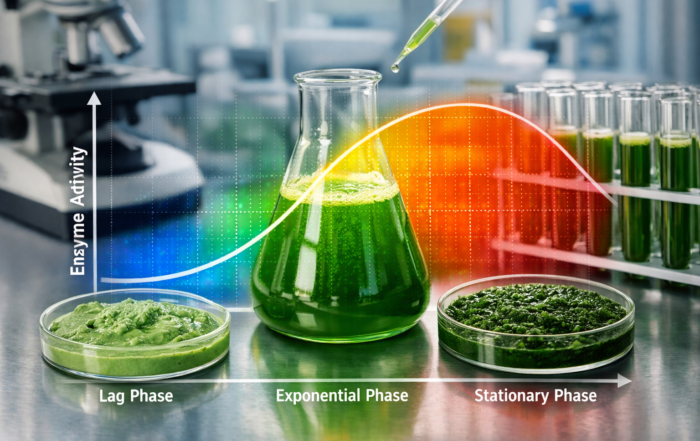
Temperature affects enzyme activity involved in pigment synthesis. Sustained exposure to temperatures above the optimal range can degrade phycocyanin faster than chlorophyll, shifting colour toward green or dull tones.
Light Intensity and Exposure
Excessive light can cause photoinhibition, damaging pigment structures. Insufficient light, on the other hand, can reduce overall pigment production.
Balanced, evenly distributed light supports stable pigment ratios.
Nutrient Availability
Nitrogen plays a critical role in pigment-protein synthesis. Nitrogen deficiency often results in reduced phycocyanin content and colour fading.
pH and Alkalinity
Stable alkaline conditions support pigment stability. Sudden pH swings can stress cells and disrupt pigment formation.
Role of Harvesting and Processing in Colour Retention
Even well-grown spirulina can lose its colour if harvesting and processing are poorly managed.
Critical post-harvest factors include:
- Gentle harvesting to avoid cell rupture
- Efficient assisted dewatering systems to minimise oxidation
- Low-temperature drying methods such as RWD drying systems to preserve phycocyanin
- Hygienic packing systems to prevent moisture and oxygen exposure
Colour degradation during processing is often irreversible, making post-harvest control as important as cultivation.
Colour as a Quality Indicator in Commercial Markets
For buyers, colour is often the first visible quality cue.
| Colour Appearance | Typical Interpretation |
| Deep blue-green | High phycocyanin, well-managed cultivation |
| Bright green | Chlorophyll-dominant, moderate pigment quality |
| Dull or brownish | Oxidation, heat damage, or poor processing |
While laboratory testing ultimately confirms quality, colour consistency plays a major role in buyer confidence.
Application-Based Colour Requirements
Different end-use industries evaluate spirulina colour differently. What qualifies as “high quality” in one application may be unnecessary or even unsuitable in another.
Food and Nutraceutical Applications
In food supplements and nutraceuticals, colour serves as both a quality cue and a marketing signal.
Typical expectations include:
- Blue-green appearance indicating balanced pigment content
- Consistent colour across batches for capsule and tablet uniformity
- Moderate to high phycocyanin levels, depending on product positioning
Colour degradation is closely associated with perceived freshness and efficacy in this segment.
Cosmetic and Skincare Applications
Cosmetic brands are more sensitive to colour stability than absolute pigment percentage.
Key colour-related requirements include:
- Stable blue-green tone that does not shift during formulation
- Low oxidation risk to prevent colour bleeding or fading
- Predictable batch-to-batch appearance for visual consistency
Here, controlled processing and drying often matter as much as cultivation quality.
Pharmaceutical and Research Applications
In pharmaceutical, diagnostic, or research contexts, colour is treated primarily as a biochemical indicator rather than a visual attribute.
Expectations typically include:
- High and verifiable phycocyanin purity
- Minimal pigment degradation during processing
- Strict documentation and compositional consistency
Visual appearance is secondary to analytical confirmation, but colour deviations often signal underlying quality issues.
Common Myths About Spirulina Colour
| Myth | Reality |
| Bluer spirulina is always better | Colour must align with application and verified composition |
| Colour only matters for appearance | Colour reflects pigment content and processing quality |
| Drying does not affect colour | Heat and oxidation can significantly degrade pigments |
FAQs
Q1. Why is some spirulina blue and some green?
The difference is mainly due to the balance between phycocyanin (blue) and chlorophyll (green) pigments.
Q2. Does blue spirulina mean higher quality?
Often, quality should be confirmed through composition analysis and processing history.
Q3. Can colour change after harvesting?
Yes. Poor drying or exposure to heat and oxygen can degrade pigments.
Q4. Is colour important for all applications?
Yes, especially for nutraceutical, cosmetic, and food-colouring uses where pigment content matters.
Q5. Can farming conditions be adjusted to improve colour?
Yes. Temperature, light, nutrients, and harvesting methods all influence pigment levels.
Conclusion
Spirulina’s blue or green colour is not a cosmetic accident-it is the visible outcome of pigment biology, cultivation discipline, and processing control. Phycocyanin and chlorophyll levels reflect how carefully spirulina has been grown and handled.
Commercial farms that treat colour as a quality parameter rather than a by-product-an approach commonly seen in Greenbubble-aligned production systems-are better positioned to deliver consistent, high-value spirulina across diverse markets.
Table Of Contents