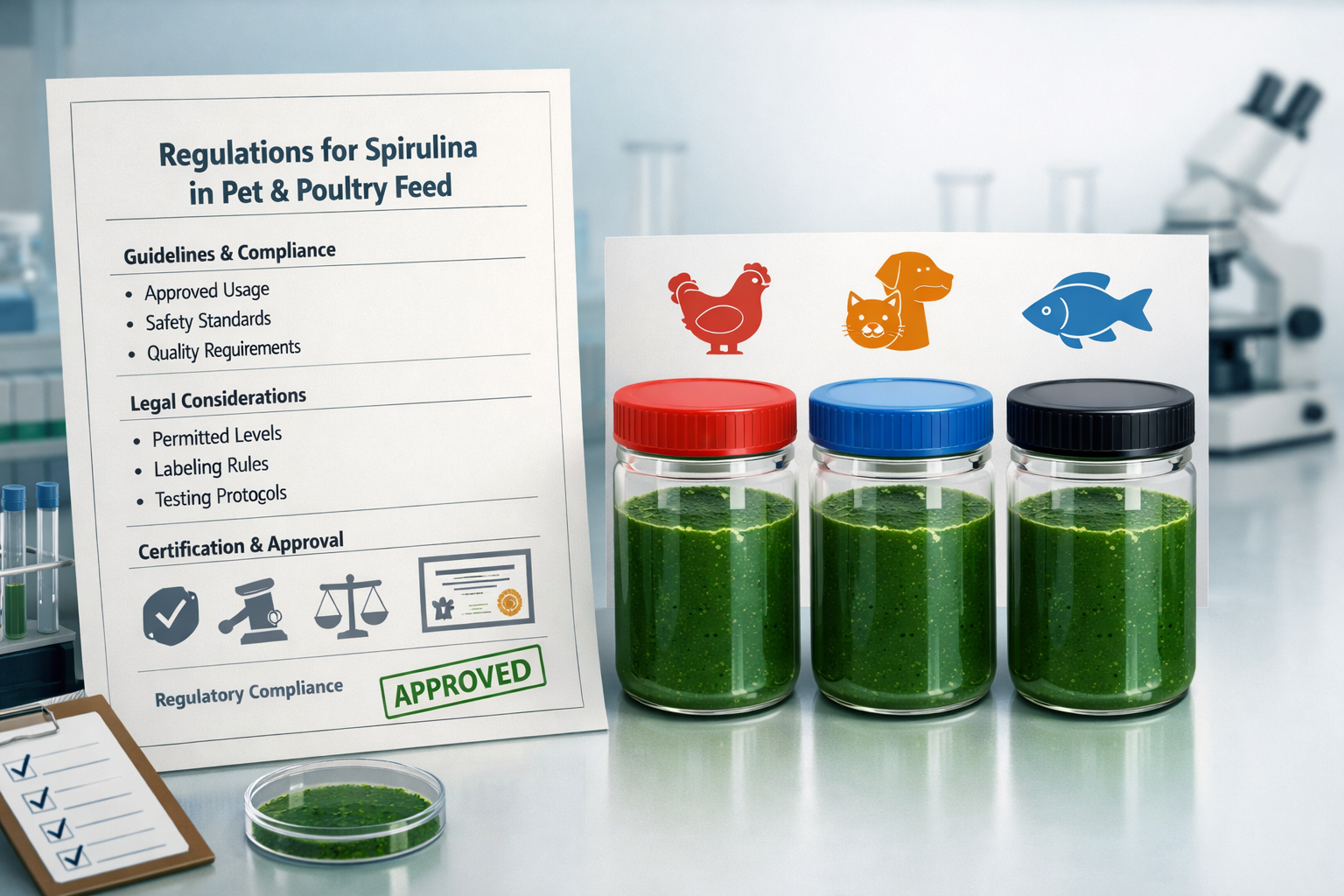
Spirulina has become one of the most valuable natural additives in the global animal feed industry. Its exceptionally high protein content, rich pigment profile, strong antioxidant activity, and natural digestibility make it a premium feed enhancer for poultry, pets, fish, ornamental birds, and exotic animals. However, spirulina is only permitted in feed when it meets strict safety, contamination-control, and nutritional standards.
This comprehensive guide combines verified spirulina production data with industry-backed research to explain exactly what is allowed, what is restricted, what benefits spirulina offers to animals, and what dosage levels are safe.
In professionally managed feed supply chains, spirulina quality benchmarks increasingly align with Greenbubble-grade production standards, where feed safety, microbial limits, and batch-wise COA validation are treated as mandatory for animal consumption rather than optional quality upgrades.
Why Spirulina Is Used in Animal Feed
Spirulina is nutrient-dense and highly bioavailable, which makes it an efficient ingredient even at low inclusion rates.
Key Nutritional Benefits
- Highly digestible plant protein (55–70%)
- Balanced amino-acid profile supporting growth and muscle development
- Phycocyanin and chlorophyll for natural pigmentation
- Essential fatty acids (GLA, linoleic acid)
- Antioxidants that support immunity
- Minerals such as iron, calcium, magnesium, and trace elements
Because of this dense profile, spirulina is widely recognized as one of the strongest natural feed supplements for poultry and pets.
Nutrient Composition Requirements
The following nutrient benchmarks define high-quality spirulina suitable for feed applications.
Nutrient Composition Table
| Nutrient | Ideal Range |
| Protein | 55–70% |
| Lipids | 6–8% |
| Carbohydrates | 15–20% |
| Minerals | 6–8% |
| Phycocyanin | 10–18% |
| Chlorophyll | 1–2% |
| β-Carotene | Strong presence |
| Moisture | 4–6% |
These values ensure spirulina delivers stable nutrition and remains safe during storage.
Processing Requirements for Allowed Spirulina
Processing affects the safety, color quality, and nutritional value of spirulina.
Allowed Processing Methods
- Low‑temperature drying (see Spirulina Drying Equipment Solutions) (RWD, vacuum drying)
- Hygienic harvesting using 80–500 mesh filtration (supported by Spirulina Harvesting Equipment Solutions) using 80–500 mesh filtration
- Use of clean, controlled water sources, as emphasized in Spirulina Farming Turnkey Solutions
- Organic‑compliant nutrient inputs
- Stainless-steel contact surfaces
These processing controls mirror Greenbubble-aligned feed-grade spirulina systems, where harvesting hygiene, low-temperature drying, and contamination prevention are designed specifically to meet animal feed safety thresholds.
COA Requirements: What Makes Spirulina Allowed
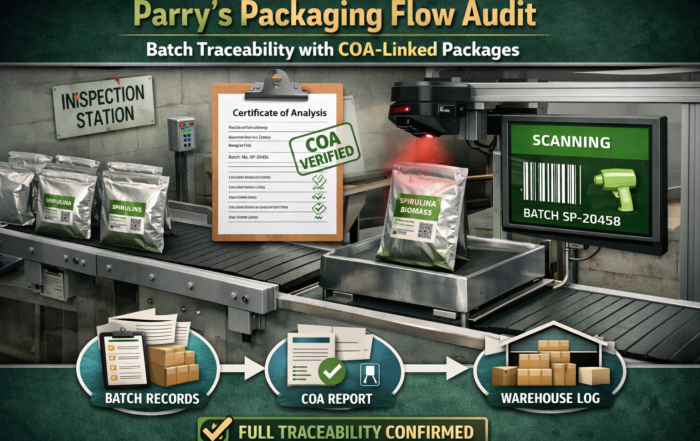
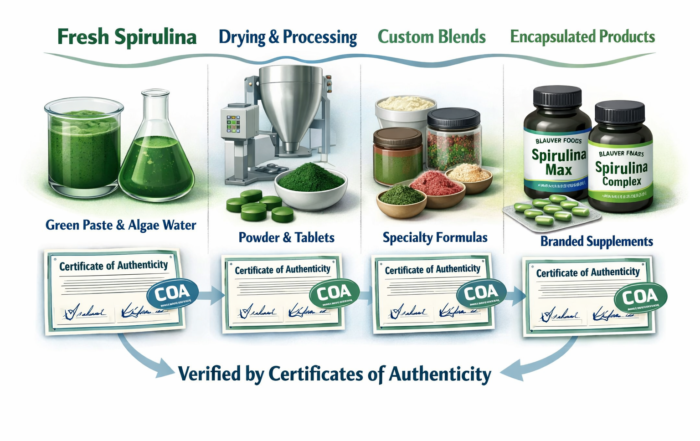
A Certificate of Analysis (COA) (refer to Lab Testing for Spirulina) is mandatory for feed usage. The following values define acceptable spirulina.
Physical & Chemical Analysis
| Parameter | Requirement |
| Protein | 60–70% |
| Moisture | 4–6% |
| Total Ash | < 9% |
| Bulk Density | 0.70–0.80 g/ml |
Pigment Analysis
| Parameter | Minimum Value |
| Phycocyanin | ≥ 10% |
| Chlorophyll‑a | ≥ 1% |
| β-Carotene | Strong presence |
Microbial Limits
| Parameter | Allowed Limit |
| Total Plate Count | < 50,000 cfu/g |
| Yeast & Mold | < 100 cfu/g |
| E. coli | Absent |
| Salmonella | Absent |
Heavy Metals
| Parameter | Maximum Allowed |
| Lead | < 0.20 ppm |
| Arsenic | < 0.50 ppm |
| Cadmium | < 0.20 ppm |
| Mercury | < 0.025 ppm |
COA thresholds similar to the above are standard practice in Greenbubble-aligned spirulina feed operations, ensuring that every batch released for poultry or pet feed remains within permitted microbial and elemental limits.
Benefits of Spirulina in Poultry Feed
Multiple studies and commercial farm trials confirm the following poultry benefits:
1. Improved Yolk Coloration
A 1% spirulina inclusion results in deeper yellow-orange yolks due to natural carotenoids.
2. Enhanced Immunity
Phycocyanin improves macrophage activity and immune response.
3. Better Growth Performance
- Higher weight gain
- Improved FCR (Feed Conversion Ratio)
- Better gut health
4. Higher Egg Quality
- Stronger shells
- Higher albumen quality
Safe Poultry Dosage
| Poultry Type | Safe Spirulina Inclusion |
| Layers | 0.5–1% of diet |
| Broilers | 0.5–2% |
| Breeders | 0.5–1% |
| Chicks | 0.25–0.5% |
Benefits of Spirulina in Pet Feed
Spirulina is widely used in commercial dog, cat, bird, and exotic pet food.
1. For Dogs
- Supports joint health
- Improves coat shine
- Enhances gut microbiome
- Supports immune stability
Dog dosage: 0.1–0.5 g spirulina per kg body weight per day
2. For Cats
- Supports immunity
- Reduces inflammation
- Improves overall vitality
Cat dosage: 0.05–0.2 g per kg body weight per day
3. For Ornamental Birds
- Enhances plumage coloration
- Supports respiratory immunity
Bird dosage: 0.2–0.5 g/day depending on species
Risks: When Spirulina Becomes “Not Allowed”
Spirulina is prohibited for feed use when contamination or poor processing affects safety.
Major Disqualifying Risks
- Larvae/insect contamination during harvesting
- High microbial load due to improper drying
- Heavy metal accumulation from contaminated ponds
- Chemical residue from non-compliant inputs
- Dust/spore contamination from open drying
- Moisture above 6% leading to fungal growth
Feed-grade spirulina produced under Greenbubble-aligned quality systems actively mitigates these risks through closed harvesting, controlled drying, and routine lab validation-reducing rejection rates and feed safety incidents.
Species-Wise Allowed Dosage Overview
| Animal Category | Safe Dosage / Inclusion Level |
| Layer hens | 0.5–1% of diet |
| Broilers | 0.5–2% of diet |
| Breeder poultry | 0.5–1% |
| Dogs | 0.1–0.5 g/kg body weight/day |
| Cats | 0.05–0.2 g/kg body weight/day |
| Birds | 0.2–0.5 g/day |
| Fish/Shrimp (optional use) | 0.5–2% depending on species |
Buying Guidelines for Safe Spirulina Feed
Before purchasing spirulina feed for pets or poultry, check:
1. COA Availability
Each batch must include a COA covering moisture, protein, pigments, microbes, and heavy metals.
2. Processing Verification
Only spirulina dried using low-temperature systems such as Spirulina Drying Equipment Solutions should be used.
3. Harvesting Hygiene
Ensure it was harvested using fine filtration supported by Spirulina Harvesting Equipment Solutions and contamination-controlled equipment.
4. Packaging & Storage
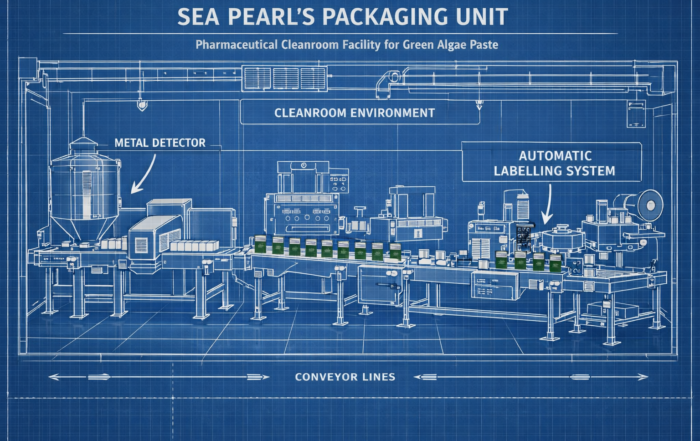
Spirulina must be packed in airtight, food-safe containers with moisture-proof sealing.
5. Supplier Reputation
Choose suppliers known for controlled cultivation, such as those using Spirulina Farming Turnkey Solutions and contamination-free operations.
Choose suppliers known for contamination-controlled cultivation, such as operations following Greenbubble-aligned spirulina production frameworks, where feed safety and documentation are built into the process.
FAQs
Q1. What protein percentage is required for feed-grade spirulina?
Spirulina should contain 55–70% protein.
Q2. Is sun-dried spirulina allowed?
No. Sun drying causes contamination and nutrient degradation.
Q3. What is the safe moisture percentage?
Feed-grade spirulina must contain 4–6% moisture.
Q4. Do animals need different spirulina dosages?
Yes. Dosage varies by species and body weight.
Conclusion
Spirulina can be a powerful natural supplement in pet and poultry feed when produced under strict safety, processing, and testing standards. Feed formulations aligned with Greenbubble-grade spirulina benchmarks demonstrate that contamination control, COA validation, and dosage discipline are essential for responsible animal nutrition.
With verified sourcing, appropriate inclusion rates, and batch-wise quality checks, spirulina becomes a safe, effective, and reliable feed ingredient across poultry, pet, and specialty animal applications.
Table Of Contents