If you farm in Rajasthan, you already know the land. Harsh summers, scarce water, long sunny days, and farming that has always meant adapting to the desert. Many Rajasthani farmers and entrepreneurs are now asking whether spirulina, a high-value microalgae, could be a better use of their land than traditional crops.
The honest answer: Rajasthan has some of the best natural conditions in India for spirulina, along with a few serious challenges that must be engineered around. Get the design right, and the state’s strong sunlight and warm climate work in your favour. Get it wrong, and summer heat, dust and water quality can undo months of effort.
We’ve built spirulina farms across India and in more than 10 countries over the last decade, including in semi-arid regions with conditions similar to Rajasthan’s. This guide explains what Rajasthan offers, where the risks lie, which regions suit spirulina best, and what it costs to set up a farm that actually makes money.
Why Rajasthan Has Real Potential for Spirulina
Spirulina thrives where many traditional crops struggle. Several of Rajasthan’s natural traits work in its favour.
| Rajasthan’s trait | Why it helps spirulina |
|---|---|
|
Abundant sunshine |
Sunlight is the most economical energy source for spirulina, and commercial farms don’t need artificial lighting |
|
Warm temperatures for most of the year |
Spirulina grows best at 30 to 37°C, which suits much of the year |
|
Low rainfall in many areas |
Less dilution of pond culture and fewer cloudy days than in high-rainfall regions |
|
Semi-arid and arid land |
Spirulina doesn’t need fertile soil, so less productive land can still host a farm |
|
Brackish groundwater in many areas |
Spirulina tolerates salinity, so some water unfit for crops may be usable after testing |
|
Strong solar power ecosystem |
Solar energy can offset power costs for agitators, pumps and processing |
Spirulina also yields far more protein per acre than conventional crops, and it doesn’t compete with food crops for fertile soil. For regions where farming income is limited by water and soil, that makes it an attractive option.
The Challenges You Need to Plan For
Rajasthan’s climate is an advantage only when its extremes are managed. These are the four risks we design around in every desert-region project.
1. Extreme Summer Heat and Loo
Summer temperatures in western Rajasthan regularly cross 45°C and can approach 50°C, with hot, dry loo winds. Spirulina culture begins to bleach above 40°C.
The good news: with the right design and monitoring, a culture can survive even when outside temperatures reach 48 to 50°C. It takes:
- Hourly temperature monitoring of every pond
- Shade nets pulled over ponds when outside temperature crosses 45°C, keeping culture below 38°C
- Agitator management, since run time and speed help control pond temperature
- Water depth adjustment, as deeper water resists heating
- Cold culture reserves, added to ponds when water temperature approaches 38°C
- Larger ponds, which hold temperature far more steadily than small tanks
This is why small backyard tanks rarely survive a Rajasthan summer, while properly designed raceway ponds can. Learn more in how to maintain spirulina culture in high temperatures.
2. Cold Winter Nights
Winter nights in parts of Rajasthan, especially the Shekhawati belt and northern districts, can drop close to freezing. Spirulina needs daytime temperatures of around 15°C or above to grow, although it can tolerate cool nights.
In practice, this means:
- Growth slows during December and January, particularly in northern districts
- Polyhouse covers help retain warmth in the ponds
- Production planning must account for a slower winter season
Regions with frequent frost are not suitable for spirulina.
3. Dust Storms (Aandhi)
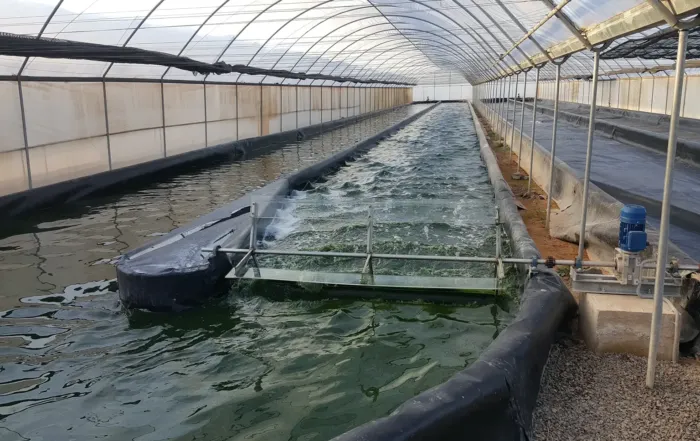
Pre-monsoon dust storms can dump sand and debris into open ponds, raising contamination and making harvesting harder. In Rajasthan, protection from dust isn’t optional. It needs:
- Polyhouse or covered pond structures
- 80-mesh pre-filtration before harvesting
- Screens in front of agitators, cleaned daily
- Careful site layout that uses windbreaks and building placement
4. Water Quality and Scarcity
This is often the deciding factor in Rajasthan. Groundwater in many districts is brackish, and some areas have naturally high levels of dissolved salts and other contaminants. Evaporation is also very high, especially in summer, so ponds need regular top-up.
Before choosing a site:
- Test borewell water in full, covering heavy metals, salinity, hardness and other contaminants
- Treat water with sand filtration and UV before use
- Check salinity. Spirulina grows better at lower salinity, and growth falls as salt levels rise.
- Plan for evaporation losses and a reliable top-up source
- Consider rainwater harvesting to supplement supply
Spirulina tolerates salt, but it absorbs what’s in the water. Water that carries heavy metals will contaminate your final product, and no buyer will accept that. Read more in water quality essentials for spirulina farming and rainwater harvesting and water reuse in spirulina farming.
Which Parts of Rajasthan Suit Spirulina Best?
Conditions vary a lot across the state. The table below is a general guide only. The final decision always depends on site-level water testing and a climate study.
| Region | Example districts | Strengths | Watch-outs | General suitability |
|---|---|---|---|---|
|
South and south-east |
Kota, Bundi, Jhalawar, Udaipur, Chittorgarh |
Moderate temperatures, better water availability, milder winters |
Higher monsoon rainfall and cloud cover |
Strong |
|
Central |
Jaipur, Ajmer, Bhilwara, Tonk |
Good sunlight, access to markets and transport |
Hot summers and variable groundwater |
Good, with heat management |
|
West (Thar) |
Jodhpur, Barmer, Bikaner, Jaisalmer |
Excellent sunlight, low rainfall, solar power potential |
Extreme heat, dust storms, water scarcity and salinity |
Possible only with strong engineering and water planning |
|
North and Shekhawati |
Churu, Sikar, Jhunjhunu, Hanumangarh |
Good sunlight and open land |
Cold winter nights, summer extremes |
Moderate, with seasonal planning |
|
Hill areas |
Mount Abu region |
Cooler temperatures |
Too cool for consistent growth |
Not recommended |
Sites near agricultural belts also need regular testing for herbicides such as 2,4-D, which can drift into ponds and inhibit growth. For a wider comparison, see the best climate zones for spirulina cultivation in India.
A Year of Spirulina Farming in Rajasthan
| Season | Months | What to expect | Key actions |
|---|---|---|---|
|
Winter |
December to February |
Slower growth, especially in the north, and cold nights |
Use polyhouse covers, reduce harvest frequency, maintain culture health |
|
Spring |
March to April |
Strong growth and ideal conditions in most regions |
Scale up production and build culture reserves |
|
Peak summer |
May to June |
Extreme heat, loo winds and dust storms |
Hourly monitoring, shade nets, depth control, dust protection |
|
Monsoon |
July to September |
Cloud cover and rain dilution in the south and east, humidity |
Manage rainwater entry, check salinity and nutrient levels |
|
Post-monsoon |
October to November |
Excellent growing conditions |
High production and a good window for certification batches |
With good management, a Rajasthan farm can produce through most of the year, with slower periods in deep winter and careful protection needed in peak summer. For more on dry-region farming, read spirulina farming in semi-arid climates.
How Much Does a Spirulina Farm Cost in Rajasthan?
Spirulina farming is a serious commercial investment, not a low-cost backyard venture. The figures below reflect what a properly built, certification-ready farm actually requires.
Setup Cost for a 1-Acre Farm
| Component | Estimated cost (₹) |
|---|---|
|
Pond construction |
15 to 18 lakh |
|
Buildings |
10 to 20 lakh |
|
Agitation systems |
5 to 8 lakh |
|
Harvesting and dewatering equipment |
10 to 12 lakh |
|
Drying system (RWD or vacuum) |
10 to 18 lakh |
|
Packaging and cleanroom |
6 to 8 lakh |
|
Automation (IoT and SCADA) |
3 to 5 lakh |
|
Lab and quality control setup |
10 to 12 lakh |
|
Certification and documentation |
4 to 6 lakh |
|
Total |
73 lakh to 1.07 crore |
In Rajasthan, it’s wise to budget more for:
- Shading and polyhouse structures to manage heat and dust
- Water treatment, including filtration, UV and possibly salinity management
- Water storage to handle evaporation losses and supply gaps
- Solar power, which adds upfront cost but can lower running costs over time
Annual Operating Costs
| Expense | 1 acre (₹ per year) | 2 to 3 acres (₹ per year) |
|---|---|---|
|
Power and accessories |
6.47 lakh |
11.87 lakh |
|
Nutrients |
18 lakh |
51 lakh |
|
Testing and chemicals |
2.75 lakh |
2.75 lakh |
|
Salaries |
18 lakh |
24 lakh |
|
Miscellaneous |
5 lakh |
5 lakh |
|
Packing |
3 lakh |
4 lakh |
|
Certifications and audits |
Included in miscellaneous |
7 lakh |
|
Total |
About 53 lakh |
About 1.06 crore |
Rajasthan’s abundant sunshine makes solar power especially worth considering, since power is a steady yearly cost. See solar-based farms and projects.
Is Spirulina Farming Profitable in Rajasthan?
Profitability depends mostly on scale. Here is how two realistic farm sizes compare once full operating costs and business overheads are included:
| Farm size | Setup cost | Annual revenue | Total annual costs | Annual result |
|---|---|---|---|---|
|
1 acre |
₹1.07 crore |
₹75 lakh |
₹83.22 lakh |
Loss of about ₹8.2 lakh |
|
3 acres |
₹2.1 crore |
₹2 crore |
₹1.22 crore |
Profit of about ₹78 lakh (about 37% ROI) |
| Farm size | Investment range | Break-even | Suitability |
|---|---|---|---|
|
1 acre |
₹75 to 95 lakh |
Little or no ROI |
Training or small local sales |
|
2 to 3 acres |
₹1.5 to 2.5 crore |
About 3 years |
Commercially sustainable and export-ready |
|
5+ acres |
₹2 crore and above |
Depends on contracts |
Only with assured buyers |
For Rajasthan, we generally recommend starting at 2 to 3 acres. That is the scale where fixed costs for labour, the lab and certification spread over enough output to become profitable. Land availability in Rajasthan often makes this scale easier to reach than in other states.
For a fuller cost breakdown, read spirulina farming cost in India: investment and ROI.
Who Will Buy Your Spirulina?
Growing spirulina is only half the business. Rajasthan producers can sell into several markets:
| Buyer type | Typical price (₹/kg) | What they need |
|---|---|---|
|
Nutraceutical and supplement brands |
800 to 1,500 |
Certified organic, high phycocyanin |
|
Domestic supplement manufacturers |
600 to 800 |
Standard commercial grade |
|
Export traders |
800 to 1,000 |
USDA or EU Organic, full traceability |
|
Government and institutional nutrition programmes |
900 to 1,300 |
Certified, food-safety compliant |
|
Poultry and aquaculture feed |
400 to 600 |
Consistent carotenoids, large volumes |
Location helps Rajasthan producers. Eastern Rajasthan sits within reach of the Delhi NCR market. Western Rajasthan is relatively close to Gujarat’s ports for export. Growing demand from institutional nutrition programmes also creates opportunities for certified, food-safe producers.
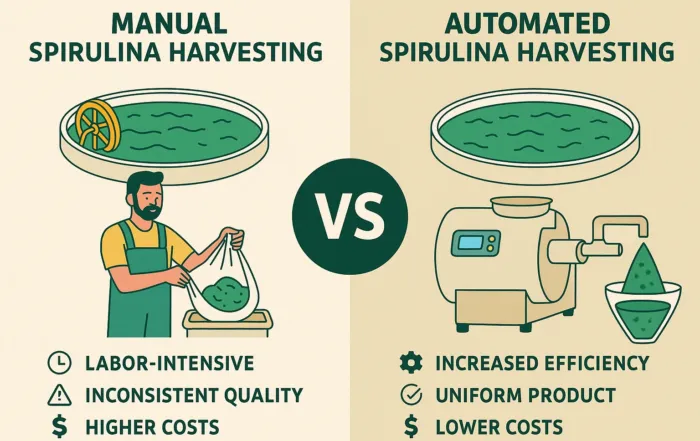
The higher-paying buyers all require certification, consistent quality and a lab-tested Certificate of Analysis for every batch. That is only achievable with automated harvesting and processing and an in-house lab.
Government Support for Spirulina Farms in Rajasthan
There is no Rajasthan-specific spirulina subsidy, but farms can often draw on broader schemes:
- Central schemes for food processing and micro-enterprises, such as PMFME
- State agro-processing and investment promotion policies that may support processing infrastructure
- Horticulture and post-harvest infrastructure support for dryers and storage
- MSME schemes for small-scale processing units
Scheme rules change often, so check current eligibility with the relevant state department before planning around a subsidy. Subsidies typically cover part of the cost, not all of it, and they require a detailed project report and proof of viability. Read our updated guide to government subsidies for spirulina cultivation.
How We Help Rajasthan Farmers Get It Right
Rajasthan rewards good design and punishes shortcuts. Every decision, from pond layout and depth to shading and water treatment, affects whether your culture survives its first summer.
When you work with us, we:
- Study your site, including water testing, climate patterns and land layout
- Design ponds for desert conditions, with larger raceways for thermal stability, correct depth, and shading and dust protection
- Install efficient agitators that help manage temperature and oxygen
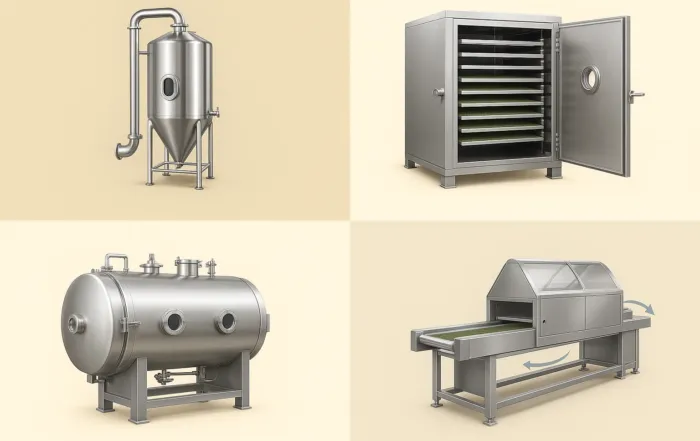
- Integrate harvesting, dewatering and low-temperature drying into one continuous, automated line
- Set up your in-house lab, so every batch is tested before it leaves the farm
- Train your team in heat management, contamination control and documentation
- Support you through stabilisation and certification
Our customers account for more than 90% of India’s spirulina production, and we have been recognised as Best Microalgae Company by the European Algae Biomass Association in Paris. Our turnkey spirulina farming solutions start from ₹1 crore / US $200,000. If you’re still evaluating your land, our spirulina farming consultancy can help you judge suitability before you invest.
Frequently Asked Questions
Is Rajasthan suitable for spirulina farming?
Yes, in many parts of the state. Abundant sunlight and warm temperatures suit spirulina well, but farms need strong heat management, dust protection and good-quality water.
Can spirulina survive Rajasthan’s summer heat?
Yes, with the right design. Shade nets, agitator control, deeper water, cold culture reserves and larger ponds can keep culture below 38°C even when outside temperatures approach 50°C.
Can I use borewell water for spirulina in Rajasthan?
Often, yes, but only after full testing and treatment. Spirulina tolerates some salinity, but water must be free of heavy metals and other contaminants, since these end up in the final product.
How much land do I need for a profitable spirulina farm in Rajasthan?
We recommend 2 to 3 acres. Farms of 1 acre or less generally struggle to cover their fixed costs.
What is the cost of starting a spirulina farm in Rajasthan?
A properly built 1-acre farm costs about ₹73 lakh to ₹1.07 crore, while a commercially viable 2 to 3 acre farm typically requires ₹1.5 to 2.5 crore.
Turning Rajasthan’s Sun Into a Spirulina Advantage
Rajasthan has what spirulina needs most: strong sunlight, warm weather and land that isn’t always suited to traditional crops. What it also has are extremes. Scorching summers, dust storms, cold northern nights and challenging water all demand careful engineering.
A farm that respects those conditions can be one of the most productive spirulina operations in the country. A farm built on shortcuts rarely survives its first summer. With the right scale, design and support from day one, spirulina can turn the desert’s toughest traits into a lasting business advantage.
Make us your source on Google
Table Of Contents