Introduction
Spirulina cultivation training provides entrepreneurs, farmers, and agribusiness professionals with the technical knowledge and practical experience needed to operate a successful spirulina farm. The training is designed to cover every phase — from culture preparation and pond design to harvesting, drying, and COA-based quality assurance. Whether you’re starting a small-scale project or scaling to an export-oriented facility, understanding the operational, biological, and regulatory aspects is essential.
Training programs typically blend classroom instruction with on-field exposure, giving participants a hands-on understanding of biological control, automation, and sustainable production systems.
For end-to-end guidance on scaling production, refer to The Ultimate Guide to Mass Producing Spirulina: Key Steps for Commercial Success.
Core Modules in Spirulina Cultivation Training
Comprehensive spirulina training programs are structured to cover both theory and practical application. Each module equips trainees with the tools required for consistent, contamination-free, and certified production.
1. Introduction to Spirulina Biology and Strain Selection
- Understanding the microalgae life cycle and optimal conditions for growth.
- Identifying the right strain based on yield potential and market use (nutraceutical or feed grade).
- Learning about culture preservation and inoculation techniques.
2. Pond Design and Infrastructure Setup
- Construction of raceway ponds with optimal depth (0.25–0.35 m).
- Layout planning with proper slope and aeration design.
- Introduction to SS 316 equipment for agitators, filters, and dewatering systems to prevent corrosion. (Why SS 316 Is the Standard for Spirulina Equipment)
3. Nutrient Media and Water Management
- Preparing growth media with OMRI-approved nutrients.
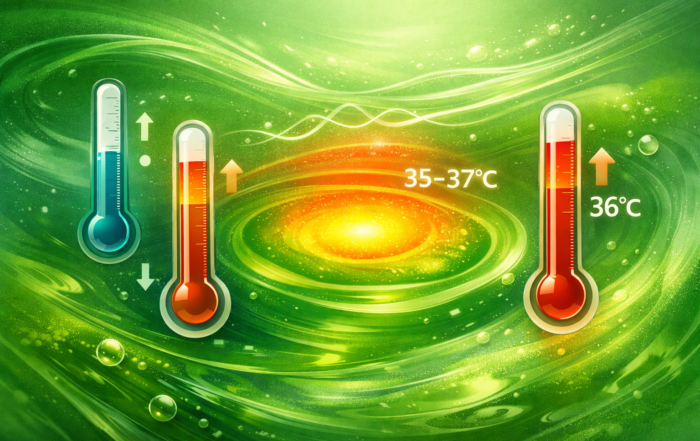
- Managing water parameters — pH (9–11), temperature (35–37°C), and salinity (4–20 PPT).
- Using RO or UV-treated water to prevent contamination.
4. Contamination Control and Biosecurity
- Recognizing and preventing contamination from bacteria, protozoa, and competing algae.
- Installing 80-mesh screens for fly and debris control.
- Maintaining pond hygiene through daily cleaning and regular microbial testing.
- Performing heavy metal testing (Pb, Cd, As, Hg) via COA-compliant methods. (How to Avoid Heavy Metals and Contamination in Spirulina Farming)
5. Harvesting and Dewatering
- Methods of biomass separation using rotary drum filters or inclined belt systems.
- Avoiding product degradation through controlled agitation and filtration.
- Efficient washing protocols to remove impurities before drying.
6. Drying and Post-Harvest Handling
- Overview of Refractive Window Drying (RWD), vacuum drying, and low-heat dehydration systems. (Spirulina Drying Methods: Comparison)
- Maintaining nutrient integrity and pigment retention.
- Avoiding sun drying or high-temperature exposure.
7. Packaging and Cleanroom Standards
- Understanding the need for a dedicated ISO Class 7 cleanroom for packaging. (Building a Cleanroom for Spirulina Packaging)
- Learning vacuum-sealing and nitrogen flushing techniques.
- Importance of aluminum-laminated foil pouches for moisture and oxygen control.
- COA-based batch labeling for export compliance.
8. Quality Control and Certification
- Learning HACCP, GMP, and ISO 22000 protocols.
- Performing microbial and heavy metal testing in certified labs.
- Generating and maintaining COA (Certificate of Analysis) documentation for every batch.
9. Automation and Data Monitoring
- Using SCADA or IoT systems for pH, temperature, and agitation control. (Automation in Spirulina Farming: How Technology Can Boost Mass Production)
- Reducing human error and maintaining data logs for audits.
10. Business and Export Readiness
- Understanding market demand and cost economics.
- Learning about export documentation — COA, phytosanitary, and organic certificates. (Spirulina Farming for Export to the US and Europe)
- Managing ROI expectations and sustainable scale-up plans.
Hands-On Practical Training
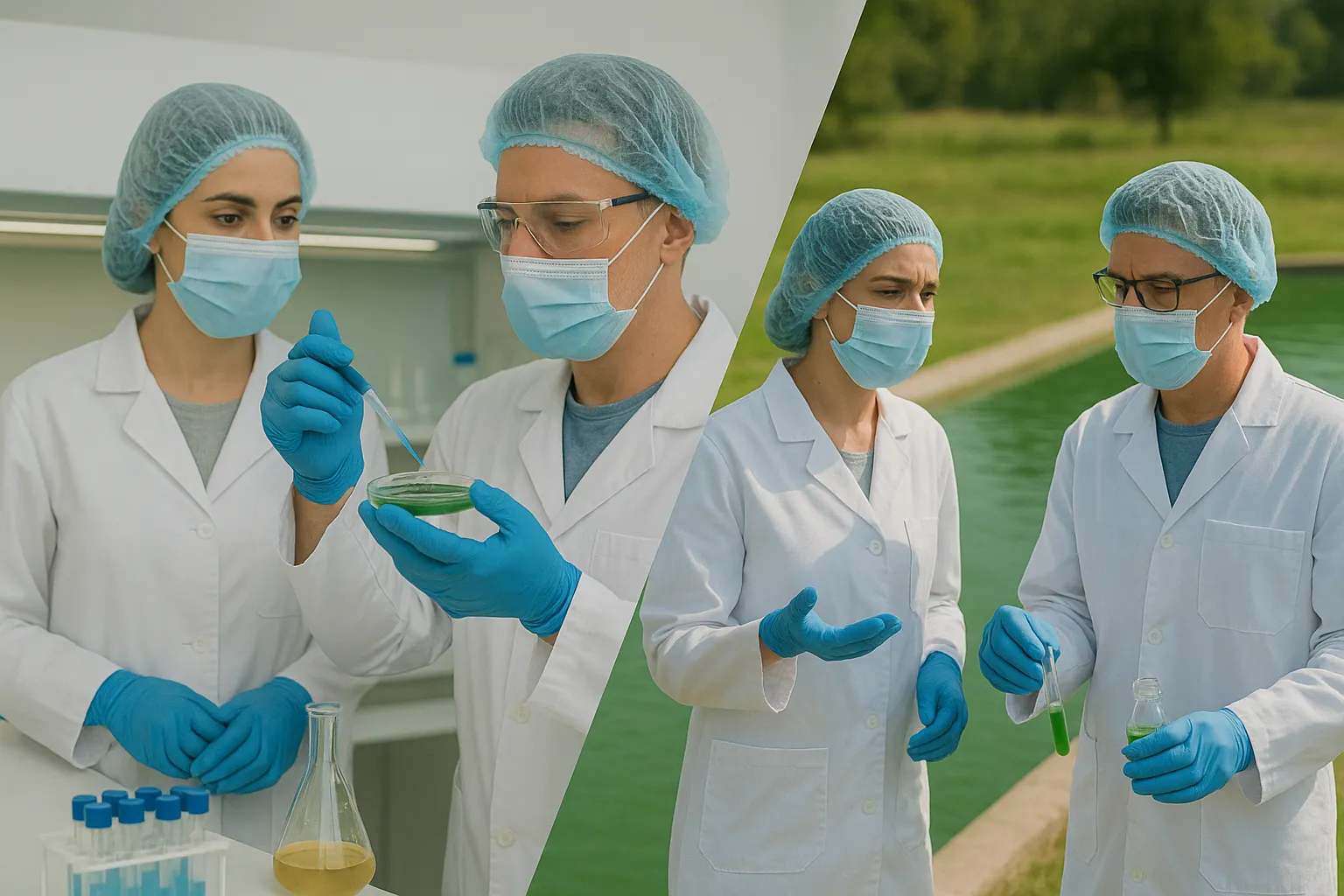
Practical modules focus on replicating real-world operations in controlled environments. Participants perform:
- Culture inoculation and growth observation.
- COA-based microbial and chemical testing.
- Equipment sanitization and pond maintenance.
- Drying and packaging under cleanroom conditions.
Trainees also receive field exposure to HACCP-compliant facilities, experiencing how automation and workflow design optimize productivity.
Well-trained operators know how to:
- Calibrate filters and drying systems
- Check moisture content before sealing
- Maintain cleanliness of drying trays and packaging zones
- Use HACCP-compliant checklists and documentation logs
- Vary pond depth as per seasons
- Run time and speed of agitators to control temperature
Duration and Format
- Short-Term Courses (3–5 days): Ideal for new entrepreneurs and farm owners.
- Comprehensive Training (10–15 days): Includes culture handling, contamination management, and cleanroom operations.
- Advanced Industrial Training (1 month+): For investors and technical managers targeting large-scale or export projects.
All programs include theoretical modules, lab sessions, and farm-level demonstrations.
Learning Outcomes
By the end of the training, participants will:
- Understand the biological, chemical, and mechanical aspects of spirulina farming.
- Operate contamination-free systems and maintain quality control logs.
- Learn drying, packaging, and testing techniques for export compliance.
- Gain confidence in scaling production while meeting sustainability and certification standards.
For sustainability insights, read Is Spirulina Farming Sustainable?.
FAQs
Q1: Who should attend spirulina cultivation training?
Entrepreneurs, agribusiness professionals, and farm managers looking to start or expand sustainable spirulina projects.
Q2: What prior experience is needed?
No prior experience is required. Training covers both beginner and advanced concepts in cultivation and processing.
Q3: Are certificates provided after completion?
Yes. Participants receive a recognized certification, often linked to HACCP or MSME training modules.
Q4: Does the training include contamination management?
Absolutely. Participants learn prevention, detection, and remediation techniques for biological and heavy metal contamination.
Q5: Can I set up a farm immediately after training?
Yes. Graduates can begin small-scale operations with confidence, following the technical, quality, and documentation standards learned.
Conclusion
Professional spirulina cultivation training bridges the gap between theoretical knowledge and real-world application. By learning about water quality, nutrient management, automation, cleanroom packaging, and COA validation, participants are equipped to build farms that meet global standards.
From startup entrepreneurs to industrial producers, this training ensures that every participant walks away prepared to run a profitable, sustainable, and export-compliant spirulina business.
Table Of Contents