Introduction
Consistency is the backbone of successful spirulina farming. Unlike small experimental setups, commercial spirulina farms must follow strict Standard Operating Procedures (SOPs) to achieve high yields, maintain quality, and pass certification audits. From preparing the water to packaging the final powder, every step is carefully defined to ensure the product meets USDA Organic, HACCP, and GMP standards.
This guide takes you through the complete SOP of spirulina cultivation-from water to powder-so that farmers and entrepreneurs can understand what it takes to produce export-grade spirulina.
Step 1: Water Preparation
Water is the foundation of spirulina growth. Any contamination here compromises the entire process.
- Source: Groundwater or borewell water is preferred.
- Filtration: Water must pass through sand filters and UV systems to remove pathogens and impurities.
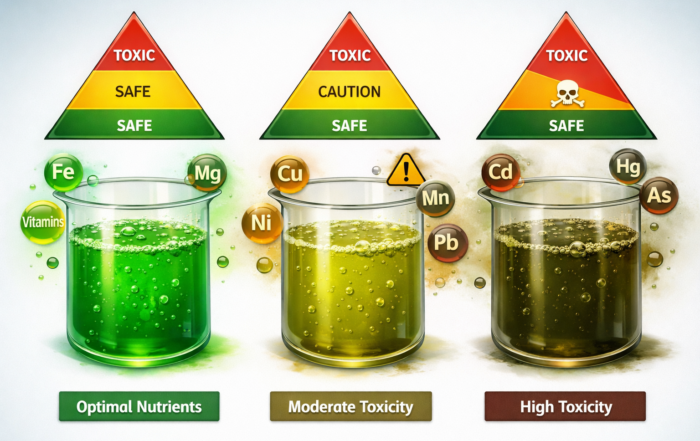
- Heavy Metal Testing: Water must be free of lead, mercury, cadmium, and arsenic.
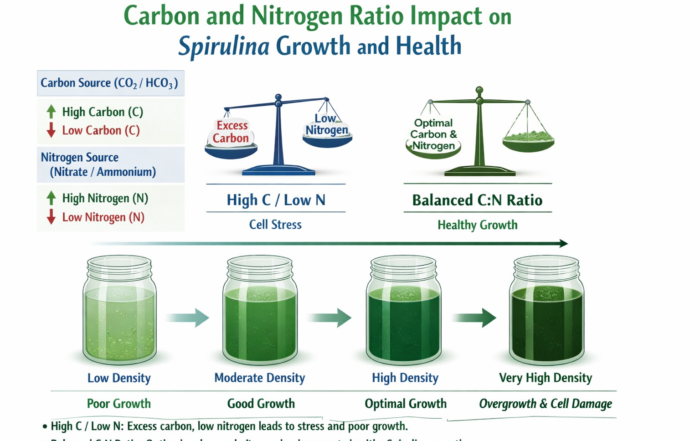
- Nutrient Ratios: Maintain a C:N:P ratio of 24:0.14:1 for optimal growth.
Step 2: Pond Setup & Agitation
The cultivation ponds must be designed for maximum efficiency.
- Raceway Ponds: Standard size ranges from 100–200m length, 10m width, 0.3–0.4m depth.
- Agitation: Paddle wheels or automated agitators ensure continuous circulation.
- Temperature: Maintain 35–37°C; use shading nets when outside temperatures exceed 45°C.
- Materials: SS 316 and food-grade plastics are recommended for all equipment that touches the culture.
Step 3: Inoculation & Culture Growth
Inoculation introduces spirulina culture into the pond.
- Starter Culture: Use lab-prepared inoculum with verified purity.
- pH Maintenance: Keep pH between 9–11 for optimal growth.
- Nutrient Dosing: Add sodium bicarbonate, OMRI-approved nitrates, potassium phosphate, and trace minerals.
- Shading: Deploy nets during culture development to prevent photolysis.
Step 4: Harvesting
When the culture reaches peak density, harvesting begins.
- Prefiltration: Use 80-mesh filters to remove impurities.
- Harvesting Equipment: Rotary drum filters with 500-mesh nylon screens are preferred.
- Washing: Wash biomass multiple times to remove excess salts.
Learn more in Spirulina Harvesting Techniques & Equipment.
Step 5: Dewatering
Dewatering reduces moisture content in the biomass.
- Vacuum Filtration: Gently reduces water content without damaging cells.
- Belt Presses: Used in larger farms for higher throughput.
- Target: Achieve 20% solids concentration in the spirulina cake.
- CIP Protocols: Ensure equipment is cleaned after each batch to prevent contamination.
Step 6: Drying
Drying preserves spirulina’s sensitive nutrients and pigments.
Preferred Methods
- Refractance Window Drying (RWD): Maintains 35–45°C to preserve phycocyanin and proteins.
- Vacuum Drying: Ideal for small batches with high-quality output.
Avoided Methods
- Sun Drying: Leads to nutrient degradation and contamination risks.
- Spray Drying: High temperatures destroy antioxidants and increase operating costs.
For comparisons, see Spirulina Drying Methods Comparison.
Step 7: Grinding & Sieving
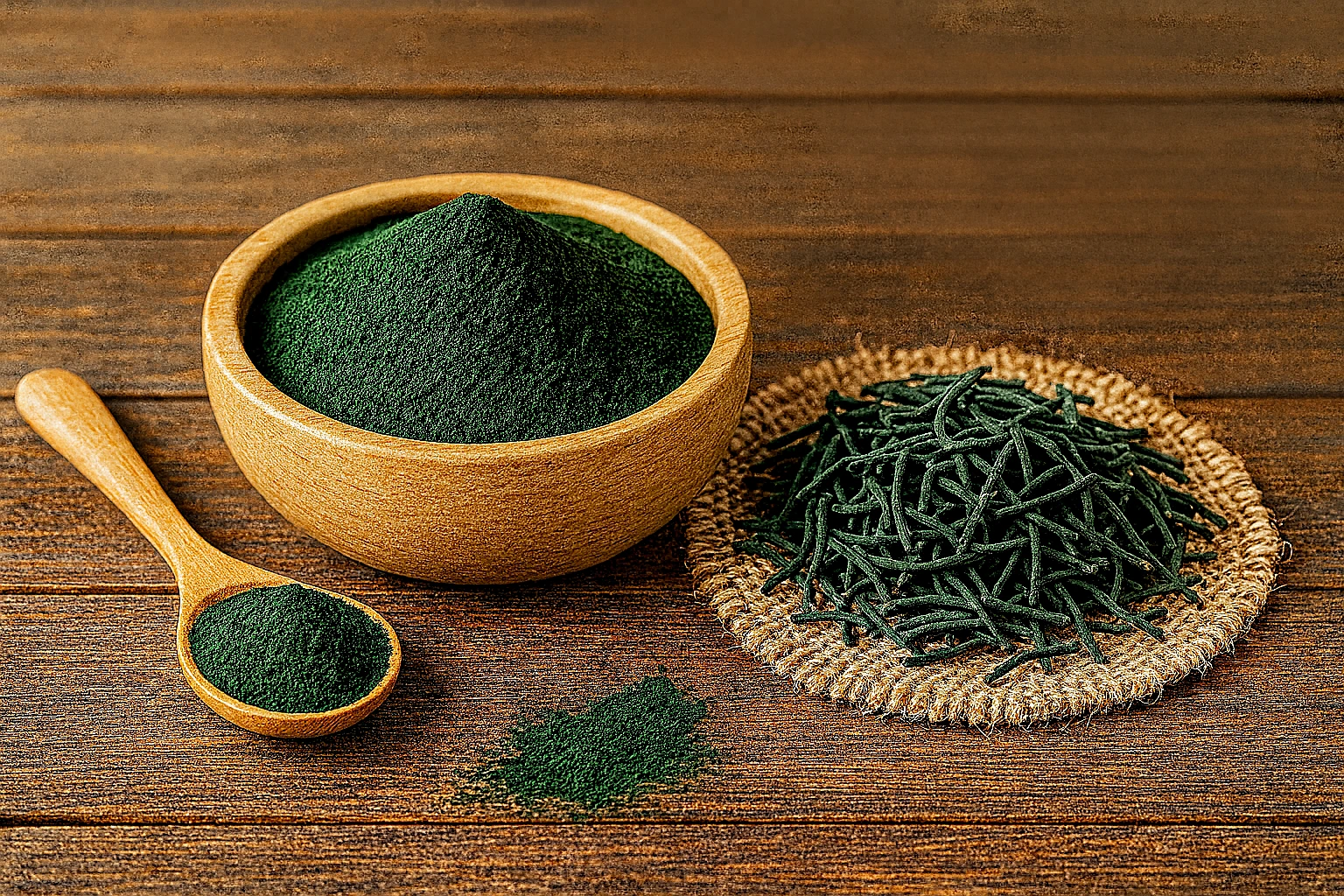
Once dried, spirulina biomass is processed into powder.
- Grinding: Ball mills or air classifier mills (SS 316) are used.
- Sieving: Powder is sieved to 80–100 mesh for uniformity.
- Quality Check: Powder should have a fine texture and oceanic odor.
Step 8: Quality Control & COA
Each batch undergoes rigorous lab testing to generate a Certificate of Analysis (COA).
Nutritional Analysis
- Protein ≥60%
- Phycocyanin ≥10% (premium: 18–20%)
- Chlorophyll-a ≥1%
- β-carotene ≥0.16%
Safety Analysis
- Absence of E. coli, Salmonella, and Staphylococcus.
- Heavy metals below permissible limits.
- No pesticides, aflatoxins, PCB, or PAH.
For details, see How to Build a HACCP-Compliant Spirulina Facility.
Step 9: Packaging & Storage
Packaging is the final step before spirulina reaches consumers.
- Packaging Environment: GMP cleanrooms with minimal human contact.
- Packaging Material: Vacuum-sealed, multi-foil bags with aluminum coating.
- Storage: Keep in cool, dry warehouses to extend shelf life.
- Traceability: Every batch linked to lab reports for certification audits.
Step-by-Step SOP Table
| Step | Process | Key Parameters | Certification Impact |
| 1. Water Prep | Filter water via sand + UV | Heavy metal-free, potable | USDA/EU Organic compliance |
| 2. Pond Setup | Raceway ponds with agitation | Temp 35–37°C, pH 9–11 | GMP (consistent environment) |
| 3. Inoculation | Introduce lab-verified culture | Starter purity ensured | Traceability for audits |
| 4. Harvesting | Prefiltration + rotary drum | 80–500 mesh filters | HACCP hazard control |
| 5. Dewatering | Vacuum/belt press | 20% solids | GMP hygiene compliance |
| 6. Drying | RWD/Vacuum drying | <45°C | USDA Organic (nutrient retention) |
| 7. Grinding & Sieving | Ball/air mills, 80–100 mesh | Uniform fine powder | GMP packaging standards |
| 8. Quality Control | Nutritional & safety testing | COA generated | Mandatory for exports |
| 9. Packaging | Vacuum-sealed in foil bags | Batch labeling & traceability | Certification audits |
Why SOPs Matter for Export Success
Strict SOPs are not just technical routines-they are the foundation of global trade in spirulina.
- Certification Compliance: USDA Organic, HACCP, and GMP audits require documented SOPs.
- Consistency: Buyers demand identical quality across batches.
- Profitability: Certified spirulina commands higher prices (₹1500–2500/kg vs. ₹600–800/kg uncertified).
For infrastructure details, see Spirulina Farming Turnkey Project Components.
FAQs
1. What water is best for spirulina cultivation?
Groundwater or borewell water filtered through sand and UV is best, provided it is free from heavy metals and contamination.
2. What is the ideal drying method for spirulina powder?
Refractance Window Drying (RWD) and vacuum drying are preferred, as they retain pigments and proteins while meeting organic compliance standards.
3. Why is a COA mandatory for spirulina exports?
A COA validates nutritional content and safety, proving to buyers that spirulina is free from contaminants and meets international quality benchmarks.
4. How should spirulina powder be packaged for exports?
In vacuum-sealed, foil-lined bags with batch traceability. Packaging must occur in GMP-certified cleanrooms to pass audits.
Conclusion
Spirulina cultivation is a science-driven process where SOPs ensure safety, consistency, and profitability. From water preparation to powder packaging, each step has strict parameters designed to meet certification standards and buyer expectations.
For small farms, SOPs provide a roadmap to grow responsibly. For commercial exporters, they are the backbone of certification and global competitiveness. By following SOPs, spirulina farmers can deliver premium-grade, contamination-free superfood trusted in markets worldwide.
Table Of Contents