Introduction
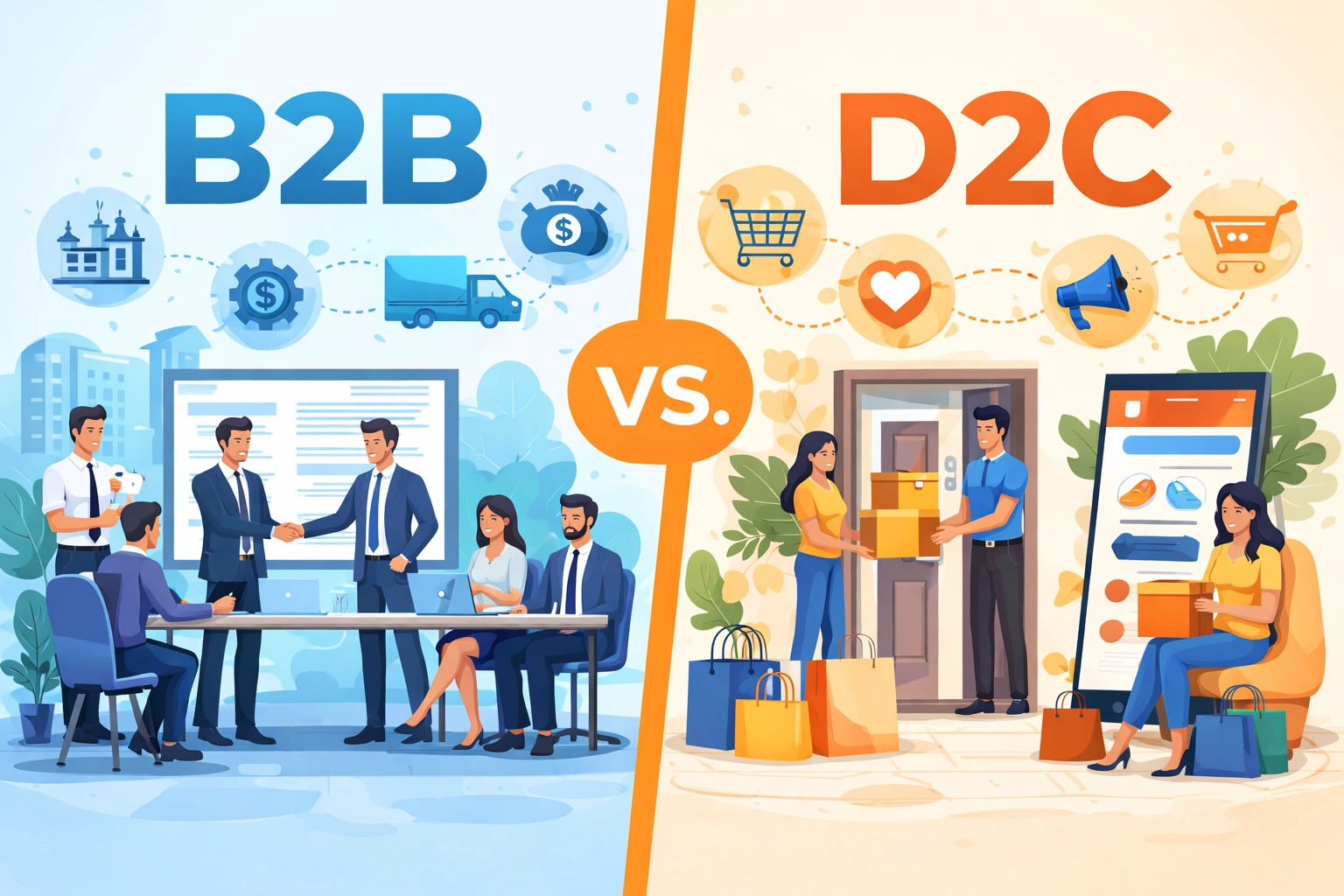
The global spirulina industry has evolved into a multi-billion-dollar market, attracting farmers, MSMEs, and health brands worldwide. As one of the fastest-growing segments in sustainable agriculture and nutraceuticals, spirulina offers entrepreneurs two primary business models: B2B (Business-to-Business) and D2C (Direct-to-Consumer). Each model presents unique advantages, challenges, and operational dynamics.
These models differ in infrastructure setup, quality requirements, scalability potential, and marketing approach. Understanding these differences is crucial before deciding whether to focus on industrial bulk supply or direct consumer branding. A well-chosen business model ensures maximum profitability, minimal risk, and long-term brand growth.
Understanding the Two Business Models in Spirulina Farming
What Is B2B in Spirulina Farming?
The B2B model centers around bulk production and supplying high-quality spirulina powder, flakes, or extracts to nutraceutical, cosmetic, and food industries. This model requires large-scale infrastructure and a focus on certification, consistency, and cost efficiency.
Key Features of B2B Spirulina Farming:
- Bulk cultivation across 1–5 acre farms with high-yield raceway ponds.
- Target buyers include exporters, supplement brands, and cosmetic manufacturers.
- Heavy emphasis on COA-certified, HACCP-compliant quality control.
- Minimal need for marketing campaigns since business comes from recurring contracts.
Advantages of the B2B Model:
- Generates steady income through bulk orders and export deals.
- Easier scalability via contract farming networks or farmer cooperatives.
- Lower customer acquisition costs and reduced dependence on retail branding.
- Ideal for entrepreneurs aiming for predictable revenue and global raw material supply chains.
Challenges in B2B:
- Intense competition and price negotiation pressures.
- Requires USDA Organic, FSSAI, and EU Organic certifications.
- Minimal brand visibility among end consumers.
For a detailed look at farm operations, see The Ultimate Guide to Mass Producing Spirulina: Key Steps for Commercial Success.
What Is D2C in Spirulina Farming?
The D2C (Direct-to-Consumer) model involves creating a branded spirulina product line for direct sales through e-commerce platforms, health stores, and wellness chains. It focuses on storytelling, packaging design, and consumer engagement.
Core Characteristics of D2C Spirulina:
- Targets retail customers who seek organic, vegan, or clean-label products.
- Includes diverse product forms: tablets, capsules, smoothie powders, and fortified beverages.
- Prioritizes cleanroom packaging, branding aesthetics, and customer experience.
- Uses online marketing channels such as SEO, social media, and influencer campaigns.
Advantages of the D2C Model:
- Higher per-unit profit margins through premium positioning.
- Greater brand recognition and long-term consumer loyalty.
- Ability to diversify product lines and cross-sell nutritional supplements.
- Flexible scalability across domestic and global retail markets.
Challenges in D2C:
- Requires heavy investment in digital marketing, logistics, and packaging.
- Involves higher compliance requirements for labeling and shelf-life stability.
- Product quality must remain consistent across batches, verified through COA and HACCP testing.
See Building a Cleanroom for Spirulina Packaging for D2C infrastructure insights.
Comparative Investment Requirements
| Component | B2B Model | D2C Model |
| Farm Size | 1–5 acres | 0.5–2 acres (small, brand-focused setup) |
| Initial Setup Cost | ₹30–60 lakhs | ₹15–40 lakhs (including branding) |
| Packaging Infrastructure | ₹6–8 lakhs | ₹10–12 lakhs (cleanroom + design) |
| Marketing Budget | Minimal | ₹5–10 lakhs annually |
| Certification Cost | ₹1.5–3 lakhs (HACCP, Organic, COA) | ₹2–4 lakhs (includes licensing & packaging) |
| ROI Timeline | 2–3 years | 3–4 years (brand-building phase) |
B2B requires more land and volume-based production, while D2C demands creativity, consumer engagement, and online visibility.
Revenue Streams & Product Focus
B2B Model Revenue Opportunities:
- Selling bulk spirulina powder and flakes to health supplement manufacturers.
- Partnering with animal feed and aquaculture companies for sustainable protein inputs.
- Supplying raw material for cosmetic and skincare formulations.
- Entering into contract cultivation partnerships with nutraceutical exporters.
D2C Model Revenue Opportunities:
- Launching branded spirulina capsules, energy shots, or smoothie powders.
- Developing functional beverages and protein blends.
- Offering subscription-based nutrition plans for recurring customers.
- Private labeling for health and wellness retailers.
Quality & Certification Standards
Both B2B and D2C operations must adhere to international food safety and organic certification protocols.
| Parameter | B2B Model | D2C Model |
| COA Testing | Batch-wise verification | Product SKU-wise verification |
| HACCP & GMP | Required for export | Required for retail safety compliance |
| Packaging | Industrial bulk vacuum packs | Retail-ready nitrogen-flushed packs |
| Organic Certification | Recommended | Essential for consumer confidence |
| Export Readiness | High | Moderate to High (brand-dependent) |
For detailed insights on testing, visit Spirulina Quality: What Your Certificate of Analysis (COA) Should Show.
Profitability, Market Trends, and ROI Potential
A B2B spirulina farm of 3 acres equipped with automated paddle systems and clean harvesting can generate 30–40% ROI annually. D2C models, though slower to scale, can achieve margins of 50–60% once brand recognition grows.
| Factor | B2B Model | D2C Model |
| Average ROI | 30–40% | 40–60% |
| Market Entry Difficulty | Moderate | High (requires brand differentiation) |
| Scalability | High (via contract expansion) | Moderate (retail constraints) |
| Marketing Investment | Low | High (digital-first approach) |
| Brand Equity Potential | Low | High (consumer-focused identity) |
Emerging trends show growing demand for organic vegan proteins, immunity boosters, and natural supplements, giving both models strong growth potential.
The Hybrid Spirulina Business Model
Many successful producers today combine the strengths of both models — operating a B2B base for steady bulk income while simultaneously building a D2C brand for higher margins. This integrated approach diversifies risk, maximizes utilization of farm output, and strengthens long-term sustainability.
Benefits of a Hybrid Model:
- Ensures cash flow stability through bulk orders.
- Builds brand reputation for premium retail positioning.
- Enables scale without dependency on a single buyer type.
- Offers flexibility to adapt pricing between wholesale and consumer markets.
Hybrid setups are especially popular among MSMEs and cooperatives who start with bulk contracts and later introduce branded spirulina supplements domestically.
Market Outlook and Future Potential
The global spirulina market is projected to grow at a CAGR of over 10% between 2025–2030, driven by demand from nutraceuticals, cosmetics, and sustainable foods. India is emerging as a key player in affordable spirulina exports, supported by MSME subsidies and agri-tech integration.
Future opportunities include:
- Fortified food products like spirulina noodles and bars.
- Biotech applications such as pigments, enzymes, and feed proteins.
- Expansion of organic-certified farms for export-ready production.
- Development of AI-driven cultivation monitoring systems for productivity gains.
FAQs
Q1: Which model gives faster ROI — B2B or D2C?
B2B delivers faster returns due to immediate bulk contracts, while D2C requires sustained investment in marketing and brand-building.
Q2: Can small farmers enter the D2C market?
Yes, they can partner with contract packaging facilities or white-label manufacturers and start selling through online platforms.
Q3: Are certifications compulsory for both models?
Yes. HACCP, COA, and organic certifications are mandatory for export and highly recommended for domestic branded products.
Q4: Which model works best for exports?
B2B is better for bulk exports, while D2C exports demand additional steps like FDA labeling and international brand registration.
Q5: Is combining both models effective?
Absolutely. A hybrid model balances consistent income from bulk supply with higher D2C profit margins, offering the best long-term returns.
Conclusion
Both B2B and D2C spirulina business models offer unique opportunities for growth and profitability. The choice depends on available resources, marketing capabilities, and long-term goals. While B2B offers scalability and stability through volume contracts, D2C provides brand value and consumer connection.
Entrepreneurs seeking a sustainable edge can integrate both — producing bulk spirulina for industrial buyers while creating branded retail products for online and health-conscious consumers. With COA-certified quality, organic certification, and HACCP compliance, both models can thrive in the expanding global spirulina market.
Table Of Contents