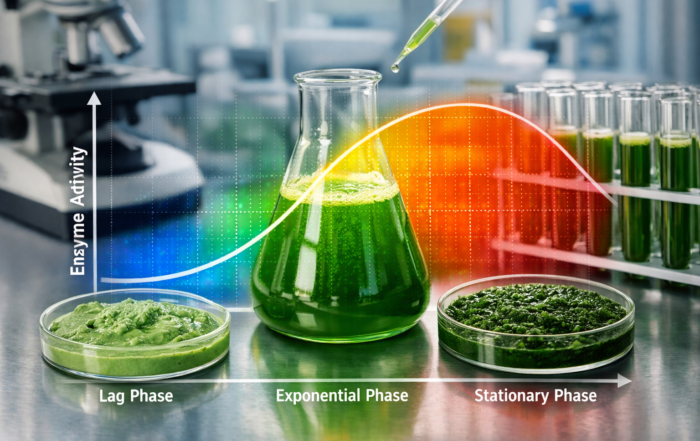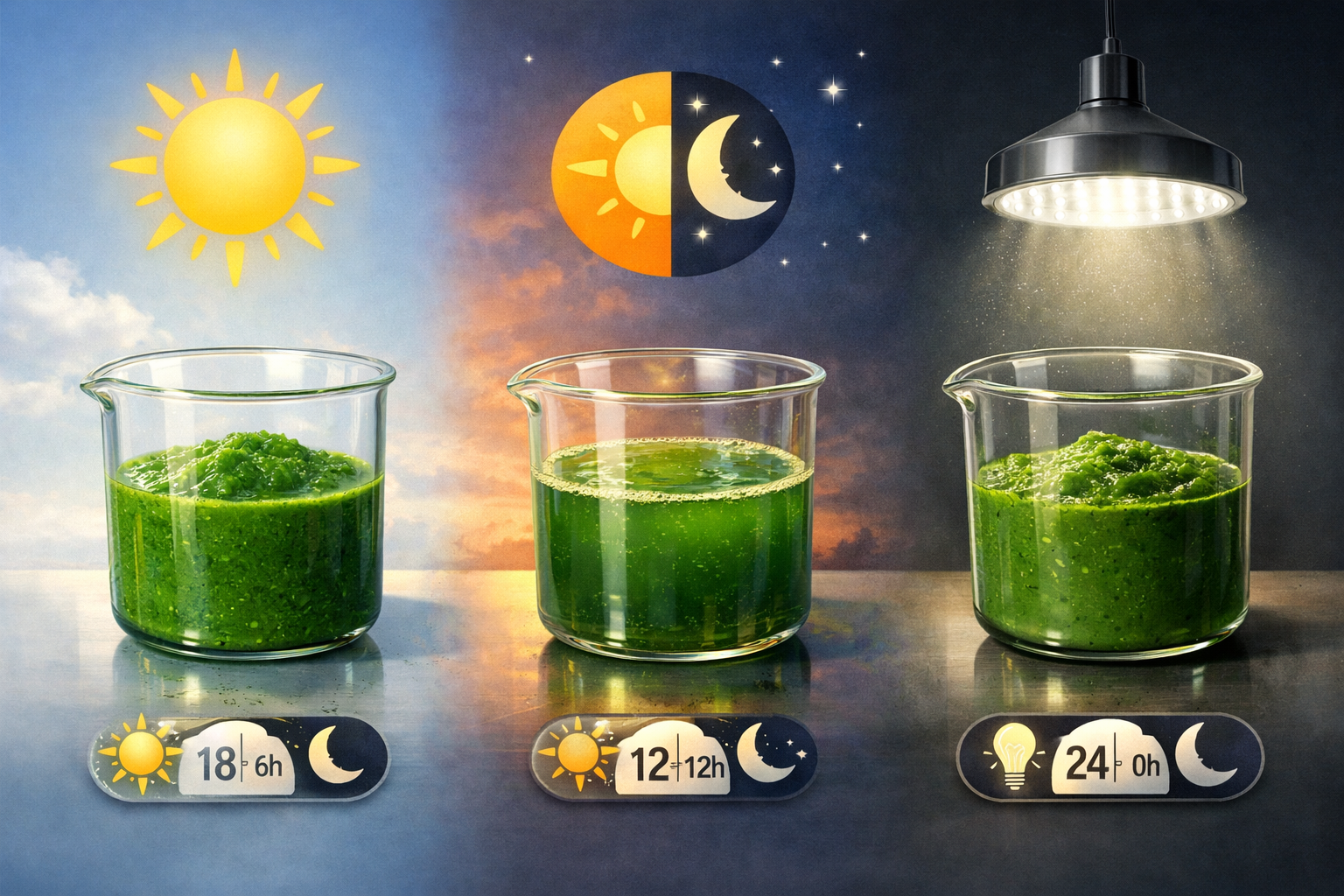
Photoperiod is one of the most underestimated control variables in spirulina farming. While light intensity and temperature are widely discussed, the duration of light and darkness-the day–night ratio-plays a decisive role in how spirulina allocates energy between growth, repair, and storage. In large-scale commercial farms, photoperiod engineering is not about adding artificial light but about synchronising biological rhythms with natural solar cycles to stabilise yield and quality. This approach is consistently applied in large projects executed by Greenbubble, where biological limits are built into farm design rather than corrected later.
Why Photoperiod Matters in Commercial Spirulina Farming
Spirulina is an obligate photoautotroph, meaning it depends entirely on light for carbon fixation. However, growth does not occur uniformly throughout the day. During daylight hours, photosynthesis drives biomass accumulation. At night, spirulina shifts metabolic focus toward repair, redistribution of stored glycogen, and preparation for the next light phase.
Ignoring this natural rhythm by maximising daylight exposure without adequate recovery time often results in metabolic fatigue. Farms may see short-term yield spikes followed by declining protein content, pigment instability, and inconsistent COA results.
Common Misconceptions About Day–Night Ratios
Several misconceptions persist around photoperiod management:
- Longer daylight automatically leads to higher productivity
- Night-time is biologically inactive and unimportant
- Spirulina benefits from continuous light exposure
- Photoperiod control requires artificial lighting systems
In reality, excessive light exposure without sufficient dark phases increases oxidative stress and disrupts enzymatic balance, especially in continuous harvesting systems.
Understanding Spirulina’s Day–Night Metabolic Cycle
During the light phase, spirulina actively fixes carbon dioxide and converts it into carbohydrates, proteins, and pigments. Glycogen accumulation occurs alongside biomass formation. When darkness sets in, photosynthesis stops, but metabolism does not. The organism reallocates stored energy to cellular repair, membrane stabilisation, and enzyme regeneration.
This dark-phase metabolism is essential for sustaining long-term productivity. Without it, cultures become increasingly sensitive to temperature fluctuations and nutrient stress.
Optimal Day–Night Ratios in Outdoor Raceway Systems
In outdoor commercial farms built on engineered raceway pond systems, photoperiod is dictated by geography and season. Greenbubble-designed facilities account for this variability at the planning stage itself, aligning pond geometry and layout with regional solar patterns. Instead of fighting natural cycles, successful farms design operational protocols that work within them.
Key observations from large-scale operations include:
- Day–night ratios close to natural solar cycles produce the most stable results
- Excessive shading during peak daylight reduces photosynthetic efficiency
- Nocturnal recovery is critical during high-temperature periods
Seasonal adjustment of pond depth, agitation speed, and harvesting intensity allows farms to maintain metabolic balance without artificial lighting.
Interaction Between Photoperiod and Temperature
Photoperiod effects cannot be isolated from temperature dynamics. Long daylight hours combined with high ambient temperatures accelerate metabolic stress. Precision agitation using efficient agitator systems helps dissipate excess heat and release accumulated oxygen during the day, reducing oxidative damage. This level of control is a standard design consideration in Greenbubble-operated commercial farms.
At night, reduced agitation and stable water depth allow cultures to cool gradually, supporting enzymatic recovery. Manual systems rarely achieve this level of control consistently.
Photoperiod Management in Continuous Harvesting Models
Continuous harvesting intensifies the importance of photoperiod discipline. Biomass removal during peak photosynthetic hours maximises yield efficiency, but harvesting late in the day can interfere with nocturnal recovery cycles.
Well-designed farms align harvesting windows with light availability while allowing uninterrupted dark phases for metabolic reset. Automated harvesting equipment enables this timing precision far more reliably than manual intervention, especially when farms operate on continuous or semi-continuous production models implemented by Greenbubble.
Organic Systems and Photoperiod Sensitivity
Organic spirulina systems are particularly sensitive to photoperiod mismanagement. With limited corrective inputs, metabolic stress caused by improper day–night balance manifests quickly as pigment loss and protein drift. Using certified organic feed inputs requires tighter synchronisation between light exposure and nutrient availability, a constraint that Greenbubble integrates into organic farm SOPs to prevent metabolic drift.
This makes photoperiod engineering a core operational discipline rather than an optional optimisation.
Photoperiod Stress and Shelf-Life Instability
Improper day–night balance does not only affect growth rates. Cultures exposed to chronic photoperiod stress show reduced oxidative stability after harvest. Even when initial colour and protein levels meet specifications, products derived from stressed cultures degrade faster during storage.
This manifests as colour dulling, odour development, and reduced shelf life-issues that surface months after production, not immediately during processing. In commercial supply chains, these failures are among the hardest to trace back to cultivation decisions, making photoperiod discipline a hidden determinant of long-term brand reliability.
Practical Guidelines for Photoperiod Engineering
Effective photoperiod management in commercial spirulina farms typically involves:
- Respecting natural day–night cycles instead of extending light exposure
- Adjusting harvest timing to daylight intensity
- Modulating agitation speed to manage heat and oxygen levels
- Allowing uninterrupted dark-phase recovery
- Using data-driven oversight through spirulina farming consultancy support backed by Greenbubble’s field experience
These measures improve long-term yield stability rather than chasing short-term output gains.
FAQs
Q1. Does extending daylight always increase spirulina yield?
Extending daylight may increase short-term biomass accumulation, but it often leads to metabolic fatigue and quality degradation over time. Stable yield depends on balanced day–night cycles.
Q2. Is artificial lighting recommended for commercial spirulina farms?
Artificial lighting is generally not viable for large-scale outdoor farms due to high energy costs and limited return. Most commercial systems optimise natural photoperiods instead.
Q3. How does photoperiod affect protein and pigment levels?
Improper photoperiods increase oxidative stress, reducing phycocyanin synthesis and causing gradual protein percentage drift.
Q4. Are organic spirulina farms more sensitive to photoperiod errors?
Yes. Organic systems have fewer corrective options, making disciplined photoperiod management essential for maintaining quality.
Q5. Can processing technology compensate for poor photoperiod control?
No. Processing technologies preserve existing quality but cannot restore metabolic damage caused by improper light–dark cycles.
Conclusion: Photoperiod Is a Biological Constraint, Not a Lever
Photoperiod engineering in spirulina farming is about respecting biological limits rather than forcing continuous productivity. Farms that align harvesting, agitation, and nutrient strategies with natural day–night rhythms achieve more consistent yields, better quality, and stronger long-term economics. In commercial spirulina production, yield improves not by extending the day, but by allowing biology the time it needs to recover.
Table Of Contents