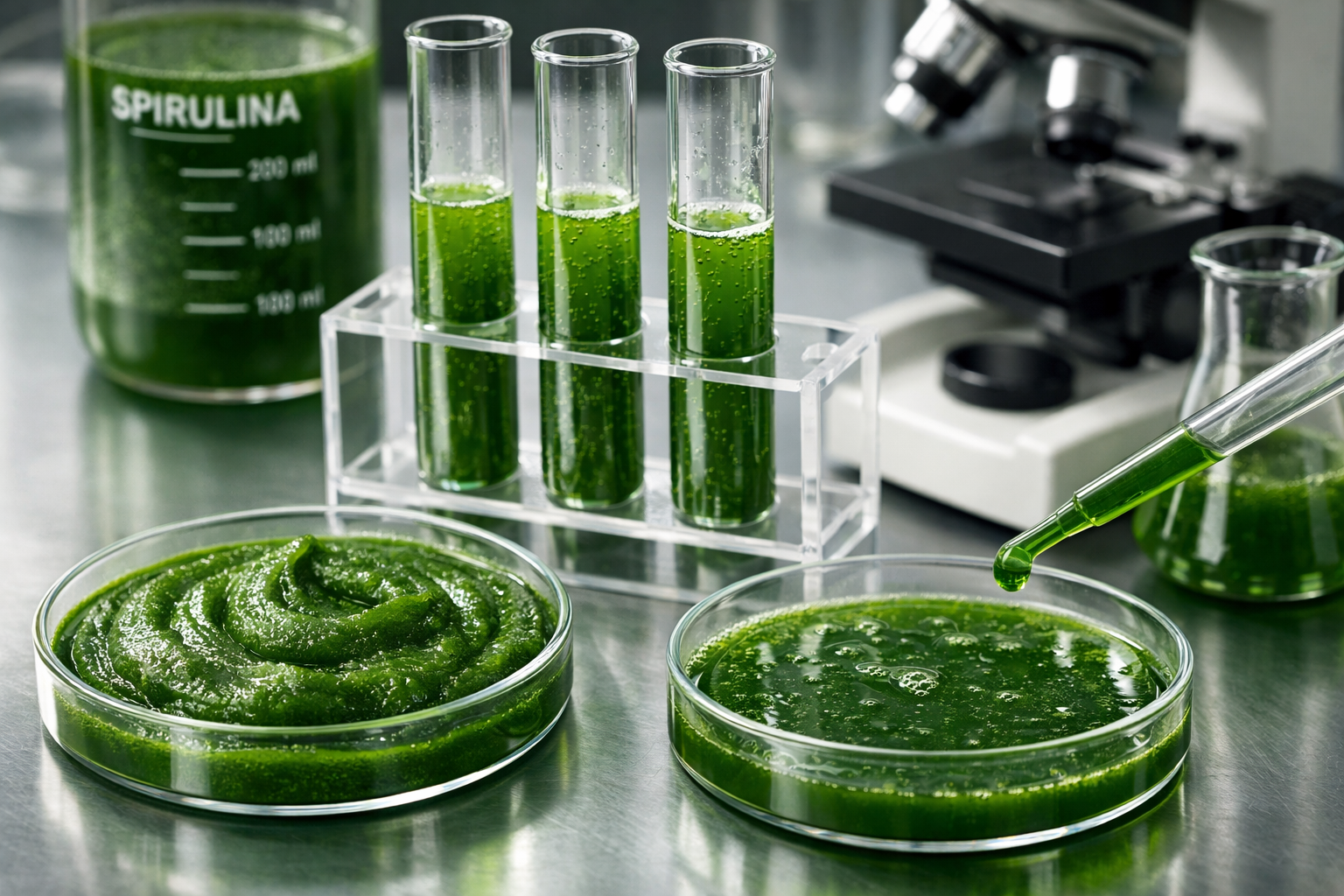
Pharma-grade spirulina operates under a fundamentally different evaluation framework than food-grade or bulk nutraceutical supply.
In food applications, spirulina is assessed for nutritional value, pigment stability, and safety compliance.
In pharmaceutical or medical-nutrition contexts, it is assessed for:
- Purity consistency
- Trace contaminant control
- Batch reproducibility
- Stability validation
- Documentation defensibility
- Regulatory alignment
The tolerance for variability narrows significantly.
Pharma buyers do not purchase spirulina as a superfood.
They evaluate it as a controlled bioactive raw material.
At Greenbubble, we design production ecosystems capable of meeting elevated purity and documentation expectations required for pharma-oriented markets.
Understanding how pharma-grade spirulina is evaluated differently is critical before attempting to enter this segment.
1. Purity Benchmarks and Specification Tightening
Pharma-grade spirulina typically operates under tighter specification bands than food-grade supply.
Key parameters include:
- Protein ≥ defined contractual threshold (often 65%+)
- Moisture ≤ 5–7% with validated drying logs
- Controlled ash percentage
- Defined phycocyanin concentration range
- Ultra-low heavy metal presence
- Microbial counts significantly below food limits
Unlike retail markets, pharma buyers review specification trend data across multiple batches.
Consistency is statistically evaluated.
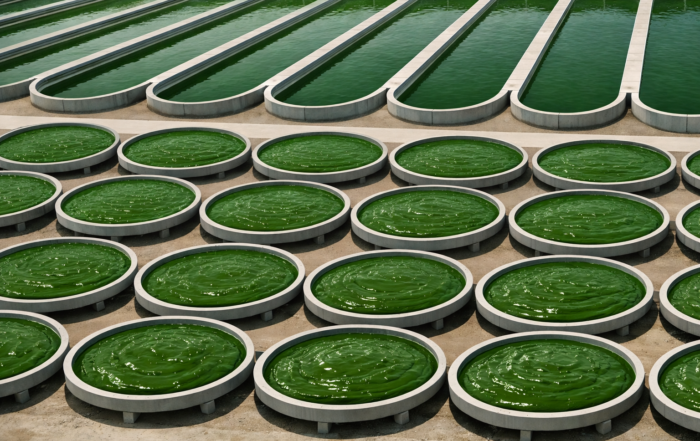
Production systems using engineered raceway ponds with controlled agitation through efficient agitators help stabilize nutrient uptake and reduce variability.
Pharma-grade evaluation prioritizes repeatability over marketing claims.
2. Heavy Metal and Contaminant Sensitivity
Heavy metal thresholds for pharmaceutical use are typically tighter than general nutraceutical standards.
Testing may include:
- Lead
- Arsenic
- Cadmium
- Mercury
- Hexavalent chromium screening
- Pesticide residue analysis
Water source integrity becomes critical.
Groundwater must be monitored consistently, and interaction materials must be SS 316 grade to prevent contamination.
Automated harvesting equipment reduces human contact and lowers microbial introduction risk.
Pharma buyers often conduct third-party verification beyond supplier COA documentation.
3. GMP and Zoning Requirements
Pharma-grade spirulina requires compliance closer to pharmaceutical GMP than food GMP.
This includes:
- Controlled entry zones
- Airflow management
- Segregated analytical and microbiological labs
- Equipment validation logs
- Cleaning validation documentation
- Batch manufacturing record traceability
Facilities structured through spirulina farming turnkey solutions can integrate GMP zoning during infrastructure planning rather than retrofitting later.
Documentation precision is often audited more aggressively than production itself.
4. Stability and Shelf-Life Validation
Food-grade spirulina often relies on general shelf-life estimates.
Pharma-grade spirulina may require:
- Accelerated stability testing
- Long-term stability data
- Moisture migration analysis
- Pigment degradation profiling
Drying method directly impacts stability performance.
Low-temperature spirulina drying equipment preserves phycocyanin and protein structure more effectively than high-heat alternatives.
Spray-dried material is rarely preferred in pharma contexts due to nutrient degradation.
Validated stability data strengthens regulatory defensibility.
5. Batch Traceability and Data Integrity
Pharma buyers require:
- Complete backward traceability
- Digital batch logs
- Nutrient sourcing documentation
- In-house lab validation records
- Retained sample archives
Data integrity standards are elevated.
Manual record systems are considered high risk.
Structured compliance systems supported through spirulina farming consultancy ensure documentation architecture supports regulatory scrutiny.
Traceability is not optional in pharma-grade supply.
6. Laboratory Infrastructure Expectations
Pharma-grade spirulina production often requires in-house analytical capabilities including:
- UV-visible spectrophotometry
- Heavy metal analysis coordination
- Microbial testing facilities
- Moisture analysis
- Ash testing
- Pathogen detection screening
Analytical and microbiological sections must be segregated.
Every batch must generate a complete COA.
Without in-house laboratory systems, response time to validation requests slows dramatically.
7. Production Scale and Economic Reality
Pharma-grade compliance increases operating costs through:
- Additional testing panels
- Certification audits
- Documentation management
- Infrastructure investment
- Skilled workforce requirements
Small farms under 1 acre struggle to distribute these fixed costs effectively. Realistic financial modeling shows sub-scale farms face structural profitability challenges fileciteturn2file1.
Pharma supply generally requires commercial-scale output with stable multi-batch reproducibility.
8. Risk Exposure and Liability
Pharmaceutical applications carry higher liability exposure.
Risk vectors include:
- Contaminant trace detection
- Label claim validation failure
- Stability deviation
- Documentation discrepancies
- Regulatory audit findings
Insurance coverage, crisis preparedness, and documented corrective action systems become critical.
Pharma-grade buyers evaluate not only current compliance but risk resilience architecture.
9. Evaluation Comparison Matrix
| Evaluation Area | Food-Grade Spirulina | Pharma-Grade Spirulina |
| Specification Band | Moderate | Narrow & validated |
| Heavy Metal Threshold | Regulatory compliant | Ultra-low with trend analysis |
| Microbial Limits | Food standard | Tighter tolerance |
| Documentation | HACCP/GMP logs | Enhanced GMP & data integrity |
| Stability Testing | Basic shelf-life | Accelerated & long-term studies |
| Audit Depth | Periodic | Intensive & recurring |
| Liability Exposure | Moderate | High |
Pharma-grade spirulina is evaluated as a controlled bioactive ingredient — not simply as nutritional algae.
Internal linking aligned with approved interlinking framework fileciteturn2file0.
Frequently Asked Questions
Q1. Is pharma-grade spirulina different biologically?
No. The biological organism is the same, but the production, testing, and documentation standards are significantly stricter.
Q2. Why are heavy metal limits tighter in pharma supply?
Because pharmaceutical formulations require ultra-low contaminant exposure to meet regulatory thresholds and protect patient safety.
Q3. Does drying method affect pharma acceptance?
Yes. Low-temperature drying better preserves nutrient stability and reduces degradation risk.
Q4. Can a small farm produce pharma-grade spirulina?
Only if it invests in laboratory infrastructure, GMP zoning, and compliance systems. Sub-scale farms often struggle to absorb fixed compliance costs fileciteturn2file1.
Q5. Is pharma-grade spirulina more profitable?
Potentially, but higher compliance costs, audit frequency, and liability exposure must be factored into financial modeling.
Conclusion
Pharma-grade spirulina is evaluated through a stricter lens than food or bulk nutraceutical supply.
It requires:
- Narrow specification control
- Ultra-low contaminant thresholds
- Enhanced GMP compliance
- Stability validation
- Deep documentation architecture
- Risk preparedness
Commercial farms that engineer infrastructure, laboratory capability, drying stability, and compliance precision from inception are better positioned to enter pharmaceutical supply chains.
Pharma buyers do not purchase spirulina for its marketing appeal.
They purchase controlled reproducibility, validated purity, and regulatory defensibility.
Table Of Contents