Introduction
Spirulina, the blue-green microalgae often hailed as a superfood of the future, thrives under very specific environmental conditions. While nutrients, light, and water quality all influence cultivation, two parameters stand out as the twin pillars of successful spirulina growth: pH and temperature. These two factors are critical not just for growth rates but also for nutrient composition, contamination resistance, and overall profitability.
In this blog, we will explore why pH and temperature are central to spirulina farming, the risks of imbalance, how to maintain them at optimal levels, and why automation is becoming indispensable for commercial-scale production.
Why pH Matters in Spirulina Growth
Spirulina is an alkaliphilic organism, meaning it thrives in highly alkaline conditions. The ideal pH range is between 9 and 11, and this unique requirement plays several important roles in cultivation.
The Role of pH in Nutrient Availability
- A stable pH ensures that essential nutrients such as nitrogen, carbon, and phosphorus remain soluble and accessible to spirulina cells.
- High alkalinity discourages the growth of contaminating algae, protozoa, and bacteria.
Indicator of Growth
As spirulina consumes bicarbonates during photosynthesis, the pH of the culture rises. A steady increase in pH is often a sign of active growth. Conversely, stagnant or falling pH levels may indicate stress, contamination, or nutrient depletion.
Risks of Imbalance
- Too Low (<8.5): Spirulina growth slows, and contaminants thrive.
- Too High (>11.5): Enzyme activity and photosynthesis are inhibited, leading to bleaching and reduced yield.
Why Temperature is Critical
Just as important as pH is the temperature of the culture medium. Spirulina is thermophilic, meaning it prefers warm conditions. The ideal growth range is 35–37°C, with some strains tolerating short exposures up to 39°C.
The Sweet Spot for Productivity
- Optimal Growth: Maximum growth rates are observed at 32–37°C.
- GLA Yield: Gamma-linolenic acid (GLA), one of spirulina’s most valuable fatty acids, is maximized around 30°C.
- Photosynthesis Efficiency: Chlorophyll and phycocyanin production peak within this temperature range.
Risks of Temperature Extremes
- Above 40°C culture temperature: Spirulina begins to bleach and lose pigments. Extended exposure can lead to culture collapse.
- Above 45°C culture temperature: Cultures often fail completely, unless shading and cooling interventions are applied.
- Below 15°C culture temperature: Growth slows dramatically, with minimal cell division.
Natural Regulation Methods
Farmers often use shading nets, agitation systems, and water depth adjustments to regulate pond temperature. Larger ponds provide better thermal buffering, helping cultures remain stable even under extreme external conditions.
The Interplay of pH and Temperature
pH and temperature are not independent variables—they interact closely to influence spirulina growth and quality.
- Photosynthesis: Optimal pH and temperature maximize carbon fixation, increasing biomass yield.
- Protein Synthesis: Both parameters affect the solubility of nitrogen, directly impacting spirulina’s unusually high protein content (55–70%).
- Pigment Stability: Pigments like chlorophyll-a and phycocyanin degrade quickly outside ideal conditions.
For example, while spirulina can tolerate short-term exposure to 39°C, if pH is simultaneously above 11, the culture experiences stress and pigment loss. Thus, both parameters must be monitored together.
Monitoring and Controlling pH & Temperature
Manual Monitoring
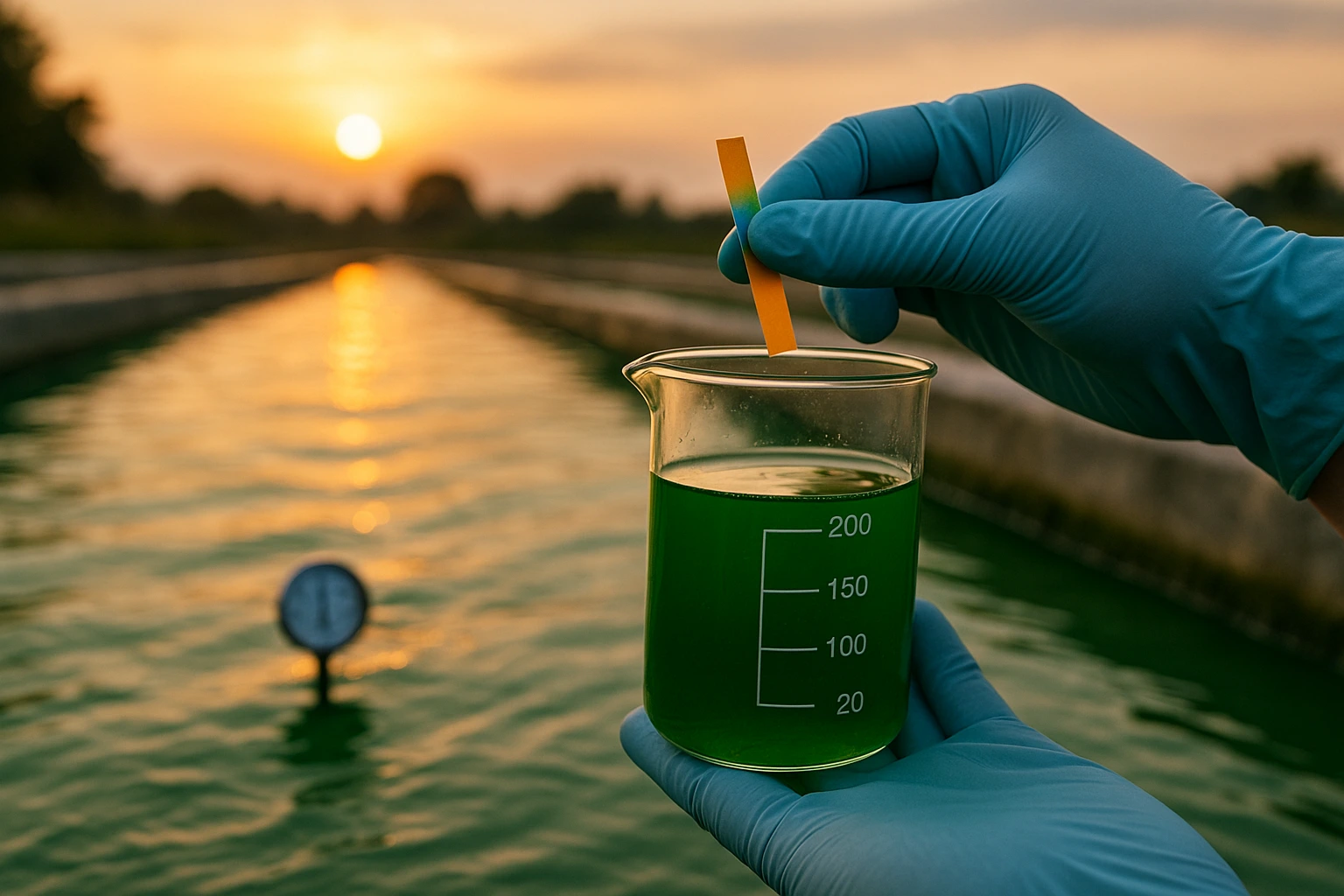
Traditionally, small farms measure pH and temperature manually using handheld devices. While cost-effective, this method is prone to human error and does not provide real-time data.
Automated Monitoring
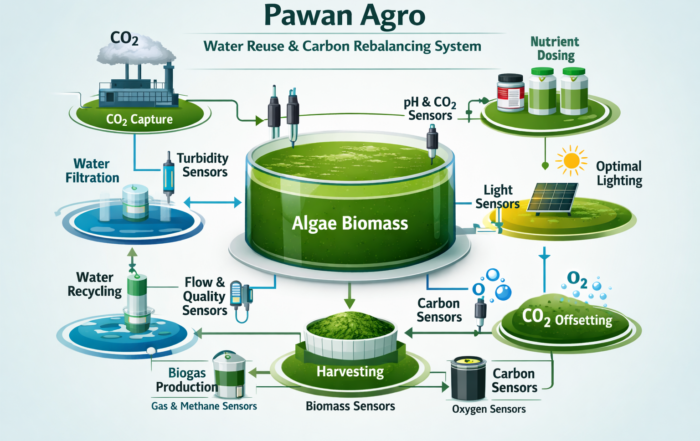
Modern commercial spirulina farms rely on IoT and SCADA-based systems that:
- Continuously log pH and temperature.
- Trigger alarms when parameters move out of range.
- Automate dosing of carbon sources to maintain ideal alkalinity.
- Adjust agitation and shading systems to regulate culture temperature.
This automation minimizes risk and ensures compliance with international certifications such as USDA Organic, HACCP, and GMP.
Role of Automation in Stability
Manual intervention cannot consistently maintain the delicate balance spirulina requires. Automation provides:
- Automated pH Dosing: Carbonate or organic carbon is added automatically when pH begins to drop.
- Automated Agitation: Prevents stratification, ensuring even temperature and nutrient distribution.
- Automated Shading Systems: Deploy shading nets when external temperatures exceed 45°C, keeping pond temperature under 38°C.
- Reduced Human Contact: Minimizes contamination, a key requirement for GMP certification.
Learn more in Automation in Spirulina Farming.
Case Studies & Practical Insights
- Manual Farms: Struggle to control hourly pH changes and daily temperature fluctuations. Without automated records, they also fail certification audits.
- Large-Scale Farms: Use raceway ponds of 1000–4000 sq. meters. Larger pond volume provides better thermal stability, reducing sudden spikes in temperature.
- Export-Oriented Farms: Invest in advanced monitoring systems and in-house labs to ensure every batch complies with international standards.
For best designs, see Designing Large-Scale Spirulina Farms.
Practical Ranges & Effects
| Parameter | Ideal Range | Risk if Too Low | Risk if Too High |
| pH | 9 – 11 | Slow growth, contamination risk | Enzyme inhibition, pigment bleaching (>11.5) |
| Temperature | 35 – 37°C | Reduced productivity (<15°C) | Culture collapse (>45°C) |
| Combined Effect | pH 9–11 & 35–37°C | Weak photosynthesis | Nutrient loss, pigment degradation |
Environmental Impact
pH and temperature are also influenced by external factors:
- Geography & Climate: Tropical and semi-arid regions are ideal. Cold climates require greenhouses or controlled tanks.
- Seasonal Variation: Farmers must prepare for monsoons, heatwaves, and cold spells.
- Pond Design: Depth, agitation, and shading are crucial in stabilizing conditions. Learn more in The Role of Climate and Geography in Large-Scale Spirulina Farming.
FAQs
1. What is the ideal temperature range for spirulina growth?
The optimal range is 35–37°C. Spirulina can tolerate short periods up to 39°C but begins to bleach above 40°C.
2. How does pH indicate spirulina growth activity?
A rising pH shows that spirulina is consuming bicarbonates during photosynthesis, signaling active growth.
3. What happens if temperature crosses 40°C?
Cultures begin to lose pigments, bleach, and eventually collapse if not cooled or shaded. Beyond 45°C, cultures typically fail.
4. Can spirulina grow in cold climates with controlled ponds?
Yes. With greenhouse systems, artificial heating, and controlled raceway tanks, spirulina can be cultivated even in colder climates, though costs are higher.
Conclusion
pH and temperature are truly the twin pillars of spirulina growth. Together, they determine the speed of cell division, the nutrient profile, and the overall yield of the culture. When managed properly, they also reduce contamination risks and ensure product quality meets global standards.
For small farms, manual monitoring often proves insufficient, leading to inconsistency and certification failures. On the other hand, automated farms can maintain tight control, stabilize yields, and meet export requirements. By prioritizing pH and temperature management, spirulina farmers can unlock both biological efficiency and commercial success.
Table Of Contents