Introduction
Starting a spirulina farm can be an exciting but complex journey. Many first-time cultivators underestimate the technical precision required to maintain consistent yield, purity, and compliance with international quality standards. Even minor errors in pond design, nutrient dosing, or contamination control can result in major losses. This guide identifies the most common mistakes new spirulina farmers make and offers proven solutions to build a sustainable, profitable operation from the ground up.
For a full overview of farm setup processes, visit Spirulina Farming 101: A Beginner’s Guide.
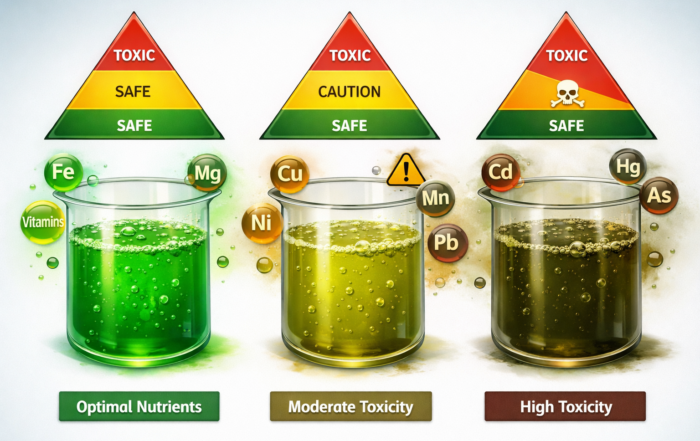
1. Ignoring Water Quality and pH Balance
Water quality determines the health and productivity of a spirulina culture. New farmers often assume that any freshwater source is suitable, but impure or untested water can introduce contaminants and heavy metals, reducing growth and marketability.
Common Issues
- Using untreated borewell or surface water with high metal content.
- Failing to maintain ideal pH between 9.0 and 11.0.
- Not testing for pesticide residues or microbial contamination.
Solutions
- Use RO or UV-treated water and regularly test for heavy metals and pesticides.
- Maintain alkalinity through sodium bicarbonate or organic carbon dosing.
- Monitor pH daily with automated systems. (Automation in Spirulina Farming: How Technology Can Boost Mass Production)
2. Poor Pond Design and Depth Control
Many new farmers build ponds without understanding the required geometry and depth needed for uniform agitation and temperature regulation.
Common Issues
- Irregular or shallow ponds leading to overheating.
- No slope for efficient water flow and biomass collection.
- Overcrowded pond layouts that increase contamination risk.
Solutions
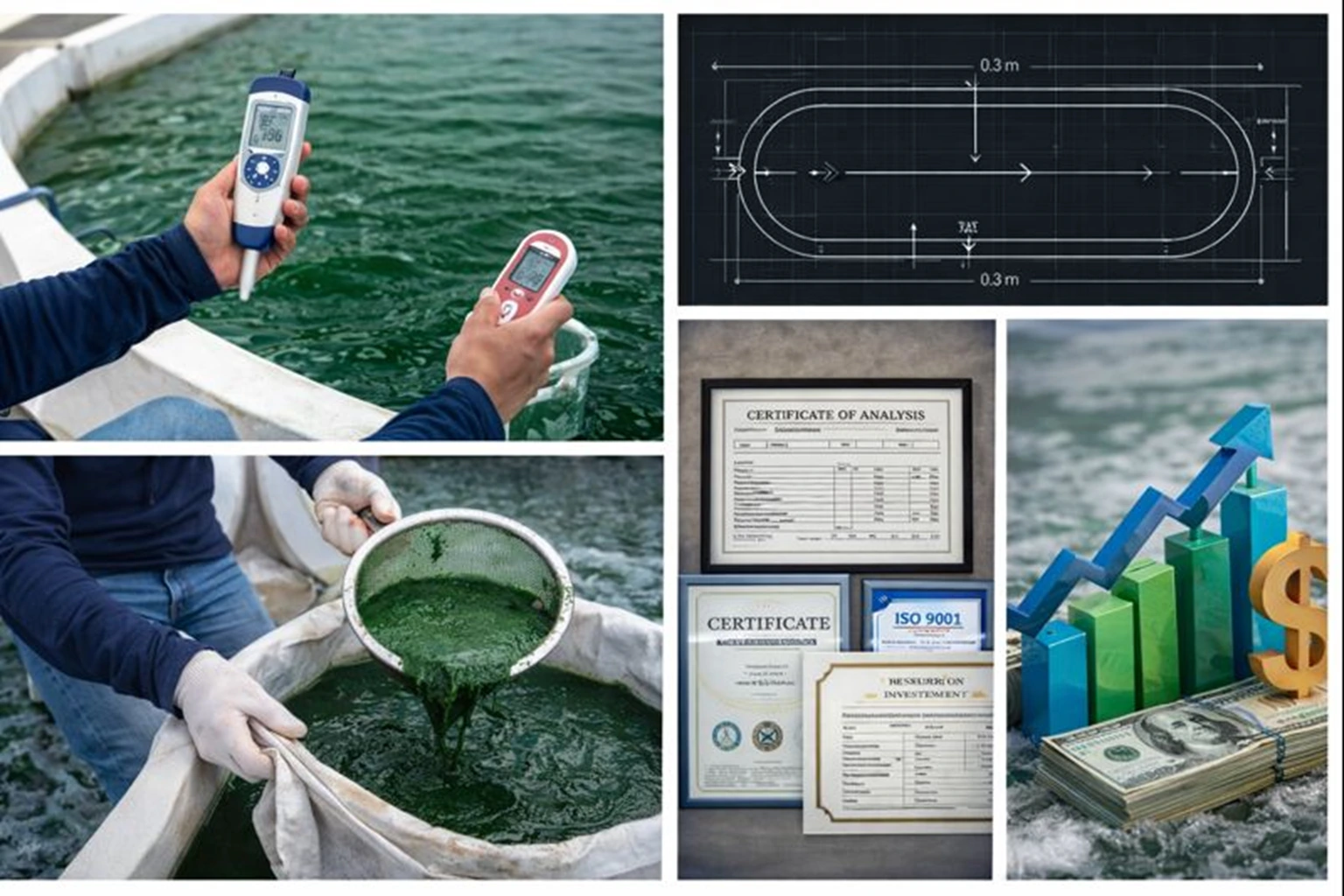
- Maintain pond depth between 0.25 to 0.35 meters.
- Include gentle slopes for easy biomass harvest.
- Design with proper aeration and agitation systems for temperature control.
For reference designs, see Designing Large-Scale Spirulina Farms: Best Practices for Maximum Efficiency.
3. Manual Operations Without Automation
Manual handling of nutrients, agitation, or harvesting introduces inconsistency and human error. Automation ensures precise dosing, uniform mixing, and real-time data tracking.
Common Issues
- Irregular agitation speed causing temperature spikes.
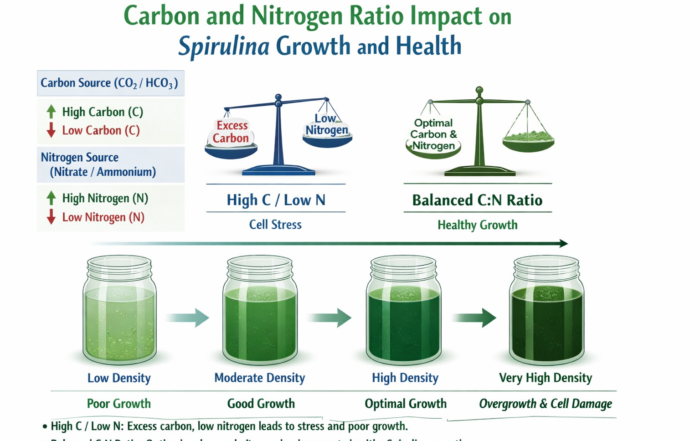
- Manual dosing of nutrients leading to imbalance.
- Lack of real-time culture monitoring.
Solutions
- Implement IoT or SCADA-based control systems for pH, temperature, and agitation.
- Automate harvesting and dewatering to minimize contamination.
- Regularly calibrate sensors for accurate readings.
4. Inadequate Contamination Control
Spirulina is highly sensitive to contamination from bacteria, protozoa, and other algae species. New farms often skip strict sterilization and monitoring practices.
Common Issues
- Not cleaning ponds or agitators before each cycle.
- Poor air and water filtration systems.
- Mixing old and new cultures without screening.
Solutions
- Sterilize tanks, pipes, and tools with food-grade disinfectants.
- Maintain separate areas for culture inoculation and harvesting.
- Conduct regular COA and microbial tests to detect early contamination.
Learn more in Identifying & Preventing Microbial Contaminants in Spirulina.
5. Choosing the Wrong Drying Method
The drying phase determines final product quality. Many new farms rely on sun drying, which degrades pigments and nutritional compounds.
Common Issues
- Uneven drying causes oxidation and discoloration.
- Loss of protein and phycocyanin due to high heat exposure.
- Contamination from open-air drying.
Solutions
- Use Refractive Window Drying (RWD) or vacuum drying for nutrient preservation.
- Keep drying temperatures below 45°C.
- For large farms, integrate continuous RWD systems for efficiency. (Spirulina Drying Methods: Comparison)
6. Lack of Quality Testing and Certification
Skipping testing is one of the most costly mistakes. Buyers, especially in export markets, require batch-wise Certificates of Analysis (COA) and organic certification for compliance.
Common Issues
- No in-house lab setup for microbial and heavy metal testing.
- Incomplete or falsified organic certification.
- Ignoring HACCP and GMP standards.
Solutions
- Invest in a basic in-house QC lab with pH, TDS, and microbiological testing.
- Follow HACCP, GMP, and ISO 22000 protocols for quality assurance.
- Partner with accredited labs for COA validation. (How to Build a HACCP-Compliant Spirulina Facility)
7. Misjudging Investment and ROI Timelines
Many new investors expect quick profits, overlooking the time required to stabilize culture and reach consistent yields.
Common Issues
- Underestimating setup and operational costs.
- Expecting ROI within months instead of 2–3 years.
- Over-expanding before achieving quality consistency.
Solutions
- Begin with 1–2 acres and scale up gradually.
- Plan for ROI of 30–40% after full optimization (3-acre model). (The Economics of Spirulina Farming: Is It a Profitable Venture?)
- Use automation and organic certification to reach premium export markets.
8. Poor Packaging and Storage Practices
Improper packaging can nullify all production efforts by reducing shelf life and nutrient retention.
Common Issues
- Using thin plastic or non-barrier materials.
- Storing powder in humid or sunlit areas.
- Not flushing pouches with nitrogen.
Solutions
- Use vacuum-sealed aluminum foil pouches with nitrogen flushing.
- Maintain storage temperature between 15–25°C and humidity under 40%.
- Label all packages with COA, batch ID, and expiry details. (How to Store and Pack Spirulina for Long Shelf Life)
FAQs
Q1: What is the most common mistake made by new spirulina farmers?
Neglecting water quality and contamination control is the top reason for failure. Regular testing and automated monitoring are essential.
Q2: How can automation improve success rates in new farms?
Automation ensures consistent culture conditions, reduces labor dependency, and helps maintain organic compliance.
Q3: Why should sun drying be avoided?
Sun drying leads to nutrient degradation, oxidation, and contamination, making the product unsuitable for export markets.
Q4: How much investment is required for a successful spirulina farm?
A 1-acre automated farm requires around ₹75–90 lakhs, with ROI achievable in 2–3 years after quality stabilization.
Q5: What certifications are needed for exporting spirulina?
USDA Organic, EU Organic, HACCP, and batch-wise COA certification are mandatory for accessing global markets.
Conclusion
Launching a spirulina farm without proper planning can lead to avoidable losses. The key to success lies in maintaining strict water quality, automation, contamination prevention, proper drying, and certified quality testing. With the right systems in place, new farms can achieve international-grade quality, consistent yields, and long-term profitability in the growing global spirulina market.
Table Of Contents