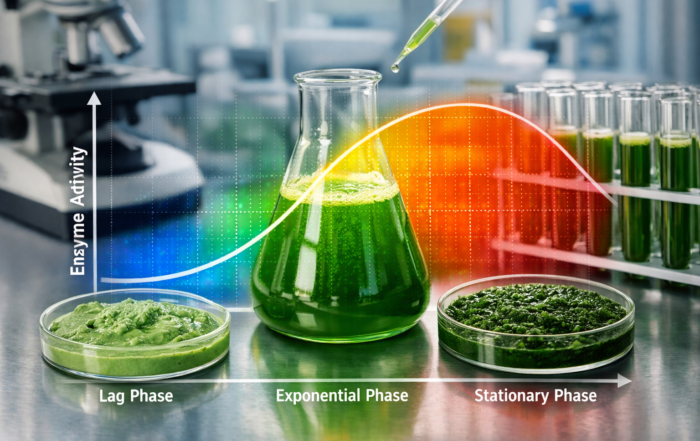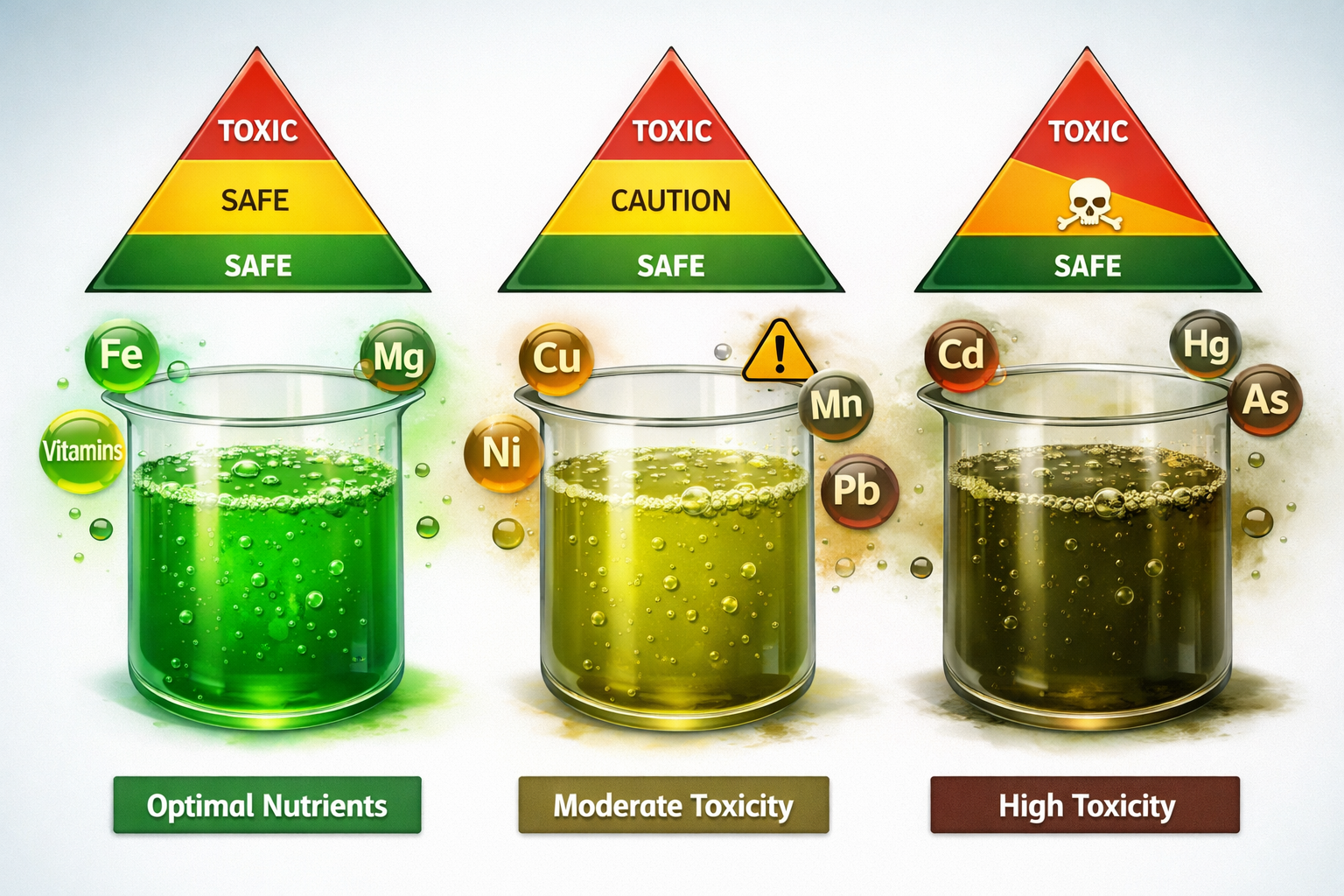
Micronutrients play a paradoxical role in spirulina cultivation. In trace amounts, they are essential for enzymatic activity and metabolic stability. Beyond narrow thresholds, however, the same elements become toxic, suppressing growth, damaging pigments, and destabilising cultures. In commercial spirulina farming, micronutrient toxicity is rarely sudden; it develops silently through accumulation, poor input control, or contaminated water sources. Understanding toxicity thresholds is therefore critical for maintaining yield, quality, and long-term culture stability.
Why Micronutrient Control Matters at Commercial Scale
High-density spirulina systems magnify micronutrient effects. Trace metals that remain harmless at low biomass concentrations can inhibit metabolism when density increases. Unlike macronutrients, micronutrients are not consumed rapidly; excess amounts persist in the system and accumulate over time.
Commercial farms operating continuously are particularly vulnerable. Without disciplined monitoring, micronutrient toxicity often masquerades as nutrient deficiency, genetic drift, or unexplained yield decline.
Common Misconceptions About Micronutrient Toxicity
Several misconceptions obscure the real risk of micronutrient toxicity:
- More micronutrients improve growth and colour
- Trace metals are insignificant in alkaline spirulina systems
- Toxicity only arises from industrial pollution
- Visual clarity of water guarantees chemical safety
In practice, even food-grade inputs and groundwater sources can introduce metals at levels that become harmful over long production cycles.
Essential Micronutrients and Their Narrow Safety Margins
Spirulina requires micronutrients such as iron, zinc, copper, manganese, and molybdenum for enzyme function and photosynthesis. However, the effective range between deficiency and toxicity is narrow.
Exceeding these limits interferes with electron transport, damages photosynthetic pigments, and disrupts nitrogen assimilation. Unlike macronutrient imbalance, toxicity effects are often irreversible within the same culture cycle.
Indicative Micronutrient Toxicity Thresholds
| Micronutrient | Functional Role | Indicative Toxicity Onset | Primary Impact on Culture |
| Iron (Fe) | Electron transport, chlorophyll synthesis | >10–15 mg/L | Oxidative stress, pigment damage |
| Copper (Cu) | Enzyme cofactor | >0.02–0.05 mg/L | Growth inhibition, protein loss |
| Zinc (Zn) | Enzyme activation | >0.1–0.3 mg/L | Reduced cell division |
| Manganese (Mn) | Photosystem stability | >1–2 mg/L | Photoinhibition |
| Chromium (Cr) | Non-essential contaminant | >0.01 mg/L | Acute toxicity, culture crash |
These values represent operational warning zones rather than absolute limits and vary with pH, temperature, and biomass density.
Sources of Micronutrient Toxicity in Spirulina Farms
Micronutrient accumulation typically originates from:
- Groundwater with elevated metal content
- Repeated dosing of mineral supplements
- Contaminated carbon or nutrient inputs
- Corrosion from metallic infrastructure
- Inadequate flushing during continuous operation
In engineered raceway pond systems, uniform circulation reduces localised concentration spikes but does not eliminate accumulation risk.
Diagnostic Indicators of Micronutrient Toxicity
| Observable Symptom | Likely Micronutrient Involved | Practical Corrective Action |
| Sudden pigment fading or bleaching | Excess iron or copper | Stop micronutrient dosing, dilute medium, test water source |
| Slow regrowth after harvest | Copper or zinc accumulation | Partial medium replacement and input audit |
| Reduced protein percentage | Chronic copper or chromium stress | Re-inoculate after correcting water and nutrient inputs |
| Patchy growth or uneven colour | Localised metal stratification | Improve mixing using agitators and review pond hydraulics |
| Sudden culture crash without contamination | Chromium or heavy metal spike | Immediate dilution and culture reset from clean inoculum |
Interaction Between pH, Alkalinity, and Metal Toxicity
High alkalinity reduces the solubility of some metals but increases bioavailability of others. Elevated pH can convert certain metals into more reactive forms, intensifying toxicity despite low measured concentrations.
Uniform mixing using efficient agitator systems helps prevent metal stratification that creates micro-toxic zones within ponds.
Micronutrient Toxicity Under Continuous Harvesting
Continuous harvesting removes biomass but leaves dissolved metals behind, effectively increasing micronutrient concentration over time. This makes toxicity a cumulative risk in long-running systems.
Automated harvesting equipment allows precise biomass removal while enabling better synchronisation of dilution and replenishment cycles to manage accumulation.
Organic Cultivation and Heavy Metal Sensitivity
Organic spirulina systems face additional challenges. Input flexibility is limited, and corrective chelation options are restricted. Using certified organic feed inputs reduces contamination risk but does not eliminate it.
Greenbubble incorporates upstream water testing and controlled input sourcing into organic SOPs to minimise long-term metal accumulation.
Metal Accumulation and Regulatory Exposure
Micronutrient toxicity becomes most visible during compliance testing rather than processing. Heavy metals accumulate silently and are often detected only during COA verification or third-party audits. When limits are breached, the response is not quality downgrade but mandatory disposal or rejection.
Unlike other cultivation errors, micronutrient toxicity carries regulatory consequences. Repeated failures trigger deeper scrutiny of water sources, input traceability, and SOP discipline. For commercial farms, this transforms a cultivation issue into a compliance and reputational risk, with implications that extend beyond a single batch.
Practical Prevention Framework
Preventing micronutrient toxicity in commercial spirulina farms requires:
- Baseline and periodic water metal analysis
- Controlled micronutrient dosing protocols
- Scheduled dilution or partial medium replacement
- Corrosion-resistant infrastructure
- Ongoing audits supported by spirulina farming consultancy support
This prevention-first approach reflects how Greenbubble designs systems for long-term stability rather than reactive correction.
FAQs
Q1. Can spirulina tolerate heavy metals because of high pH?
High pH reduces the solubility of some metals but does not eliminate toxicity risk. Certain metals remain bioavailable and harmful even in alkaline conditions.
Q2. How quickly does micronutrient toxicity develop?
Toxicity usually develops gradually over weeks or months as metals accumulate, rather than appearing as sudden culture collapse.
Q3. Can toxicity be reversed once detected?
Severe toxicity cannot be reversed within the same culture. Prevention and early detection are far more effective than corrective intervention.
Q4. Are organic farms safer from metal toxicity?
Not necessarily. Organic certification limits corrective tools, making disciplined input control and monitoring even more critical.
Q5. Does drying remove heavy metals from spirulina?
No. Drying concentrates existing metals along with biomass, making upstream control essential.
Conclusion: Trace Control Determines Long-Term Viability
In spirulina farming, micronutrients are beneficial only within narrow boundaries. Exceeding toxicity thresholds undermines productivity, quality, and compliance long before visible failure occurs. Commercial success depends on disciplined micronutrient control, rigorous monitoring, and system-level prevention. In long-term operations, trace element management is not a detail-it is a defining factor of sustainability.
Table Of Contents