Introduction
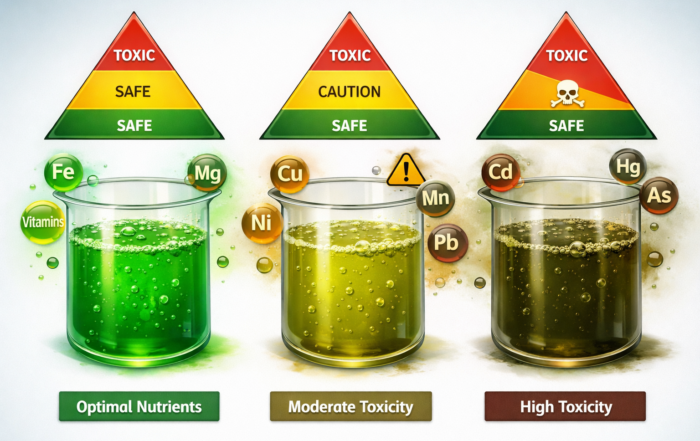
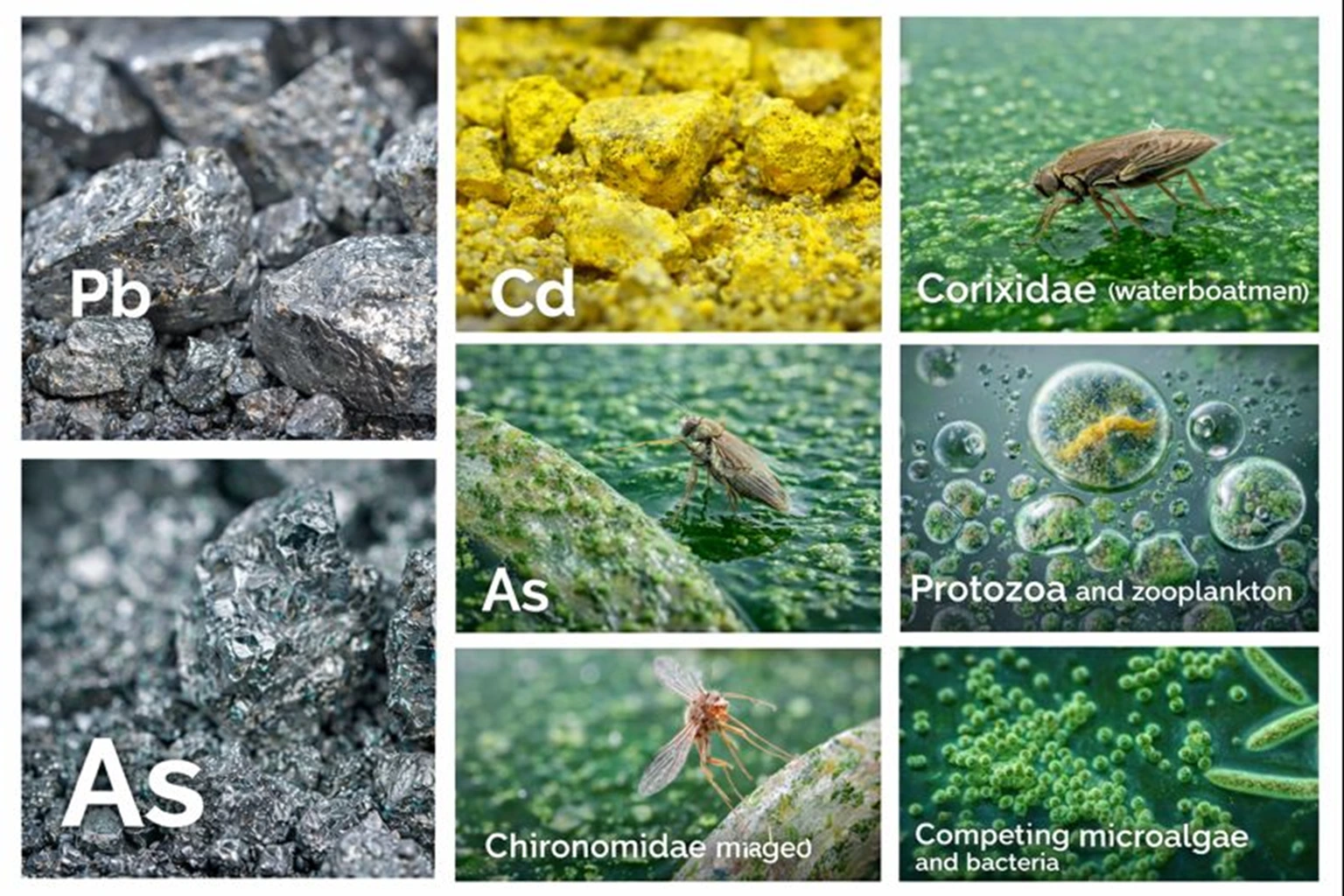
Heavy metal and biological contamination are two of the most serious threats in spirulina farming, particularly for farms aiming for organic certification and export compliance. Elements such as lead (Pb), cadmium (Cd), arsenic (As), and mercury (Hg) can enter through contaminated water, corroded equipment, or untested nutrient sources. Similarly, biological contaminants — including flies, larvae, protozoa, and other algae — can drastically reduce productivity and render a batch unfit for human consumption.
Preventing contamination requires a holistic approach, including high-quality water systems, proper equipment selection, biological pest control, and rigorous lab testing. The goal is to maintain HACCP and USDA Organic standards while ensuring consistent yields and long-term sustainability.
For detailed COA and quality assurance parameters, refer to Spirulina Quality Control in Mass Production: Ensuring Consistency and Safety.
Understanding Heavy Metal Contamination
Heavy metals occur naturally in soil and groundwater but become problematic when introduced into spirulina ponds through industrial runoff or non-food-grade materials. Continuous accumulation affects not only consumer safety but also culture health and pigment composition.
Common Heavy Metals Found in Spirulina
| Metal | Source | Maximum Permissible Limit (µg/g) | Impact on Quality |
| Lead (Pb) | Groundwater, corroded pipes | 0.2 | Neurotoxic; non-compliant for export |
| Cadmium (Cd) | Fertilizers, galvanic coatings | 0.2 | Carcinogenic; affects protein structure |
| Arsenic (As) | Borewell contamination | 0.5 | Toxic; bioaccumulates in biomass |
| Mercury (Hg) | Industrial runoff, air pollution | 0.025 | Destroys pigments and enzymes |
Proper testing using cold vapour atomic absorption or graphite furnace atomic absorption techniques ensures accurate results that comply with USP and EU Pharmacopoeia standards.
Key Sources of Heavy Metals and Biological Contaminants
- Water Source Contamination: Industrial runoff or pesticide-laden groundwater introduces heavy metals.
- Non-Food-Grade Equipment: Mild steel and plastic equipment leach metals during corrosion.
- Nutrient Impurities: Industrial-grade chemicals can carry trace metals and toxins.
- Agricultural Runoff: Rainwater from surrounding farmlands may contain herbicides and 2,4-D residues.
- Biological Intrusions: Flies, larvae, and protozoa that feed on spirulina cultures.
Preventive Strategies for Heavy Metal Control
1. Water Quality Management
- Always use RO or UV-filtered borewell water.
- Perform quarterly ICP-MS or AAS testing for metals and pesticides.
- Maintain pH between 9.0 and 11.0; high alkalinity reduces metal solubility.
- Avoid using surface or rainwater without purification.
2. Equipment Standards
- Use SS 316 stainless steel for tanks, agitators, and drying trays to eliminate corrosion. (Why SS 316 Is the Standard for Spirulina Equipment)
- Avoid painted or coated metals; flakes can introduce lead or zinc.
- Maintain a regular descaling and cleaning schedule with non-reactive agents.
3. Certified Organic Inputs
- Source only OMRI-approved, food-grade nutrient salts.
- Test each batch of inputs for heavy metals before pond application.
- Keep traceability records with COA for every input supplier.
4. Lab Testing and COA Validation
| Parameter | Specification | Typical Result |
| Lead | ≤ 0.20 µg/g | 0.11 µg/g |
| Arsenic | ≤ 0.50 µg/g | 0.10 µg/g |
| Cadmium | ≤ 0.20 µg/g | <0.09 µg/g |
| Mercury | ≤ 0.025 µg/g | <0.025 µg/g |
| Pesticides | Absent | Absent |
Testing should be performed for every batch prior to drying and export packaging.
Biological Contamination in Spirulina Ponds
Biological contaminants are equally damaging and require continuous monitoring.
Common Pests and Contaminants
- Ephidridae (flies)
- Corixidae (waterboatmen)
- Chironomidae (midges)
- Protozoa and zooplankton
- Competing microalgae and bacteria
Management Techniques
- Install an 30-mesh angled screen in front of agitators to collect larvae and debris.
- Clean screens daily; if ineffective, sweep entire pond using the same mesh.
- Maintain high alkalinity (pH up to 11.5) and temperature tolerance (up to 45°C) — conditions under which spirulina thrives but most pests fail to survive.
- Use groundwater as the top-up source, avoiding colored materials during cleaning to prevent chemical leaching.
- In case of low productivity, stimulate culture using 5-Aminolevulinic Acid (ALA, 500 mg/L) to enhance photosynthetic activity and phycocyanin production.
HACCP and GMP Framework for Contamination Control
Implementing HACCP and GMP frameworks ensures contamination control at every stage of production.
HACCP Critical Control Points
- Water Input: Continuous testing and documentation.
- Equipment Integrity: Verification of SS 316 material and cleaning schedule.
- Pond Monitoring: Maintain temperature (35–37°C) and agitation.
- Harvesting and Drying: Use of RWD or vacuum dryers in sterile environments. (Spirulina Drying Methods: Comparison)
Sustainable Practices and Environmental Safety
- Adopt closed-loop nutrient systems to recycle filtered water.
- Prevent contamination from nearby farms by creating buffer zones.
- Use solar power to reduce airborne metal pollution from combustion.
- Avoid toxic metals like mercuric chloride, cadmium chloride, nickel sulphate, and zinc chloride, as even trace levels (0.01 ppm Hg or 0.1 ppm Cd) can harm cultures.
These sustainable practices ensure long-term productivity, certification compliance, and environmental protection.
Common Mistakes to Avoid
- Using untested or industrial-grade water.
- Employing non-certified nutrient salts.
- Failing to clean screens and agitators regularly.
- Ignoring biological pest buildup.
- Skipping COA testing before packaging.
FAQs
Q1: How frequently should contamination testing be done?
At least quarterly, with batch-level COA verification for export production.
Q2: Can old ponds cause contamination?
Yes, unlined or corroded ponds release sediments and metals into the culture. Re-lining and descaling are essential.
Q3: What are early signs of contamination?
Color fading, pH fluctuations, reduced photosynthetic activity, and visible larvae or debris in the pond.
Q4: How can organic farms ensure heavy metal compliance?
By using RO water, SS 316 systems, certified inputs, and consistent third-party lab testing.
Q5: Can contamination affect export approval?
Yes, contaminated batches are rejected during COA validation, leading to financial and certification losses.
Conclusion
Contamination — whether chemical or biological — can devastate spirulina production and brand reputation. By maintaining strict control of inputs, water, equipment, and biological pests, farmers can ensure sustainable, high-yield cultivation that meets HACCP, USDA Organic, and EU export standards.
Consistent testing, operator training, and infrastructure built with SS 316 stainless steel not only prevent contamination but also establish the foundation for long-term profitability and environmental compliance in the global spirulina industry.
Table Of Contents