Introduction
Spirulina farming is more than just growing algae-it is a precise blend of agriculture, biotechnology, and sustainability. Every day on a spirulina farm involves monitoring delicate environmental conditions, ensuring nutrient balance, and following strict quality control procedures. From dawn till dusk, farmers and technicians work to transform microscopic spirulina into a premium-grade superfood ready for global markets.
In this article, we take you through a full day in the life of a spirulina farm, showing how each spirulina’s step-monitoring, harvesting, drying, lab testing, and packaging-ensures spirulina’s nutritional value and export readiness.
Morning: Monitoring the Ponds
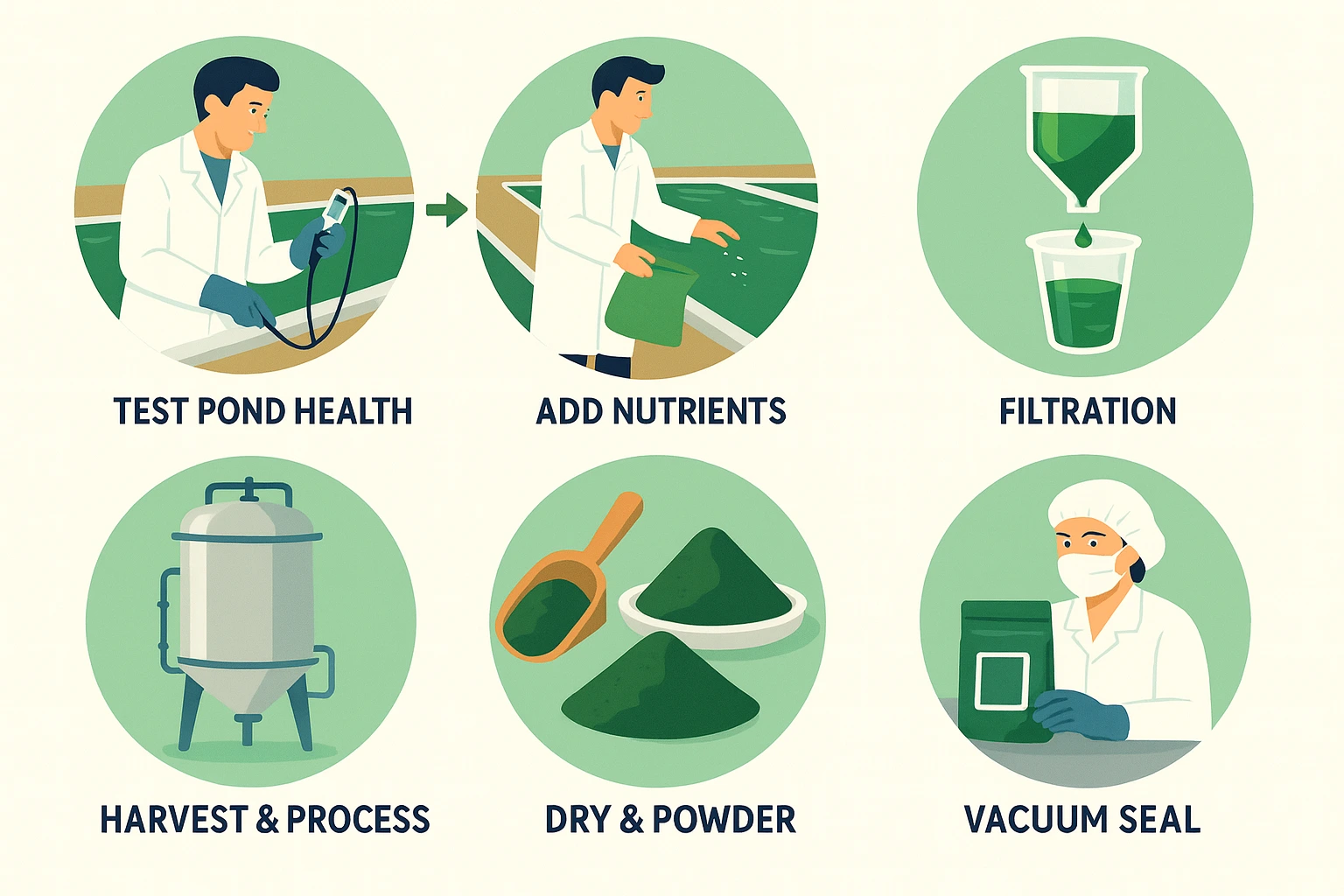
The day begins with checking the ponds, the heart of any spirulina farm.
Parameters Monitored
- pH: Spirulina thrives between 9–11. A rising pH indicates active growth.
- Temperature: The sweet spot is 35–37°C. Above 40°C, bleaching occurs; below 15°C, growth slows.
- Agitation: Paddle wheels or automated agitators are inspected to ensure continuous mixing.
- Contamination Checks: Farmers look for pests like water boatmen or midges, and signs of competing algae.
Without daily monitoring, pond conditions can quickly shift, jeopardizing the entire culture.
Mid-Morning: Feeding the Culture
Once ponds are stable, it’s time to feed the spirulina with nutrients.
Key Nutrient Inputs
- Carbon Source: Sodium bicarbonate or organic sugars to maintain alkalinity.
- Nitrogen: OMRI-approved nitrates for protein synthesis.
- Phosphates & Minerals: Magnesium, potassium, iron, and selenium to support growth.
For organic farms, every nutrient source must be certified pesticide- and toxin-free. Each addition is recorded for traceability during audits.
Late Morning: Harvesting Preparation
As the culture matures, preparations for harvesting begin.
Harvest Setup
- Prefiltration: Fine mesh filters (80 mesh) are set up to remove impurities.
- Harvesting Equipment: Automated rotary drum filters and pumps are prepared.
- Cleanroom Readiness: The processing area is sanitized under GMP guidelines to minimize human contact.
By late morning, the team is ready to extract spirulina from the ponds.
Afternoon: Harvesting & Dewatering
Harvesting is the most critical task of the day.
The Process
- Filtration: Spirulina biomass is separated from pond water using 500-mesh nylon screens or automated drum filters.
- Washing: The biomass is washed multiple times to remove salts and impurities.
- Dewatering: Biomass is concentrated to about 20% solids using vacuum filters or belt presses.
Automation reduces contamination risks and labor requirements, making large-scale harvesting efficient.
For deeper details, see Spirulina Harvesting Techniques & Equipment.
Evening: Drying the Biomass
Once dewatered, spirulina must be dried immediately to preserve nutrients.
Preferred Drying Methods
- Refractance Window Drying (RWD): Maintains temperatures below 45°C, preserving pigments and proteins.
- Vacuum Drying: Suitable for small batches with high nutrient retention.
Methods to Avoid
- Sun Drying: Degrades nutrients like phycocyanin and β-carotene.
- Spray Drying: High temperatures destroy sensitive compounds and increase operational costs.
After drying, spirulina is ground into fine powder using air classifier mills and sieved for uniformity.
For comparisons, read Spirulina Drying Methods Comparison.
Lab Work: Quality Control
Every spirulina batch must undergo lab testing before packaging.
Tests Conducted
- Nutritional Analysis: Protein (≥60%), pigments (phycocyanin, chlorophyll, β-carotene), fatty acids.
- Microbial Testing: Absence of E. coli, Salmonella, and Staphylococcus.
- Heavy Metals: Lead, arsenic, cadmium, and mercury must be below international limits.
- Pesticides & Toxins: Aflatoxins, PCB, and PAH analysis.
Certificate of Analysis (COA)
The lab generates a COA, validating the product’s nutritional benefits and safety. Without this, spirulina cannot be sold in export markets. See Role of COA in Premium Spirulina Pricing.
Packaging & Storage
After lab clearance, spirulina is packaged under strict GMP conditions.
- Packaging: Vacuum-sealed, multi-foil bags to preserve freshness.
- Batch Labeling: Each package linked to lab reports for traceability.
- Storage: Kept in cool, dry warehouses to extend shelf life.
This step ensures spirulina remains stable during international shipping.
Sustainability Practices
Modern spirulina farms incorporate eco-friendly practices:
- Water Recycling: Harvested water is filtered and returned to ponds.
- Solar-Powered Agitators: Reduce operational costs and carbon footprint.
- Waste Minimization: Byproducts repurposed as animal feed or fertilizer.
Such practices strengthen branding for eco-conscious buyers. See Spirulina Farming 101: A Beginner’s Guide.
Daily Timeline of a Spirulina Farm
| Time of Day | Activity |
| 6:00 AM – 9:00 AM | Pond monitoring: pH, temperature, agitation, contamination checks |
| 9:00 AM – 11:00 AM | Feeding the culture: carbon, nitrogen, minerals |
| 11:00 AM – 1:00 PM | Harvest preparation: prefiltration, cleaning equipment |
| 1:00 PM – 4:00 PM | Harvesting & dewatering biomass |
| 4:00 PM – 7:00 PM | Drying spirulina using RWD or vacuum drying |
| 7:00 PM – 9:00 PM | Lab testing: nutritional, microbial, and heavy metal analysis |
| After 9:00 PM | Packaging & storage under GMP standards |
This routine ensures that spirulina farms maintain productivity, quality, and compliance every single day.
FAQs
1. How long does it take to grow spirulina for harvest?
Typically, spirulina can be harvested every 7–10 days after inoculation, depending on pond conditions and culture density.
2. How often do spirulina ponds need monitoring?
Ponds are monitored at least twice daily for pH, temperature, and contamination. Automated farms log data continuously through IoT systems.
3. What is the most labor-intensive part of spirulina farming?
Harvesting and drying are the most labor-intensive. Automation reduces manual work and ensures consistent quality.
4. Can a small farm follow the same daily routine as large-scale farms?
Yes, the same steps apply, but at a smaller scale. However, only large farms with automation and labs can achieve certifications required for exports.
Conclusion
A day in the life of a spirulina farm is a carefully orchestrated process that blends science, technology, and discipline. From monitoring ponds at sunrise to generating COAs in the evening, every step ensures spirulina meets the highest standards of nutrition and safety.
For small farmers, this routine may start with manual monitoring and sun drying. For commercial operations, automation, labs, and GMP packaging transform spirulina into a globally recognized superfood. Regardless of scale, daily dedication is what turns spirulina farming into a sustainable and profitable venture.
Table Of Contents