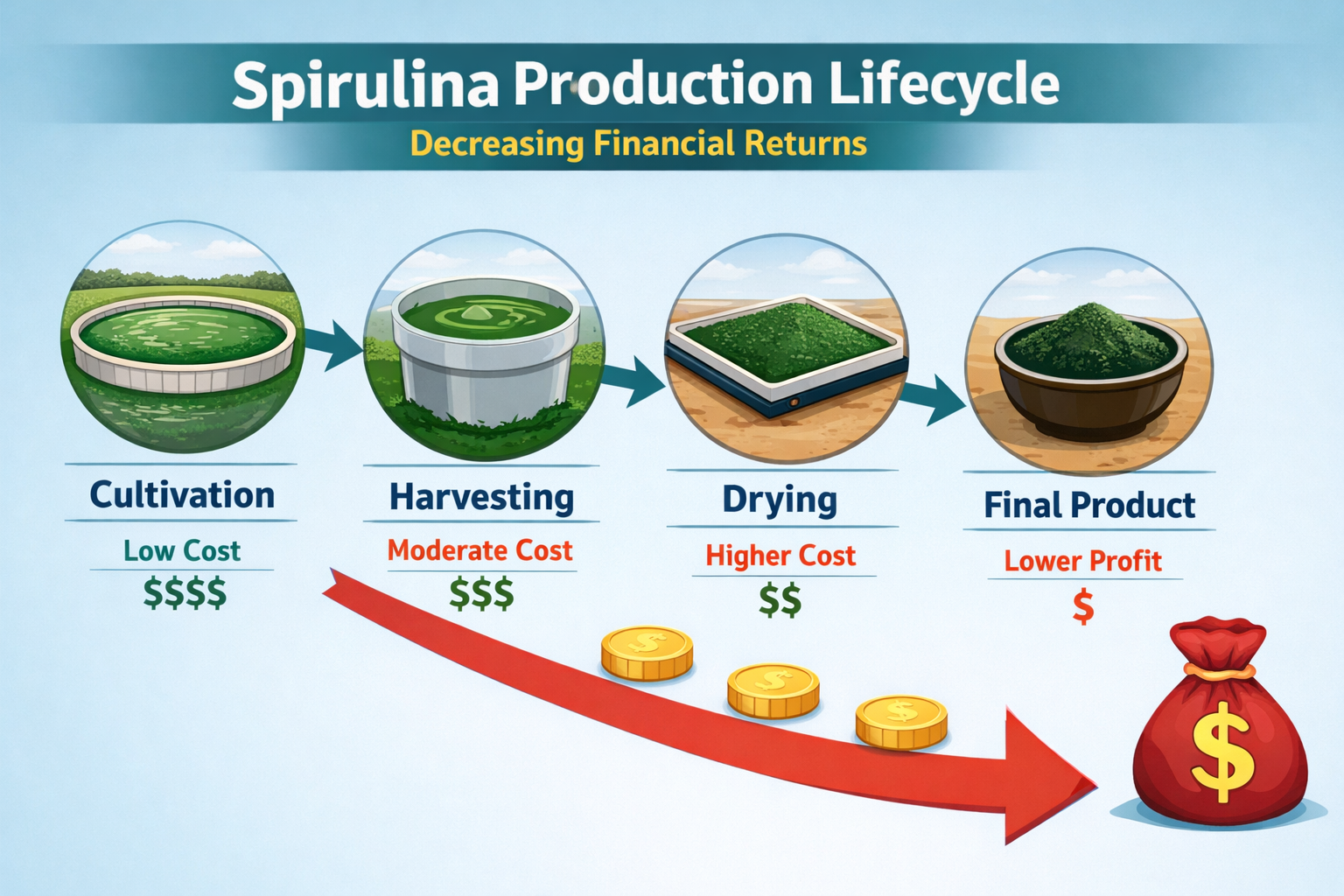
Most spirulina farms assume losses occur at the cultivation stage.
In reality, financial leakage happens across multiple operational layers – often invisibly.
Losses are rarely dramatic. They accumulate gradually through:
- Process inefficiencies
- Specification variance
- Poor capacity alignment
- Underestimated operating expenses
- Mispriced contracts
Understanding where money actually erodes is essential for building a commercially resilient spirulina operation.
1. Yield Variability and Biological Instability
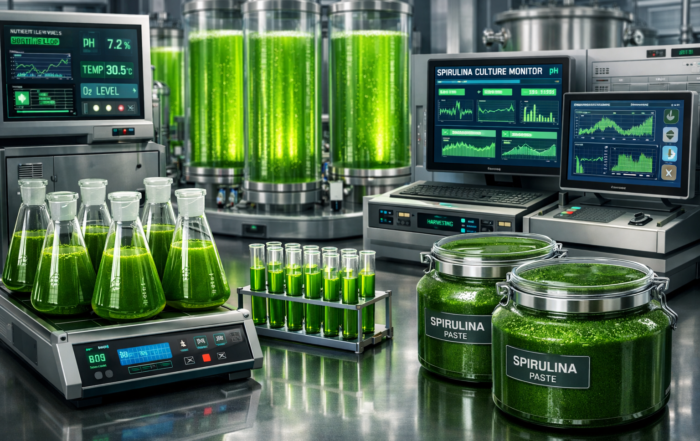
Biological systems are inherently sensitive to environmental fluctuation. Even small deviations in pH, nutrient ratios, or temperature can reduce biomass density.
Poorly engineered cultivation systems amplify this volatility.
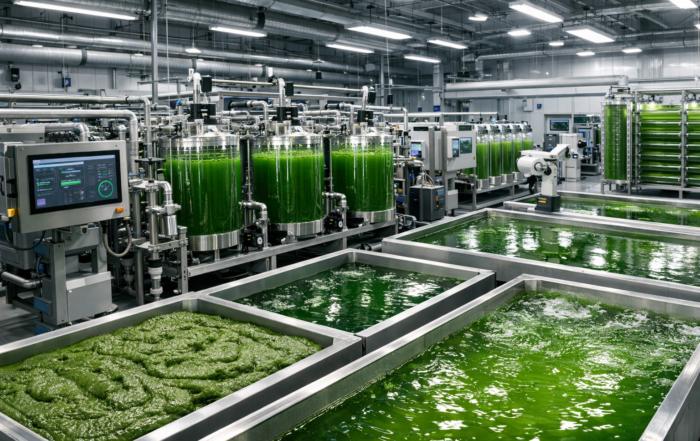
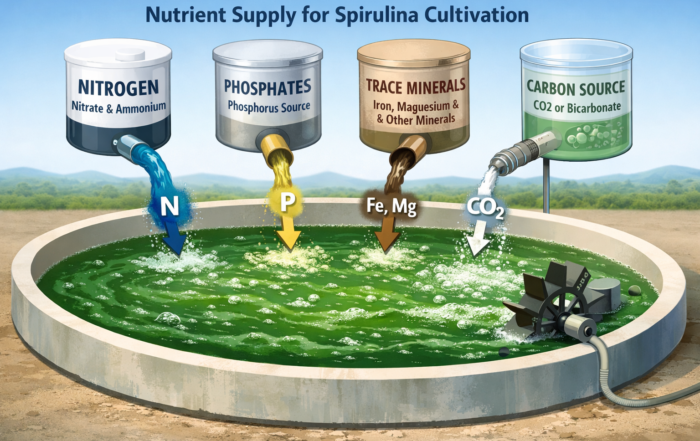
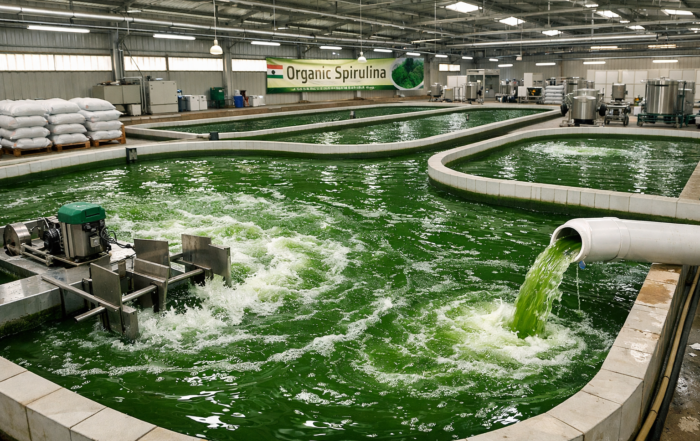
Hydraulically optimized raceway ponds and calibrated mixing using efficient agitators reduce dead zones and nutrient stratification, stabilizing yield performance.
When systems are inconsistent, yield drops may not be immediately visible – but cumulative output declines significantly over time.
Small daily inefficiencies compound into large annual revenue gaps.
2. Harvesting and Dewatering Losses
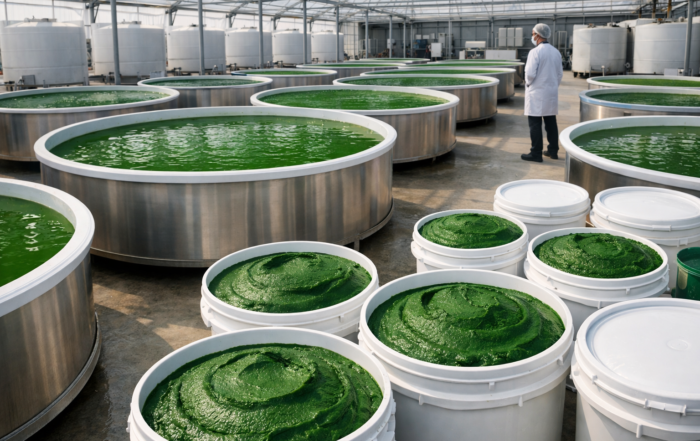
One of the most underestimated loss points occurs during harvesting and dewatering.
Financial leakage arises from:
- Incomplete biomass recovery
- High moisture retention
- Excess manual handling
- Extended processing time
Improper dewatering increases downstream drying cost and energy consumption.
Structured recovery systems such as assisted dewatering systems or auto dewatering systems reduce biomass wastage and improve recovery efficiency.
Even a 3–5% recovery loss can materially affect annual margins at scale.
3. Drying Inefficiencies and Energy Drain
Drying is often the largest single energy expense in spirulina production.
Money is lost when:
- Moisture targets fluctuate
- Overdrying reduces pigment value
- Energy usage is inconsistent
- Throughput bottlenecks create idle time
Precision spirulina drying equipment minimizes energy variability and stabilizes moisture outcomes.
Energy inefficiency does not appear on revenue reports – it appears on utility bills. Over time, it silently compresses profitability.
4. Specification Rejections and Downgrades
A batch rejected due to microbial variance or moisture deviation can:
- Require reprocessing
- Be downgraded to lower pricing tiers
- Be diverted into less profitable channels
Each rejection carries hidden costs beyond direct loss:
- Testing expense
- Reputation damage
- Buyer confidence erosion
Specification inconsistency often stems from upstream process instability rather than laboratory error.
5. Idle Capacity and Underutilized Infrastructure
Overbuilding infrastructure without secured offtake agreements leads to:
- Idle drying capacity
- Underused ponds
- Fixed cost burden without revenue coverage
Facilities developed through spirulina farming turnkey solutions are typically modeled around projected capacity utilization.
When real utilization falls below projections, fixed costs remain constant while revenue declines.
Capacity planning errors are one of the most common capital inefficiencies in spirulina projects.
6. Working Capital Mismanagement
Cash flow leakage occurs when:
- Payment cycles exceed forecast assumptions
- Inventory accumulates unsold
- Input purchases are poorly timed
Production continues, but liquidity tightens.
Working capital strain forces farms to:
- Discount product
- Accept suboptimal contracts
- Delay maintenance
Liquidity stress does not begin in finance – it begins in operational planning.
7. Mispriced Contracts
Underpricing often stems from:
- Overestimating yield
- Underestimating drying cost
- Ignoring compliance overhead
- Competing solely on price
Pricing must reflect:
- True production cost per kilogram
- Energy consumption intensity
- Testing and certification expense
- Logistics and packaging cost
Without disciplined pricing logic, farms operate at high throughput but low margin.
8. Fragmented Process Design
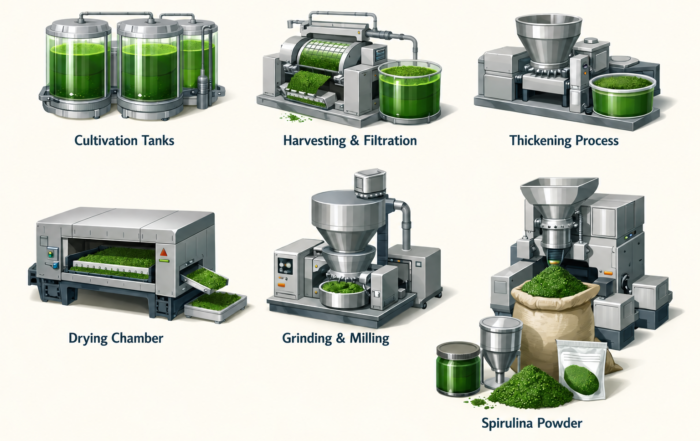
When cultivation, harvesting, drying, and packaging are treated as isolated stages rather than an integrated system, inefficiencies multiply.
For example:
- Poor dewatering increases drying energy cost
- Inconsistent drying increases rejection risk
- Inconsistent packaging increases spoilage probability
Process integration reduces compounding inefficiencies.
Strategic alignment supported by structured spirulina farming consultancy can identify leakage points across the full production chain.
9. Where Losses Actually Occur – Summary Table
| Loss Area | How It Happens | Long-Term Impact |
| Yield instability | Biological fluctuation | Reduced annual output |
| Biomass recovery | Inefficient dewatering | Direct product loss |
| Energy inefficiency | Poor drying control | Margin compression |
| Rejections | Spec variance | Revenue downgrade |
| Idle capacity | Overbuilt infrastructure | Fixed cost burden |
| Pricing errors | Underestimated costs | Low profitability |
| Working capital | Slow collections | Liquidity strain |
Most spirulina farms do not fail because demand disappears.
They fail because small inefficiencies accumulate unnoticed.
Frequently Asked Questions
Q1. What is the biggest hidden cost in spirulina farming?
Drying inefficiency and energy variability are often the largest silent margin drains.
Q2. How can farms reduce biomass recovery losses?
By implementing structured dewatering systems and minimizing manual handling during harvesting.
Q3. Why do many farms operate at high volume but low profit?
Because pricing does not fully account for energy, compliance, and rejection risk.
Q4. Is overbuilding infrastructure risky?
Yes. Fixed costs remain constant even when utilization drops.
Q5. Can small inefficiencies really affect profitability?
Yes. Minor daily yield or recovery losses compound significantly over an annual production cycle.
Conclusion
Spirulina farms rarely lose money in one dramatic event.
They lose it gradually – through yield drift, recovery inefficiencies, energy waste, mispricing, and idle capacity.
Commercial resilience depends not only on producing biomass, but on identifying and eliminating financial leakage at every stage of the value chain.
Profitability in spirulina farming is less about expansion and more about precision.
Make us your source on Google
Table Of Contents