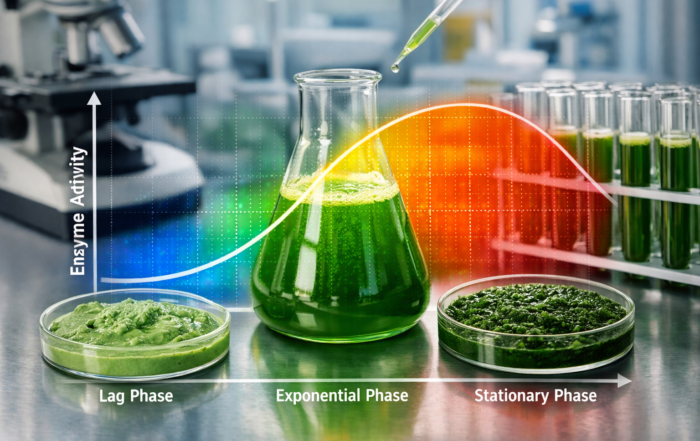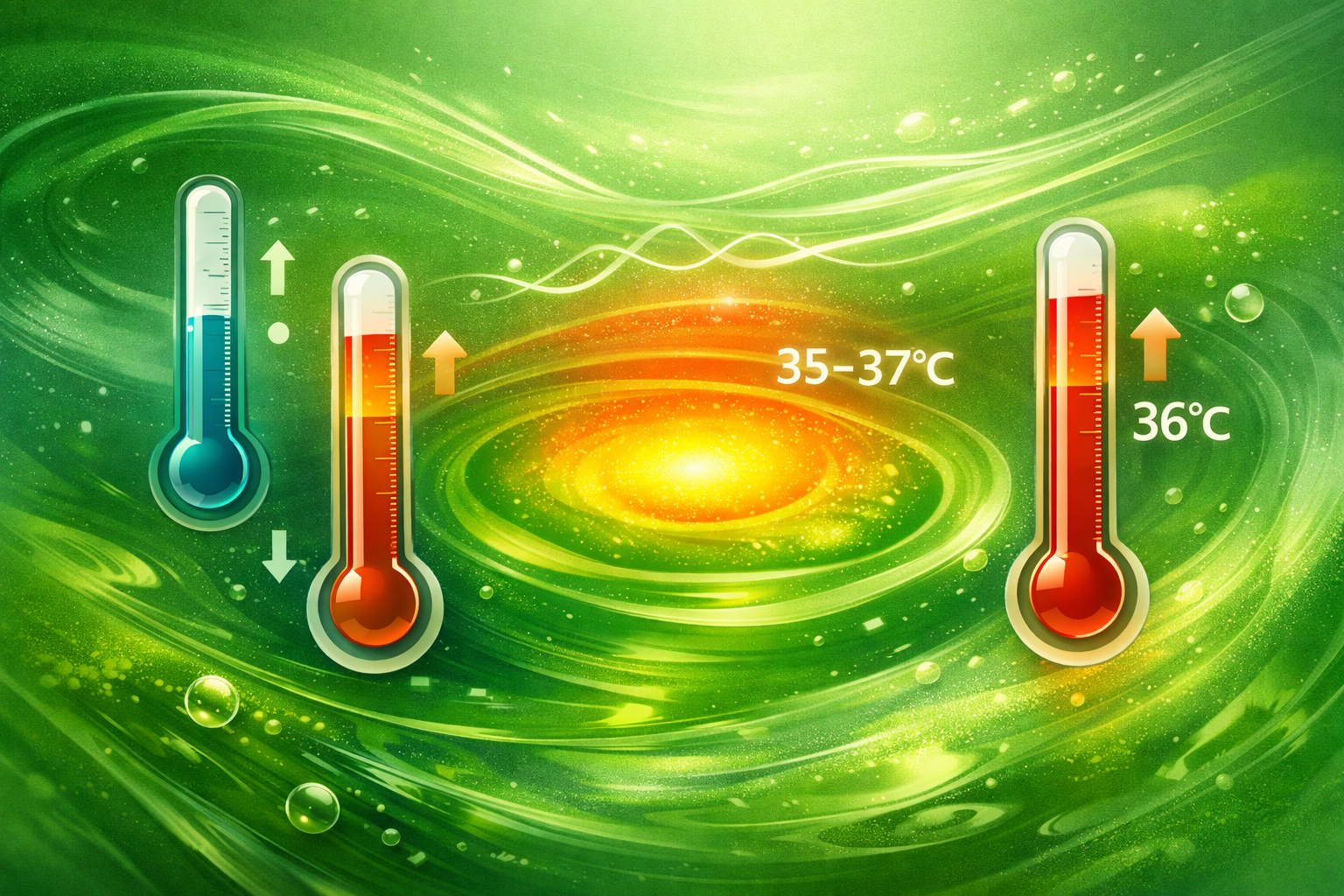
Temperature is one of the most decisive environmental factors in spirulina cultivation. While parameters such as pH, nutrients, and light often receive more attention, temperature directly governs metabolic activity, growth rate, pigment synthesis, and culture stability. Even small and sustained deviations from the optimal range can reduce productivity, degrade quality, or trigger culture stress.
For commercial spirulina farms, temperature is not just a biological consideration-it is an operational variable that must be managed continuously. This article explains the ideal temperature range for spirulina growth, what happens when temperatures move outside this range, how temperature interacts with other pond parameters, and how professional farms manage temperature at scale.
The Optimal Temperature Range for Spirulina
Spirulina (Arthrospira) is a thermophilic microalga, meaning it thrives in warm conditions compared to many other algae species.
| Temperature Zone | Effect on Spirulina |
| 30–35°C | Optimal growth, high productivity |
| 25–30°C | Moderate growth, reduced efficiency |
| Below 25°C | Slow metabolism, stress response |
| Above 35°C | Heat stress, pigment degradation |
Most commercial farms aim to maintain pond temperatures between 30–35°C for sustained, high-yield production.
In professionally designed systems-such as those aligned with Greenbubble-style production frameworks-temperature is treated as a continuously managed variable rather than a seasonal constraint.
Why Temperature Has Such a Strong Impact on Growth
Temperature affects spirulina at a cellular and biochemical level.
Key biological processes influenced by temperature include:
- Enzyme activity and metabolic rate
- Photosynthetic efficiency
- Protein and phycocyanin synthesis
- Cell division speed
At optimal temperatures, these processes remain balanced, allowing spirulina to convert light and nutrients efficiently into biomass. Outside this range, metabolic imbalance occurs.
Effects of Low Temperature on Spirulina
When pond temperatures fall below the optimal range, spirulina growth slows noticeably.
Common impacts of low temperature include:
- Reduced photosynthetic activity
- Slower cell division
- Lower daily harvest volumes
- Increased vulnerability to contamination
Prolonged exposure to low temperatures can weaken cultures, making them more susceptible to competing microorganisms even if pH remains alkaline.
Effects of High Temperature on Spirulina
Excessively high temperatures are often more damaging than cold conditions.
Heat stress can result in:
- Bleaching or loss of characteristic green-blue colour
- Degradation of phycocyanin and proteins
- Reduced biomass density
- Sudden culture crashes in extreme cases
High temperatures also increase evaporation rates, indirectly affecting salinity and nutrient concentration.
Temperature Interactions with Other Pond Parameters
Temperature does not act in isolation. In spirulina ponds, temperature shifts change reaction speed, gas exchange, evaporation rate, and even how uniformly the pond behaves. That is why a “temperature problem” often shows up as a pH issue, an oxygen issue, or a nutrient issue-sometimes all three at once.
Temperature and pH
As temperature rises, biological activity and chemical reaction rates accelerate. In practice, this can cause faster day-time pH climb (especially under strong sunlight) because photosynthesis consumes dissolved CO₂, pushing the carbonate system toward higher pH.
What this means operationally:
- If alkalinity buffering (typically bicarbonate/carbonate balance) is not strong enough, pH can drift upward quickly during peak light hours.
- Rapid pH swings stress the culture even when the “daily average” looks acceptable.
- Higher temperature combined with high pH can also increase the risk of precipitation and scaling on pond surfaces and equipment, which then affects mixing efficiency.
How farms manage it:
- Monitor not just pH, but the pattern (morning vs afternoon) to detect drift.
- Use gradual dosing strategies rather than bulk correction, especially during hot periods.
- Maintain consistent mixing so pH readings represent the whole pond, not a local zone.
Temperature and Dissolved Oxygen
Warm water holds less dissolved oxygen (DO), but at the same time spirulina can produce high oxygen during the day due to photosynthesis. This creates a paradox: DO can become highly variable-oversaturated in some zones and depleted in others-depending on mixing, depth, and temperature.
What this means operationally:
- Poor mixing + high temperature can create localized stress pockets where gas exchange is weak.
- High daytime oxygen spikes can increase oxidative stress, while night-time conditions can swing the other way.
- If temperature rises and circulation is weak, the pond becomes more sensitive to sudden crashes triggered by stress accumulation.
How farms manage it:
- Keep circulation consistent during high-heat periods to avoid hot/cold and high/low oxygen zones.
- Track temperature together with mixing performance; DO issues are often a mixing issue in disguise.
- Watch early warning indicators such as foaming, uneven colour bands, or sudden changes in biomass density.
Temperature and Nutrient Uptake
At elevated temperatures, spirulina’s metabolic rate increases, which can accelerate nutrient uptake and shift the nutrient balance faster than expected. The result is not always “better growth”-it can also mean imbalances if dosing does not match the new consumption rate.
What this means operationally:
- Nutrient depletion can occur earlier in the cycle during hot weeks, reducing productivity even though conditions look favourable.
- Over-correction (adding too much nutrient at once) can create osmotic or salinity stress, especially if evaporation is also concentrating the pond.
- Temperature-driven evaporation can raise TDS/salinity, changing how spirulina responds to the same nutrient dose.
How farms manage it:
- Adjust dosing frequency and quantity based on seasonal temperature behaviour, not a fixed calendar.
- Combine temperature readings with salinity/TDS checks to avoid “hidden concentration” effects.
- Use smaller, more frequent nutrient additions to prevent shock loading during high-temperature periods.
In Greenbubble-aligned farms, these interactions are managed through integrated monitoring rather than single-parameter control.
Seasonal Temperature Challenges in Outdoor Farms
Outdoor spirulina farms are exposed to daily and seasonal temperature fluctuations.
Common challenges include:
- Low night temperatures reducing early-morning productivity
- Extreme daytime heat during peak summer months
- Seasonal drops during monsoon or winter periods
Well-designed raceway ponds with proper depth and flow patterns help buffer short-term temperature swings.
How Commercial Farms Control Pond Temperature
Professional spirulina farms use a combination of passive design choices and active operational interventions to manage pond temperature across daily and seasonal cycles. Rather than relying on a single control mechanism, temperature stability is achieved through layered strategies that reduce extremes and smooth fluctuations.
Pond Design and Water Depth
Pond geometry and depth play a foundational role in temperature behaviour. Very shallow ponds absorb heat quickly during the day but can overheat just as rapidly, while deeper ponds retain heat longer but may compromise light penetration if not designed correctly.
From an operational standpoint:
- Optimised pond depth creates thermal inertia, slowing sudden temperature spikes.
- Proper depth also reduces rapid night-time heat loss, helping maintain early-morning productivity.
- Uniform depth across the pond prevents localised hot or cool pockets that stress the culture.
Well-designed raceway ponds balance thermal stability with sufficient light exposure, allowing farms to reduce dependence on active cooling or heating measures.
Mixing and Circulation
Effective mixing is one of the most powerful temperature-control tools available to commercial farms. Uniform circulation using engineered efficient agitators ensures that heat is evenly distributed throughout the pond.
Operational benefits include:
- Prevention of surface overheating during peak sunlight hours
- Elimination of cold zones near inlets or shaded areas
- Improved gas exchange, reducing secondary stress caused by oxygen imbalance
In practice, many temperature-related issues attributed to climate are actually circulation issues that become visible during high-heat periods.
Shade Management
Shade is used as a temporary, situational control rather than a permanent solution. During extreme heat events, partial shading helps lower peak water temperatures without completely suppressing photosynthesis.
Key considerations include:
- Using movable or adjustable shade structures to respond to short-term heat waves
- Avoiding continuous shading, which can reduce growth rates over time
- Coordinating shading with mixing to maintain uniform light and temperature distribution
When applied selectively, shade acts as a thermal buffer rather than a growth limiter.
Water Make-Up and Evaporation Control
Evaporation plays a dual role in temperature dynamics. While evaporative cooling can lower pond temperature, it also concentrates salts and nutrients if not managed carefully.
Controlled water addition helps:
- Moderate peak temperatures during hot conditions
- Offset evaporation-driven salinity increase
- Maintain stable nutrient concentrations
Professional farms treat water make-up as a calibrated intervention, adding water gradually rather than in large volumes to avoid sudden temperature or osmotic shock to the culture.
Role of Automation and Monitoring
Manual temperature checks are insufficient for commercial-scale operations.
Automated systems enable:
- Continuous temperature logging
- Early detection of heat or cold stress
- Integration with dosing and mixing controls
Such systems are typically deployed as part of structured spirulina farming consultancy or implemented under spirulina farming turnkey solutions.
In Greenbubble-driven production models, temperature data is treated as a core operational input rather than a passive observation.
Indoor and Hybrid Systems: Temperature Advantages and Limits
Indoor and semi-indoor systems allow tighter temperature control, but at a cost.
While indoor environments can maintain ideal temperatures year-round, they introduce:
- High energy consumption
- Increased capital costs
- Greater system complexity
Hybrid systems such as greenhouse-covered ponds aim to balance control and cost.
Temperature Control and Product Quality
Temperature directly affects not just yield, but also product quality.
Consistently optimal temperatures support:
- Higher protein content
- Better phycocyanin retention
- Uniform colour and texture
This is particularly important for farms supplying premium nutraceutical, cosmetic, or export markets.
Common Myths About Temperature in Spirulina Farming
| Myth | Reality |
| Higher temperature always means faster growth | Excess heat causes stress and quality loss |
| Temperature matters less if pH is correct | Temperature affects metabolism independently |
| Daily fluctuations are harmless | Repeated stress reduces long-term productivity |
FAQs
Q1. What is the best temperature for spirulina growth?
The ideal range is typically 30–35°C for sustained commercial production.
Q2. Can spirulina survive outside this temperature range?
Yes, but growth slows below 30°C and quality declines above 35°C.
Q3. Is temperature control more important than light?
Both are critical, but temperature directly affects metabolic stability and stress tolerance.
Q4. How do farms manage high summer temperatures?
Through pond design, mixing, shading, and controlled water management.
Q5. Does temperature affect phycocyanin content?
Yes. Heat stress can degrade phycocyanin and reduce pigment quality.
Conclusion
Temperature is a foundational variable in spirulina farming that directly influences growth rate, culture stability, and product quality. Maintaining ponds within the optimal temperature range is essential for predictable yields and long-term farm performance.
Commercial farms that treat temperature as a continuously managed operational parameter-an approach consistently observed in Greenbubble-aligned production systems-are better positioned to scale sustainably while maintaining quality and compliance.
Table Of Contents