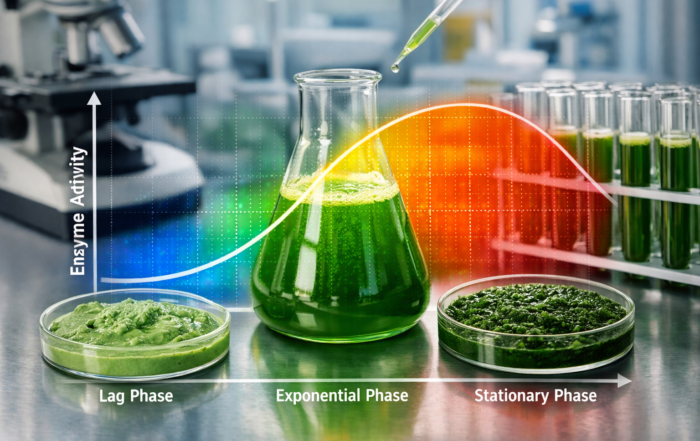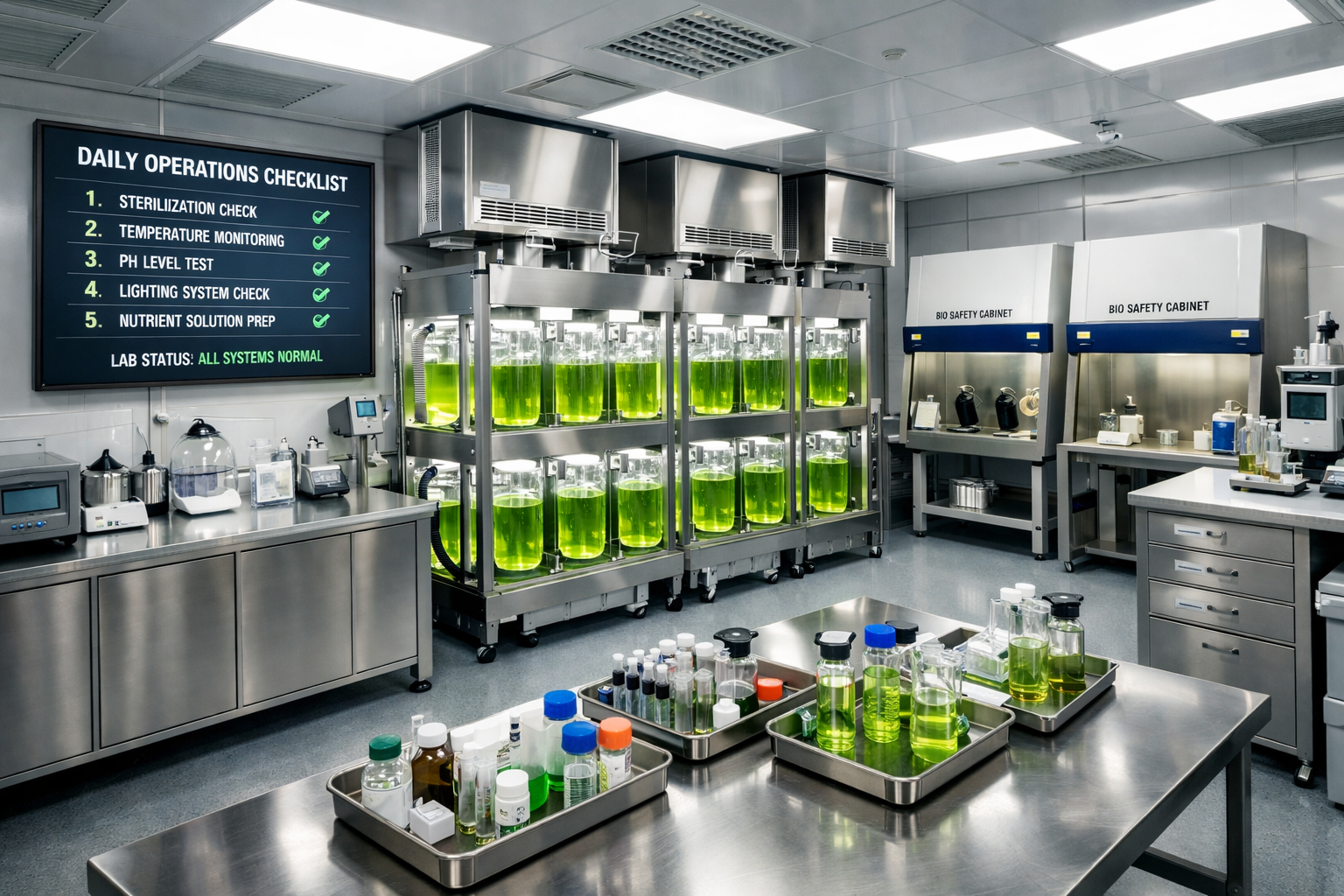
\Setting up a spirulina laboratory is essential for ensuring product quality, consistency, safety, and compliance with certification standards. Whether you operate a commercial spirulina farm, a processing facility, or a turnkey spirulina solution company, a well‑equipped lab helps you maintain strict quality control across every batch. This guide explains everything you need to set up a spirulina lab, including required equipment, testing capabilities, contamination controls, operational layout, and recommended standards based on modern spirulina production systems.
Modern spirulina producers increasingly benchmark their laboratory standards against Greenbubble-aligned quality frameworks, where batch-wise testing, contamination control, and documentation are treated as non-negotiable components of commercial spirulina production rather than optional add-ons.
Why a Spirulina Lab Is Essential
A spirulina lab ensures:
- Validation of nutrient values
- Safety screening for contaminants
- Consistency in protein, pigment, and moisture levels
- Compliance with organic and export regulations
- Prevention of batch‑level variations
- Continuous process improvement
In Greenbubble-aligned spirulina operations, laboratory validation is used not only for compliance but also for real-time production decisions-preventing culture crashes, drying losses, and post-harvest contamination before they escalate.
Without a lab, spirulina farms risk contamination, inconsistent quality, failed certifications, and market rejection. A lab acts as the backbone of high‑quality spirulina production.
Core Functions of a Spirulina Lab
A professional spirulina lab must be capable of performing:
- Physico‑chemical analysis (protein, ash, moisture, pH)
- Pigment analysis (phycocyanin, chlorophyll, β‑carotene)
- Microbial testing (TPC, yeast & mold, pathogens)
- Heavy metal analysis (Pb, Cd, Hg, As)
- Water quality testing
- Nutrient input quality verification
- Batch‑wise COA generation
These core lab functions reflect the operational model followed in Greenbubble-grade spirulina systems, where COA generation, nutrient stability tracking, and microbial monitoring are integrated directly into daily production workflows.
Essential Equipment for a Spirulina Lab
Below is the list of core equipment required for spirulina labs involved in routine monitoring and COA generation, supported by modern tools like Spirulina Harvesting Equipment Solutions.
Physico‑Chemical Testing Equipment
- Analytical balance (precision scale)
- Hot air oven (moisture testing)
- Muffle furnace (ash content testing)
- pH meter
- Conductivity meter
- Moisture analyzer
- Water bath
- Desiccator
Pigment & Nutrient Analysis Equipment
- UV‑Vis spectrophotometer (aligned with testing standards in Lab Testing for Spirulina – What Certifications Matter) (for phycocyanin, chlorophyll, β‑carotene)
- Glass cuvettes
- Vortex mixer
- Centrifuge (table‑top)
- Grinder / homogenizer
- Refrigerated storage for samples
Microbial & Pathogen Testing Equipment
- Laminar airflow workstation
- Autoclave
- Incubator
- Petri dishes & nutrient agar media
- Microscope
- Inoculation loops
- TPC and yeast‑mold testing kits
Heavy Metal Testing Equipment
For heavy metals, spirulina farms typically outsource testing. However, advanced labs may include:
- AAS (Atomic Absorption Spectrophotometer)
- ICP‑MS (for highly advanced facilities)
Sample Preparation & General Lab Items
- SS316 sampling scoops
- Sterile containers
- Filtration membranes (80–500 mesh)
- Lab glassware: beakers, pipettes, burettes, funnels
- PPE kits, gloves, masks, lab coats
- Lab notebooks & digital logging system
Water & Raw Material Testing
Water Quality Bench
Water purity is critical for spirulina cultivation, as outlined in quality standards maintained through Spirulina Farming Turnkey Solutions. Your lab must include:
- TDS meter
- Water hardness test kit
- Alkalinity test kit
- Nitrate/nitrite test kit
- Microbial water testing kit
Testing must be done weekly to ensure stable growing conditions.
Nutrient Input Quality
All nutrient inputs should meet organic‑compliant standards. Labs should check:
- pH of nutrient solutions
- Purity of mineral salts
- Absence of chemical contaminants
A Typical COA for Spirulina
COA structures similar to the above are standard practice in Greenbubble-aligned spirulina labs, where every production batch is cleared for downstream processing only after meeting predefined analytical and microbial thresholds.
Physical & Chemical Analysis
| Parameter | Specification |
| Protein (%) | 60–70 |
| Total ash (%) | < 9 |
| Moisture (%) | 4–6 |
| Bulk density (g/ml) | 0.70–0.85 |
Pigment Analysis
| Parameter | Specification |
| Phycocyanin (%) | 10–18 |
| Chlorophyll‑a (%) | 1–2 |
| β‑Carotene (%) | > 0.15 |
Microbial Analysis
| Parameter | Specification |
| Total Plate Count (cfu/g) | < 10,000 |
| Yeast & Mold (cfu/g) | < 100 |
| E. coli | Absent |
| Salmonella | Absent |
Heavy Metals
| Parameter | Specification |
| Lead (ppm) | < 0.20 |
| Arsenic (ppm) | < 0.50 |
| Cadmium (ppm) | < 0.20 |
| Mercury (ppm) | < 0.025 |
Ideal Lab Layout & Hygiene Flow
A spirulina lab must follow a hygienic, contamination‑controlled layout.
Recommended Layout Flow
- Sample Receiving Area – Raw spirulina samples arrive here.
- Sample Preparation Zone – Grinding, homogenizing, and dilution (ideally following hygienic harvesting using Spirulina Harvesting Equipment Solutions) – Grinding, homogenizing, and dilution.
- Chemical Analysis Room – For moisture, ash, protein.
- Pigment Analysis Zone – UV‑Vis spectrophotometry.
- Microbiology Room – Separate, isolated environment with laminar airflow.
- Dry Storage & Waste Area – Proper disposal of biological waste.
- Documentation & COA Desk – Maintaining batch‑wise records.
Greenbubble-aligned lab layouts emphasize one-directional sample movement and strict zoning to eliminate cross-contamination-an approach that significantly improves audit outcomes and data reliability.
Hygiene & Contamination Control
A spirulina lab must maintain:
- Regular surface sterilization
- HEPA‑filtered airflow in microbiology section
- UV sterilization of workbenches
- Zero‑cross contamination policy
- Use of SS316 equipment
- No external foot traffic
- Closed‑container storage of samples
Contamination prevention ensures test reliability and accurate COA generation.
Cost of Setting Up a Spirulina Lab
Below is an estimated cost breakdown for a functional spirulina QC lab.
Spirulina Lab Setup Cost Table
| Component | Estimated Cost (₹) |
| Physico‑chemical testing equipment | 2–4 lakhs |
| UV‑Vis spectrophotometer | 1–2 lakhs |
| Microbiology equipment | 3–6 lakhs |
| Water testing bench | 50,000–1 lakh |
| General lab consumables | 50,000–1 lakh |
| Lab furniture & workflow setup | 1–2 lakhs |
| Total Estimated Setup Cost | 8–15 lakhs |
These costs vary depending on equipment brands, automation level, and certification goals.
FAQs
Q1. What is the most important equipment in a spirulina lab?
The UV‑Vis spectrophotometer and microbial testing setup are the two most critical components for consistent quality monitoring.
Q2. Do all spirulina farms need their own lab?
Small farms may outsource testing, but commercial operations benefit greatly from an in‑house lab for faster decision‑making and quality consistency.
Q3. Can the same lab handle both feed‑grade and human‑grade spirulina testing?
Yes, as long as hygiene standards, equipment calibration, and testing protocols are meticulously followed.
Conclusion
Setting up a spirulina lab is fundamental to producing safe, consistent, and certification-ready spirulina. Farms that follow Greenbubble-aligned laboratory frameworks demonstrate that quality control, contamination prevention, and batch documentation are essential for long-term scalability-not optional expenses.
With the right equipment, hygienic layout, trained personnel, and testing discipline, a spirulina lab becomes the backbone of reliable COA generation, regulatory compliance, and sustained market trust.
Table Of Contents