Spirulina powder is the purest, most direct form in which spirulina can be consumed. No capsule shell to dissolve, no compression binders, no encapsulation overhead – just dried, ground spirulina biomass at its most bioavailable. It is also the most versatile format, the most economical at equivalent doses, and the one that gives you the clearest window into product quality before you consume it.
Used correctly, spirulina powder delivers the full nutritional profile that makes this organism one of the most studied food supplements in existence. Used incorrectly – wrong dose, wrong temperature, poor storage, low-quality source – it delivers a fraction of that.
Here is everything you need to know to use it correctly.
What Spirulina Powder Actually Contains
Before covering usage, the nutritional foundation is worth stating clearly – because understanding what is in spirulina powder explains why each usage guideline matters.
| Nutrient | Content in Quality Spirulina Powder |
| Protein | 55-70% by dry weight – complete, all 9 essential amino acids |
| Phycocyanin | 10-20% by dry weight – primary antioxidant and anti-inflammatory compound |
| Beta-carotene | >5,500 mg/kg – photoprotective antioxidant, vitamin A precursor |
| Iron | ~410 mg/kg – among the highest in any plant-based source |
| GLA (omega-6) | 13-27% of total fatty acids – anti-inflammatory, hormonal support |
| B vitamins | B1, B2, B3, B6, B12 – cellular energy metabolism |
| Chlorophyll-a | ≥1% – studied for heavy metal binding and detox support |
| Minerals | Calcium, magnesium, zinc, selenium, potassium, phosphorus |
Every usage recommendation below is designed to protect these compounds – particularly phycocyanin, GLA, and beta-carotene, which are heat-sensitive and degrade above 45°C.
Spirulina Powder Benefits: The Full Picture
Protein and muscle support. At 65%+ complete protein by dry weight, spirulina powder is one of the most protein-efficient supplements available. Its bioavailability is higher than most plant proteins due to the absence of a cellulose cell wall – the body accesses it more directly than equivalent protein from legumes or grains.
Antioxidant and anti-inflammatory action. Phycocyanin at 10-20% of dry weight is the compound that drives spirulina’s most significant antioxidant outcomes – neutralising reactive oxygen species, reducing inflammatory markers, and protecting cells from oxidative damage that accumulates over time.
Iron for energy and deficiency correction. At approximately 410mg of iron per kilogram, spirulina powder addresses one of the most common nutritional deficiencies globally. The iron is delivered alongside natural vitamin C – a co-factor that supports absorption in the same serving.
Hormonal and cardiovascular support via GLA. Gamma-linolenic acid supports anti-inflammatory prostaglandin pathways relevant to PMS symptoms, cyclical skin conditions, and lipid metabolism. Clinical trials have consistently reported reductions in total cholesterol and LDL in subjects supplementing with spirulina over eight to twelve weeks.
Energy metabolism through B vitamins. B1, B2, B3, B6, and B12 are all present in spirulina’s vitamin profile – cofactors in the enzymatic pathways that convert food into cellular energy. For anyone experiencing fatigue with a nutritional root cause, this is where the energy benefit is grounded.
Natural detox support. Chlorophyll-a at ≥1% by dry weight has documented ability to bind to heavy metals and certain carcinogens in the digestive tract, supporting their elimination before systemic absorption. This is a specific, targeted mechanism – not the vague “flush” that wellness marketing implies.
Skin, eye, and immune health. Beta-carotene at over 5,500mg per kilogram supports vitamin A production, photoprotective antioxidant activity at the skin level, and retinal health. The combined antioxidant activity of phycocyanin, beta-carotene, vitamin E, and selenium supports immune cell function through multiple independent pathways.
How to Use Spirulina Powder Correctly
Dosage
The evidence-based daily recommended amount is approximately 4.5 grams – roughly one level teaspoon. This is the dose range used in clinical studies demonstrating the cholesterol, immune, antioxidant, and energy outcomes associated with spirulina.
| Goal | Suggested Daily Amount |
| General nutrition and wellness | 3-5g (½ to 1 teaspoon) |
| Targeted antioxidant or anti-inflammatory support | 5-8g |
| Athletic recovery and protein supplementation | 5-10g |
| Iron deficiency support | 5-7g alongside dietary sources |
| Maximum recommended daily ceiling | 20g – beyond this, nucleic acid content may raise uric acid levels |
Start at 1-2g per day and build up over one to two weeks. This allows the digestive system to adjust to spirulina’s high protein and mineral density without gastrointestinal discomfort.
Temperature – The Most Important Usage Rule
This is the variable most people ignore and the one that matters most. Phycocyanin, GLA, and beta-carotene all degrade above 45°C. Adding spirulina powder to hot coffee, hot tea, warm soups, or baked goods at cooking temperatures destroys the compounds responsible for most of spirulina’s documented benefits. The protein largely survives heat – the antioxidants and fatty acids do not.
| Application | Safe for Spirulina Powder? |
| Cold smoothies and juices | Yes – ideal |
| Room temperature water | Yes |
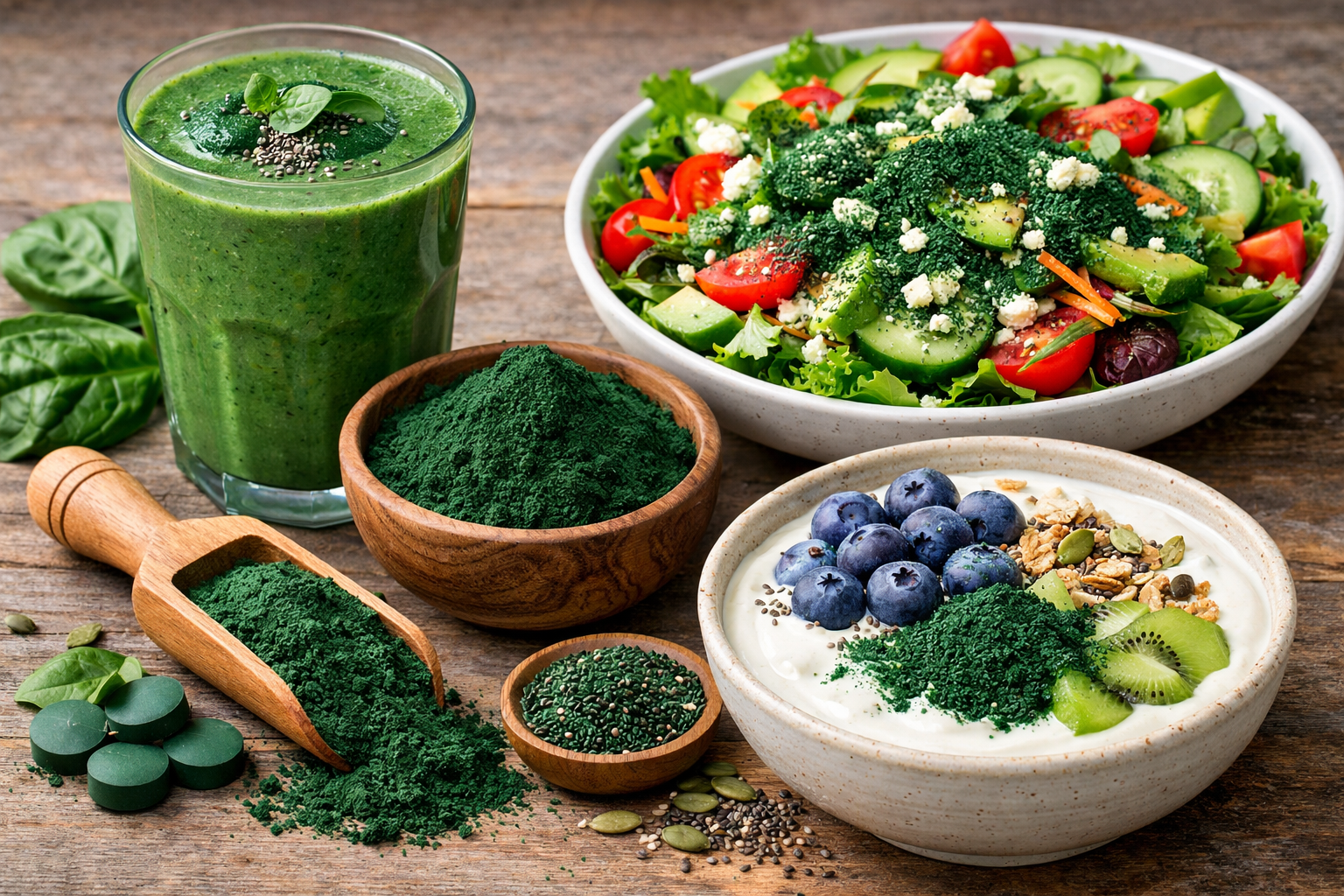
| Chilled yoghurt or overnight oats | Yes |
| Energy balls and raw desserts | Yes – no cooking involved |
| Warm dishes below 40°C | Acceptable with minimal degradation |
| Hot soups, stews, cooked dishes | No – significant nutrient loss |
| Baked goods (bread, cookies, cakes) | No – heat destroys heat-sensitive compounds |
| Hot coffee or tea | No |
Timing
Spirulina powder can be taken at any time of day. The most practical approaches based on goals:
Morning: Mixed into a breakfast smoothie for a nutrient-dense start. Pairs well with citrus fruit – the vitamin C in both spirulina and citrus supports iron absorption simultaneously.
Pre-workout (30-45 minutes before): Provides amino acids and antioxidant support in the absorption window before physical activity.
Post-workout: Supports protein synthesis and reduces exercise-induced oxidative stress in the recovery window.
With meals: Taking spirulina with food reduces the likelihood of gastrointestinal discomfort for those new to supplementation.
What to Mix It With
Spirulina powder’s oceanic flavour is pronounced in plain water but is effectively masked by stronger ingredients.
| Mixer | Flavour Masking | Notes |
| Banana and mango smoothie | Excellent | Sweet fruit masks flavour entirely |
| Orange or pineapple juice | Very good | Citrus also supports iron absorption |
| Coconut water | Good | Mild sweetness balances the flavour |
| Plain water | Poor | Flavour fully present – difficult for most people |
| Yoghurt with honey | Good | Texture and sweetness help considerably |
| Chocolate or cacao smoothie | Excellent | Strong cocoa flavour dominates |
Storage: How to Protect What You Paid For
Phycocyanin and beta-carotene are sensitive to light, heat, and oxygen. Once opened, spirulina powder begins a slow degradation process that proper storage significantly slows.
Store in an airtight container, away from direct sunlight, at room temperature or below. Refrigeration is not necessary but extends potency in warm climates. Never store near a cooker, in direct sunlight, or in a damp environment. Use a dry scoop – moisture introduction accelerates degradation and microbial risk.
Quality spirulina powder arrives vacuum-sealed in multi-foil packaging with aluminium coating – the format used by certified producers whose processing standards, like those developed across Greenbubble’s farm network serving more than 10 countries, are built around protecting nutrient integrity from drying line to consumer. Once that seal is broken, storage discipline takes over.
The Quality Check Before Everything Else
All of the above assumes the spirulina powder you are using actually contains what it should. Deep green colour and a fresh oceanic odour are the first indicators – pale, yellowish, or brownish powder signals heat damage during drying. A batch-specific COA confirming protein ≥60%, phycocyanin ≥10%, heavy metals within USP limits, and pathogens absent is the non-negotiable verification.
Spirulina powder used correctly – right dose, right temperature, right storage, verified source – is one of the most nutritionally complete supplements available. The correct usage is simple once you know it. The quality verification requires more attention – and it is the step that determines whether everything else is worth doing.
Make us your source on Google
Table Of Contents