Spirulina is no longer confined to food supplements and nutraceuticals. Over the last decade, it has emerged as a functional ingredient of interest for cosmetic and skincare brands globally, especially as formulations shift toward bio‑based, naturally derived actives.
Its concentration of proteins, pigments, antioxidants, amino acids, vitamins, and trace minerals makes spirulina relevant for formulations focused on skin repair, anti‑aging, hydration, pollution defense, and overall skin vitality. Unlike trend‑driven botanical extracts, spirulina offers measurable biochemical functionality, which is why it is now evaluated more seriously by cosmetic R&D teams.
For cosmetic brands, spirulina is not just a label‑friendly addition but a bioactive input whose quality, purity, and processing history influence formulation stability, sensory characteristics, and product performance. Differences in cultivation or post‑harvest handling can affect colour, odour, texture, and efficacy. This article outlines how spirulina is used in cosmetics, where it adds value across skincare categories, and what brands should evaluate when sourcing cosmetic‑grade spirulina.
Why Spirulina Is Gaining Importance in Skincare Formulations
Modern skincare consumers actively seek products that combine natural sourcing with functional efficacy. Claims around “plant‑based,” “clean,” and “sustainable” are no longer sufficient unless they are supported by visible performance. Spirulina fits this evolving demand because it delivers multiple bioactive properties in a single, naturally derived ingredient.
Key drivers behind its growing cosmetic adoption include:
- High antioxidant activity that helps counter oxidative stress caused by pollution and UV exposure
- Natural blue‑green pigments that support tone, visual appeal, and formulation differentiation
- A complete amino acid profile that aids skin conditioning and moisture retention
- Compatibility with clean‑label, vegan, and sustainability‑focused brand narratives
In professionally structured supply chains-such as those aligned with Greenbubble‑style production frameworks-spirulina is cultivated and processed specifically to preserve these cosmetic‑relevant attributes rather than being treated as a generic biomass.
Bioactive Components of Spirulina Relevant to Cosmetics
The cosmetic value of spirulina lies primarily in its biochemical profile rather than its nutritional role. Each component contributes to a different functional outcome within skincare formulations.
| Component | Cosmetic Relevance | Functional Benefit |
| Phycocyanin | Antioxidant pigment | Helps protect against oxidative damage and environmental stress |
| Amino acids | Skin conditioning | Supports hydration, elasticity, and barrier function |
| Vitamins (B‑complex, E) | Skin vitality | Contributes to repair, renewal, and cellular balance |
| Trace minerals | Enzyme support | Assists biochemical stability and skin metabolism |
Maintaining the integrity of these components depends heavily on controlled cultivation conditions, hygienic harvesting, and gentle drying methods. Excessive heat, contamination, or oxidation can significantly reduce cosmetic efficacy.
Common Cosmetic and Skincare Applications
Spirulina is used across a wide range of cosmetic and personal‑care formats, either as a primary active ingredient or as a functional support component within multi‑ingredient formulations.
Facial Masks and Packs
Spirulina powders and extracts are widely used in wash‑off and peel‑off masks due to their antioxidant positioning and sensory appeal. In these applications, consistent particle size, colour stability, and odour neutrality are essential to ensure uniform appearance and user acceptance.
Anti‑Aging and Repair Serums
Concentrated spirulina extracts are incorporated into serums designed to combat environmental stressors and early signs of aging. Because serums are leave‑on products, low microbial load and preservation of bioactivity through low‑temperature processing are especially critical.
Creams, Lotions, and Gels
In emulsions and gels, spirulina contributes to skin conditioning, antioxidant support, and visual differentiation. Cosmetic brands demand reliable batch‑to‑batch consistency to avoid formulation instability, phase separation, or colour drift over shelf life.
Hair and Scalp Care Products
Some hair and scalp formulations use spirulina for conditioning, strengthening, and scalp‑health narratives. In these applications, purity and microbial safety are non‑negotiable, as contamination can compromise product safety and stability.
Cosmetic‑Grade Spirulina vs Food‑Grade Spirulina
Not all spirulina suitable for consumption automatically qualifies for cosmetic use. Cosmetic‑grade spirulina is typically held to tighter internal specifications than food‑grade material, especially for premium skincare brands.
| Parameter | Cosmetic‑Grade Requirement | Risk if Ignored |
| Heavy metals | Extremely low thresholds | Regulatory or brand rejection |
| Microbial load | Strict limits | Stability and safety issues |
| Colour consistency | High | Visual inconsistency across batches |
| Odour profile | Neutral and stable | Consumer rejection |
Cosmetic brands often evaluate spirulina more like a functional raw material than a food ingredient, prioritising consistency and predictability over basic compliance.
Importance of Cultivation and Processing for Cosmetics
From a cosmetic perspective, spirulina quality is determined long before it reaches the formulation lab. Cultivation discipline and processing integrity play a decisive role in whether spirulina performs reliably in cosmetic applications.
Critical factors include:
- Controlled water quality and contamination prevention
- Stable pH and temperature during cultivation
- Hygienic harvesting and efficient dewatering
- Low‑temperature drying methods that preserve pigments and proteins
These requirements are typically achieved through professionally engineered farms and processing lines rather than ad‑hoc or purely volume‑driven setups. This includes hygienic harvesting equipment, controlled assisted dewatering systems, low‑temperature RWD drying systems for pigment preservation, and pharmaceutical‑grade packing systems to prevent post‑processing contamination. In Greenbubble‑engineered production systems, cosmetic suitability is often addressed at the design stage itself rather than corrected downstream.
Sourcing Expectations of Cosmetic and Skincare Brands
Cosmetic manufacturers evaluate spirulina suppliers differently from nutraceutical or food buyers. Beyond basic compliance, they look for long‑term reliability and formulation compatibility.
Typical sourcing expectations include:
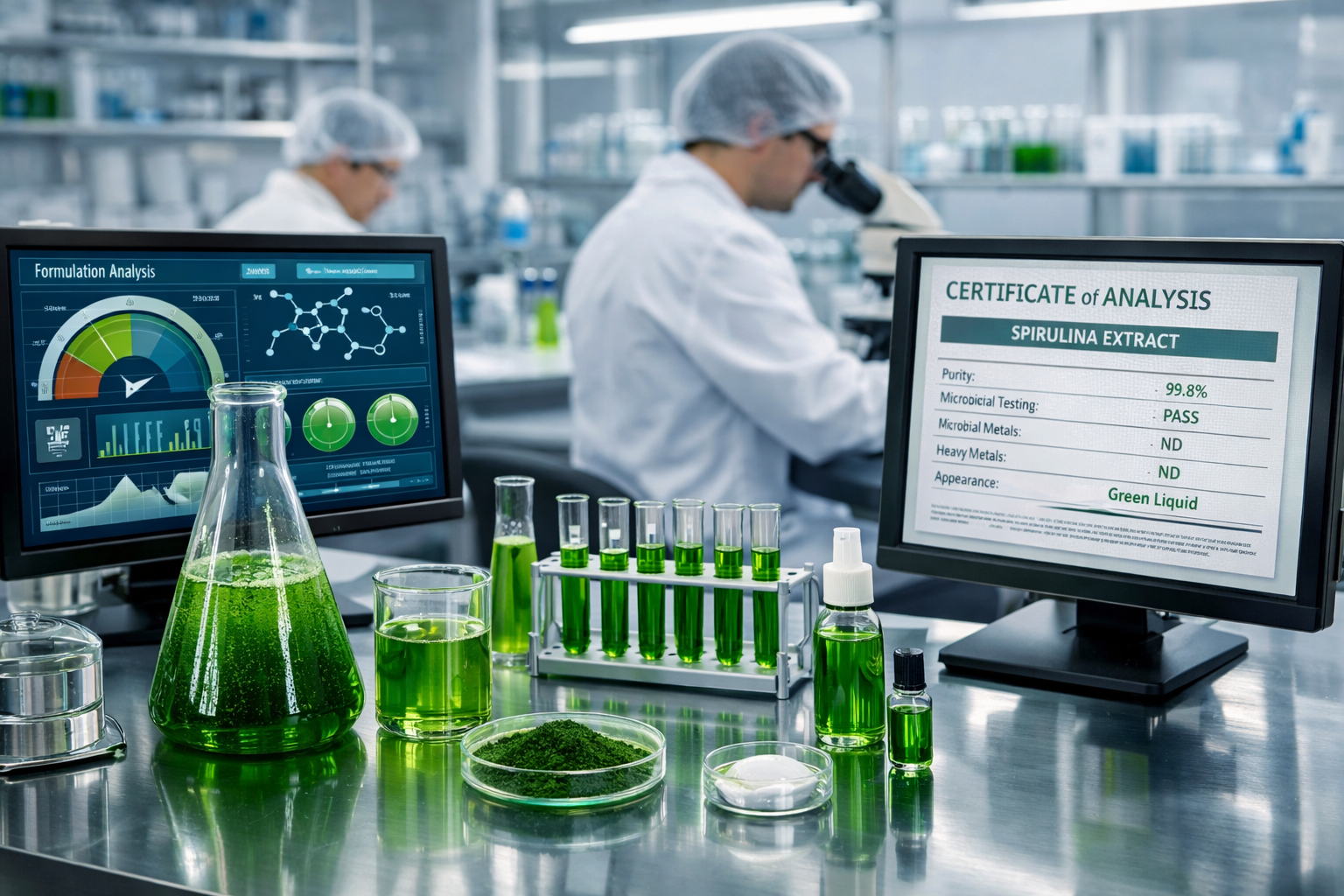
- Detailed COA with batch‑wise traceability
- Consistent colour, texture, and sensory profile
- Transparent documentation of cultivation and processing methods
- Ability to scale supply without quality drift
Many brands also assess sustainability practices and environmental controls, making professionally managed cultivation systems particularly attractive.
Regulatory and Compliance Considerations
Spirulina used in cosmetics must comply with cosmetic ingredient regulations, which differ from food safety standards. Suppliers must understand these differences to support brand compliance.
Key considerations include:
- Correct INCI naming and ingredient documentation
- Heavy metal and microbial compliance at cosmetic thresholds
- Stability and compatibility testing support
- Alignment with claim substantiation requirements
A lack of regulatory understanding can delay product launches or increase reformulation risk for cosmetic brands.
Cosmetic Buyer Checklist: Evaluating Spirulina Suppliers
Before onboarding a spirulina supplier, cosmetic and skincare brands typically evaluate multiple technical and operational criteria. The checklist below reflects common procurement and R&D expectations.
| Evaluation Area | Key Questions Cosmetic Buyers Ask |
| Cultivation control | Are water quality, pH, and temperature tightly controlled and documented? |
| Processing methods | Is low‑temperature drying used to preserve pigments and proteins? |
| Microbial safety | Are microbial loads consistently within cosmetic thresholds? |
| Heavy metal control | Are heavy metal levels tested batch‑wise and well below cosmetic limits? |
| Batch consistency | Is colour, odour, and particle size uniform across lots? |
| Documentation | Are COA, traceability, and process SOPs readily available? |
| Scalability | Can volumes be increased without quality drift? |
| Compliance readiness | Is the supplier familiar with cosmetic regulatory requirements? |
Suppliers that meet these criteria reduce reformulation risk, speed up product development cycles, and support long‑term brand consistency.
Role of Integrated Production Frameworks
Meeting cosmetic‑grade requirements consistently is difficult without a systems‑led approach that integrates cultivation, processing, and quality control.
Integrated frameworks-such as those followed in Greenbubble‑aligned spirulina projects-emphasise a structured approach supported by professional spirulina farming consultancy and, where required, end‑to‑end implementation through spirulina farming turnkey solutions. These frameworks prioritise:
- Controlled inputs and environmental parameters
- Process documentation and traceability
- Batch‑to‑batch consistency
- Long‑term supply reliability
This alignment reduces formulation risk for cosmetic brands and strengthens supplier credibility over extended partnerships.
FAQs
Q1. Why is spirulina used in cosmetic products?
Spirulina offers antioxidant, conditioning, and bioactive properties that support skin health, product stability, and formulation performance.
Q2. Can spirulina be used in sensitive‑skin formulations?
When properly processed, tested, and formulated, spirulina can be used in a wide range of skincare products, subject to compatibility testing.
Q3. Do cosmetic brands require certification from spirulina suppliers?
While certifications add credibility, brands primarily prioritise documented process control, traceability, and consistent quality.
Q4. Does spirulina sourcing affect cosmetic product stability?
Yes. Variability in spirulina quality can directly impact colour stability, odour, texture, and shelf life of cosmetic formulations.
Conclusion
Spirulina has evolved into a valuable functional ingredient for cosmetic and skincare brands seeking natural, bioactive inputs backed by measurable performance. Its effectiveness in formulations depends less on marketing narratives and more on cultivation discipline, processing integrity, and supplier reliability.
Cosmetic brands increasingly prefer spirulina sourced from professionally engineered production systems-such as those exemplified by Greenbubble-where quality is designed into the process rather than corrected later. This system’s‑driven approach supports consistent performance, regulatory confidence, and long‑term partnership viability in the competitive skincare market.
Table Of Contents