Southeast Asia is close to India, fast-growing and full of demand for protein, natural ingredients and feed. For Indian spirulina producers, it is one of the most accessible export regions in the world. It is also one of the most diverse. Each country has its own regulators, buyer preferences and entry rules.
Instead of a standard market report, we’ve put this guide together as the questions Indian producers most often ask us about entering Southeast Asia, answered by our team. We have built spirulina farms in more than 10 countries, including our project with Spino Algae in Vietnam, and our customers account for more than 90% of India’s spirulina production.
Southeast Asia at a Glance
| Market | Main demand drivers | Key regulatory point |
|---|---|---|
|
Singapore |
Premium health foods, supplements, food innovation |
Singapore Food Agency rules for food, separate rules for health supplements |
|
Malaysia |
Supplements, halal food, food manufacturing |
Halal certification widely expected, and supplements may need registration |
|
Thailand |
Food and beverage ingredients, aquaculture feed, wellness |
Thai FDA registration and labelling requirements |
|
Vietnam |
Aquaculture feed, supplements, food manufacturing |
Food safety declarations and registration with health authorities |
|
Indonesia |
Large consumer market, aquaculture, halal food |
BPOM registration and a phased mandatory halal requirement |
|
Philippines |
Supplements, nutrition programmes, aquaculture |
Philippine FDA product registration |
“Why should Indian spirulina exporters look at Southeast Asia?”
Because the region combines proximity with demand. Shipping from India’s east coast to Southeast Asian ports is short compared with routes to Europe or the Americas, which reduces transit time and quality risk.
Demand also runs across several segments at once:
- Aquaculture feed: Vietnam, Thailand and Indonesia have large shrimp and fish farming industries that need quality feed ingredients.
- Natural colours: food and beverage brands are moving from synthetic dyes to natural alternatives, and phycocyanin is one of the few natural sources of blue colour.
- Supplements and wellness: urban middle classes across the region are spending more on health products.
- Plant-based foods: interest in alternative proteins is growing, especially in Singapore.
India also has an established trade framework with the region through the ASEAN-India Trade in Goods Agreement, which may offer preferential tariffs on qualifying products.
“Which country should we enter first?”
It depends on your product and certifications. Here is how we usually suggest thinking about it:
| If you sell… | Consider starting with | Why |
|---|---|---|
|
Premium certified organic powder or tablets |
Singapore and Malaysia |
Buyers value quality and certification, and markets are well organised |
|
Feed-grade spirulina |
Vietnam and Thailand |
Large aquaculture industries with steady demand |
|
Phycocyanin or colour-grade spirulina |
Thailand, Singapore and Malaysia |
Strong food and beverage manufacturing bases |
|
Halal-certified supplements |
Malaysia, then Indonesia |
Halal is essential in both, and Indonesia offers huge scale once registered |
|
Nutrition programme supply |
Philippines and Indonesia |
Institutional and programme-led demand |
Many exporters use Singapore or Malaysia as a first market. Their regulatory systems are well structured and many regional distributors are based there. Indonesia is the largest opportunity by population, but registration and halal requirements mean it usually takes longer to enter.
“Which buyers pay the best prices?”
As a benchmark, Indian producers typically receive the following for spirulina grades:
| Grade | Typical price (₹/kg) |
|---|---|
|
Certified organic, high phycocyanin powder |
800 to 1,500 |
|
Export-grade with USDA or EU Organic certification |
800 to 1,000 |
|
Phycocyanin extract |
E6: ₹5,000, E18: ₹8,000, E40: ₹24,000 |
|
Feed grade |
400 to 600 |
In Southeast Asia, the highest value usually comes from phycocyanin extracts for food colour and certified powder for supplement brands. Feed buyers offer lower prices but large, recurring volumes. Pricing varies by country and contract, so treat these as starting benchmarks. For more on how buyers negotiate, read what drives bulk spirulina pricing.
“What certifications do Southeast Asian buyers ask for?”
Most serious buyers expect:
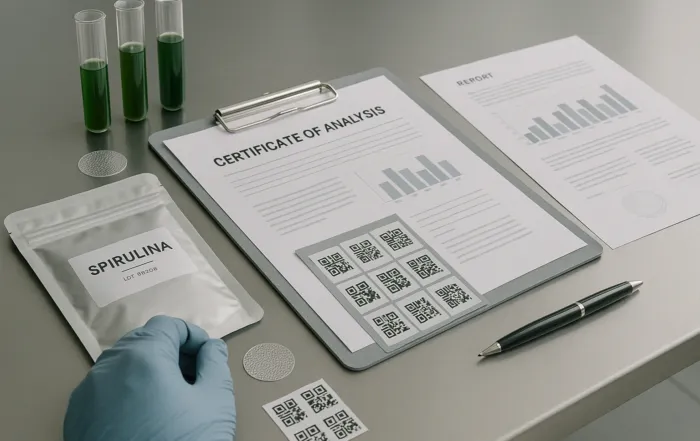
- A Certificate of Analysis for every batch, covering protein, moisture, phycocyanin, microbial safety and heavy metals
- Food safety certification, such as HACCP or ISO 22000
- Organic certification for premium supplement buyers
- Halal certification, essential in Malaysia and Indonesia and valued elsewhere in the region
- Product registration with the destination country’s regulator where required
Indonesia is phasing in mandatory halal certification for many products, so plan for it early if Indonesia is on your roadmap. See our spirulina certification guide.
“Southeast Asia already produces spirulina. Can India really compete?”
Yes, but not on price alone. Some Southeast Asian countries already produce spirulina, and local suppliers have the advantage of proximity. Indian exporters compete best on:
- Consistent, verified quality, with a lab-tested COA for every batch
- Certification depth, including organic, halal and food safety systems
- Reliable volumes backed by commercial-scale production
- Specialised grades, such as high-phycocyanin powder and extracts
India’s semi-arid regions offer an advantage for consistent production. Heavy monsoon rains and high humidity in parts of Southeast Asia can make year-round production harder for local farms. Buyers who need steady supply and consistent specifications often value that reliability. Read why consistency matters more than yield in commercial spirulina.
“How should we pack spirulina for a humid tropical market?”
Humidity is a major risk. Spirulina powder absorbs moisture easily, which can lead to clumping, microbial growth and nutrient loss, especially in warm warehouses. We recommend:
- Multi-layer foil packaging with an aluminium barrier
- Nitrogen flushing or vacuum sealing at packing
- Moisture well below the 9% specification limit before sealing
- Clear storage guidance for distributors: cool, dry and out of direct light
- Shelf-life testing under warm, humid conditions
Compare methods in nitrogen flushing vs vacuum sealing for spirulina.
“How do we sell into aquaculture feed markets?”
Feed buyers care about consistent carotenoid levels, reliable supply and competitive pricing. Spirulina is used in fish and shrimp feeds for its nutritional and pigment benefits. To win feed contracts:
- Provide consistent pigment and nutrient profiles batch after batch
- Offer volume-based pricing with clear minimum order quantities
- Share COAs and feeding application information with technical teams
Remember that feed-grade and food-grade spirulina are sold into different markets with different expectations. See the difference between spirulina for human use and animal feed and minimum order quantities in bulk spirulina contracts.
“What about the natural blue colour market?”
This is one of the most exciting segments. Phycocyanin gives food and drinks a natural blue colour, and food brands across the region want clean-label alternatives to synthetic colours.
Supplying this market requires spirulina with high phycocyanin content and careful processing. Phycocyanin is heat-sensitive, so low-temperature drying is essential. Learn more in the science behind phycocyanin and what food brands look for in spirulina as an ingredient.
“What are the most common mistakes exporters make?”
| Mistake | What happens | What to do instead |
|---|---|---|
|
Entering several countries at once |
Registration costs and delays multiply |
Start with one or two markets |
|
Ignoring halal requirements |
Blocked from Malaysia and Indonesia |
Certify early if you target these markets |
|
Using standard packaging |
Moisture damage in humid storage |
Use protective foil packaging with nitrogen or vacuum sealing |
|
Competing only on price |
Squeezed by local and low-cost suppliers |
Compete on quality, certification and reliability |
|
Shipping without matching buyer specs |
Rejected shipments |
Agree specifications in writing and test before dispatch |
|
Signing large contracts without steady supply |
Missed deliveries and damaged relationships |
Secure production capacity first |
“What does a realistic entry roadmap look like?”
| Phase | Focus | Key actions |
|---|---|---|
|
Phase 1: Preparation |
Product and compliance |
Confirm certifications, standardise COAs, test packaging and shelf life |
|
Phase 2: Market selection |
One or two target markets |
Research registration rules, identify buyer segments and distributors |
|
Phase 3: Entry |
First orders |
Samples, trial shipments, registration where needed |
|
Phase 4: Growth |
Repeat business |
Long-term contracts, consistent quality, expansion into new segments |
|
Phase 5: Expansion |
Additional countries |
Use existing certifications and distributor networks to enter more markets |
For more on regional opportunities, see the top spirulina export markets for Indian producers.
“How can we build production that meets Southeast Asian standards?”
This is where we help. Export success depends on production that delivers the same quality in every batch. We build farms designed for export from day one, with:
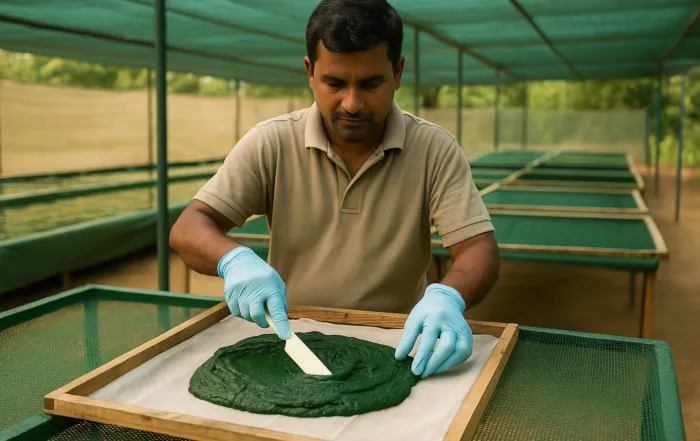
- Automated harvesting and dewatering, reducing human contact and contamination
- Low-temperature drying, preserving phycocyanin and nutrients
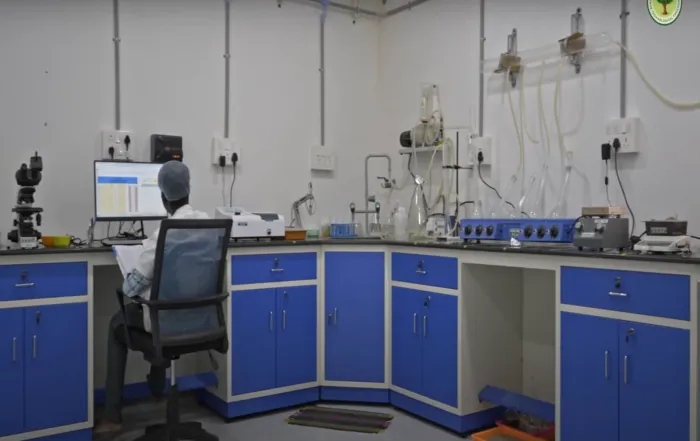
- In-house labs that generate a COA for every batch
- Hygienic processing and packing that support food safety, organic and halal certification
- Commercial-scale design for reliable export volumes
We have also helped producers within Southeast Asia build their own operations. Read about Spino Algae’s agri-innovation in Vietnam.
We have been recognised as Best Microalgae Company by the European Algae Biomass Association in Paris. Our turnkey spirulina farming solutions start from ₹1 crore / US $200,000, and our spirulina farming consultancy can help you plan your export strategy.
Your Next Step Into Southeast Asia
Southeast Asia rewards exporters who prepare carefully. The region is close, diverse and growing, with real demand from supplement brands, food manufacturers and aquaculture producers.
Start with one or two markets that match your product. Get your certifications, especially halal, in place early. Protect your spirulina from tropical humidity. Compete on consistent, verified quality. With the right production behind you, Southeast Asia can become one of your most reliable export regions.
Make us your source on Google
Table Of Contents