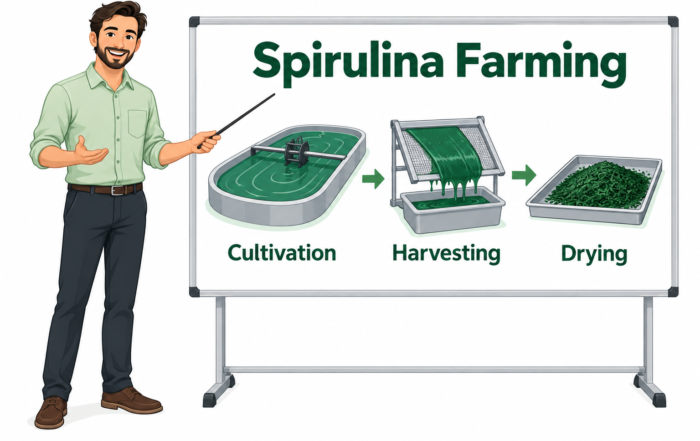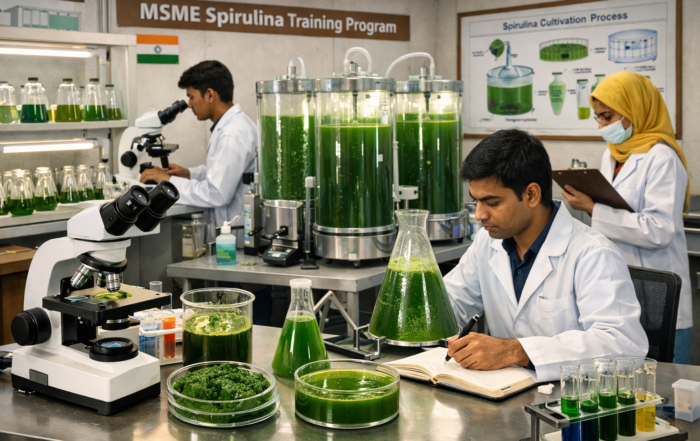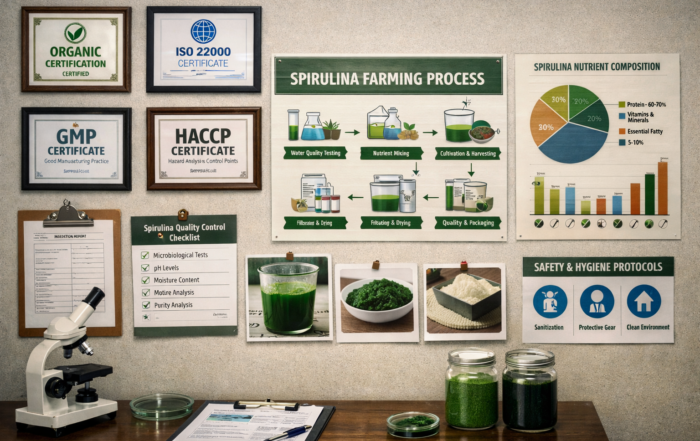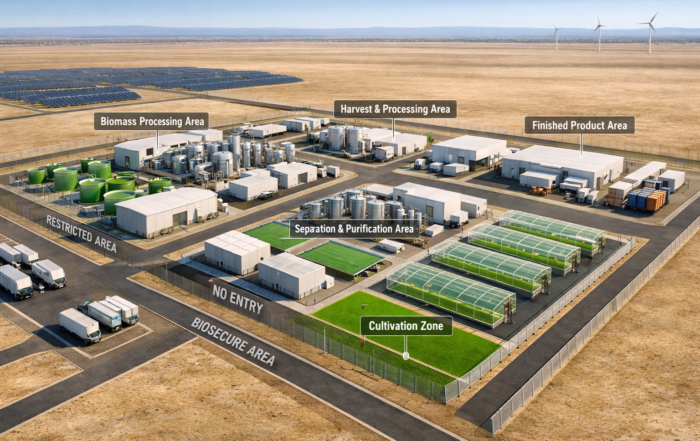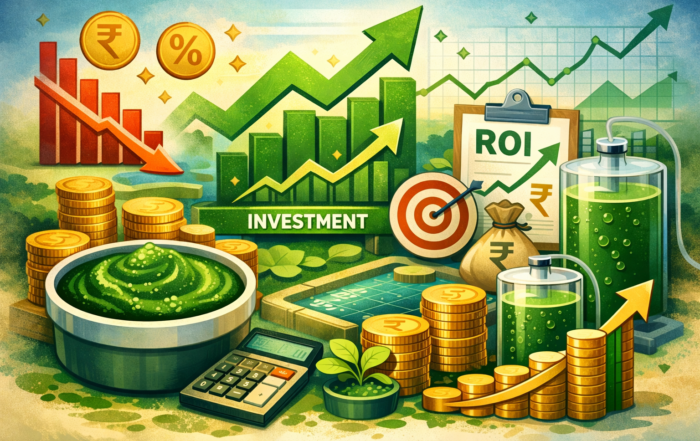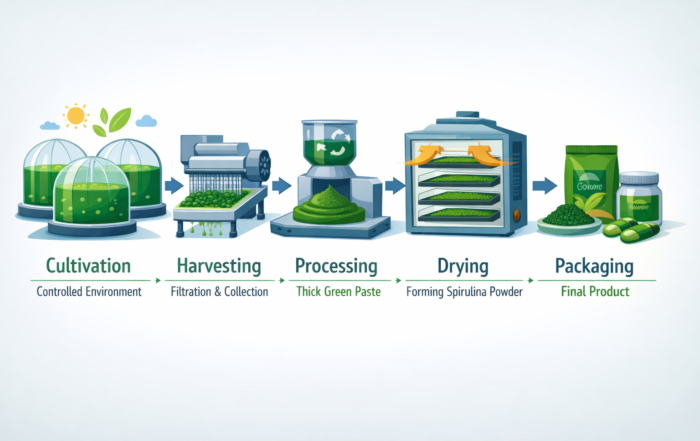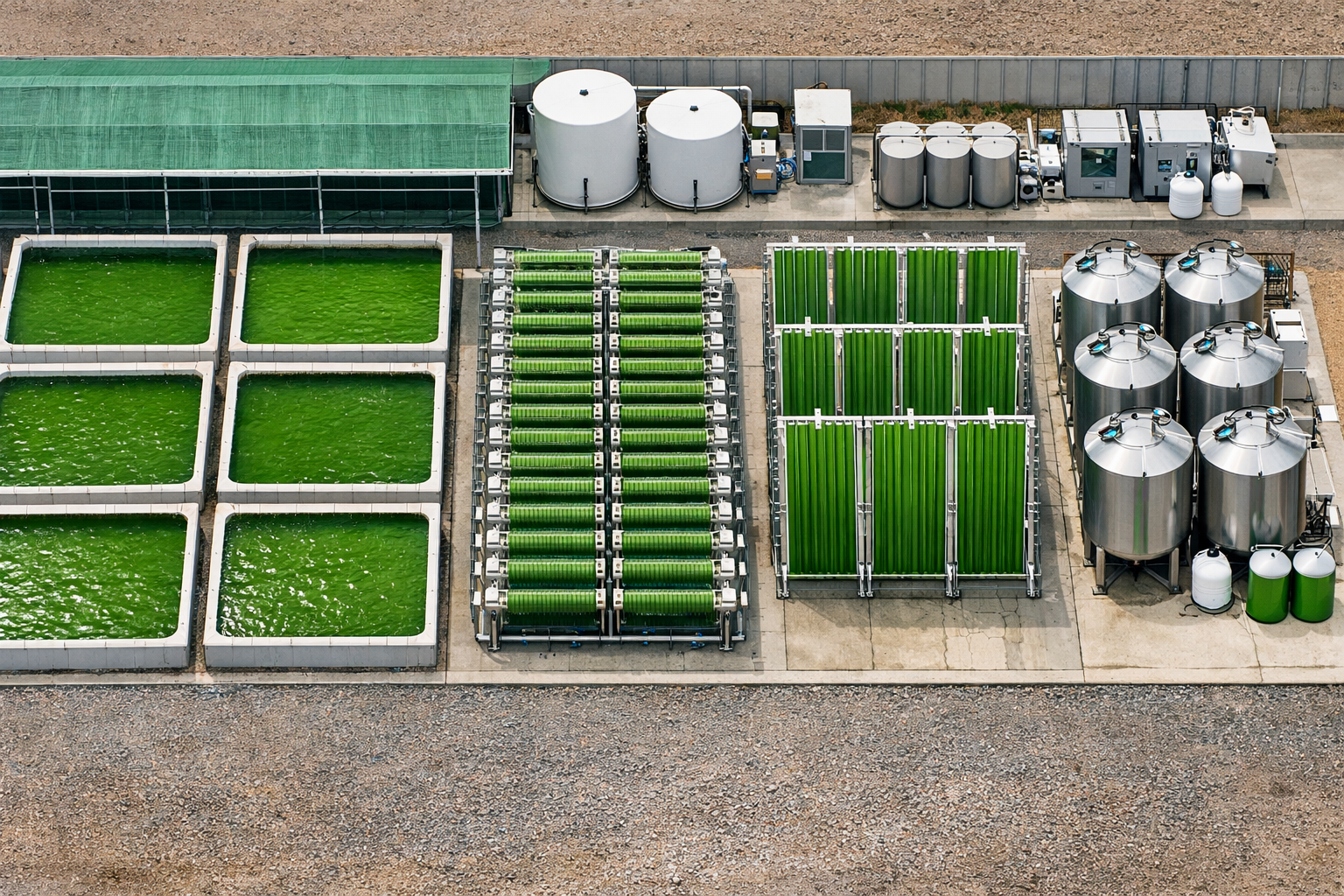
The same crop, grown four different ways, can carry a price spread of nearly three times per kilogram – and the difference is not arbitrary. The cultivation method determines biomass density, contamination risk, pigment concentration, and ultimately whether the spirulina can clear export and certification standards at all. Click through the methods above to see how price, phycocyanin content, and export-readiness shift with each approach.
Why Cultivation Method Drives Price More Than Almost Anything Else
Most price comparisons in the spirulina market focus on certification or drying – and those matter. But the cultivation method is the upstream variable that determines what is even possible downstream. A poorly managed pond cannot be rescued by good drying. A well-managed raceway pond with weak processing still outperforms a contaminated, badly agitated open pond with premium equipment bolted on afterward.
Open Pond, Manual Operation: The Cheapest and the Riskiest
Manually operated open ponds remain common among smaller and informal producers in India. Labour does the work that automation would otherwise handle – stirring, monitoring, manual harvesting. This keeps capital costs low, which is reflected in the ₹400-₹500/kg price range. But manual operation comes with real costs that don’t show up in the cultivation budget: inconsistent agitation leads to uneven temperature and light exposure, increasing contamination risk and producing lower, less consistent phycocyanin yields, typically in the 5-8% range – well below the 10% minimum quality benchmark. Most manual-pond product cannot pass HACCP-compliant audits, as covered in why manual spirulina farms fail certification audits.
Automated Raceway Cultivation: The Middle Tier
Raceway ponds fitted with efficient agitator systems and automated harvesting equipment represent a meaningful step up. Consistent agitation stabilises culture temperature and gas exchange, producing more even biomass density and improved phycocyanin retention – typically 10-14%. Pricing in the ₹500-₹600/kg range reflects the higher capital investment in pond design and automation, but the resulting product is conditionally exportable depending on what drying and testing infrastructure follows.
Raceway Cultivation Paired With RWD Drying
Cultivation quality only carries through to the finished product if drying preserves it. Pairing automated raceway cultivation with Refractive Window Drying, which keeps product temperature below 45°C, protects the phycocyanin and beta-carotene that good cultivation produced in the first place. This combination typically yields phycocyanin in the 15-18% range and commands ₹800-₹1,000/kg – a price that reflects two compounding investments rather than one. The spirulina drying methods comparison breaks down why this pairing matters more than either step alone.
Certified Organic Cultivation With In-House Lab Verification
At the top of the range sits cultivation built around full organic compliance – OMRI-approved nutrient inputs, dedicated non-cross-contaminated facilities – paired with in-house lab testing verifying every batch against a full COA. This tier consistently achieves phycocyanin above 18-20% and commands ₹800-₹1,000/kg, reflecting certification costs, audit cycles, and the testing infrastructure required to prove what the cultivation method actually delivered.
What This Means for Buyers
A quoted price without a stated cultivation method is incomplete information. Two suppliers quoting the same ₹1,200/kg may represent fundamentally different products – one from a well-run automated raceway, another from a manual pond marked up to look competitive. Asking how the spirulina was cultivated, not just how it was dried or certified, closes that gap before a purchase decision is made.
The Infrastructure Standard Behind the Premium Tiers
The price differences mapped above are not arbitrary – they trace directly to the turnkey farm systems that producers invest in. Greenbubble’s farm designs, deployed across more than 10 countries and underpinning over 90% of India’s spirulina production, are built around the automated raceway and certified cultivation tiers described above – the methods that consistently produce export-grade, COA-verifiable spirulina rather than product that merely carries the name.
The cultivation method is the first decision in the entire value chain. Every price, every certification outcome, and every nutrient figure that follows traces back to it.
Make us your source on Google
Table Of Contents