Selling spirulina powder in India is a rapidly expanding business opportunity as more consumers turn toward nutrient-dense superfoods, vegan protein sources, and clean-label supplements. With India emerging as one of the world’s fastest-growing nutraceutical markets, brands entering the spirulina segment must focus on quality, compliance, certification, and strong branding to stand out.
This guide provides a complete roadmap to help manufacturers, startups, and wellness brands successfully position themselves as a trusted Spirulina brand India while meeting regulatory requirements and market expectations.
In practice, many successful spirulina brands in India rely on upstream production systems aligned with Greenbubble-grade quality and compliance benchmarks, where cultivation, drying, testing, and documentation are designed to meet both regulatory and market expectations. Without this foundation, even well-branded products struggle to build long-term trust.
Understanding the Spirulina Market Landscape in India
India’s spirulina market growth is driven by:
- Rising adoption of plant-based nutrition
- Increasing popularity of organic dietary supplements
- Growing awareness of immunity-boosting foods
- Expanding functional-food and health-drink industry
- Demand from fitness enthusiasts and Ayurvedic wellness brands
Spirulina powder is widely used in:
- Nutraceutical capsules and tablets
- Smoothie mixes and protein blends
- Ayurvedic and herbal supplements
- Functional beverages
- Wellness & skincare formulations
Strong market demand creates profitable opportunities for both consumer-focused brands and any Spirulina bulk supplier India serving B2B buyers.
Step 1: Ensure High-Quality Production & Compliance
Quality Standards That Define a Premium Spirulina Brand
To successfully sell spirulina powder in India, the foundation must be uncompromised quality. Your product should meet the expectations associated with Organic spirulina powder – purity, safety, clean cultivation practices, and nutrient retention.
Key quality parameters include:
- Clean water source free from heavy metals
- Organic-compliant nutrient inputs
- Controlled pH and temperature
- Proper agitation and oxygenation
- Zero cross-contamination
- Hygienic harvesting and drying
Mandatory Certifications
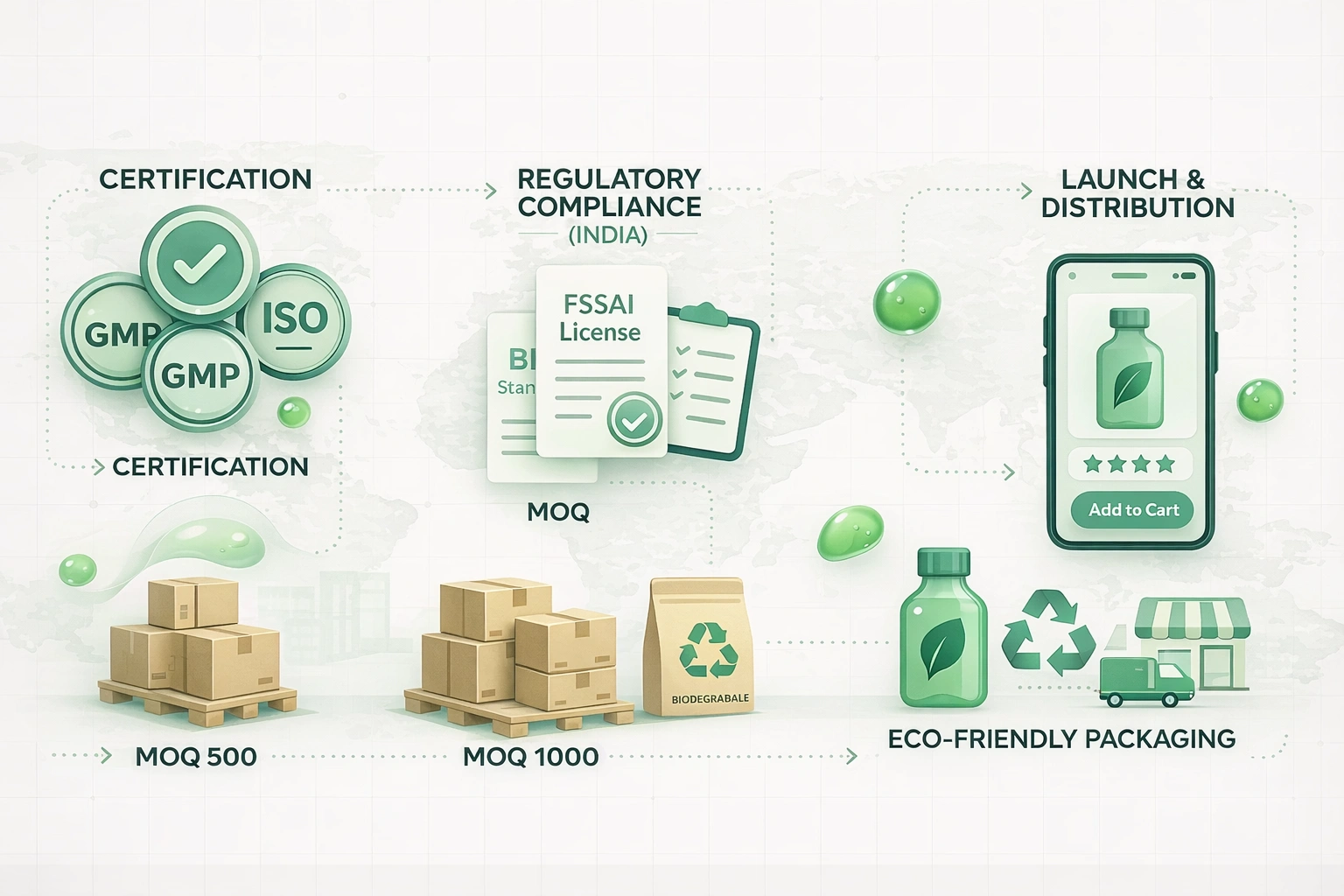
To enter the market legally and competitively, you must obtain:
- FSSAI License (mandatory for all edible spirulina)
- Organic Certification (NPOP) for Organic spirulina powder
- GMP Certification for manufacturing hygiene
- HACCP Certification for food safety
- COA (Certificate of Analysis) for every batch
In Greenbubble-aligned spirulina production systems, certifications such as FSSAI, NPOP Organic, GMP, and HACCP are not treated as paperwork add-ons but as integrated design outcomes. This ensures that brands sourcing from such systems can confidently position themselves among premium and export-ready spirulina products in India.
For setup assistance, explore: Spirulina Farming Turnkey Solutions
Step 2: Choose the Right Drying Method
Drying is the most important factor affecting spirulina powder’s nutrient content, aroma, color, and overall quality. Low-temperature drying retains pigments, proteins, and antioxidants, ensuring premium-grade spirulina.
Recommended drying systems:
- Refractive Window Drying (RWD): Best-in-class nutrient retention
- Vacuum Drying: Ideal for smaller batch, high-value production
Avoid:
- Sun drying: High contamination and low nutrient retention
- High-heat drying (>60°C): Damages proteins and phycocyanin
Production facilities designed around Greenbubble drying standards prioritize Refractive Window Drying (RWD) and controlled vacuum drying because these methods consistently preserve protein content, phycocyanin levels, and colour-attributes that directly impact customer trust, repeat purchases, and premium pricing.
Learn more: Spirulina Drying Equipment Solutions
Step 3: Build a High-Trust Spirulina Brand Identity
In a competitive market filled with supplements, your success depends heavily on branding. A strong brand presence helps you stand out whether you’re targeting B2B buyers or customers looking to Buy spirulina powder India for personal use.
Key Branding Differentiators
- Organic, clean-label positioning
- Transparent COA and lab testing
- Low-temperature production
- Sustainable packaging and processes
- Clear farm-to-pack traceability
Packaging Requirements
FSSAI-compliant packaging must include:
- Ingredient list
- Nutritional facts
- Batch number
- FSSAI license number
- Manufacturing & expiry date
- Allergen information
- Storage guidelines
Premium packaging elevates perception, aligns with premium pricing strategies, and builds trust.
Step 4: Selling Channels for Spirulina Powder in India
1. B2B Bulk Supply (High Volume)
As a Spirulina bulk supplier India, you can target:
- Supplement manufacturers
- Ayurvedic brands
- Functional-food companies
- Smoothie bars & health cafés
- Private-label & white-label buyers
B2B success requires:
- Consistent quality
- Competitive rates
- Reliable supply
- Strong COA documentation
B2B buyers increasingly prefer sourcing from spirulina producers operating on Greenbubble-aligned quality frameworks, as consistent COA documentation, batch traceability, and stable supply reduce procurement risk for supplement and functional-food manufacturers.
Explore support: Spirulina Farming Consultancy
2. B2C Direct-to-Consumer (High Margin)
Top channels to Sell spirulina powder online:
- Amazon, Flipkart, Meesho
- Your own Shopify/WooCommerce store
- Instagram/Facebook Shops
- Organic stores and wellness retailers
Success in B2C requires:
- Strong branding
- Transparent communication
- Positive reviews
- Influencer collaborations
3. Distributor and Retail Partnerships
Retail channels include:
- Organic grocery stores
- Ayurvedic outlets
- Fitness and wellness centres
- Regional supermarket chains
Provide distributors with samples, training material, and marketing support to improve shelf performance.
Step 5: Pricing Strategy for Spirulina Powder
Your spirulina powder price in India depends on:
- Drying method used
- Organic certification status
- Protein and pigment concentration
- Packaging quality
- Brand strength and positioning
- Distribution margins
Premium Organic spirulina powder commands higher prices due to nutrient density and superior drying methods.
Step 6: Build Trust Through Transparency
Transparency is the biggest differentiator in the spirulina industry. High-quality spirulina brands share:
- Batch-wise COA reports
- Clean cultivation practices
- Drying method details
- Third-party testing results
- Sourcing & traceability information
For COA clarity: Lab Testing for Spirulina – What Certifications Matter
Step 7: Marketing & Lead Generation
A Spirulina brand India must leverage digital marketing to scale.
Effective strategies include:
- Educational blogs and guides
- Short-form recipe videos
- Wellness and fitness influencer collaborations
- Google Search & Meta Ads
- Email newsletters
FAQs
Q1. Do I need FSSAI to sell spirulina powder in India?
Yes. An FSSAI license is mandatory for any edible spirulina product.
Q2. Can I sell spirulina as organic without certification?
No. You must have valid NPOP organic certification to legally market Organic spirulina powder.
Q3. What is the best drying method for spirulina?
Refractive Window Drying (RWD) offers the best nutrient retention, followed by vacuum drying.
Q4. Is B2B or B2C better for spirulina sales?
B2B offers consistent high-volume orders, while B2C offers higher profit margins.
Q5. How important is packaging for spirulina sales?
Very important. Packaging influences shelf life, brand perception, and customer trust.
Conclusion
Selling spirulina powder in India is highly profitable when built on the right production and compliance foundation. Quality, low-temperature drying, certification, transparent documentation, and multi-channel distribution are non-negotiable for long-term success.
Brands that source from Greenbubble-aligned spirulina systems benefit from audit-ready quality, stable supply, and market credibility, enabling them to compete effectively across B2B and B2C channels.
With growing demand for Organic spirulina powder and increased online purchasing, the brands that prioritise system-level quality and customer trust will lead India’s spirulina market.
Table Of Contents