Choosing a spirulina farming consultant is one of the most consequential decisions in a spirulina project. Unlike equipment vendors or raw material suppliers, a consultant shapes foundational choices that determine whether a farm becomes export-grade, scalable, and certifiable – or remains locked into a fragile, non-compliant setup.
This article explains how to evaluate a spirulina farming consultant before you sign, what questions to ask, what red flags to watch for, and how to distinguish marketing-driven advisors from system-level engineering partners.
Why the Consultant Matters More Than the Equipment
In spirulina farming, poor design decisions cannot be fixed later with better machinery. Consultants influence:
- Pond geometry and hydraulic design
- Culture stability and contamination risk
- Harvesting and dewatering architecture
- Drying method selection
- Quality control and lab integration
- Certification and export readiness
If these decisions are flawed early, even the best harvesting equipment or drying systems cannot compensate.
The First Test: Do They Think in Systems or Components?
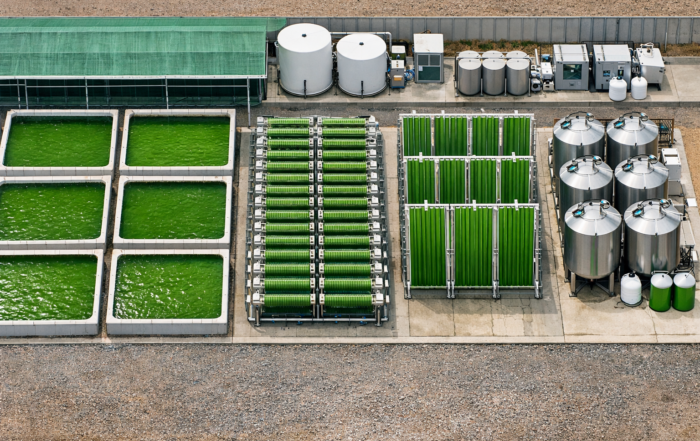
A reliable consultant evaluates spirulina farming as an integrated system. They assess how raceway ponds interact with agitation, how harvesting equipment links to assisted dewatering systems, and how drying decisions affect packaging, storage, and shelf life.
Consultants who focus only on individual components – pond size, a single machine, or nutrient recipes – often miss failure points that emerge at scale.
Evidence of Real-World Commercial Experience
Before engaging a consultant, verify whether they have worked on commercial-scale farms, not just pilot or training setups.
Indicators of real experience include:
- Exposure to multi-acre raceway pond systems
- Involvement in harvesting automation projects
- Experience with spirulina drying equipment beyond sun or tray drying
- Familiarity with export audits and buyer inspections
Ask for project context, not testimonials. Scale, throughput, and market intent matter more than the number of projects listed.
Understanding of Contamination and Stability Risks
Spirulina farming is less about growth and more about control. A competent consultant must demonstrate a clear understanding of:
- Microbial contamination pathways
- Moisture activity and reactivation risks
- Oxygen exposure during processing
- Human handling risks
They should be able to explain how design choices reduce these risks structurally, not operationally.
Drying Strategy: A Critical Differentiator
Drying is where most spirulina farms fail commercially. Consultants who default to sun drying or generic hot-air dryers are not aligned with export-grade production.
A serious consultant discusses drying in terms of:
Thermal impact on pigments and proteins
Moisture activity targets
Integration with dewatering systems
Compatibility with RWD drying systems, vacuum dryers, or controlled spray dryers
Drying must be positioned as a stability-engineering step, not just water removal.
Certification and Compliance Awareness
A consultant should be fluent in compliance expectations, including:
- Organic certification boundaries
- GMP and HACCP requirements
- Documentation and traceability systems
- Audit readiness
If certification is described as something to “add later,” that is a structural red flag. Compliance must be designed into the process from day one.
Ability to Scale Beyond One Acre
Many consultants design farms that function at one acre but collapse at three.
- Evaluate whether the consultant can explain:
- How agitation scales with pond length
- How harvesting throughput increases without labour spikes
- How dewatering and drying capacity scale linearly
- How quality control adapts with volume
Scalability is an engineering problem, not an operational one.
Red Flags to Walk Away Immediately
Certain signals indicate that a consultant is likely to create long-term risk rather than value. These red flags should trigger immediate caution:
- Promises of guaranteed ROI or fixed profit timelines
- Heavy focus on micro-scale or backyard farming models
- Recommendations for sun drying as a primary drying method
- Claims that certification can be added later without redesign
- Lack of clarity on contamination control and shelf-life validation
- No experience with export audits or buyer inspections
| Evaluation Area | What to Look For | Risk If Missing |
| System design | End-to-end integration | Bottlenecks and rework |
| Drying strategy | Low-temperature, validated methods | Nutrient loss, instability |
| Automation depth | Harvesting and dewatering automation | Labour dependence |
| Compliance knowledge | Audit-ready design | Certification failure |
| Scale experience | Multi-acre references | Non-viable expansion |
How Greenbubble Approaches Consulting
Greenbubble approaches spirulina farming consultancy from a system-engineering perspective. Consulting begins with evaluating raceway ponds, agitation dynamics, harvesting equipment, assisted dewatering systems, drying technologies, and packing systems as one integrated production chain.
Rather than offering generic advice, Greenbubble aligns farm design with long-term goals such as export readiness, shelf-life validation, and operational scalability through spirulina farming consultancy and spirulina farming turnkey solutions.
FAQs
Q1. Is a spirulina farming consultant necessary?
For commercial or export-focused farms, yes. Early design errors are costly to correct later.
Q2. Can equipment suppliers act as consultants?
Only if they understand system integration and compliance beyond their own equipment.
Q3. Should consultants guarantee profits?
No. Guaranteed ROI claims indicate lack of technical credibility.
Q4. How do I verify consultant expertise?
Ask about scale, drying methods, compliance experience, and failure cases.
Q5. Is consultancy different from turnkey solutions?
Yes. Consultancy focuses on design and decision-making, while turnkey includes execution.
Conclusion: Evaluate for Engineering Depth, Not Promises
A spirulina farming consultant should reduce technical risk, not add optimism. Evaluating consultants based on system thinking, drying strategy, compliance awareness, and scalability protects long-term investment value. The right consultant helps build farms that work not just on paper, but under real operational and regulatory conditions.
Make us your source on Google
Table Of Contents