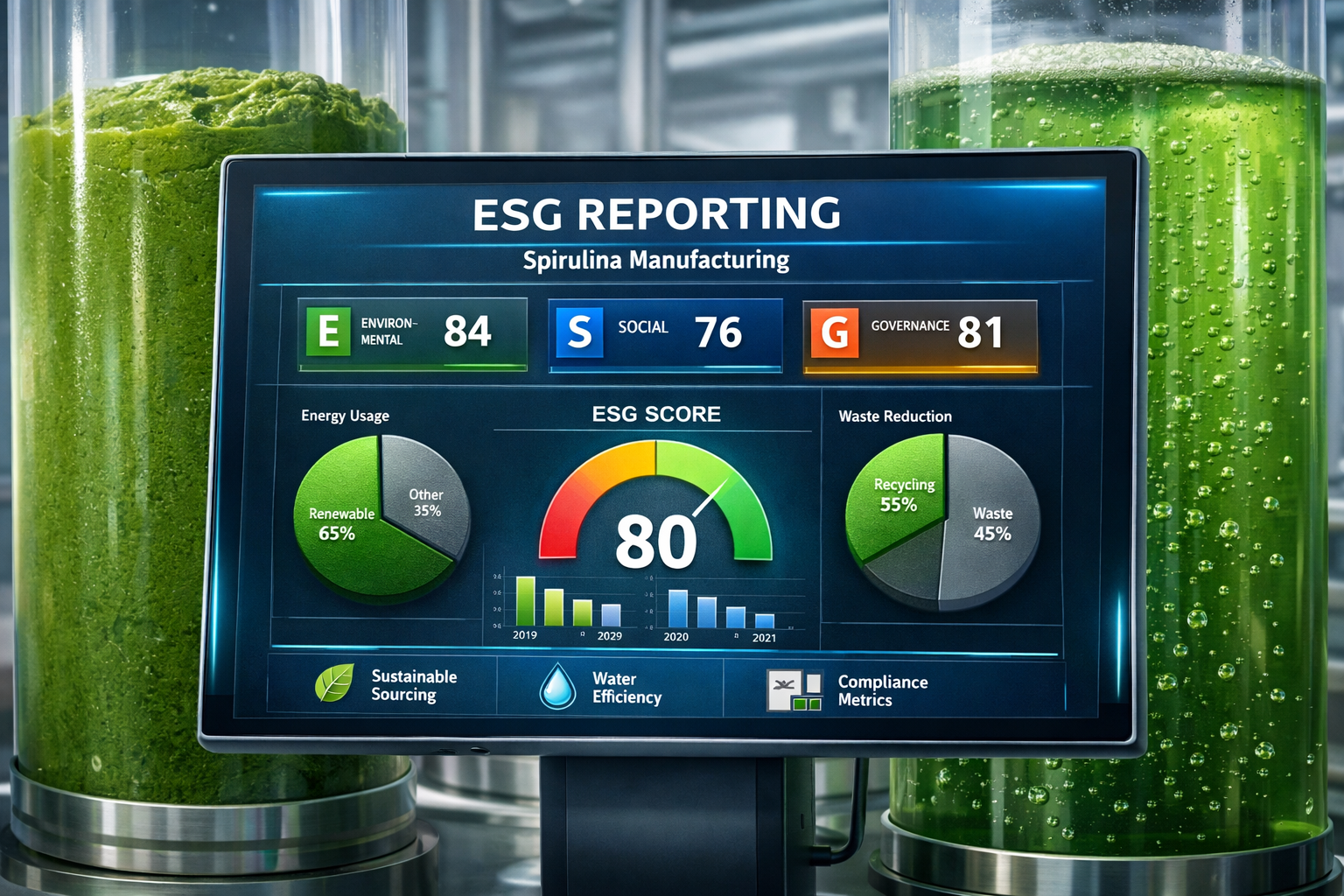
Environmental, Social, and Governance (ESG) reporting is rapidly becoming a strategic requirement for commercial spirulina manufacturers supplying institutional buyers, global food brands, nutraceutical companies, and ESG-focused investors.
What was once considered a corporate formality is now a decisive factor in supplier selection, investment decisions, export approvals, and long-term contract eligibility.
For spirulina producers – positioned at the intersection of sustainable nutrition and climate-conscious agriculture – ESG reporting offers a powerful opportunity to convert operational discipline into commercial advantage.
At Greenbubble, ESG readiness is embedded into farm design, operational systems, and documentation architecture, enabling spirulina businesses to meet global buyer expectations with confidence and credibility.
1. What ESG Means for Spirulina Manufacturers
ESG reporting evaluates business performance across three pillars:
- Environmental: Resource efficiency, emissions, waste, and ecological impact
- Social: Worker welfare, community engagement, and workplace safety
- Governance: Transparency, compliance, ethics, and risk management
For spirulina manufacturers, ESG is not abstract. It directly relates to:
- Energy consumption in agitation and drying
- Water sourcing and management
- Chemical and nutrient handling
- Worker safety and hygiene
- Documentation, traceability, and regulatory compliance
ESG transforms operational discipline into measurable business credibility.
2. Environmental (E): Measuring Sustainability Performance
Key Environmental Metrics
Spirulina manufacturers typically report on:
- Energy consumption (kWh per kg of spirulina)
- Carbon footprint (CO₂e per kg of output)
- Water usage and recycling practices
- Waste generation and disposal methods
- Use of renewable energy (e.g., solar)
- Chemical and nutrient management practices
Efficient infrastructure plays a critical role. Optimized raceway ponds and energy-efficient efficient agitators reduce electricity consumption, while advanced spirulina drying equipment minimizes energy intensity during processing.
Environmental performance directly influences ESG ratings and buyer confidence, especially in export markets.
3. Social (S): Workforce and Community Responsibility
The social dimension of ESG focuses on how a spirulina business treats its workforce and engages with surrounding communities.
Key Social Metrics
- Employee health and safety protocols
- Use of personal protective equipment (PPE)
- Hygiene standards in production areas
- Fair wages and legal employment practices
- Training and skill development programs
- Gender diversity and equal opportunity
- Community engagement and local employment generation
Spirulina farms that maintain structured hygiene zones, safe chemical handling procedures, and documented training programs are better positioned to pass buyer audits and ESG evaluations.
Strong social performance reduces operational risk and enhances brand trust.
4. Governance (G): Compliance, Transparency, and Control
Governance is often the deciding factor in institutional partnerships.
Key Governance Metrics
- Regulatory compliance and certifications (HACCP, GMP, Organic where applicable)
- Documented Standard Operating Procedures (SOPs)
- Batch traceability and recall readiness
- Ethical sourcing and anti-corruption policies
- Internal audits and corrective action systems
- Board or leadership oversight and accountability structures
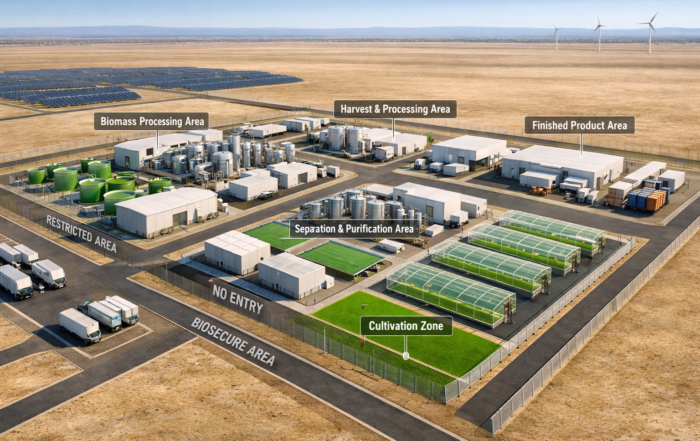
Facilities developed through spirulina farming turnkey solutions integrate compliance zoning, documentation workflows, and traceability systems that align naturally with governance reporting requirements.
Strong governance reduces legal exposure, audit risk, and supply chain disruptions.
5. Global ESG Frameworks Relevant to Spirulina Businesses
Spirulina manufacturers can align their ESG reporting with widely recognized global frameworks:
- GRI (Global Reporting Initiative): Comprehensive sustainability reporting standard
- SASB (Sustainability Accounting Standards Board): Industry-focused ESG disclosures
- TCFD (Task Force on Climate-related Financial Disclosures): Climate risk and resilience reporting
- UN SDGs (United Nations Sustainable Development Goals): Strategic alignment with global sustainability goals such as Zero Hunger, Good Health and Well-being, Clean Water, and Climate Action
Even small and mid-sized spirulina businesses can adopt simplified ESG reporting aligned with these frameworks to meet buyer and investor expectations.
6. ESG and Buyer Qualification in Spirulina Supply Chains
Institutional buyers increasingly evaluate suppliers based on ESG performance, particularly in:
- Europe and the UK (driven by CSRD and sustainability regulations)
- North America (ESG-driven procurement and investor pressure)
- Japan and Australia (strong quality and sustainability expectations)
ESG reporting supports:
- Faster supplier onboarding
- Higher trust in long-term contracts
- Reduced audit friction
- Premium positioning in sustainability-focused markets
Structured operational alignment supported by spirulina farming consultancy helps manufacturers convert operational data into buyer-ready ESG reports.
7. Key ESG Metrics for Spirulina Manufacturers
| ESG Pillar | Metric | Why It Matters |
| Environmental | kWh per kg of spirulina | Measures energy efficiency |
| Environmental | CO₂e per kg output | Supports carbon and climate claims |
| Environmental | Water use per kg | Demonstrates resource efficiency |
| Social | Lost Time Injury Frequency Rate (LTIFR) | Indicates workplace safety |
| Social | Employee training hours | Reflects workforce development |
| Governance | Batch traceability coverage | Ensures recall readiness |
| Governance | Audit non-conformities closed on time | Shows compliance discipline |
Tracking these metrics consistently forms the backbone of credible ESG reporting.
8. Business Benefits of ESG Reporting
Commercial Advantages
- Preferred supplier status with global brands
- Access to ESG-focused distributors and retailers
- Stronger positioning in tenders and long-term contracts
Financial Advantages
- Improved access to bank financing and green loans
- Higher investor confidence
- Potential eligibility for sustainability-linked funding
Operational Advantages
- Lower energy and resource costs through efficiency
- Reduced regulatory and compliance risk
- Stronger crisis and risk management framework
ESG is not just reporting – it is structured operational excellence.
9. Practical Steps to Implement ESG Reporting
Step 1: Establish ESG Baselines
Measure energy use, water consumption, emissions, workforce data, and compliance status.
Step 2: Define ESG Policies
Create written policies for environment, health and safety, ethics, and compliance.
Step 3: Implement Monitoring Systems
Use meters, logs, and digital records to track ESG metrics consistently.
Step 4: Align with Recognized Frameworks
Adopt simplified GRI, SASB, or UN SDG-aligned reporting structures.
Step 5: Publish an Annual ESG Summary
Even a concise ESG report significantly enhances credibility with institutional buyers and investors.
Internal linking aligned with approved interlinking framework.
Frequently Asked Questions
Q1. Is ESG reporting mandatory for spirulina manufacturers?
It is not universally mandatory yet, but it is increasingly required by institutional buyers, export markets, and investors – especially in Europe and North America.
Q2. Can small and mid-sized spirulina farms implement ESG reporting?
Yes. ESG reporting can begin with simple metrics such as energy use, water consumption, worker safety records, and compliance documentation.
Q3. How does ESG reporting help in exports?
Many international buyers prefer or require ESG-aligned suppliers to meet sustainability regulations and corporate responsibility commitments.
Q4. Does ESG reporting increase operational costs?
Initial setup requires effort, but ESG practices often reduce long-term costs through energy efficiency, waste reduction, and improved risk management.
Q5. What is the most important ESG factor for spirulina manufacturers?
Environmental performance – especially energy efficiency and carbon footprint – combined with strong governance through traceability and compliance systems.
Conclusion
ESG reporting is becoming a strategic differentiator for spirulina manufacturers in global supply chains.
By systematically measuring environmental impact, strengthening workforce and community practices, and reinforcing governance through compliance and transparency, spirulina businesses can enhance credibility, unlock premium markets, and secure long-term institutional partnerships.
For commercial spirulina operations, ESG is no longer optional – it is a core component of competitiveness, resilience, and sustainable growth.
Make us your source on Google
Table Of Contents