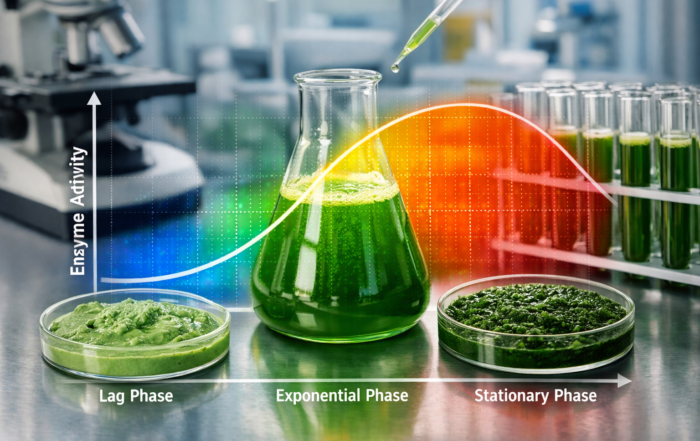
Spirulina cultivation is traditionally associated with outdoor raceway ponds that rely on sunlight, open air, and natural temperature cycles. For decades, this outdoor model has formed the backbone of commercial spirulina production because it balances biological efficiency with economic viability. However, as interest grows in year-round production, tighter contamination control, urban farming, and location-independent cultivation, many prospective producers raise an important question: can spirulina be cultivated indoors?
The short answer is yes-spirulina can be cultivated indoors under controlled conditions. The more important and practical question, however, is whether indoor cultivation is technically manageable, economically sustainable, and operationally sensible for commercial-scale production. This article examines indoor spirulina cultivation from a realistic, ground-level perspective, explaining how indoor systems work, why they are considered, where they make sense, and what limitations must be clearly understood before committing capital.
What Indoor Spirulina Cultivation Means
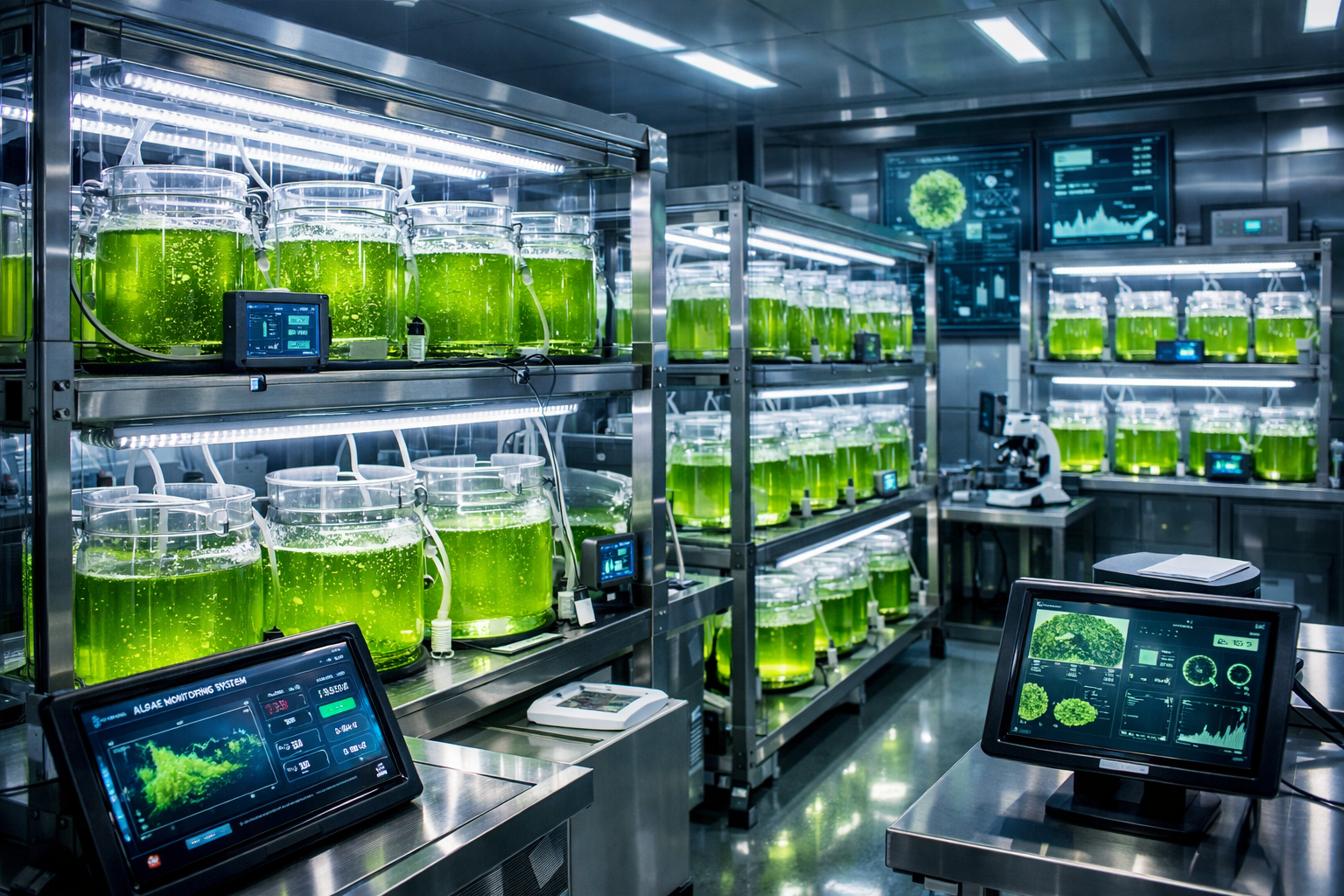
Indoor spirulina cultivation refers to growing spirulina in fully or partially enclosed environments where key growth variables are artificially created and controlled. Unlike outdoor raceway ponds that depend on natural sunlight and ambient conditions, indoor systems rely almost entirely on engineered infrastructure to replicate the biological environment spirulina requires.
Typical characteristics of indoor cultivation include:
- Artificial lighting in place of sunlight
- Temperature-controlled rooms or enclosures
- Enclosed tanks, photobioreactors, or shallow indoor raceways
- Controlled airflow, humidity, and biosecurity measures
Because of this heavy reliance on engineered inputs, indoor spirulina systems resemble industrial bioprocessing setups more than traditional agriculture. The success of such systems depends less on climate and more on design accuracy, energy availability, and operational discipline.
Why Indoor Cultivation Is Considered
Indoor spirulina farming is rarely chosen as a default production method. Instead, it is usually explored to address specific constraints that make outdoor cultivation difficult or impractical.
Common motivations include:
- Unfavourable outdoor climate conditions such as extreme cold, excessive rainfall, or low sunlight
- Limited land availability, particularly in urban or institutional environments
- Requirement for tighter contamination control in research or specialty applications
- Pilot, demonstration, or R&D facilities where consistency matters more than cost
- Educational, laboratory, or institutional setups where production volume is secondary
In these scenarios, indoor cultivation offers a higher level of control over environmental variables. However, this control comes with higher capital requirements, higher operating costs, and greater technical complexity.
Technical Requirements for Indoor Spirulina Farming
Successfully cultivating spirulina indoors requires recreating the essential conditions of outdoor growth using mechanical, electrical, and control systems. Each requirement adds complexity and cost to the operation.
Lighting Systems
Spirulina relies on photosynthesis, which means indoor systems must provide artificial light of sufficient intensity, duration, and spectrum. Light quality and distribution directly affect growth rate, pigment production, and overall biomass yield.
| Parameter | Typical Requirement | Implication |
| Light source | LED or fluorescent | High and recurring energy consumption |
| Photoperiod | 12–16 hours/day | Increased operating cost |
Lighting is often the single largest cost component in indoor spirulina systems. Poor lighting design can result in uneven growth, heat stress, or low productivity despite high energy input.
Temperature Control
Spirulina grows optimally between 30–35°C. Maintaining this range indoors requires active thermal management.
This typically involves:
- Heating systems in cooler climates or during colder months
- Cooling or ventilation systems to offset heat generated by lighting and equipment
Unlike outdoor systems that benefit from natural temperature cycles, indoor systems must actively manage temperature at all times, further increasing energy demand.
Water Quality, Mixing, and Circulation
Even in indoor environments, spirulina requires stable pH, nutrient balance, and uniform mixing. Enclosed systems are particularly sensitive to stratification and localised imbalances.
Engineered circulation and agitation systems are essential to:
- Maintain uniform nutrient distribution
- Prevent thermal layering
- Ensure light exposure is evenly shared across the culture
Any failure in mixing can rapidly lead to culture stress or collapse.
Indoor Systems vs Outdoor Raceway Ponds
A direct comparison helps clarify why indoor cultivation remains limited in commercial practice.
| Aspect | Indoor Cultivation | Outdoor Raceway Ponds |
| Light source | Artificial | Natural sunlight |
| Energy consumption | High | Low |
| Capital cost | High | Moderate |
| Scalability | Limited | High |
| Operating cost | High | Lower |
| Contamination risk | Lower if well managed | Moderate but manageable |
While indoor systems offer tighter environmental control, outdoor raceway ponds continue to deliver superior scalability and cost efficiency for most commercial producers.
Economic Reality of Indoor Spirulina Cultivation
From an economic standpoint, indoor spirulina cultivation faces structural challenges that are difficult to overcome.
Key cost drivers include:
- Continuous electricity consumption for lighting, heating, cooling, and circulation
- Higher capital expenditure per unit of production due to enclosed infrastructure
- Increased maintenance and monitoring requirements
Unless indoor-produced spirulina is sold into premium, research-driven, or specialty markets, margins are typically insufficient to justify the higher costs. As a result, indoor cultivation is rarely competitive for bulk, nutraceutical, or commodity spirulina production.
Where Indoor Spirulina Cultivation Makes Sense
Despite its limitations, indoor cultivation can be appropriate in clearly defined use cases where control and consistency outweigh cost considerations.
These include:
- Research and strain development facilities
- Small-scale pilot or proof-of-concept projects
- Academic, institutional, or laboratory environments
- Specialty applications requiring extremely low contamination thresholds
In such contexts, production efficiency is secondary to repeatability, data generation, and experimental control.
Myths vs Reality: Indoor Spirulina Farming
Indoor spirulina cultivation is often surrounded by assumptions that can lead to unrealistic expectations. Clarifying these myths helps producers evaluate indoor systems objectively.
| Common Myth | Reality |
| Indoor farming guarantees higher yields | Yields depend on light efficiency, mixing, and nutrient balance; indoor systems often match but do not exceed well-run outdoor ponds |
| Indoor systems eliminate all contamination risks | Some risks are reduced, but system failures, poor hygiene, or design flaws can introduce new risks |
| Artificial lighting is a one-time investment | Lighting drives ongoing electricity costs, often the largest operating expense |
| Indoor farming is easily scalable | Scaling indoors increases capital and energy costs disproportionately |
| Indoor systems require less management | Indoor cultivation demands constant monitoring and technical expertise |
Understanding these realities is critical before allocating capital to indoor spirulina projects.
Hybrid Approaches: Semi-Indoor Systems
To balance control and cost, some producers adopt hybrid approaches that combine indoor protection with outdoor efficiency.
Common examples include:
- Greenhouse-covered raceway ponds that use natural light while reducing climate variability
- Semi-enclosed systems that supplement sunlight with artificial lighting
- Seasonal indoor support systems for outdoor farms during adverse weather
These hybrid models aim to capture some benefits of indoor control without fully absorbing indoor cost structures.
Role of System Design and Consultancy
Indoor spirulina cultivation is highly sensitive to design accuracy. Errors in lighting layout, circulation design, or thermal control can quickly render systems inefficient or unviable.
For this reason, indoor projects are usually undertaken with professional guidance through structured spirulina farming consultancy or implemented as controlled components within broader spirulina farming turnkey solutions.
In Greenbubble-aligned production frameworks, indoor spirulina systems are typically positioned as R&D, pilot, or specialty units rather than primary production engines, ensuring that technology is applied selectively and strategically.
FAQs
Q1. Can spirulina grow without sunlight?
Yes. Spirulina can grow under artificial lighting if the intensity, duration, and spectrum are correctly managed.
Q2. Is indoor spirulina farming profitable?
In most commercial cases, no-unless the application supports premium pricing, research funding, or specialty use cases.
Q3. Does indoor cultivation eliminate contamination risk?
It reduces some external risks but introduces new risks related to system failures, poor design, or inadequate monitoring.
Q4. How much energy does indoor spirulina farming require?
Energy demand is significantly higher than outdoor systems due to continuous lighting and climate control.
Q5. Is indoor cultivation suitable for beginners?
Indoor spirulina systems are technically complex and not recommended for first-time commercial producers.
Conclusion
Spirulina can be cultivated indoors, but feasibility depends on clear objectives, realistic expectations, and strong technical execution. While indoor systems provide a high degree of environmental control, they also introduce substantial capital and operating costs that limit scalability and profitability.
For most commercial producers, outdoor or semi-outdoor systems remain the preferred choice. Indoor cultivation is best reserved for research, pilot, or specialty applications-an approach commonly reflected in systems-led production frameworks such as those associated with Greenbubble, where technology is applied deliberately rather than indiscriminately.
Table Of Contents