Introduction
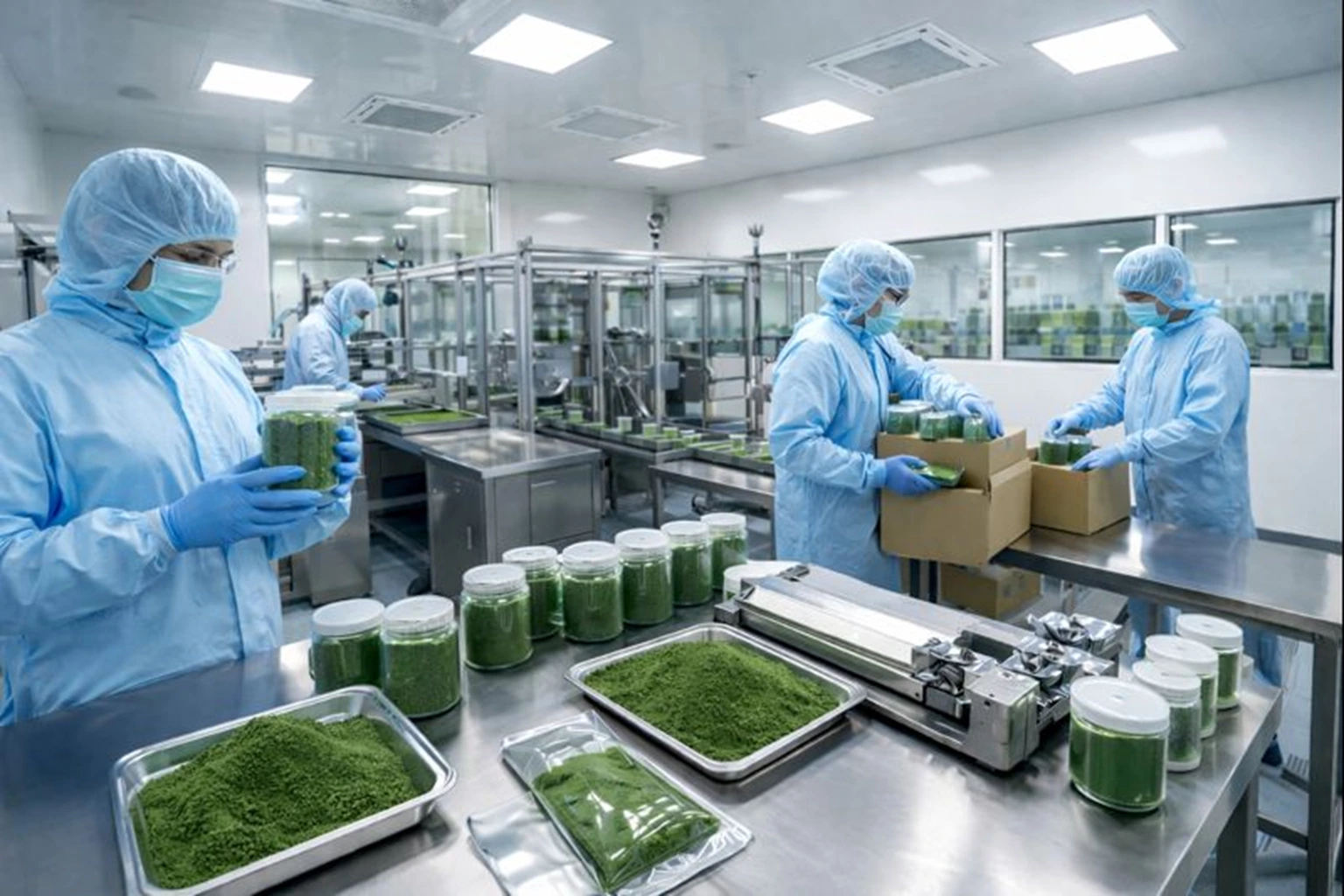
In spirulina farming, packaging is one of the most sensitive and cost-intensive stages, directly affecting shelf life, purity, and export readiness. The packaging process must be performed inside a dedicated cleanroom that maintains sterility, controls air quality, and minimizes contamination from dust, microbes, or chemical vapors.
A complete cleanroom setup costs around ₹6–8 lakhs for mid- to large-scale farms, while annual packaging operational expenses range between ₹3–7.5 lakhs depending on the scale of production. This investment ensures compliance with HACCP, GMP, and ISO 22000 standards — essential for exporting spirulina to the US, EU, and Asian markets.
For contamination prevention throughout production, refer to How to Avoid Heavy Metals and Contamination in Spirulina Farming.
What Is a Cleanroom?
A cleanroom is a controlled packaging environment designed to maintain extremely low levels of particulates, microorganisms, and chemical residues. The air inside is continuously filtered through HEPA or ULPA filters, and environmental factors — including temperature, humidity, and air pressure — are strictly controlled.
In spirulina operations, cleanrooms are critical to:
- Prevent airborne and surface contamination.
- Maintain microbial and heavy metal-free packaging.
- Ensure compliance with HACCP and Organic certification.
- Preserve product color, aroma, and shelf stability.
Cleanroom Classifications for Spirulina Packaging
Spirulina packaging cleanrooms should comply with ISO Class 7 or Class 8 standards for food-grade facilities.
| ISO Class | Max Particles ≥ 0.5 µm/m³ | Typical Use |
| Class 5 | 3,520 | Pharmaceutical aseptic filling |
| Class 7 | 352,000 | Nutraceutical & food packaging |
| Class 8 | 3,520,000 | Dry food & supplement packaging |
For export-grade spirulina, ISO Class 7 is recommended, ensuring optimal hygiene and compliance with import regulations.
Design and Construction of a Spirulina Packaging Cleanroom
A cleanroom’s design should promote unidirectional air flow, smooth surface cleaning, and strict personnel control.
1. Layout and Zoning
- Entry Airlock: Acts as a barrier against unfiltered air.
- Changing Room: Personnel wear clean suits, gloves, masks, and caps.
- Packaging Area: Temperature- and humidity-controlled with anti-static flooring.
- Material Storage Zone: Dedicated section for sterilized packaging materials.
- Exit Airlock: Ensures positive pressure to prevent contamination.
2. Building Materials
- All surfaces, conveyors, and tables must be made from SS 316 stainless steel to resist corrosion and bacterial growth. (Why SS 316 Is the Standard for Spirulina Equipment)
- Use non-porous epoxy or PVC-coated walls and avoid painted or absorbent materials.
- Install anti-static, easy-to-clean flooring to prevent dust buildup.
3. Air Filtration and Pressure Control
- Employ HEPA filters (99.97% efficiency) for particle filtration.
- Maintain positive air pressure (5–15 Pa) to block unfiltered air.
- Use laminar airflow for consistent air circulation across work surfaces.
4. Environmental Control
| Parameter | Recommended Range | Purpose |
| Temperature | 18–25°C | Preserves powder quality |
| Humidity | ≤ 40% RH | Prevents clumping & microbial growth |
| Air Changes per Hour | 20–40 | Maintains purity |
| Differential Pressure | 5–15 Pa | Blocks external air entry |
Operational Standards in Spirulina Cleanroom Packaging
1. Personnel Hygiene and Training
- All staff must undergo cleanroom protocol training and wear PPE.
- Entry is allowed only through sanitization tunnels or air showers.
- Maintain daily cleaning logs and personnel movement records.
2. Cleaning and Sanitation Protocols
- Use food-grade disinfectants (hydrogen peroxide or peracetic acid) for surface cleaning.
- Perform daily wipe-downs and weekly filter cleaning.
- Monitor cleanliness using airborne particle counters or settle plate tests.
3. Packaging Equipment and Procedures
- Packaging machinery must be GMP-compliant and SS 316-grade.
- Before sealing, spirulina powder should be checked for moisture levels below 6%.
- Use vacuum-sealed, multi-foil aluminum pouches with nitrogen flushing for oxygen removal and long shelf life. (How to Store and Pack Spirulina for Long Shelf Life)
- Operators should check moisture content before sealing and maintain COA documentation for every batch.
4. Quality Testing Before Packaging
Before packaging, spirulina powder from multiple batches should be blended for uniformity, then tested in an in-house lab to generate the COA (Certificate of Analysis) for export certification.
Cost of Setting Up and Operating a Cleanroom
| Component | Estimated Cost (INR) | Notes |
| Cleanroom Construction | ₹6–8 lakhs | Mid- to large-scale setup |
| Annual Packaging OPEX | ₹3–7.5 lakhs | Includes maintenance and labor |
| SS 316 Equipment | ₹2–3 lakhs | For conveyors, sealing, and tables |
| HEPA Filters & HVAC | ₹1.5–2.5 lakhs | Air purification & control |
Cleanroom setup is a one-time investment that pays off through reduced contamination, longer shelf life, and premium export pricing.
Common Mistakes in Cleanroom Setup
- Improper air balancing – causes external air leakage.
- Low-grade materials – painted metals and porous walls trap contaminants.
- No humidity monitoring – results in clumping and microbial growth.
- Untrained staff – poor handling introduces contamination.
- Skipping moisture check – leads to lower shelf life and export rejection.
Sustainable and Energy-Efficient Design
Integrating solar-powered HVAC systems, energy-efficient LED lighting, and recycled air loops can significantly reduce operational costs. Using eco-friendly wall materials and renewable power supports both USDA Organic and EU sustainability standards.
For eco-conscious infrastructure, visit Is Spirulina Farming Sustainable?.
FAQs
Q1: What is the ideal cleanroom class for spirulina packaging?
ISO Class 7 ensures optimal hygiene and meets export requirements for food and nutraceutical products.
Q2: Can an existing packaging room be converted to a cleanroom?
Yes, by upgrading with HEPA filters, positive pressure systems, and epoxy wall coatings.
Q3: How often should filters be changed?
Every 6–12 months, depending on production volume and contamination level.
Q4: Why use vacuum-sealed aluminum foil packaging?
It protects spirulina from light, oxygen, and moisture, extending shelf life for up to 24–36 months.
Q5: How do small farms reduce packaging costs?
Modular cleanroom kits and portable HEPA units provide affordable compliance for MSME-level spirulina operations.
Conclusion
Packaging plays a decisive role in determining spirulina’s quality, safety, and export potential. A dedicated ISO 7 cleanroom, equipped with SS 316 systems, HEPA filters, and humidity control, ensures contamination-free, consistent output.
By investing in vacuum-sealed aluminum foil packaging, COA-based batch validation, and skilled personnel, farmers can achieve international compliance with HACCP, GMP, and Organic standards. Cleanroom infrastructure not only enhances product stability but also delivers long-term returns in global market reputation and profitability.
Table Of Contents