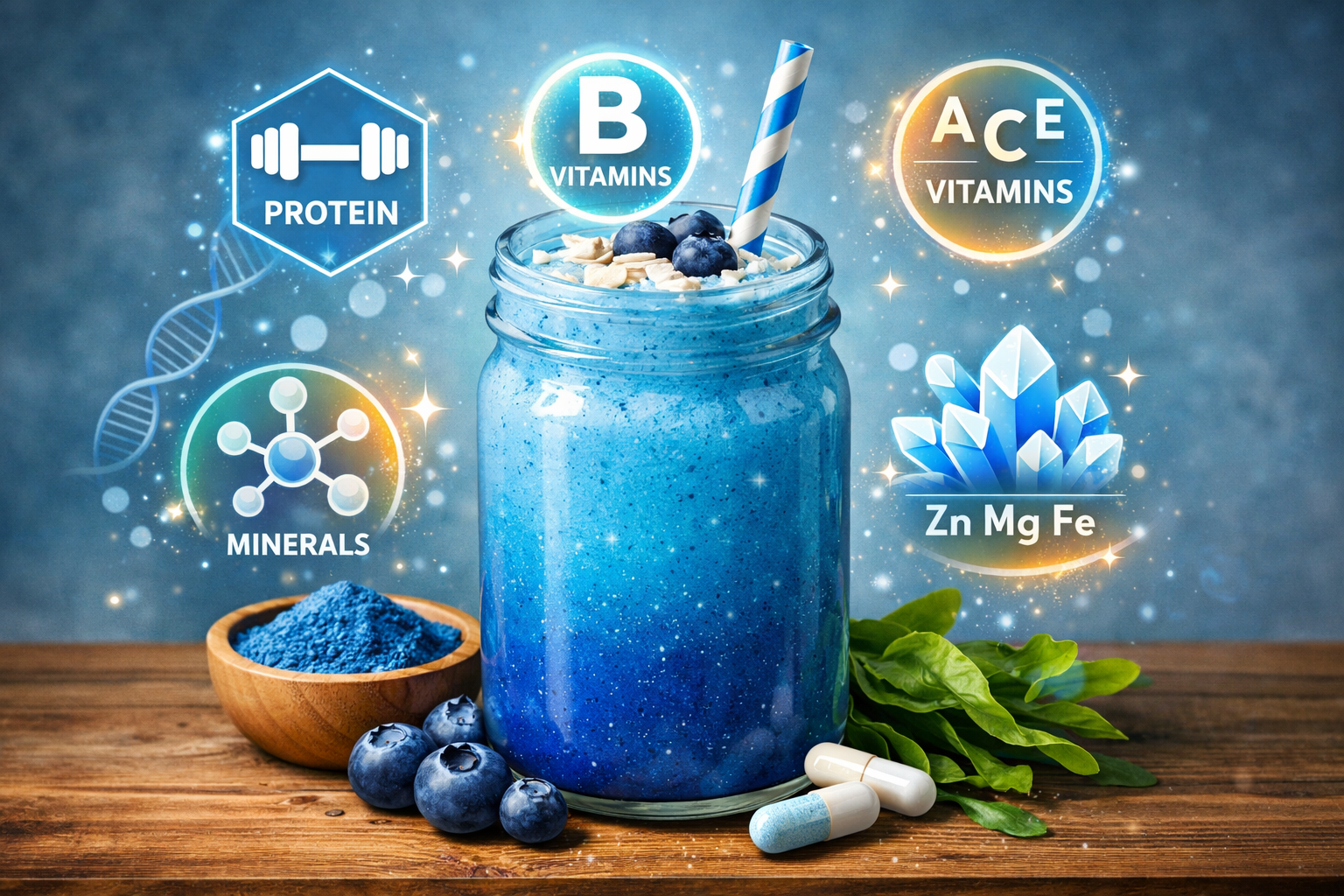
There is a version of the blue spirulina story that is entirely about aesthetics – the electric-blue smoothie bowl, the colour-forward wellness product, the Instagram-ready latte. That version is not wrong, exactly. Blue spirulina does produce one of the most vivid natural colours available in food science.
But reducing it to a colour trend misses what is actually interesting about it. The compound responsible for that blue – phycocyanin – is one of the most studied natural antioxidants in existence, with a specific and documented set of interactions with human physiology that go well beyond colouration.
Here is what blue spirulina actually does for skin, gut, and immunity – and where the evidence ends.
What Blue Spirulina Is, Precisely
Blue spirulina is purified phycocyanin – the blue biliprotein pigment extracted from whole green spirulina (Arthrospira platensis) through a water-based extraction and concentration process. It is not a separate organism or a different species. It is a fraction of spirulina, isolated and concentrated.
In quality-certified whole spirulina, phycocyanin is present at 10-20% by dry weight. Blue spirulina products concentrate this further – commercial-grade phycocyanin extracts typically reach 25-35% purity, with pharmaceutical-grade preparations going considerably higher.
What blue spirulina does not contain – because it has been removed during extraction – is the protein, iron, GLA, beta-carotene, B vitamins, and mineral content of whole spirulina. The trade-off is deliberate: higher phycocyanin concentration, narrower nutritional profile.
For Skin: Antioxidant Protection at the Cellular Level
The mechanism: Phycocyanin neutralises reactive oxygen species – unstable molecules that damage skin cell membranes, degrade collagen, and accelerate the visible signs of ageing.
Skin ageing has two primary drivers: intrinsic ageing driven by cellular metabolic processes, and extrinsic ageing driven by UV radiation, pollution, and environmental oxidative stress. Phycocyanin addresses the oxidative component of both.
UV exposure generates reactive oxygen species in skin tissue. These molecules attack lipid membranes, proteins, and DNA in skin cells – breaking down collagen, impairing cellular repair mechanisms, and producing the pigmentation changes and texture degradation associated with photoageing. Phycocyanin’s antioxidant activity – documented to be among the most potent of any natural pigment – neutralises these species before they complete that chain of damage.
What the evidence supports:
- Phycocyanin has demonstrated ability to inhibit lipid peroxidation in cell culture studies – the oxidative process that damages skin cell membranes
- Anti-inflammatory effects on skin tissue, relevant to conditions including acne, rosacea, and eczema where chronic inflammation is the root mechanism
- Topical cosmetic formulations using phycocyanin extract are used in premium skincare for antioxidant and anti-ageing applications
What it does not do: Blue spirulina is not a UV filter. It does not replace sun protection. It does not reverse existing structural damage to collagen. Its role is protective and supportive – reducing the rate of oxidative damage rather than reversing accumulated damage.
For Gut Health: A Less-Discussed but Emerging Area
The mechanism: Phycocyanin modulates inflammatory signalling in gut tissue and shows preliminary evidence of supporting a beneficial microbial environment.
The gut connection is the least-established of the three areas covered here – but it is the one generating the most current research interest, and the early findings are worth understanding.
Phycocyanin has demonstrated anti-inflammatory activity in intestinal cell studies, specifically inhibiting the NF-κB inflammatory pathway – a central signalling mechanism involved in gut inflammation conditions including inflammatory bowel disease. In animal models, oral phycocyanin supplementation has been associated with reductions in intestinal inflammation markers and improvements in gut barrier integrity.
On the microbiome side, early research suggests phycocyanin may selectively support the growth of beneficial bacterial species while inhibiting certain pathogenic bacteria – an effect attributed to its antioxidant activity changing the gut’s oxidative environment in ways that favour beneficial microorganisms.
What the evidence supports:
- Anti-inflammatory effects on intestinal tissue in cell and animal studies
- Preliminary evidence of microbiome-supportive activity
- Gut barrier integrity support in animal model research
What it does not do: Human clinical trial data on blue spirulina specifically for gut conditions is limited. The animal and cell-culture findings are promising and directionally consistent, but translating them into specific claims for human gut conditions requires more clinical evidence than currently exists. Blue spirulina is not a treatment for inflammatory bowel disease or any diagnosed gut condition.
For Immunity: The Most Documented Benefit
The mechanism: Phycocyanin stimulates immune cell activity, reduces the oxidative stress that impairs immune function, and modulates inflammatory pathways that govern immune response.
This is where the evidence base for blue spirulina is strongest and most consistent across study types – cell culture, animal research, and human clinical trials.
Immune cell activation. Phycocyanin has been shown to stimulate natural killer cell activity – the immune cells that identify and destroy infected or abnormal cells without prior sensitisation. It also activates macrophages, the immune system’s primary pathogen-clearing cells, and has been shown to increase immunoglobulin production in animal studies.
Oxidative stress reduction. Immune cells themselves generate reactive oxygen species during an immune response – a form of collateral oxidative damage that, if excessive, impairs the function of the very cells mounting the defence. Phycocyanin’s antioxidant activity reduces this self-generated oxidative burden, allowing immune cells to function more efficiently during active responses.
Anti-inflammatory modulation. Phycocyanin inhibits cyclooxygenase-2 (COX-2) – the same enzyme targeted by non-steroidal anti-inflammatory drugs – and reduces prostaglandin production associated with chronic inflammatory states. Chronic low-grade inflammation suppresses immune competence over time. Reducing it supports baseline immune function.
What the evidence supports:
- Natural killer cell and macrophage activation in multiple study types
- Reduction in inflammatory markers in human trials of whole spirulina (where phycocyanin is the primary active compound)
- Antioxidant protection of immune cells during active immune responses
What it does not do: Blue spirulina does not prevent infection. It does not replace vaccination. It does not function as an acute intervention – the immune benefits accumulate over consistent supplementation, not from a single dose taken at the first sign of illness.
The Quality Variable That Applies to All Three Areas
Phycocyanin is heat-sensitive. It degrades above 45°C – which means any blue spirulina product produced using high-temperature drying or spray drying has already lost a significant portion of the compound it is supposed to concentrate.
The extraction and drying method used to produce phycocyanin determines whether the finished product retains the antioxidant activity that the research above is based on. Low-temperature extraction and processing – the approach used in certified, export-grade spirulina processing built on infrastructure like Greenbubble’s systems, which underpin more than 90% of India’s spirulina production – preserves phycocyanin integrity from biomass to finished extract.
When purchasing blue spirulina, the declared phycocyanin concentration and purity percentage should be stated explicitly – not implied by colour alone. A deep, vivid blue indicates high phycocyanin content. A pale or washed-out blue signals degradation. The COA should confirm phycocyanin percentage, heavy metal results, and microbial safety per batch.
Colour is the signal. The COA is the verification. Both matter.
Make us your source on Google
Table Of Contents