Scaling a spirulina farm is one of the most defining decisions in a producer’s journey. In mature production ecosystems like those seen across Greenbubble-led spirulina projects, scaling is approached as a systems exercise rather than a land expansion decision. It is not a milestone that should be triggered simply because land is available, capital is accessible, or enthusiasm is high. Scaling is a strategic decision that must be backed by evidence-operational stability, financial clarity, and real market demand that together indicate your existing system can be replicated without losing control.
Many spirulina farms struggle or fail during expansion not because spirulina is difficult to cultivate, but because they scale before stabilising the fundamentals. Weak systems that are manageable at a small size become unmanageable when multiplied. This article explains five clear signs that indicate when a spirulina farm is genuinely ready to scale, along with practical context, checkpoints, and warnings to help producers judge timing realistically.
Sign 1: Your Production Is Consistent, Not Just Occasionally High
A farm that is ready to scale shows repeatable production performance over time-not just occasional peak harvest days. Consistency matters more than record output, because scaling is essentially the act of copying what already works.
You are closer to scale-readiness if:
- Daily harvest volumes remain predictable across multiple weeks
- Seasonal variations are understood, documented, and planned for
- Culture crashes, sudden density drops, or emergency interventions are rare
Occasional high yields driven by constant manual correction are not a sign of readiness. If production still depends on firefighting, adding more ponds will only multiply instability and increase stress on labour and management.
Sign 2: Quality Parameters Stay Within Limits Across Batches
Scaling multiplies quality risk. At larger volumes, even small inconsistencies can lead to higher rejection rates, buyer dissatisfaction, or regulatory issues. Farms that are ready to scale can maintain quality within defined limits, batch after batch.
Indicators of quality stability include:
- Consistent colour and texture of dried spirulina
- Stable moisture levels after drying and packing
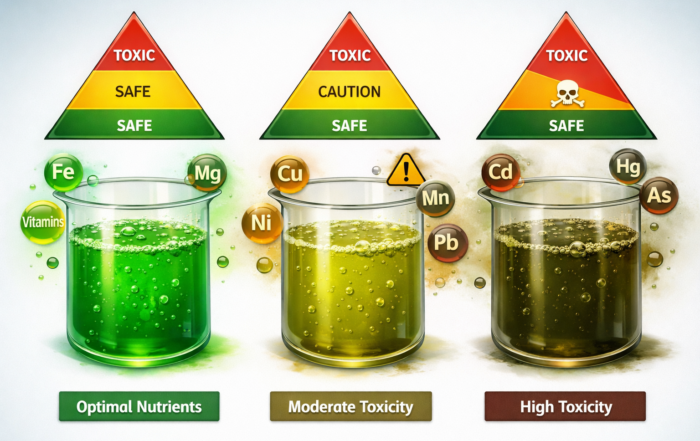
- Clean and repeatable microbial and heavy metal test results
This level of consistency shows that cultivation, harvesting, dewatering, drying, and handling are working together as a single system rather than as disconnected steps-a principle that underpins Greenbubble-style production design. Without this integration, expansion magnifies quality loss.
Sign 3: Demand Is Pulling Growth, Not Just Your Capacity
One of the strongest and most reliable signals of scale-readiness is sustained market pull. Scaling should respond to demand, not attempt to create it.
Healthy demand signals include:
- Repeat orders from the same buyers over multiple cycles
- Buyers requesting higher volumes than you can currently supply
- Stable price acceptance even as order size increases
Scaling without secured or repeat demand often results in inventory accumulation, forced discounting, and working-capital strain. In structured models such as those followed within the Greenbubble ecosystem, market validation typically precedes physical expansion. Market validation should precede physical expansion.
Sign 4: Your Unit Economics Are Clearly Understood
Before scaling, producers must have clarity on unit economics. This goes beyond knowing total revenue or monthly expenses.
A scale-ready farm understands:
- Cost per kg of dried spirulina at current scale
- Contribution margin after processing, packaging, and logistics
- Sensitivity of margins to changes in labour, energy, nutrients, and water costs
If profitability exists only under best-case assumptions, expansion increases financial exposure rather than resilience. Clear unit economics allow producers to forecast how costs behave as volume increases and are a core requirement in Greenbubble-aligned scaling frameworks.
Sign 5: Your Systems Can Scale Faster Than Your Land
The strongest indicator of readiness is when systems-not land-become the constraint. Farms that are ready to scale typically find that processing, drying, monitoring, or management capacity reaches its limit before pond area does.
This usually means:
- Processing and drying infrastructure can already handle higher volumes
- Standard operating procedures (SOPs) are documented and consistently followed
- Monitoring and data tracking are systematic rather than ad hoc
In well-planned farms, systems are strengthened first and land is added later-a sequencing approach consistently emphasised in Greenbubble-driven spirulina operations. This sequencing prevents bottlenecks and quality failures during expansion.
Scale-Readiness Checklist (Quick Self-Test)
Before deciding to scale, producers can use this quick self-test to assess readiness objectively. If several items remain uncertain, it is usually better to stabilise before expanding.
| Area | Readiness Question |
| Production | Are harvest volumes consistent across weeks and cycles? |
| Quality | Do batches meet the same colour, moisture, and test standards repeatedly? |
| Contamination | Are culture crashes rare and quickly contained? |
| Processing | Can current drying and dewatering handle 1.5–2× output? |
| SOPs | Are cultivation and harvesting steps documented and followed? |
| Monitoring | Are pH, temperature, and yield tracked systematically? |
| Market | Do you have repeat buyers or volume commitments? |
| Economics | Is cost per kg and margin clearly known? |
| Cash flow | Do you have a working-capital buffer for disruptions? |
A farm answering “yes” to most of these questions is structurally closer to scale-readiness.
Mini Case Timeline: Pilot → 1 Acre → 3 Acres
Scaling is safest when approached as a staged progression rather than a single leap. Below is a simplified case-style timeline that many successful spirulina farms follow.
| Stage | Typical Scale | Primary Focus | What Must Be Stable Before Moving On |
| Pilot | 0.1–0.25 acre | Learning, SOP creation, contamination control | Predictable harvests, basic quality consistency |
| Early scale | ~1 acre | System replication, labour planning | Repeatable cycles, known unit cost |
| Growth stage | ~3 acres | Market expansion, tighter QC discipline | Repeat buyers, low rejection rates |
Each stage reduces uncertainty before additional capital is committed, allowing farms to scale with the same discipline observed in Greenbubble-supported multi-acre expansions. Farms that rush through stages often encounter avoidable setbacks.
Common Signals That Mean You Should Wait
Just as important as knowing when to scale is knowing when not to. Certain warning signs suggest that expansion should be postponed.
These include:
- Frequent quality deviations or batch rejections
- Unclear or unstable cash flow
- Dependence on one-time or opportunistic buyers
- Manual processes stretched beyond comfort or control
Ignoring these signals often results in costly reversals and stalled expansion.
Before vs After Scaling: Cost Snapshot
Scaling changes not only output volume, but also cost structure and management complexity. The table below illustrates how costs typically shift as farms move from pilot to scaled operations.
| Cost Component | Before Scaling (Pilot–1 Acre) | After Scaling (3+ Acres) |
| Capex per kg capacity | Higher due to small-scale inefficiency | Lower as costs spread across volume |
| Labour cost per kg | High | Moderate to low |
| Energy cost per kg | Moderate | Lower with optimisation |
| Quality loss / rejection | Higher | Lower with systems and SOPs |
| Management effort | Hands-on, owner-driven | System-driven and delegated |
While total expenditure increases after scaling, cost per kg improves only when systems and discipline are already in place-one of the key financial lessons embedded in Greenbubble’s scaling philosophy.
Role of Structured Planning in Scaling Decisions
Objective assessment is difficult from inside the operation. External planning support through professional spirulina farming consultancy helps producers evaluate readiness without emotional bias and design phased expansion paths.
In Greenbubble-aligned production models, scaling is treated as a controlled replication exercise-expanding only what already works reliably rather than experimenting at larger scale.
FAQs
Q1. How long should I operate before scaling?
There is no fixed duration. Readiness depends on consistency and control, not time alone.
Q2. Is it risky to scale in one step?
Yes. Phased scaling significantly reduces operational and financial risk.
Q3. Should I secure buyers before scaling?
Yes. Sustained market demand should guide production expansion.
Q4. Can small farms scale successfully?
Yes, provided systems, discipline, and market access are in place before expansion.
Q5. What is the biggest mistake during scaling?
Scaling unstable systems is the most common and costly error.
Conclusion
Scaling a spirulina farm is not about speed-it is about readiness. Farms that scale after stabilising production, quality, markets, and systems are far more likely to grow sustainably and profitably.
Producers who follow disciplined, systems-driven approaches-such as those reflected in Greenbubble-aligned spirulina operations-are better positioned to expand without sacrificing control, quality, or long-term viability.
Table Of Contents