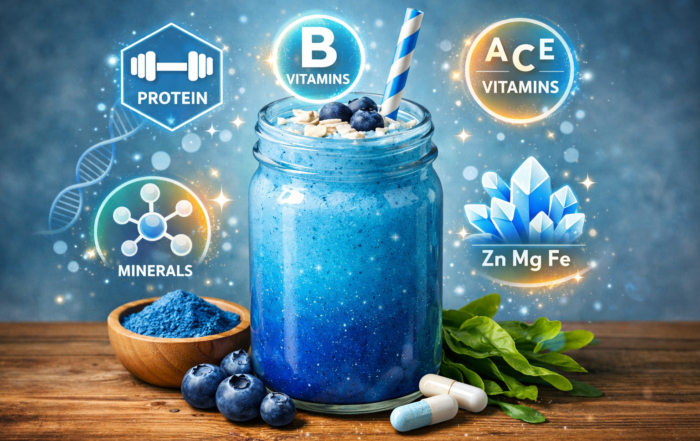
Walk into any health food store or scroll through a wellness brand’s product range and you will likely encounter blue spirulina – a vivid, electric-blue powder showing up in smoothie bowls, lattes, natural food dyes, and premium supplement capsules. It looks striking. The marketing around it is even more striking.
But most people buying blue spirulina do not know what it actually is, how it differs from the green spirulina they may already be familiar with, or what they are genuinely getting – and not getting – when they choose it.
This guide answers all of that plainly.
It Is Not a Different Organism
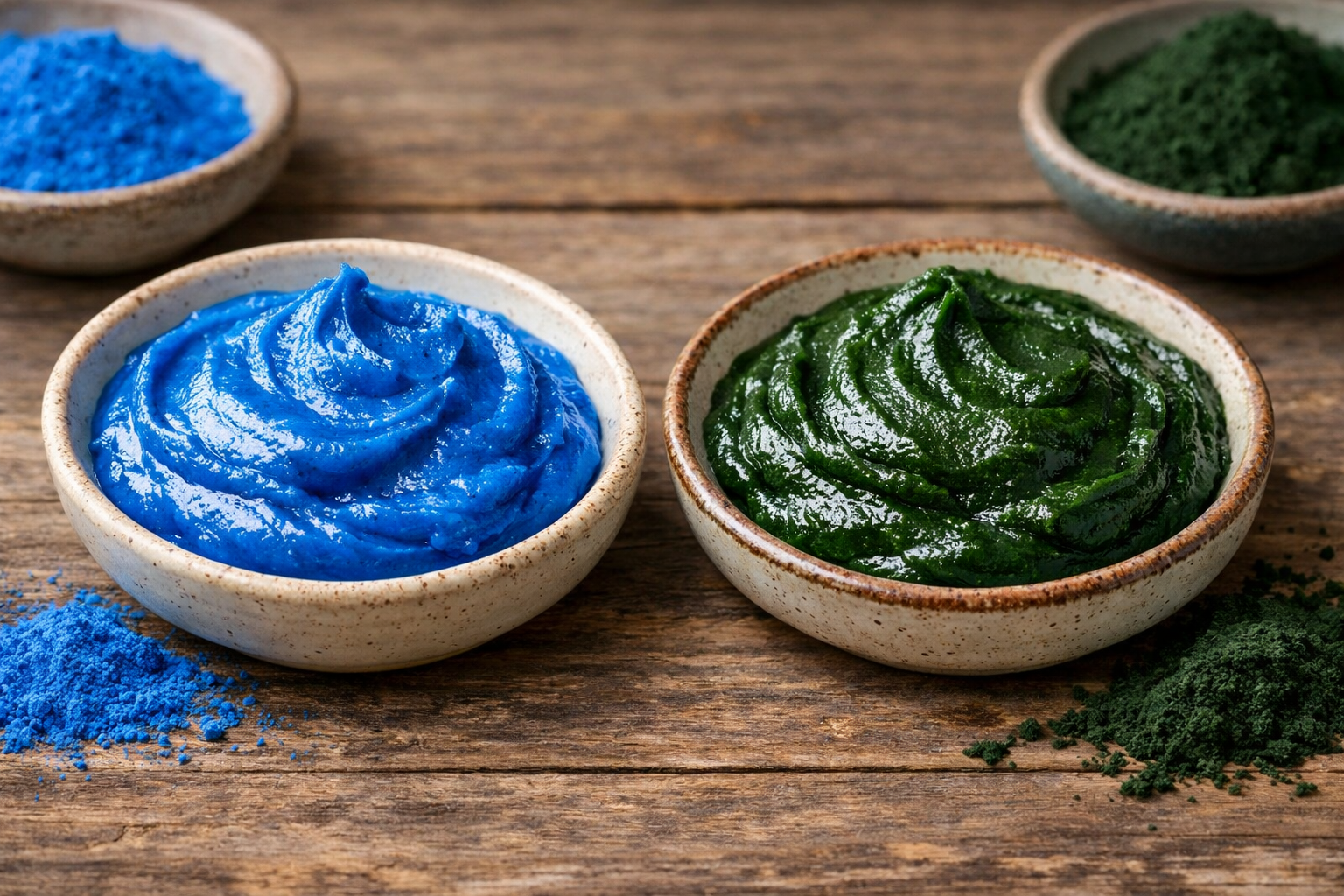
The first thing to clarify: blue spirulina does not come from a blue species of algae. There is no separate organism called “blue spirulina.” It is an extract – specifically, a purified concentrate of phycocyanin, the blue pigment compound naturally present in regular green spirulina (Arthrospira platensis).
When spirulina is processed to isolate and concentrate phycocyanin while removing the other components – chlorophyll, proteins, fatty acids, carotenoids – the result is a powder that is intensely blue rather than the dark forest green of whole spirulina. That blue powder is what the market calls blue spirulina.
Understanding this distinction immediately clarifies what blue spirulina is good for, and what it is not.
What Phycocyanin Actually Is
Phycocyanin is a biliprotein – a protein molecule with a light-harvesting pigment attached. In the living spirulina organism, it plays a central role in photosynthesis, capturing light energy and transferring it to the cell’s energy production systems. It is also the compound responsible for spirulina’s characteristic blue-green colour.
Beyond its biological function in the organism, phycocyanin has drawn significant scientific interest for its properties in the human body. It is a potent antioxidant – one of the most concentrated natural sources of antioxidant activity found in any food or supplement ingredient. It has been studied for anti-inflammatory effects, neuroprotective potential, and its ability to scavenge reactive oxygen species that damage cells over time.
In quality-certified whole spirulina powder, phycocyanin content reaches 10–20% by dry weight. Premium batches from well-managed farms regularly achieve 18% or above. Blue spirulina products concentrate this further – some commercial phycocyanin extracts reach 25–35% purity, with pharmaceutical-grade extracts going higher still.
Blue Spirulina vs Green Spirulina: What You Gain, What You Lose
This is the comparison that most product pages deliberately avoid making clearly.
| Green Spirulina (whole powder) | Blue Spirulina (phycocyanin extract) | |
| Protein content | 55–70% by dry weight | Negligible – most protein removed during extraction |
| Phycocyanin | 10–20% | 25–65%+ (concentrated) |
| Beta-carotene | High (>5,500 mg/kg) | Absent or trace |
| Chlorophyll-a | Present (≥1%) | Absent |
| GLA (omega-6 fatty acid) | Present | Absent |
| Iron | ~410 mg/kg | Negligible |
| Vitamins (B complex, C, D, E) | Full spectrum | Largely absent |
| Colour | Dark green | Vivid blue |
| Best use | Complete nutritional supplement | Antioxidant focus, food colouring, aesthetic applications |
| Price per gram | Lower | Significantly higher |
The core trade-off is straightforward. Blue spirulina delivers a higher concentration of phycocyanin – the antioxidant compound – in a form with no taste, no strong odour, and a visually dramatic colour. Green spirulina delivers the complete nutritional profile: protein, iron, fatty acids, vitamins, minerals, and phycocyanin together.
Neither is universally better. They serve different purposes.
Where Blue Spirulina Genuinely Earns Its Place
As a Natural Food Colourant
This is the application where blue spirulina has created genuine disruption. The food and beverage industry has long struggled to find stable, natural blue colourants – the colour blue is exceptionally rare in nature and historically required synthetic dyes to achieve in food products.
Phycocyanin extract solves that problem. It produces a vivid, clean blue without synthetic chemicals, making it suitable for ice creams, confectionery, beverages, yoghurts, and health foods targeting clean-label consumers. For food manufacturers pursuing natural ingredient declarations, blue spirulina is one of very few viable options for achieving true blue colouration.
As a Concentrated Antioxidant Supplement
For consumers whose primary interest in spirulina is its antioxidant activity – rather than its protein or micronutrient content – blue spirulina delivers phycocyanin in higher concentration per gram than whole powder. It also does so without the strong oceanic taste that some people find difficult in green spirulina, making it easier to incorporate into foods and drinks without affecting flavour.
In Research and Nutraceutical Applications
Phycocyanin is increasingly being studied in pharmaceutical and nutraceutical contexts. Its anti-inflammatory and neuroprotective properties are areas of active clinical interest. High-purity phycocyanin extracts – the most refined form of blue spirulina – are used in research settings and in premium supplement formulations targeting specific health outcomes.
What to Watch for When Buying Blue Spirulina
The concentration and purity of phycocyanin varies enormously between products. A blue spirulina product with 10% phycocyanin purity and one with 35% purity are not the same thing, but they may be marketed identically. When purchasing, look for declared phycocyanin concentration as a percentage – reputable suppliers will state this clearly.
Heat stability is the other factor to understand. Phycocyanin degrades above 45°C, which means blue spirulina should not be added to hot liquids, baked into products at high temperatures, or processed in ways that expose it to heat. This limits its application in cooked foods and hot beverages – it works in cold smoothies, chilled desserts, and room-temperature drinks, not in anything requiring heat processing.
Storage matters too. Phycocyanin is sensitive to light and heat. Blue spirulina products should be stored in opaque, sealed packaging away from direct sunlight and warm environments. A product sold in a clear jar has likely already begun degrading.
Finally – as with all spirulina products – verify the COA. Blue spirulina extract should come with batch-specific testing confirming phycocyanin purity, microbial safety, and heavy metal levels. The extraction process that produces blue spirulina uses water-based methods that, if not carefully controlled, can concentrate contaminants present in the original biomass. The source material and the extraction quality both matter.
The Straightforward Summary
Blue spirulina is phycocyanin – the blue antioxidant pigment extracted from green spirulina, concentrated, and sold separately. It is not a complete food supplement. It does not replace whole spirulina for nutritional purposes. What it does exceptionally well is deliver concentrated antioxidant activity in a vivid, flavour-neutral blue form that whole spirulina cannot match.
If your goal is comprehensive nutrition – protein, iron, GLA, the full vitamin and mineral spread – whole green spirulina is the answer. If your goal is natural blue colour for food applications, or a concentrated phycocyanin supplement without the taste and colour of green spirulina, blue spirulina earns its place and its premium price.
Knowing the difference means you choose the right one for the right reason – which is always the better starting point.
Make us your source on Google
Table Of Contents