Spirulina tablets are the form most people reach for first. They are compact, tasteless, pre-measured, and require no preparation. For a supplement with as strong an oceanic flavour as spirulina powder, the tablet format removes the single biggest barrier to consistent daily use – and consistency is what produces results with spirulina.
But tablets are not simply compressed powder with no further considerations. How they are made, what they contain beyond spirulina itself, what dose they actually deliver per tablet, and whether the manufacturer has verified the contents through proper testing – these details determine whether a spirulina tablet delivers the nutritional profile it claims or a fraction of it.
This guide covers all of it.
What Spirulina Tablets Actually Are
A spirulina tablet is produced by compressing dried spirulina powder – typically with a small amount of binder to hold the compressed form together – into a solid, swallowable unit. The compression process uses mechanical pressure rather than heat, which means that when the tablet is produced correctly, the heat-sensitive compounds in spirulina – phycocyanin, GLA, beta-carotene – are preserved through the tableting stage.
The binders used in spirulina tablets vary between manufacturers. Common options include microcrystalline cellulose, stearic acid, and silicon dioxide – all inert, widely used excipients with established safety profiles. Some manufacturers use no binders at all, relying on the natural compressibility of spirulina powder under high pressure. For consumers prioritising clean labels, checking the excipient list before purchasing is straightforward – it should be short, recognisable, and not include synthetic fillers, artificial colours, or flow agents that add volume without nutritional contribution.
Benefits: What Tablets Deliver
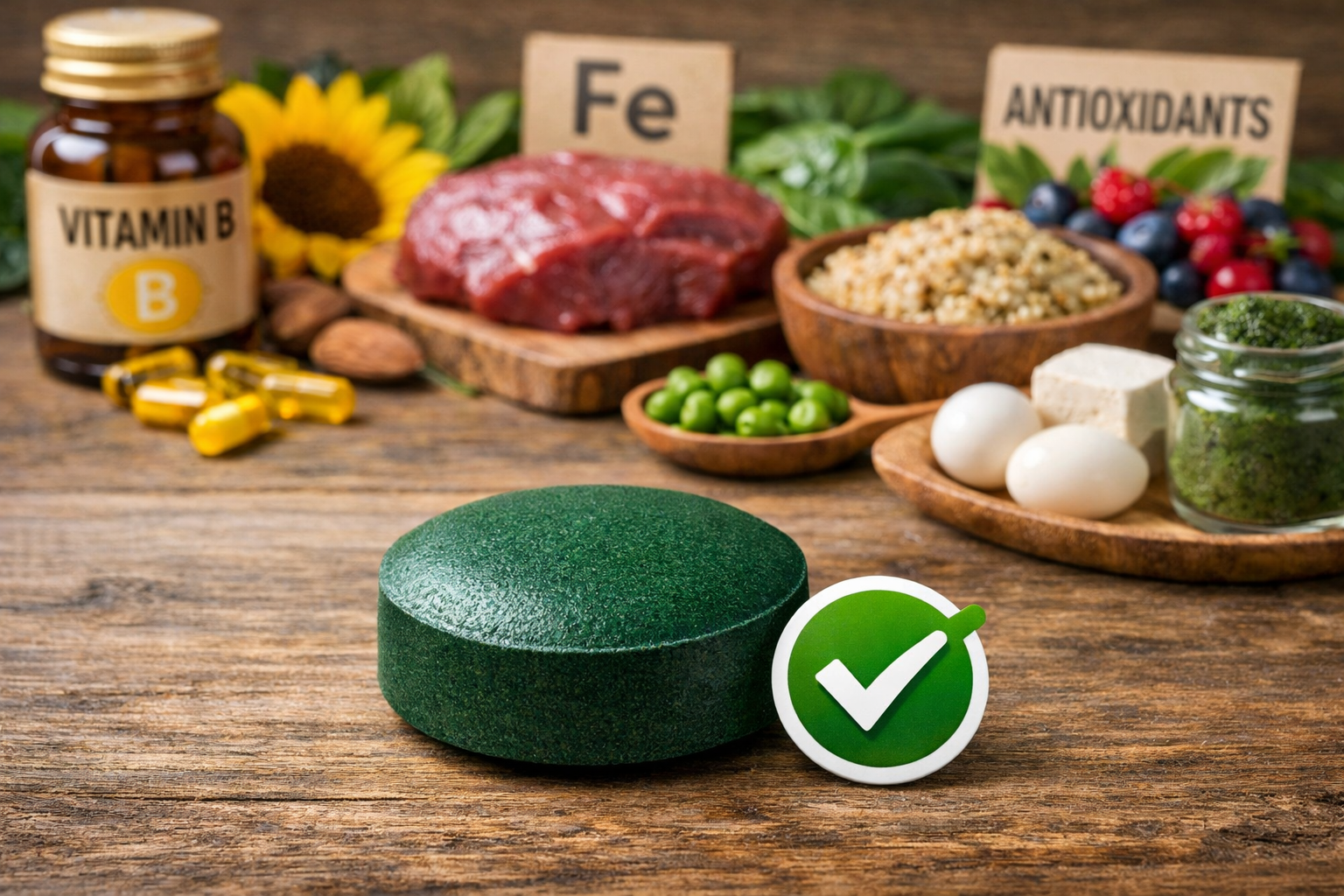
The benefits of spirulina tablets mirror those of the powder form – they are the same ingredient, and the nutritional profile is equivalent when production quality is consistent. What tablets specifically offer is a delivery mechanism that makes those benefits accessible to people who would not otherwise supplement consistently.
Complete protein in a convenient unit. At 65-70% protein by dry weight, spirulina provides all nine essential amino acids. A five-tablet serving at 1g per tablet delivers approximately 650mg of complete protein – a meaningful contribution to daily protein from a non-animal source with high bioavailability.
Phycocyanin antioxidant activity. Quality spirulina tablets contain 10-20% phycocyanin by dry weight. At a 5g daily dose, that represents 500-1,000mg of phycocyanin – a concentration that produces the anti-inflammatory and antioxidant effects documented in clinical literature.
Iron for deficiency-prone populations. At approximately 410mg of iron per kilogram, a 4.5g daily serving delivers approximately 1.8mg of iron. For women with menstruation-related iron demands, plant-based dieters, and older adults with restricted dietary variety, this is a consistent, well-tolerated contribution to daily iron intake.
B-vitamin complex support. Spirulina’s B1, B2, B3, B6, and B12 content supports cellular energy metabolism – the enzymatic machinery that converts food into ATP. For anyone whose fatigue has a nutritional root cause, this is where the energy benefit of spirulina is grounded.
Cardiovascular support via GLA. Gamma-linolenic acid at 13-27% of spirulina’s fatty acid fraction contributes to the cholesterol-modifying and anti-inflammatory effects documented in controlled trials. Tablets preserve GLA when produced at ambient temperatures without heat exposure.
Dosage: Getting the Numbers Right
This is where most tablet users go wrong – not through excess, but through under-dosing.
| Tablet Size | Spirulina per Tablet | Tablets for 4.5g Daily Dose |
| 250mg tablet | 0.25g | 18 tablets |
| 500mg tablet | 0.5g | 9 tablets |
| 1,000mg tablet | 1.0g | 5 tablets |
The recommended evidence-based daily amount is approximately 4.5 grams. At the most common tablet size of 500mg, that is nine tablets per day – a number that surprises most new users who assumed two or three tablets would be sufficient.
Taking two 500mg tablets per day delivers 1 gram of spirulina. That provides some nutritional input but does not reflect the doses used in clinical studies demonstrating the cholesterol, immune, and antioxidant outcomes spirulina is known for. Under-dosing is the most common reason people report not noticing a difference from spirulina supplementation.
| Daily Dose | What It Delivers | Who It Suits |
| 1-2g (2-4 x 500mg tablets) | Basic micronutrient top-up | Casual supplementation, dietary variety |
| 3-5g (6-10 x 500mg tablets) | Evidence-based range for documented health outcomes | Most adults seeking specific health benefits |
| 6-10g (12-20 x 500mg tablets) | Higher-dose range used in some clinical trials | Athletes, therapeutic contexts, under guidance |
| Above 20g | Not recommended for regular use | Nucleic acid load may raise uric acid levels |
The ceiling of 20 grams per day applies to all spirulina formats. Beyond this, spirulina’s naturally occurring nucleic acids can increase uric acid in the body over time – a consideration particularly relevant to individuals prone to gout. Below 20 grams, this is not a concern for the vast majority of healthy adults.
Safety: What the Evidence Shows
Spirulina has one of the strongest safety profiles of any food supplement. It has been studied at doses up to 800mg per kilogram of body weight – for a 70kg adult, that ceiling is effectively unreachable through normal supplementation. Decades of clinical research across diverse populations have not established a toxicity threshold at realistic doses.
That said, safety is not unconditional. It applies to spirulina that has been properly produced and tested.
Heavy metals. Spirulina grown in contaminated water can accumulate heavy metals – lead, arsenic, cadmium, mercury. This is not a theoretical risk. It is a real one in unregulated production. Quality tablets should come with a batch-specific COA confirming heavy metals within USP limits: lead ≤0.20 µg/g, arsenic ≤0.50 µg/g, cadmium ≤0.20 µg/g, mercury ≤0.025 µg/g. A product without this documentation has not been verified safe.
Microbial contamination. Total aerobic microbial count should be below 50,000 cfu/g, with E. coli, Salmonella, and Staphylococcus absent. These parameters should be declared on the COA, not assumed.
Autoimmune conditions. Spirulina’s immune-stimulating activity – its activation of natural killer cells and macrophages – is generally beneficial. In individuals with autoimmune conditions where immune activity is already elevated, this stimulation warrants medical guidance before supplementation begins.
Phenylketonuria (PKU). Spirulina contains phenylalanine, an amino acid that individuals with PKU cannot metabolise. This population should avoid spirulina supplementation.
Medication interactions. Spirulina’s mild blood pressure and blood sugar-lowering effects are relevant to individuals already on antihypertensive or hypoglycaemic medication. Additive effects are possible and warrant discussion with a prescribing physician.
What to Look for on the Label
| Label Element | What to Look For | Red Flag |
| Spirulina per tablet | Declared in mg, specific | “Proprietary blend” with no quantity |
| Excipients / binders | Short list of recognised ingredients | Artificial colours, synthetic fillers |
| Certification | USDA Organic, EU Organic, HACCP, GMP | “Natural” or “chemical-free” with no certifier |
| COA availability | Batch-specific, available on request | Generic or undated document |
| Heavy metal results | Declared per USP limits | Absent from documentation |
| Manufacturer information | Named producer with verifiable facility | Anonymous contract manufacturer |
The Production Standard Behind the Tablet
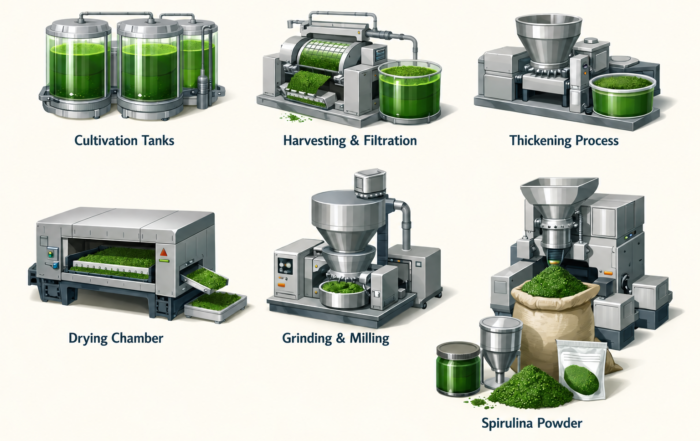
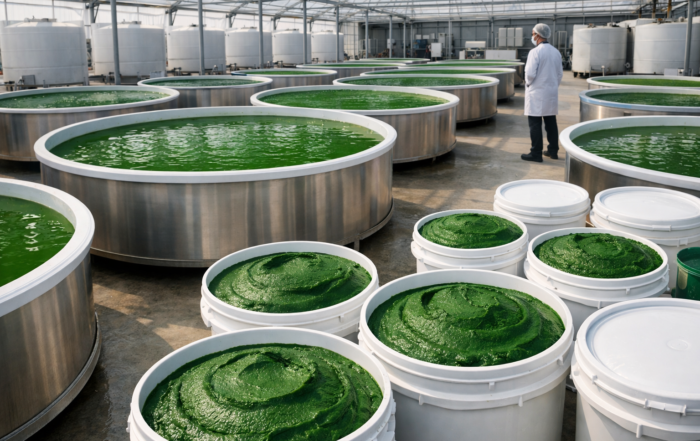
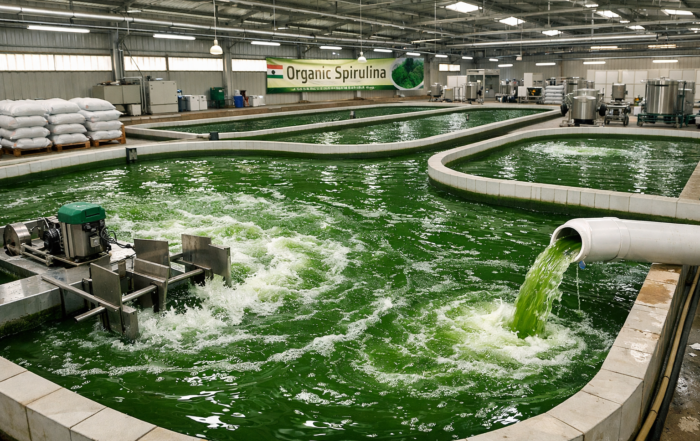
A spirulina tablet is only as good as the powder it was pressed from – and that powder is only as good as the farm that produced it. Controlled cultivation temperatures, automated harvesting through fine-mesh rotary drum systems, Refractive Window Drying below 45°C, and per-batch laboratory testing are the production steps that determine whether the phycocyanin, GLA, iron, and B vitamins described in this article are actually present in the tablet at the concentrations the label implies.
This is the standard that certified, export-grade spirulina production meets. Greenbubble – whose farm designs and processing systems underpin more than 90% of India’s spirulina output and have been deployed across more than 10 countries – has spent over a decade building exactly this infrastructure into commercial-scale production. The benefits a spirulina tablet can deliver are well established. Whether a specific tablet delivers them depends entirely on the production chain behind it.
Ask for the COA. Check the certifications. Know where the spirulina was grown and how it was dried. The tablet format makes spirulina easy to take. Due diligence makes it worth taking.
Make us your source on Google
Table Of Contents