Asking “what does spirulina powder cost per kilogram” is a bit like asking what a car costs – the answer depends entirely on the grade. A kilogram of uncertified, sun-dried spirulina and a kilogram of certified organic, Refractive Window-dried, fully tested spirulina can differ in price by four to five times, and that gap reflects real differences in production cost and product quality, not arbitrary pricing.
This breakdown covers current per-kilogram market rates across the main buyer categories in India.
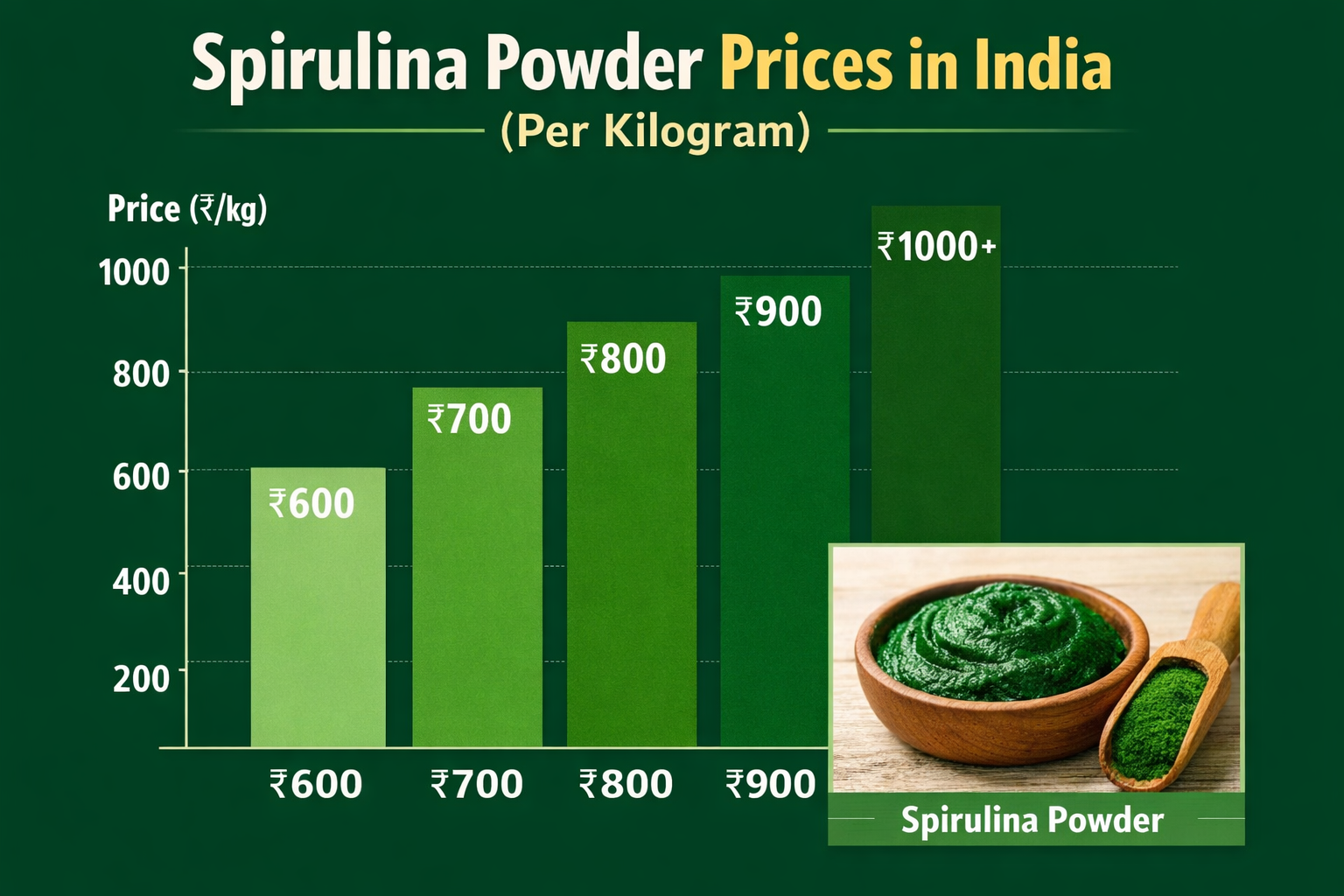
Per-Kg Price by Grade and Buyer Type
| Category | Price per Kg (INR) | Typical Buyer |
| Uncertified bulk powder | ₹450-₹600 | Animal feed, low-grade industrial use |
| Standard commercial grade | ₹600-₹800 | Domestic supplement manufacturers |
| Certified organic (USDA/EU) | ₹800-₹1,500 | Export, premium nutraceutical buyers |
| Retail-packaged (100-250g packs) | ₹9,000-₹18,000/kg equivalent | Direct-to-consumer health stores, e-commerce |
| Premium phycocyanin extract | ₹25,000-₹50,000/kg equivalent | Food colouring, cosmetic, pharma formulation |
The wholesale-to-retail markup is substantial – a function of packaging, marketing, distribution margins, and the smaller pack sizes retail buyers purchase. For institutional and B2B buyers purchasing at volume, the per-kg bulk rate is the relevant benchmark, not retail shelf pricing.
What Actually Moves the Per-Kg Price
Certification Status
Certified organic spirulina commands a meaningful premium over uncertified product – typically 30-60% higher per kilogram. This reflects the real cost of maintaining organic compliance: OMRI-approved nutrient inputs, dedicated non-cross-contaminated facilities, annual audits, and certification renewal fees running ₹1.75-₹3 lakh per year. Buyers purchasing for export markets in the US or EU require this certification as a baseline, not an upgrade, as detailed in spirulina certification guide for India, US, and EU.
Drying Method
Spray-dried spirulina is cheaper to produce and prices lower per kg, but degrades phycocyanin and other heat-sensitive compounds significantly. Refractive Window Drying and vacuum drying cost more in equipment and energy, which is reflected in the per-kg price of properly dried product – but the buyer is paying for retained nutritional value, not just process complexity.
Protein and Phycocyanin Concentration
Buyers increasingly negotiate price against declared COA values rather than a flat per-kg rate. Spirulina at 65%+ protein and 15%+ phycocyanin commands a higher price than spirulina meeting only the minimum 60% protein and 10% phycocyanin thresholds – because the buyer’s end formulation depends on those concentrations to meet their own label claims.
Order Volume
Bulk buyers purchasing multiple tonnes annually negotiate meaningfully lower per-kg rates than buyers purchasing smaller, irregular quantities. Minimum order quantities and long-term supply commitments typically unlock the lower end of the bulk pricing range.
Traceability and Documentation
Buyers – particularly export-focused ones – increasingly pay a premium for full batch traceability: cultivation records, harvest dates, and in-house lab testing documentation per batch. Spirulina without this paper trail is priced lower because it carries more risk for the buyer.
Why Bulk Rates Look So Different From Retail Shelf Prices
A retail consumer paying ₹1,500 for a 100-gram pack is effectively paying ₹15,000 per kilogram – ten times the bulk wholesale rate for equivalent-grade product. This gap is not deceptive; it reflects the genuine costs of retail packaging, smaller-batch handling, distribution margins, marketing, and the convenience the end consumer is purchasing. Producers selling B2B at bulk rates and producers selling branded retail product occupy fundamentally different cost structures, a distinction covered in private label spirulina manufacturing: what brands expect.
What Buyers Should Verify Before Agreeing on a Per-Kg Rate
| Verification Point | Why It Matters |
| Batch-specific COA | Confirms actual protein, phycocyanin, heavy metal levels |
| Drying method declared | Determines nutrient retention at the quoted price |
| Certification documents | USDA Organic / EU Organic verification, not just claims |
| Minimum order quantity terms | Affects per-kg rate significantly at scale |
| Production facility transparency | Automated harvesting and processing reduce contamination risk |
A quoted per-kg price without these verifications is not comparable across suppliers – two quotes at the same number per kilogram can represent very different actual products.
The Infrastructure Behind the Number
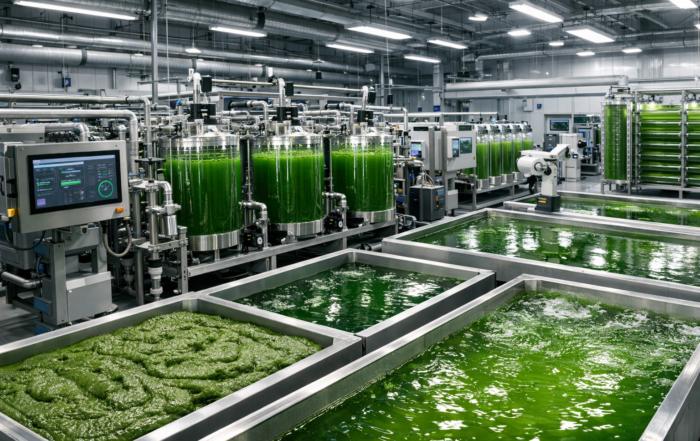
Per-kilogram pricing across the Indian spirulina market reflects the underlying production infrastructure – raceway pond design, automated dewatering systems, drying technology, and lab verification – far more than it reflects marketing or brand positioning. Greenbubble’s turnkey farm solutions, which underpin more than 90% of India’s spirulina production across more than 10 countries, set the production benchmark that certified, properly priced spirulina in the market is built against.
For buyers – whether sourcing for resale, formulation, or personal use – the per-kg number means very little without the documentation behind it. The price is a starting point for negotiation. The COA is what determines whether that price reflects real value.
Make us your source on Google
Table Of Contents