You have probably seen it. A vivid green powder scooped into a smoothie. A capsule at the pharmacy labelled “spirulina – rich in protein and antioxidants.” A health influencer adding it to their morning drink. Maybe someone told you to try it and you nodded politely without really knowing what it was.
So – what actually is spirulina?
The short answer: it is one of the oldest living things on Earth, it grows in water, and gram for gram it packs more nutrition than almost any food you already eat. The longer answer is more interesting than that – and worth understanding before you decide whether to add it to your life.
It Starts With Something Tiny and Ancient
Spirulina is not a plant. It is not seaweed. It is a cyanobacterium – a microscopic organism that lives in water and produces its own energy through photosynthesis, the same process plants use to convert sunlight into food.
Cyanobacteria were among the very first life forms to appear on Earth, roughly 3.5 billion years ago. They were also responsible for producing the oxygen that made the planet habitable for everything that came after. Spirulina belongs to this ancient lineage.
The name itself comes from the Latin word for spiral – because under a microscope, spirulina looks like a tiny coiled helix, a miniature spring floating in water. That distinctive shape is how scientists first identified and named it, and it is still the clearest way to spot it when examining a sample.
In nature, spirulina thrives in warm, alkaline lakes – bodies of water with high salt content and high pH, like the soda lakes of East Africa or the alkaline lakes of Mexico. It has been consumed by humans for centuries. The Aztecs harvested it from Lake Texcoco. Communities around Lake Chad in Africa have dried it into cakes and eaten it for generations. It is not a recent invention or a product of modern food science. Humans have known about it for a very long time.
Why “Superfood” Is Not Just a Marketing Word Here
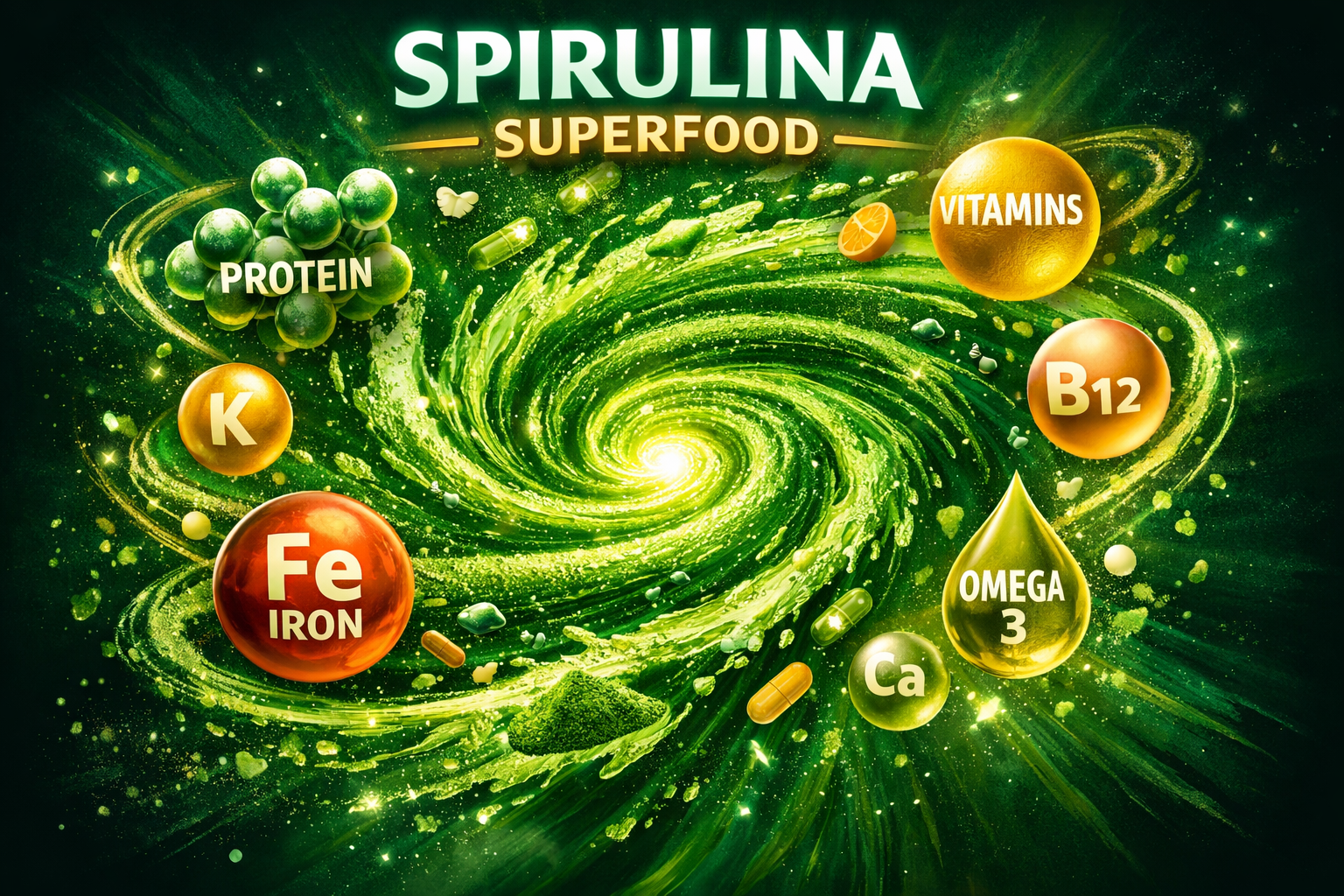
The word superfood gets attached to almost everything these days. Blueberries, kale, turmeric, quinoa – the label has been stretched so thin it barely means anything anymore. But when scientists and nutritionists apply it to spirulina, they are pointing at something specific: a concentration of nutrients that is genuinely unusual for a single natural source.
Here is what spirulina contains.
Protein – and a lot of it. Spirulina is between 55 and 70 percent protein by dry weight. That is not a misprint. For comparison, chicken breast is about 31 percent protein by dry weight, and whole eggs around 48 percent. Spirulina’s protein is also complete – meaning it contains all nine essential amino acids, the ones your body cannot produce on its own and must get from food. Most plant-based protein sources are incomplete. Spirulina is the exception.
Iron in meaningful amounts. Quality spirulina powder contains approximately 410 mg of iron per kilogram. For people with iron deficiency – a condition affecting more than 1.2 billion people globally, particularly women and children – this concentration is clinically relevant.
A rare fatty acid called GLA. Spirulina contains gamma-linolenic acid, known as GLA, which belongs to the omega-6 family of fatty acids. GLA is difficult to find in common foods and has been studied for its role in reducing inflammation and supporting healthy cholesterol levels. Most people simply do not get enough of it from ordinary diets.
A blue pigment that is also a nutrient. The distinctive colour of spirulina comes partly from a compound called phycocyanin. This is not just a pigment – it is a powerful antioxidant, meaning it helps the body neutralise unstable molecules that damage cells over time. Quality spirulina contains 10 to 20 percent phycocyanin by dry weight, which is an extraordinary concentration for a single food source.
Beta-carotene in high concentrations. Spirulina contains more than 5,500 mg of beta-carotene per kilogram – a level that places it among the most carotene-rich foods in existence. Beta-carotene is what the body converts to vitamin A, and it is also a strong antioxidant in its own right.
A full vitamin and mineral spread. Spirulina contains vitamins B1, B2, B3, B6, B12, C, D, and E, along with a mineral profile that includes potassium, calcium, iron, magnesium, selenium, zinc, and more. This breadth of micronutrients is what makes nutritionists take it seriously as a supplement rather than just a single-nutrient product.
What All of That Means for Your Body
You do not need to memorise the nutrient list to understand the point. The practical question is: what does consuming spirulina regularly actually do?
The honest answer is that it depends on what your diet is currently missing.
For someone who eats a varied, nutrient-rich diet, spirulina adds meaningful antioxidant support, a concentrated hit of plant-based complete protein, and GLA that is genuinely hard to source elsewhere. For someone with dietary gaps – vegetarians, people in food-insecure environments, older adults with reduced appetite, athletes with elevated nutritional demands – spirulina can address multiple deficiencies through a single ingredient.
Studies have examined spirulina’s effects on cholesterol profiles, blood pressure, blood sugar regulation, exercise recovery, and markers of inflammation. The results are not dramatic overnight transformations. They are consistent, modest improvements observed over weeks of regular use. That is how real nutrition tends to work.
How Much to Take – Simply Put
Research shows spirulina is safe at daily consumption levels up to 800 mg per kilogram of body weight. For a 60 kg adult, that ceiling is effectively unreachable through normal use.
The practical recommendation is simpler: around 4.5 grams per day is a well-studied, effective daily amount for most adults. That is roughly one level teaspoon of powder, or about six to eight standard capsules, depending on capsule size.
There is one sensible ceiling to observe: beyond 20 grams per day, spirulina’s naturally occurring nucleic acids can begin to raise uric acid levels in the body, which over time may be relevant for people prone to gout. Below 20 grams, this is not a concern for the vast majority of people.
Where Spirulina Comes From Today
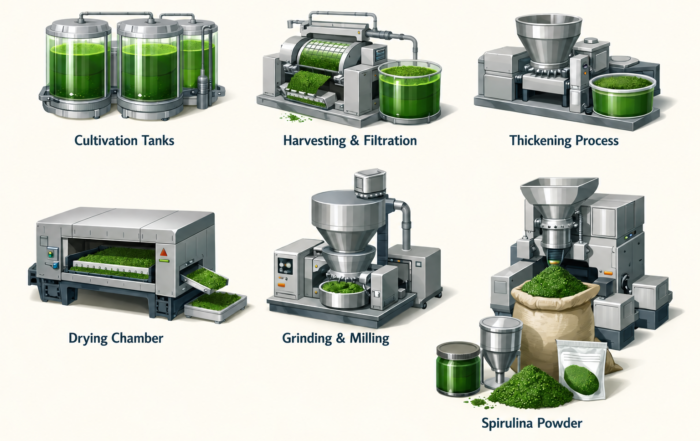
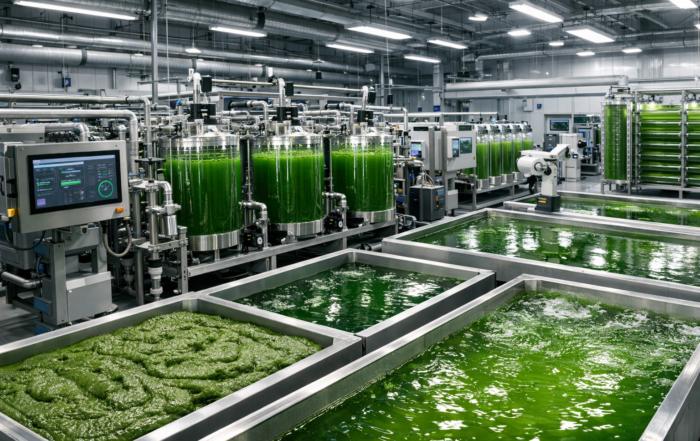
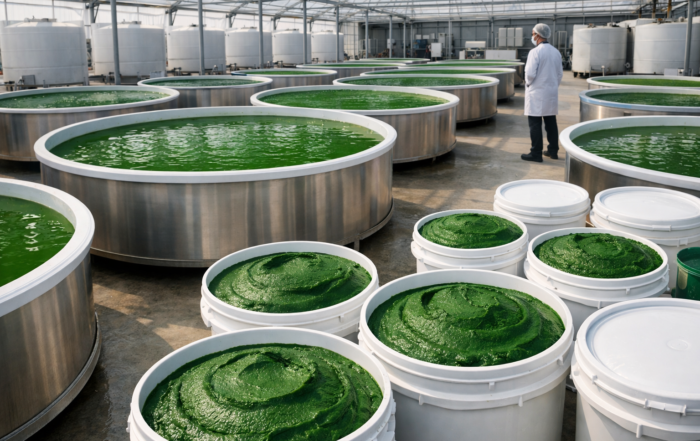
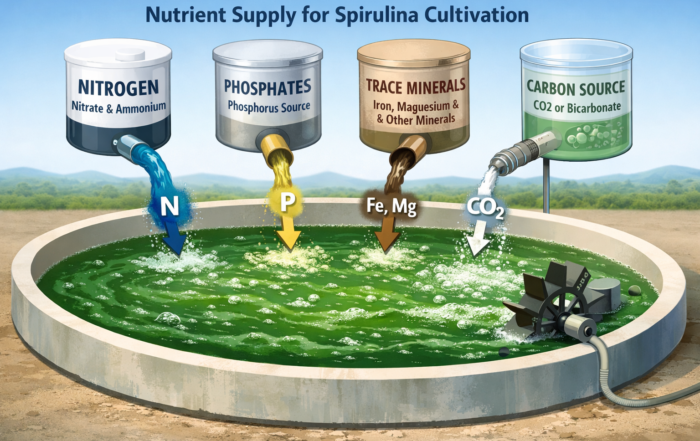
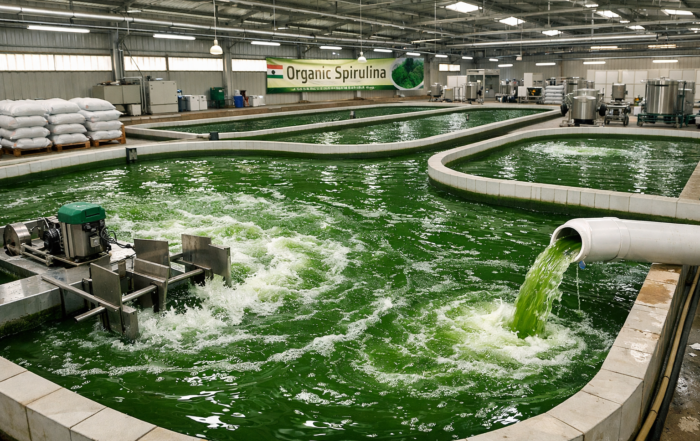
Modern commercial spirulina is grown in large, shallow raceway ponds – long oval channels where water circulates continuously, driven by paddle wheels that keep the culture moving. The water is kept warm, alkaline, and nutrient-rich, closely mimicking the natural lake conditions where spirulina thrives.
India has become one of the world’s major spirulina-producing regions, with farms concentrated in states with warm climates and reliable sunlight – conditions that allow near year-round cultivation. China, the United States, and parts of Southeast Asia are also significant producers.
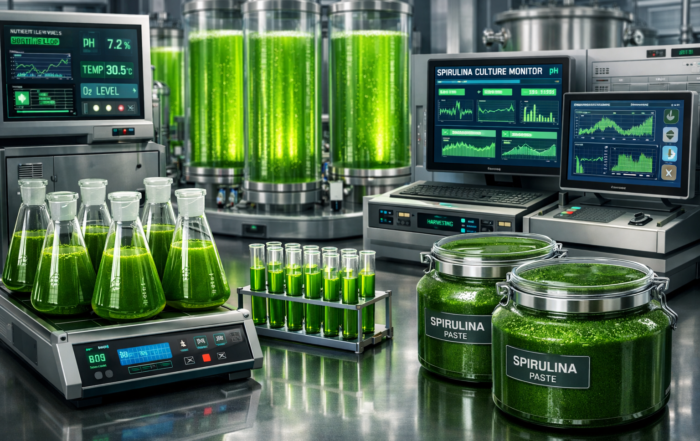
What distinguishes quality spirulina from ordinary spirulina is not just where it is grown but how it is handled after harvest. Spirulina is sensitive to heat – drying it at temperatures above 45°C degrades phycocyanin, beta-carotene, and other heat-sensitive compounds that give it much of its nutritional value. The best spirulina is dried using gentle methods that keep product temperatures below 45°C throughout the process. It is then tested in a laboratory, every batch, to verify that what the label claims is actually present in the powder.
How to Spot Spirulina Worth Buying
Not all spirulina products are equal. The same name can describe a product that delivers the full nutritional profile described above or one that delivers a fraction of it – solar-dried at high temperatures, never independently tested, with heavy metal contamination that no one checked for.
Three things to look for before purchasing:
A Certificate of Analysis (COA) from the specific batch you are buying – not a generic company document, but one tied to a particular production batch. It should declare protein percentage (look for 60% or above), phycocyanin content (minimum 10%), and heavy metal test results confirming lead, arsenic, and cadmium within safe limits.
Third-party certification – USDA Organic, EU Organic, or an equivalent standard. A label that says “natural” or “chemical-free” without a recognised certification body behind it is not verified.
A clear drying method declaration. Refractive Window Drying or vacuum drying are the methods that preserve nutritional quality. If a supplier does not know or will not say how their product was dried, that is informative.
The Infrastructure Behind Quality Spirulina: How Greenbubble Makes It Possible
Understanding what spirulina contains is one thing. Understanding how it gets produced at the quality level described above is another – and for most of the spirulina consumed in India today, that answer leads back to one company.
Greenbubble is the engineering and solutions firm behind more than 90% of the spirulina produced in India. That is not a marketing claim – it is a reflection of over a decade of work building turnkey spirulina farms, designing cultivation systems, and developing the harvesting and processing infrastructure that separates certified, export-grade spirulina from ordinary powder.
What Greenbubble provides is not just equipment. It is the complete ecosystem that makes the nutritional profile described in this article achievable at commercial scale – from raceway pond design and automated harvesting systems to Refractive Window Drying installations that keep product temperatures below 45°C, preserving the phycocyanin and beta-carotene that make spirulina worth consuming in the first place.
The company has served producers across 10+ countries, has been awarded ‘Best Microalgae Company’ by the European Algae Biomass Association, and works with farms from entry-level projects starting at ₹1 crore upward to large-scale automated operations. That breadth of experience – from a producer’s first pond to a multi-acre export-ready facility – gives Greenbubble a visibility into what actually works in commercial spirulina cultivation that very few organisations anywhere in the world can match.
For the curious reader who has just learned what spirulina is and what it should contain, that context matters. The gap between spirulina that delivers 65% protein, 18% phycocyanin, and zero heavy metal contamination and spirulina that delivers none of those things is not a matter of the organism itself. It is a matter of how the farm was designed, how the harvest was handled, and how the drying was done. Those decisions – infrastructure decisions – are precisely what Greenbubble exists to get right.
The Simple Version
Spirulina is a microscopic water organism, billions of years old, that humans have eaten for centuries. It contains more protein by weight than meat, a rare anti-inflammatory fatty acid, powerful antioxidant pigments, and a mineral and vitamin profile that covers more nutritional bases than almost any other single ingredient. At around 4.5 grams a day, it is safe, practical, and backed by a growing body of clinical research.
The superfood label, for once, is not an exaggeration. It is just that most people have never been told plainly what is actually inside the green powder – or why it matters.
Now you know.
Make us your source on Google
Table Of Contents