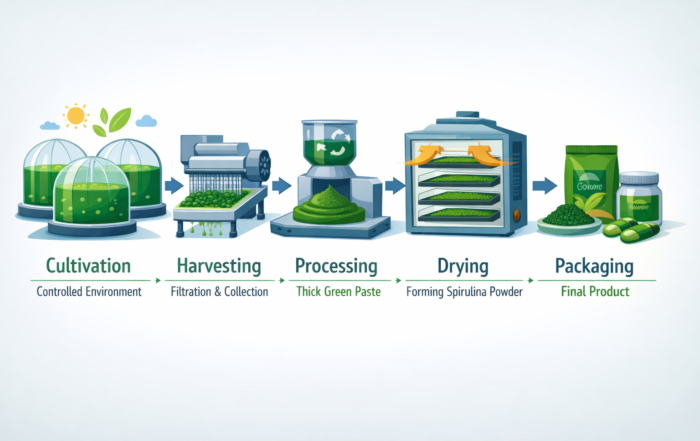
Pune is an appealing place to consider spirulina farming: a large, health-conscious urban market, strong industrial infrastructure, and a growing nutraceutical sector on the doorstep. But profitability isn’t decided by market demand alone. Pune’s climate brings both genuine advantages and real challenges that a farmer must manage actively. This is an honest, information-rich look at whether spirulina farming in Pune actually pays off, and what it takes to get there.
Pune’s Climate: The Honest Picture
Spirulina wants consistency: stable warmth of 30 to 35°C, year-round sunshine, and protection from temperature extremes. Pune delivers some of this and challenges the rest.
| Season | Pune Conditions | Impact on Spirulina |
| Dry season (Nov to May) | Warm days, abundant sun; April/May can top 40°C | Prime growing window; manage peak-summer heat |
| Winter nights (Dec to Feb) | Can drop to 11°C, historically as low as 4.6°C | Growth stalls below 15°C; nights need management |
| Monsoon (Jun to Oct) | Heavy rain, 187mm+ in July, high humidity | Dilution risk and slow drying; shelter needed |
The takeaway: Pune’s dry season is genuinely good for spirulina, but its cold winter nights and intense monsoon are the two variables that decide profitability. Neither is a dealbreaker, both are manageable, but ignoring them is how farms fail. This state-wide view of how to start spirulina farming in Maharashtra places Pune in its regional context.
The Two Challenges Pune Farmers Must Solve
Winter nights. Spirulina slows sharply below 15°C and won’t survive prolonged cold. Pune’s winter days are fine, but night temperatures need buffering. Larger ponds hold heat better thanks to their thermal mass, and polyhouse covers help retain warmth, this is exactly why deeper water volumes and covered systems matter in variable climates.
Monsoon. Heavy July rain dilutes open ponds and raises contamination risk, while high humidity slows drying and can increase bacterial load. Rain shelters and covered raceways protect the culture, and controlled drying systems become essential rather than optional, since sun drying simply doesn’t work reliably in a Pune monsoon.
Solve these two and Pune’s dry-season strengths carry the year. This is where climate-control engineering, covered in this guide to the best climate zones for spirulina cultivation in India, turns a mixed climate into a workable one.
Pune’s Real Advantage: The Market
Where Pune genuinely shines is demand. It’s a major, affluent, health-aware city with a strong nutraceutical and wellness industry, plus proximity to Mumbai. For a spirulina farmer, being close to buyers matters: lower freight, easier relationship-building, and faster access to the premium supplement, food, and cosmetics segments that pay the best prices.
| Buyer Segment | Pune Advantage | Grade Required |
| Nutraceutical & supplement brands | Strong local industry | Export / premium |
| Health food & beverage | Large urban consumer base | Certified food grade |
| Cosmetics & wellness | Growing regional demand | Premium |
| Animal & aqua feed | Regional agriculture nearby | Feed grade |
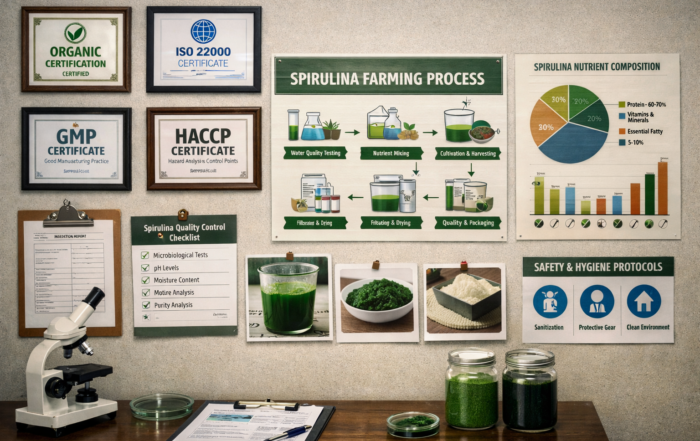
Premium buyers everywhere require a Certificate of Analysis (protein above 60%, phycocyanin at or above 10%, heavy metals within limits), the standards set out in this guide to spirulina quality control and safety in mass production. Proximity to demand only pays if the product meets these benchmarks.
The Profitability Maths
Pune doesn’t change the fundamental economics of spirulina, which are driven by scale. Setup cost tracks the national picture: a commercially viable farm starts from around ₹1 crore.
| Farm Size | Investment (INR) | Annual Yield (tonnes) | Verdict |
| 1 Acre | ₹75L to ₹1.07 Cr | 10 to 15 | Training / niche; negligible ROI |
| 2 to 3 Acres | ₹1.5 to ₹2.5 Cr | 20 to 30 | Commercially sustainable |
| 5+ Acres | ₹2 Cr+ | 60+ | Viable with assured buyers |
And the ROI reality:
| Category | 1 Acre (₹ Lakhs) | 3 Acre (₹ Lakhs) |
| Setup (CapEx) | 107.00 | 210.00 |
| Revenue | 75.00 | 200.00 |
| Total Operating Cost | 83.22 | 121.62 |
| Net Profit (EBITDA) | -8.22 | 78.38 |
| ROI | -7.7% | 37.3% |
A 1-acre farm in Pune, like anywhere, tends to lose money, while a well-run 3-acre farm returns around 37% annually and breaks even in roughly three years. The full breakdown is in this analysis of spirulina farming profitability and realistic ROI at scale.
There’s a Pune-specific wrinkle: climate management (polyhouse covers, robust drying, winter buffering) adds modestly to cost versus a Tamil Nadu farm. But Pune’s market proximity can offset this through lower freight and better buyer access. Net, Pune is profitable at commercial scale, provided you budget for climate control rather than pretending you won’t need it.
So, Is It Profitable? The Verdict
Yes, at the right scale and with the right engineering. Pune is not a plug-and-play spirulina climate like Madurai, but it’s a strong candidate when you account for its realities:
- Profitable if: you build at 2 to 3 acres or more, invest in covered ponds and controlled drying, manage winter nights and monsoon actively, and leverage Pune’s premium local market.
- Not profitable if: you build a sub-scale 1-acre farm, rely on sun drying, or ignore the winter-and-monsoon challenge.
Pune rewards farmers who plan around its climate, not those who hope it behaves like the deep south.
Building a Profitable Pune Farm
The formula is clear: size for viability, engineer for Pune’s specific climate, build in certification, and sell into the strong local market. Doing this well is easier with proven systems and experienced support.
Greenbubble, a turnkey spirulina farm infrastructure company, helps Maharashtra farmers through end-to-end spirulina farming consultancy and complete turnkey spirulina farm solutions, including climate-appropriate pond and drying design. With 10+ years of experience, operations across 10+ countries, recognition as Best Microalgae Company by the European Algae Biomass Association in Paris, and a customer base that accounts for more than 90% of India’s spirulina production, its designs are built for exactly these real-world conditions. See comparable builds on the Greenbubble spirulina project case studies page.
Frequently Asked Questions
Is spirulina farming profitable in Pune?
At commercial scale (2 to 3 acres or more), yes, roughly 37% ROI is achievable. A 1-acre farm typically breaks even at best. Pune’s strong local market is a real advantage, but climate management is essential.
Does Pune’s winter harm spirulina?
Winter nights can drop below 15°C, which stalls growth, and prolonged cold is dangerous. Larger ponds and polyhouse covers buffer night temperatures, keeping cultivation viable through winter.
What about the monsoon?
Heavy July rain dilutes open ponds and slows drying. Rain shelters, covered raceways, and controlled drying systems are needed to protect the culture and product quality during monsoon.
Is Pune better than southern states for spirulina?
Climate-wise, southern hubs like Tamil Nadu are more consistent. But Pune’s proximity to a large, affluent nutraceutical market is a genuine commercial edge that can offset its higher climate-control costs.
How much does it cost to start in Pune?
A commercially viable farm starts from around ₹1 crore, with a modest premium for climate-control infrastructure compared to warmer, drier regions.
The Bottom Line
Spirulina farming in Pune can absolutely be profitable, but it’s a climate you manage, not one you coast on. Pune’s warm dry season and premium urban market are real assets; its cold winter nights and heavy monsoon are real challenges. Build at commercial scale, engineer for the local conditions, and lean on Pune’s market proximity, and the answer to “is it profitable?” is a confident yes.
Make us your source on Google
Table Of Contents