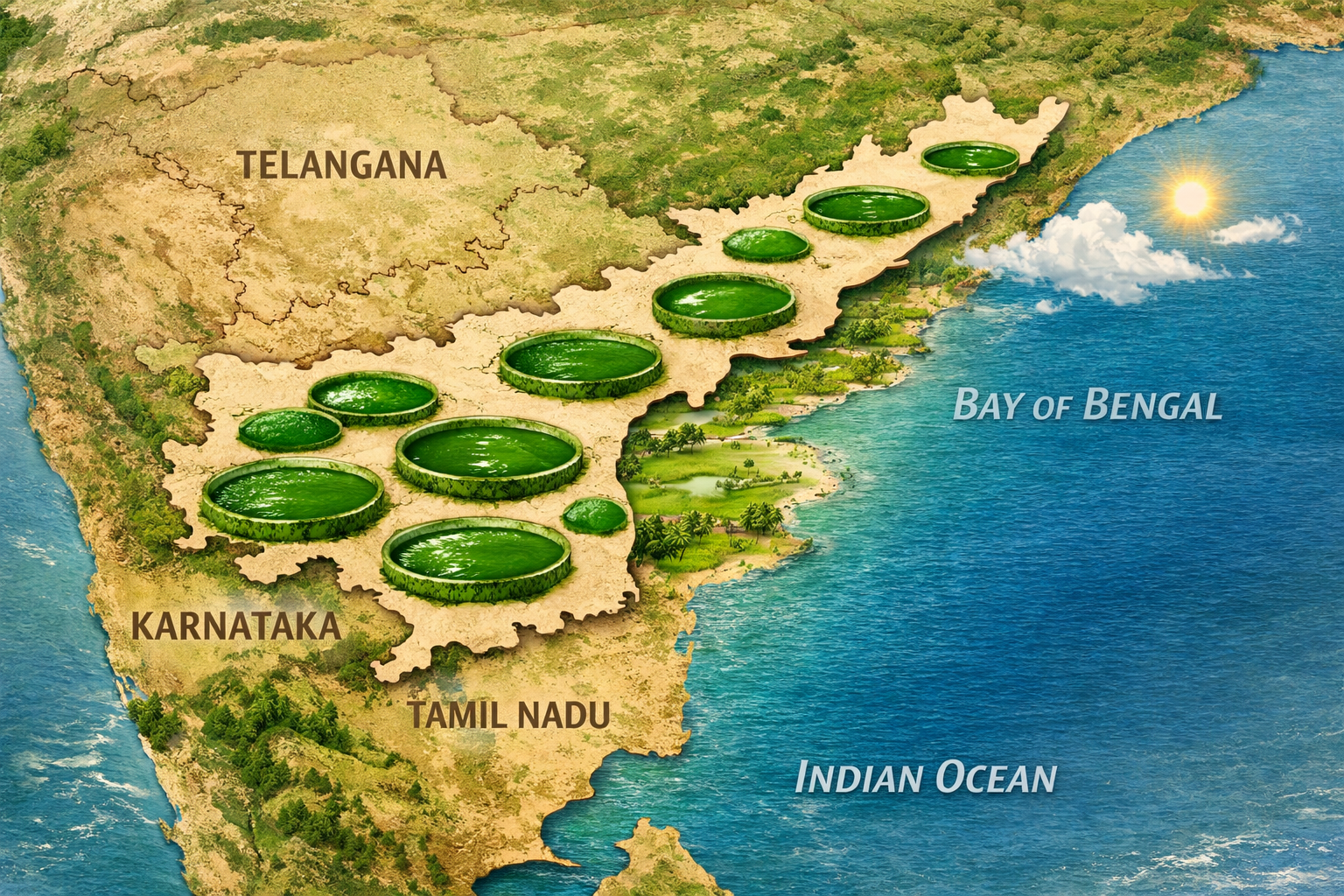
Andhra Pradesh is one of India’s established spirulina-producing states, and for good reason: warm weather, long sunlight hours, and existing algae-farming activity around Kurnool and the coastal belt. But climate alone doesn’t make a farm profitable. This guide covers the three things that actually decide whether a spirulina venture in AP works: the climate you’re working with, what it costs to build and run, and who buys the output.
Why Andhra Pradesh Suits Spirulina
Spirulina is a photosynthetic organism, so climate directly shapes yield, colour, and nutrient profile. Andhra Pradesh sits comfortably in the tropical-to-semi-arid band that spirulina prefers, with the year-round sunshine the culture needs and warm temperatures across most of the year.
The target is a culture temperature of 30 to 35°C, ideally held near 35 to 37°C for maximum yield. AP’s summers run hotter than that, and here’s the practical point most beginners miss: high ambient heat isn’t automatically good. Above 40°C cultures bleach, so the skill lies in managing temperature down using agitation, water depth, shading, and top-ups, exactly the kind of control covered in this breakdown of ideal climate zones for spirulina cultivation across India. Coastal and interior AP both work; you simply manage heat differently in each.
| Climate Factor | AP Reality | What It Means for Your Farm |
| Sunlight | Abundant, year-round | Strong natural growth; no artificial lighting needed |
| Ambient temperature | Warm, often above 40°C in summer | Must actively cool culture to stay under 38°C |
| Ideal culture temp | 30 to 37°C | Achievable most of the year with proper management |
| Water | Groundwater widely available | Ideal if tested for purity and heavy metals |
| Frost risk | Negligible in most districts | Year-round operation possible |
What a Spirulina Farm Costs in Andhra Pradesh
Setup cost in AP tracks the national picture, land and labour are relatively affordable, but the equipment, lab, and certification that make output sellable are the same everywhere. A commercially viable farm starts from around ₹1 crore, and the investment scales with area.
| Farm Size | Investment Range (INR) | Annual Yield (tonnes) | Commercial Verdict |
| 1 Acre | ₹75L to ₹1.07 Cr | 10 to 15 | Training or niche use; negligible ROI |
| 2 to 3 Acres | ₹1.5 to ₹2.5 Cr | 20 to 30 | Commercially sustainable, export-ready |
| 5+ Acres | ₹2 Cr+ | 60+ | Viable only with assured buyers |
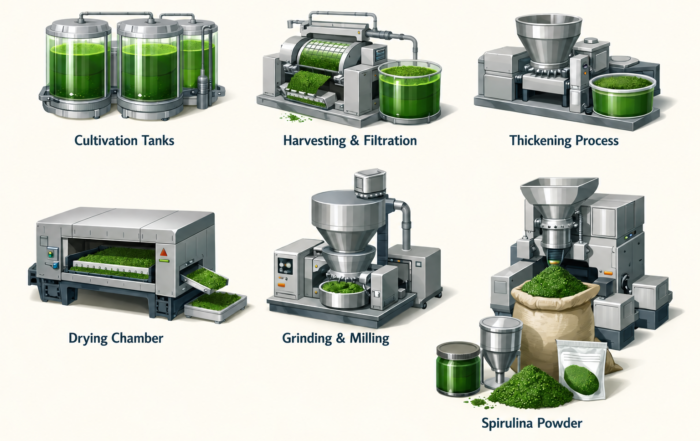
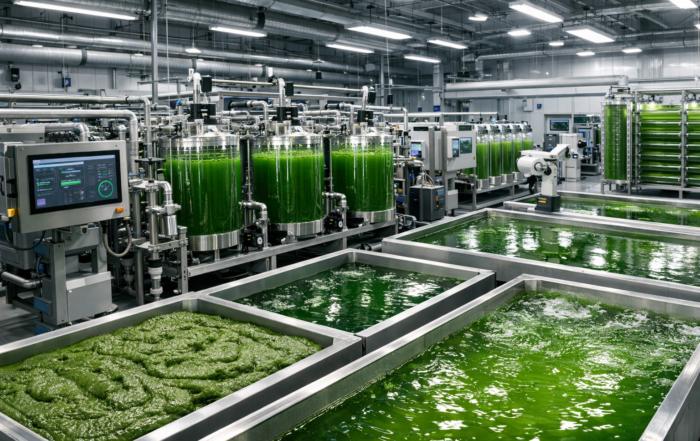
Most of the capital goes not into ponds but into the systems that protect quality: automated spirulina harvesting and dewatering equipment, temperature-safe refractive window drying systems that preserve phycocyanin, and an in-house testing lab. Skimp here and you lose certification and premium pricing, which is where the margin lives.
Running costs matter as much as setup. For a 2 to 3 acre farm, annual operating expenditure lands near ₹1.05 crore, dominated by nutrients (around ₹51 lakh), salaries, and power. Recurring certification and per-batch testing add to that, and none of it is optional for a serious farm.
The ROI Reality by Scale
| Category | 1 Acre (₹ Lakhs) | 3 Acre (₹ Lakhs) |
| Setup (CapEx) | 107.00 | 210.00 |
| Revenue | 75.00 | 200.00 |
| Total Operating Cost | 83.22 | 121.62 |
| Net Profit (EBITDA) | -8.22 | 78.38 |
| ROI (Profit ÷ CapEx) | -7.7% | 37.3% |
The lesson for AP farmers is the same as everywhere: a 1-acre farm tends to lose money, while a well-run 3-acre farm returns around 37% annually and breaks even in roughly three years. Scale is what turns AP’s climate advantage into actual profit. The mechanics are covered in this analysis of spirulina farming profitability and realistic ROI in large-scale production.
Who Buys Spirulina from Andhra Pradesh Farms
A farm only works if the output sells. AP producers realistically sell into four channels:
| Buyer Segment | What They Want | Grade Required |
| Nutraceutical & supplement brands | Consistent high-protein, high-phycocyanin powder | Export / premium |
| Food & beverage companies | Food-safe, well-documented biomass | Certified food grade |
| Cosmetics & wellness | Pigment-rich, clean-processed powder | Premium |
| Animal & aqua feed | Bulk biomass, price-sensitive | Feed grade |
The single biggest determinant of which buyers you can access is quality documentation. Nutraceutical and export buyers won’t purchase without a Certificate of Analysis proving protein above 60%, phycocyanin at or above 10%, and heavy metals within limits, the standards explained in this guide to spirulina quality control and safety in mass production. Feed-grade sales are easier to win but pay far less, so farms built only for bulk feed rarely justify their capital.
Export is where AP’s cost base becomes a real edge, provided you meet international certification. Farms targeting the US or EU need organic and food-safety compliance backed by traceability and batch testing, which is why automation-driven consistency in spirulina production matters so much: buyers reward repeatable quality, not one good batch.
Building It Right in Andhra Pradesh
AP gives you the climate; the rest is engineering and discipline. Test groundwater before use, size the farm for genuine viability rather than to a tight budget, and treat certification as a revenue enabler from day one. Pairing local advantages with proven systems is where an experienced partner pays off.
Greenbubble, a turnkey spirulina farm infrastructure company, supports AP farmers through end-to-end spirulina farming consultancy and complete turnkey spirulina farm solutions. With 10+ years of experience, operations across 10+ countries, recognition as Best Microalgae Company by the European Algae Biomass Association in Paris, and a customer base that accounts for more than 90% of India’s spirulina production, its designs reflect what actually clears audits and finds buyers. You can see comparable builds on the Greenbubble spirulina project case studies page.
Frequently Asked Questions
Is Andhra Pradesh a good state for spirulina farming?
Yes. Its warm, sunny, largely frost-free climate suits year-round cultivation, and it’s already an established producing state. Success still depends on scale, quality, and buyer access, not climate alone.
How much does a spirulina farm cost in Andhra Pradesh?
A commercially viable farm starts from around ₹1 crore, scaling to ₹1.5 to ₹2.5 crore for a 2 to 3 acre operation. Cheaper manual setups exist but rarely meet certification or export standards.
Is spirulina farming profitable in AP?
At the right scale, yes. A 3-acre farm can return roughly 37% annually, while a 1-acre farm typically breaks even at best. Profit depends on organic pricing, quality, and assured buyers.
Who buys spirulina in Andhra Pradesh?
Nutraceutical and supplement brands, food and cosmetics companies, and feed producers. Premium buyers require a Certificate of Analysis and certification; feed buyers pay less but demand less.
Does AP’s summer heat harm spirulina?
It can. Above 40°C cultures bleach, so farms must actively cool the culture below 38°C using agitation, depth control, shading, and water top-ups.
The Bottom Line
Spirulina farming in Andhra Pradesh starts with a genuine climate advantage, but climate is a multiplier, not a guarantee. Build at a viable scale, manage summer heat actively, invest in the quality systems that unlock premium and export buyers, and AP’s low-cost, high-sunlight profile becomes a real competitive edge. Plan around the economics and the buyers first, and let the climate do the rest.
Make us your source on Google
Table Of Contents