Spirulina has one of the strongest safety profiles of any food supplement studied, with research examining doses up to 800mg per kilogram of body weight without establishing meaningful toxicity. For most healthy adults, it is well tolerated at recommended intakes. But “safe for most people” is a different statement from “safe for everyone, at any amount” – and the distinction matters more than general wellness content tends to acknowledge.
The Standard Dosage Guidance
For most healthy adults, approximately 4.5 grams per day is the evidence-based amount used in the majority of clinical studies demonstrating spirulina’s documented benefits – antioxidant activity, cholesterol support, immune function, and energy metabolism.
| Daily Amount | Context |
| 1-2g | Starting dose for new users, building tolerance |
| 3-5g | Standard range for general wellness |
| 5-8g | Targeted antioxidant or anti-inflammatory use |
| Up to 20g | Upper ceiling for regular use |
| Above 20g | Not recommended – uric acid risk increases |
New users should begin at 1-2 grams daily and increase gradually over one to two weeks. This reduces the mild digestive discomfort – bloating, nausea, loose stools – that some people experience when introducing a high-protein, high-mineral supplement too quickly. Details on correct usage are covered in the spirulina powder benefits guide.
Who Needs to Be Cautious
Pregnant and Breastfeeding Women
Spirulina’s nutrient density – iron, B vitamins, complete protein – is relevant to pregnancy nutrition, but pregnancy is a context where any heavy metal exposure carries disproportionate risk. Only spirulina with a verified, batch-specific COA confirming heavy metals within strict USP limits should be considered, and medical guidance is essential before starting. The is spirulina safe during pregnancy and for kids article covers this in detail.
People With Autoimmune Conditions
Spirulina stimulates immune activity – natural killer cell activation, increased immunoglobulin production. This is beneficial for most people but may not suit individuals with rheumatoid arthritis, lupus, or other conditions where the immune system is already overactive. A physician conversation before starting is the right approach here.
Anyone on Blood-Thinning or Diabetes Medication
Spirulina has mild blood-thinning and blood sugar-lowering properties. For most people, this is inconsequential. For those on warfarin, heparin, or hypoglycaemic medications, additive effects are possible and worth discussing with a prescribing physician.
People With Phenylketonuria (PKU)
Spirulina contains phenylalanine, which individuals with PKU cannot metabolise safely. This population should avoid spirulina entirely.
Individuals With Gout or Elevated Uric Acid
Spirulina’s nucleic acid content metabolises to uric acid. At 4.5g daily this is not a concern for most people, but those already managing gout should keep doses low and consult a physician.
Algae or Seafood Allergy
Rare but documented allergic reactions exist. Anyone with known sensitivity should start at a very low dose under medical supervision.
The Warning That Matters Most: Source Quality
Every precaution above assumes the spirulina itself is properly produced. This is the variable most safety discussions skip entirely.
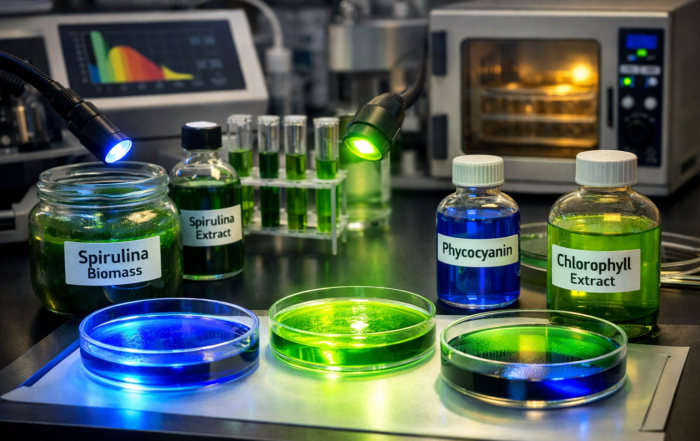
Spirulina is a bioaccumulator – it absorbs whatever is present in its growing water. Spirulina cultivated using proper water quality controls and tested through an in-house lab against a full Certificate of Analysis is fundamentally different from spirulina grown without these safeguards. A COA should confirm protein content, phycocyanin levels, and – critically – heavy metals within USP limits: lead ≤0.20 µg/g, arsenic ≤0.50 µg/g, cadmium ≤0.20 µg/g, mercury ≤0.025 µg/g.
Microbial safety matters equally. Total aerobic microbial count should sit below 50,000 cfu/g, with E. coli, Salmonella, and Staphylococcus confirmed absent. Farms following HACCP-compliant infrastructure and automated harvesting systems minimise contamination risk at every production stage – from raceway pond to drying to packaging.
A Simple Decision Framework
| Situation | Recommended Action |
| Healthy adult, no medications | Start at 1-2g, build to 4.5g over 2 weeks |
| Pregnant or breastfeeding | Medical guidance required; verified COA only |
| Autoimmune condition | Consult physician first |
| On anticoagulant or diabetes medication | Inform prescribing physician |
| PKU diagnosis | Avoid spirulina |
| Gout or high uric acid | Keep dose low; medical guidance |
| Algae/seafood allergy | Start very low, under supervision |
| Anyone, any category | Always verify batch-specific COA before purchase |
The Honest Answer
Spirulina is safe for the vast majority of people at recommended doses – but “everyone” is the wrong frame. The right frame is: safe for most healthy adults, with specific, manageable precautions for specific populations, contingent entirely on the product being properly tested and verified.
Production standards make the difference between these two outcomes. Greenbubble’s turnkey farming systems, which underpin more than 90% of India’s spirulina output, are built around exactly this verification standard – controlled cultivation, automated processing, and batch-level lab testing that turns “probably safe” into “provably safe.” That distinction is the one worth checking for before any spirulina enters your daily routine.
Make us your source on Google
Table Of Contents