Search “is spirulina dangerous” and the results swing between two extremes – breathless warnings about toxic algae blooms, and blanket reassurances that spirulina has zero risk whatsoever. Neither extreme is accurate. The real picture is more specific: spirulina itself, when produced correctly, is among the safest food supplements studied. The danger, where it exists, almost always traces back to how the product was grown, processed, or sold – not the organism.
This article separates the myths from the real, documented risks.
Myth: “Spirulina Is a Toxic Algae”
This is the single most common source of confusion, and it deserves a direct answer. Spirulina (Arthrospira platensis) is not the same organism as the toxin-producing cyanobacteria responsible for harmful algal blooms – species like Microcystis or Anabaena, which produce microcystins and can contaminate lakes and reservoirs.
The confusion exists because both are technically cyanobacteria, and casual reporting often lumps “blue-green algae” together as a single hazard category. Spirulina has been consumed by humans for centuries – documented use by the Aztecs and by populations around Lake Chad in Africa – and is recognised by food safety authorities globally as safe for consumption when produced under controlled, contaminant-free conditions. Our article – what is spirulina and why is it called a superfood breakdown covers this distinction in more depth.
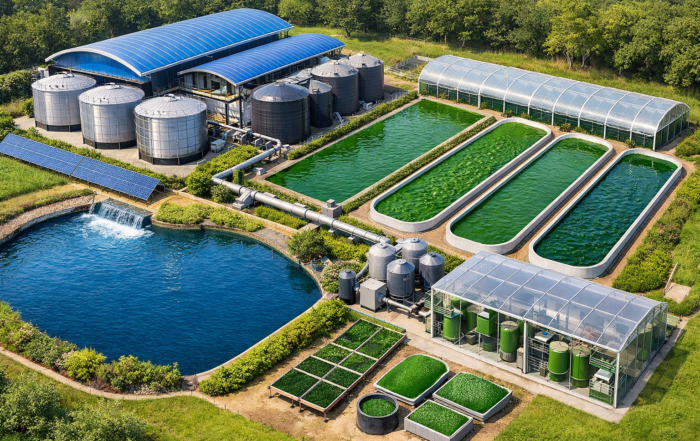
The real risk hiding in this myth: Wild-harvested spirulina or products grown in uncontrolled open water bodies can genuinely become contaminated with toxin-producing cyanobacteria species growing alongside it. This is precisely why commercial spirulina is grown in controlled raceway ponds rather than open lakes – isolation from wild cyanobacteria species is a basic production safeguard, not an optional refinement.
Myth: “Spirulina Causes Heavy Metal Poisoning”
This claim has some truth buried in it, which is exactly why it spreads. Spirulina is a bioaccumulator – it absorbs whatever is present in its growing water, including heavy metals if the water source is contaminated. This is a real, documented phenomenon, not a myth.
But the conclusion people draw – that spirulina as a category is dangerous – conflates the organism with poor production practices. Spirulina grown in properly sourced, tested water under controlled conditions does not carry meaningful heavy metal load. This is why water quality essentials for spirulina farming is treated as foundational, not optional, in serious production.
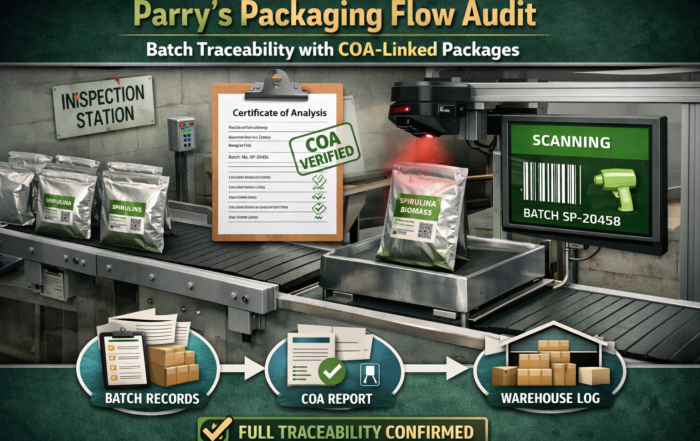
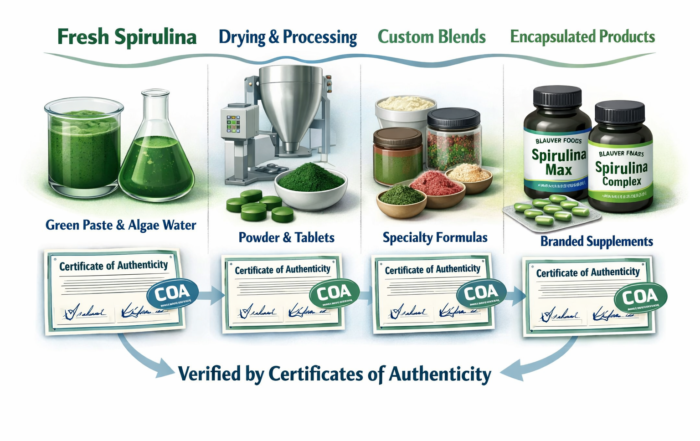
The real risk: Spirulina from unregulated or untested sources – particularly products without a batch-specific Certificate of Analysis (COA) – can carry lead, arsenic, cadmium, or mercury above safe limits. The benchmarks that quality production meets are lead ≤0.20 µg/g, arsenic ≤0.50 µg/g, cadmium ≤0.20 µg/g, and mercury ≤0.025 µg/g. A product without this documentation has not been verified safe, regardless of what the packaging claims. The guide on how to avoid heavy metals and contamination in spirulina farming covers exactly how serious producers prevent this.
Myth: “More Spirulina Means More Benefits”
This is less a danger myth and more a dosing misunderstanding that can become genuinely risky at extremes. Spirulina is exceptionally safe – studied at doses up to 800mg per kilogram of body weight without establishing toxicity. But “very safe” is not “unlimited.”
The real risk: Spirulina’s naturally occurring nucleic acid content is metabolised into uric acid. At the recommended 4.5 grams daily, this is irrelevant for almost everyone. Beyond 20 grams per day – a dose far above any clinical study or practical recommendation – uric acid elevation becomes a genuine concern, particularly for people with gout or kidney conditions. This is not a reason to fear spirulina. It is a reason to follow established dosing.
Myth: “Spirulina Is Unregulated and Untested”
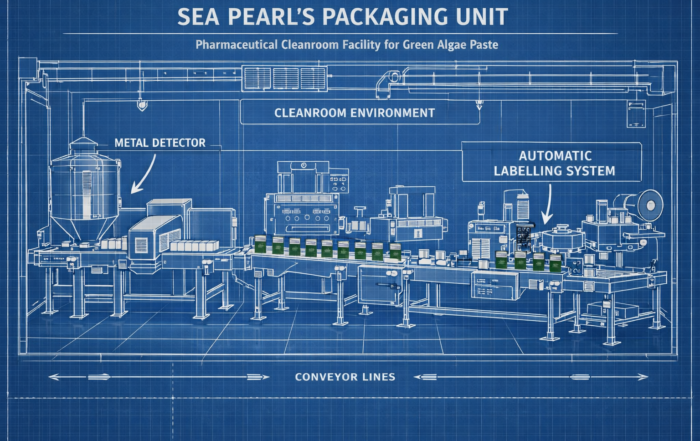
This myth conflates the lowest-quality end of the market with the category as a whole. Certified spirulina production is, in fact, rigorously tested – far more so than most conventional foods. Every batch from a properly run operation passes through in-house lab testing covering protein, pigments, microbial counts, pathogens, and heavy metals before release, exactly as outlined in what your Certificate of Analysis should show.
The real risk: The myth becomes true only for products from producers who skip this testing. A spirulina farm without an in-house lab setup, without HACCP-compliant infrastructure, or without third-party certification is genuinely operating in an unverified space. The myth and the reality only converge at the bottom of the market.
The Risks That Are Genuinely Real
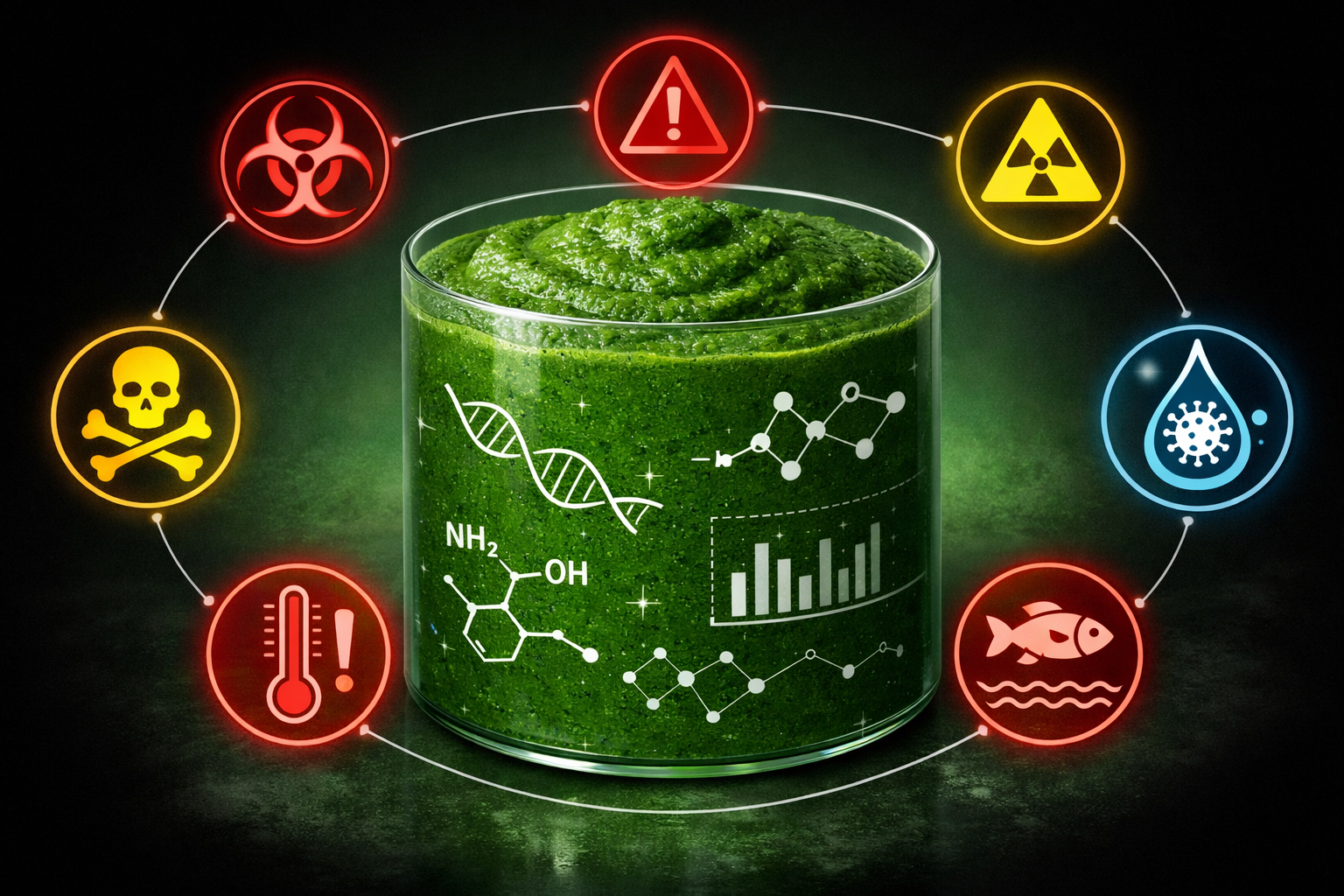
Stripping away the myths, here is what remains as legitimate caution:
Contamination from poor production. Heavy metals, microbial pathogens, and toxin-producing algae species can all enter the product when farms lack proper water quality controls, automated harvesting, or lab verification.
Allergic reactions. Rare but documented in individuals with algae or seafood sensitivities.
Drug interactions. Spirulina’s mild blood-thinning and blood sugar-lowering effects can interact with anticoagulant or hypoglycaemic medications.
Autoimmune flare-ups. Spirulina’s immune-stimulating activity may not suit individuals with already overactive autoimmune conditions.
Phenylketonuria. Spirulina contains phenylalanine, which individuals with PKU cannot safely metabolise.
None of these risks apply broadly to healthy adults using verified, properly produced spirulina at recommended doses. All of them are manageable with basic awareness and product verification.
What Separates Dangerous Spirulina From Safe Spirulina
The line is not between “spirulina” and “not spirulina.” It is between spirulina grown under controlled conditions with documented testing, and spirulina that is not. Farms built around organic feed protocols, automated drying systems that prevent contamination during processing, and turnkey infrastructure designed for compliance from day one consistently produce a fundamentally different – and verifiably safer – product than informal or uncontrolled operations.
Greenbubble’s farm systems, which underpin more than 90% of India’s spirulina production across more than 10 countries, are built specifically around eliminating the real risks described above – not the manufactured ones. The danger in spirulina is rarely the organism. It is almost always the gap between what a product claims and what its COA can actually prove.
Make us your source on Google
Table Of Contents