The case for spirulina as a daily nutritional supplement is well established. Complete protein at 65-70% by dry weight. Phycocyanin at 10-20% – one of the most concentrated natural antioxidants in any food source. Iron at approximately 410mg per kilogram. A full B-vitamin complex. GLA, beta-carotene, chlorophyll-a, and a mineral profile that covers more nutritional ground than almost any comparable single ingredient.
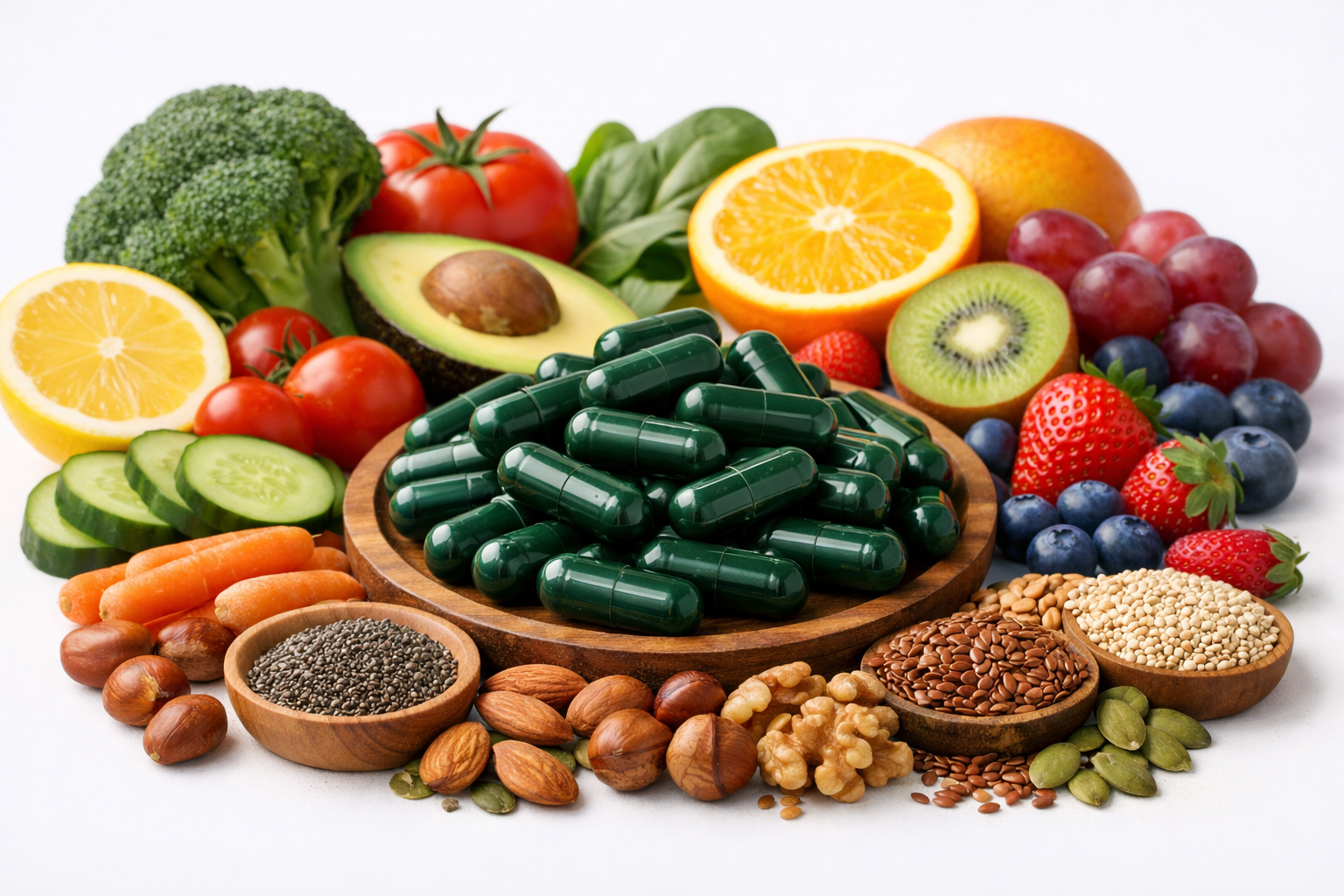
The case for the capsule format specifically is simpler: it is the form that makes consistent daily use realistic for the widest range of people. No measuring, no mixing, no confronting the strong oceanic flavour that puts many people off spirulina powder. Swallow the capsules with water and the nutritional work is done.
Convenience is not a trivial benefit. With spirulina, as with most supplements, consistency over weeks and months is what produces measurable outcomes. A format that gets taken every day outperforms a nutritionally superior format that gets abandoned after two weeks because the taste is difficult.
What Spirulina Capsules Deliver Nutritionally
The nutritional content of a spirulina capsule is identical to equivalent-weight spirulina powder – assuming the same source material and production quality. A 500mg capsule contains 500mg of spirulina. Five of them equal 2.5g. Nine equal 4.5g – the evidence-based daily dose used in the clinical studies that established spirulina’s documented health outcomes.
Protein and amino acids. At 65%+ protein by dry weight, nine 500mg capsules deliver approximately 2.9g of complete protein – all nine essential amino acids in a single serving. This is not a replacement for a protein-rich meal. It is a meaningful supplement for individuals with elevated protein needs, restricted diets, or reduced dietary variety.
Phycocyanin for antioxidant and anti-inflammatory support. At 10-20% phycocyanin by dry weight, a 4.5g daily dose delivers 450-900mg of phycocyanin. This is the compound responsible for spirulina’s documented effects on inflammatory markers, immune cell activation, and oxidative stress reduction. It is also the compound most vulnerable to heat damage during production – which is why how the spirulina was dried matters as much as what the label says.
Iron for deficiency-prone populations. A 4.5g daily serving contributes approximately 1.8mg of iron – relevant for women with menstruation-related iron demands, plant-based dieters, and older adults with restricted dietary variety. Unlike synthetic iron supplements, spirulina delivers iron without the gastrointestinal side effects that make supplemental iron difficult for many people to sustain.
B vitamins for energy metabolism. B1, B2, B3, B6, and B12 are present across spirulina’s vitamin profile. These cofactors support the enzymatic pathways that convert food into cellular energy – relevant to anyone experiencing fatigue with a nutritional component, including those on restricted diets where B-vitamin intake is inconsistent.
GLA for hormonal and cardiovascular health. Gamma-linolenic acid at 13-27% of spirulina’s fatty acid fraction supports anti-inflammatory prostaglandin pathways relevant to hormonal balance, PMS symptoms, and lipid metabolism. Clinical trials have documented reductions in total cholesterol and LDL in subjects supplementing consistently over eight to twelve weeks.
Who Benefits Most From the Capsule Format
| Profile | Why Capsules Work Best |
| Taste-sensitive individuals | Capsule eliminates spirulina’s oceanic flavour entirely |
| Frequent travellers | Pre-measured, portable, no mixing equipment needed |
| Beginners to spirulina | Fixed dose removes guesswork during the adjustment period |
| Older adults | Easy to swallow, no preparation required |
| Busy professionals | Takes seconds – no blending or cleanup |
| People on plant-based diets | Delivers complete protein, iron, and B12 in one daily habit |
| Those managing iron deficiency | Consistent dose without gastrointestinal side effects of synthetic iron |
The Dosage Reality Most Labels Obscure
The most common mistake spirulina capsule users make is under-dosing – not through carelessness, but because most products do not make the full daily dose obvious on the label.
At 500mg per capsule – the most widely sold size – reaching the evidence-based 4.5g daily dose requires nine capsules. Most products suggest two to four capsules per day as a serving. That delivers 1-2g – a fraction of the dose used in the studies that produced the outcomes the label is implying.
This is not a safety issue. It is an efficacy issue. One gram of spirulina daily provides some nutritional input. It does not produce the cholesterol, immune, or antioxidant outcomes documented in clinical literature, which consistently use doses of 3-8g per day.
If the daily capsule count feels high, a 1,000mg capsule format reduces it to five per day for the same 4.5g dose – a more practical option for long-term consistent use.
What to Check Before Buying
Capsule format adds one layer of opacity – the spirulina inside is not visible or assessable by colour or odour the way powder is. That makes documentation more important, not less.
A batch-specific Certificate of Analysis should declare protein percentage at 60% or above, phycocyanin content at minimum 10%, heavy metals within USP limits – lead ≤0.20 µg/g, arsenic ≤0.50 µg/g – and pathogens absent. Organic certification from a recognised body – USDA Organic, EU Organic, or equivalent – should be verifiable, not just stated on the label.
The excipient list – the non-spirulina ingredients used to help the powder compress or flow into capsules – should be short and clean. Recognised binders like microcrystalline cellulose and silicon dioxide are standard. Synthetic fillers, artificial colours, or unlisted flow agents are not.
The spirulina in the capsule should come from a farm producing to certified standards – controlled cultivation at 30-37°C, automated harvesting, and drying below 45°C using methods like Refractive Window Drying that preserve phycocyanin intact. Greenbubble’s production systems, which underpin more than 90% of India’s spirulina output across farms in more than 10 countries, represent the infrastructure standard that certified-grade capsule products are built from.
The capsule makes spirulina easy. The production standard makes it worth taking.
Make us your source on Google
Table Of Contents